Swollen Ears From Earrings: A Hypoallergenic Buying Guide
Discover why you get swollen ears from earrings and learn exactly which hypoallergenic metals, gauges, and closures to buy for sensitive lobes.

The Anatomy of an Allergic Reaction: Why Ears Swell
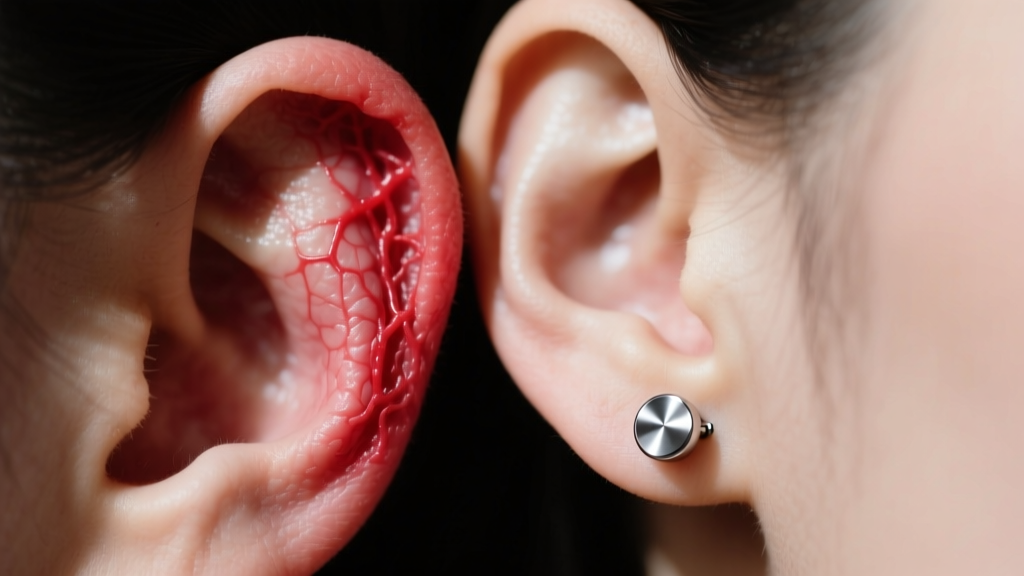
If you are experiencing swollen ears from earrings, you are likely dealing with one of two distinct issues: allergic contact dermatitis or mechanical irritation. The term 'hypoallergenic' is largely an unregulated marketing buzzword that offers zero legal protection or guarantee of metal purity. When your earlobes or cartilage become red, hot, and engorged, your immune system is reacting to foreign proteins or metallic salts leaching into your tissue.
According to the American Academy of Dermatology, nickel allergy is the most common cause of allergic contact dermatitis, affecting nearly 18% of adults. When sweat and natural skin oils interact with cheap alloyed metals, nickel salts are released into the piercing channel. The body identifies these salts as a threat, triggering an inflammatory response that results in the dreaded swelling, itching, and weeping associated with metal sensitivities.
However, not all swelling is allergic. Mechanical irritation—caused by poor jewelry design, incorrect gauge sizing, or excessive pressure from heavy dangles—can cause localized trauma. Understanding the difference is the first step in building a curated, irritation-free jewelry collection.
The Metal Hierarchy: What to Buy and What to Avoid
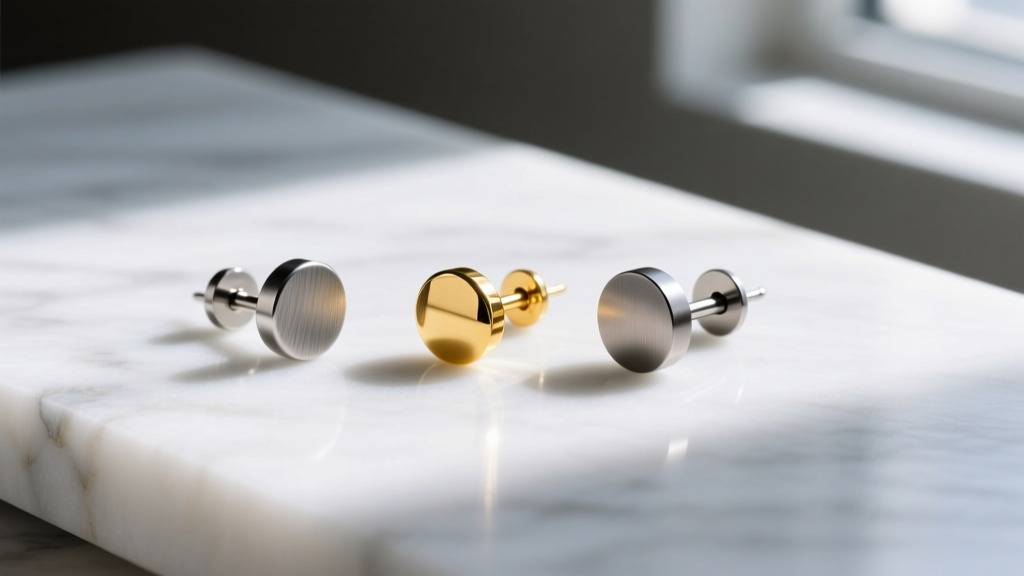
To permanently stop swollen ears from earrings, you must audit your jewelry box and eliminate reactive metals. The Association of Professional Piercers (APP) strictly outlines which materials are safe for long-term wear in the human body. Here is the definitive hierarchy of earring metals for sensitive ears.
The 'Avoid at All Costs' Tier
- Surgical Steel (ASTM F138): Despite the clinical-sounding name, surgical steel contains 8% to 12% nickel. It is safe for surgical tools that are washed and sterilized, but it is entirely inappropriate for long-term body jewelry.
- Sterling Silver (925): Silver contains 7.5% copper, which oxidizes and tarnishes when exposed to moisture. Tarnish inside a piercing channel causes severe irritation and can permanently stain the skin (argyria).
- White Gold (Lower Karats): Many 10k and 14k white gold alloys are mixed with nickel to achieve a silver color. Unless explicitly stated as 'nickel-free' or alloyed with palladium, avoid white gold.
The 'Safe for Sensitive Ears' Tier
| Material Grade | Nickel Content | Average Price Range | Best Use Case |
|---|---|---|---|
| ASTM F136 Implant-Grade Titanium | 0.00% (Nickel-Free) | $25 - $65 per stud | Daily wear, fresh piercings, severe allergies |
| Niobium (Un-anodized or Anodized) | 0.00% (Nickel-Free) | $20 - $50 per stud | Cartilage hoops, clickers, lightweight huggies |
| 14k / 18k Solid Gold (Yellow/Rose) | Varies (Must be Ni-Free) | $85 - $300+ per stud | Healed lobes, luxury upgrades, special occasions |
| Fused Quartz / Borosilicate Glass | 0.00% (Inert) | $15 - $40 per retainer | Troubleshooting swelling, MRI prep, sleeping |
Pro-Tip: When shopping for gold, always look for brands that explicitly state their gold is alloyed without nickel. Reputable brands like BVLA, Maria Tasha, and Anatometal provide metallurgy certificates upon request.
The Mechanics of Swelling: Gauge and Backing
Even if you are wearing pure titanium, you can still experience swollen ears from earrings if the physical mechanics of the jewelry are flawed. The structural design of the post and the backing plays a massive role in tissue health.
The Gauge Dilemma: The 'Cheese Cutter' Effect
Piercing gauges refer to the thickness of the metal post. Standard mall-kiosk lobe piercings are often done at 20G (0.81mm) or 18G (1.02mm), while professional cartilage piercings are typically done at 16G (1.29mm) or 14G (1.63mm).
If you wear a thin 20G earring in a hole that has stretched or was originally pierced at 16G, the thin wire acts like a cheese cutter against the tissue. The weight of the earring pulls the thin wire downward, slicing through the bottom of the piercing channel. This micro-trauma triggers an immediate inflammatory response, resulting in localized swelling and eventual migration of the piercing. Always match your jewelry gauge to your piercing gauge. If you are unsure, a professional piercer can measure your fistula with a taper in seconds.
Friction Backs vs. Threadless Labrets
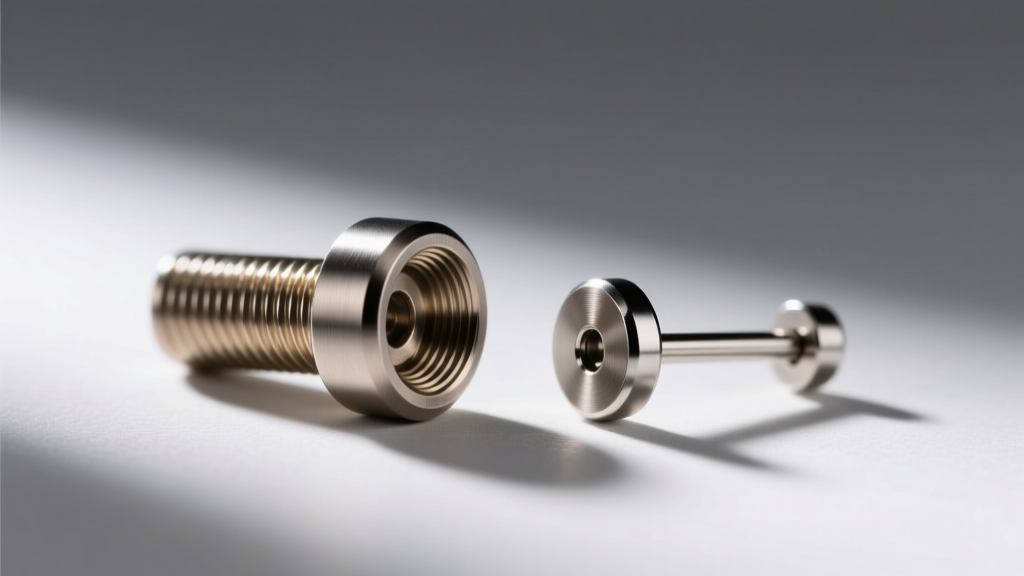
The traditional 'butterfly' friction back is a primary culprit for swollen earlobes. The grooved post traps dead skin cells, sebum, and bacteria directly against the back of the ear. Furthermore, the tension of the butterfly clutch often squeezes the lobe too tightly, restricting lymphatic drainage and causing the lobe to swell and throb.
The Solution: Switch to internally threaded or threadless flat-back labrets. These feature a smooth, flat disc that sits flush against the back of the ear, distributing pressure evenly and eliminating the crevices where bacteria breed. Threadless (push-pin) jewelry relies on the tension of a slightly bent pin inside a hollow post, offering a secure fit that will not fall out in your hair or sleep.
Cartilage vs. Lobe: Different Rules for Swelling
Cartilage and earlobes react to irritation in fundamentally different ways due to their vascular structure. Earlobes are highly vascular, meaning they have excellent blood flow. When irritated, they swell quickly but also heal relatively fast once the irritant is removed.
Cartilage, on the other hand, is avascular. It receives nutrients and oxygen through diffusion from the surrounding skin. When cartilage becomes swollen from an earring, the swelling can easily compress the already-limited blood supply, leading to a condition called perichondritis. This presents as a hard, hot, deeply painful lump (often mistaken for a piercing bump or granuloma).
'Never sleep on fresh or irritated cartilage piercings. The pressure restricts blood flow and causes the cartilage to swell unevenly, leading to permanent angle shifts and chronic irritation bumps.' — Professional Piercer Guidelines
If you suffer from chronic cartilage swelling, avoid heavy huggies or continuous hoop rings. Hoops rotate constantly, dragging dried lymph and bacteria back into the piercing channel. Opt for flat-back labret studs until the tissue is 100% stabilized.
Troubleshooting: What to Do If You Already Have Swollen Ears
If you are currently dealing from swollen ears from earrings, follow this immediate triage protocol to save the piercing and reduce inflammation:
- Remove the Offending Metal: Take out the silver, surgical steel, or mystery-metal earring immediately.
- Do Not Leave the Hole Empty: If the piercing is relatively new, the hole will close within hours if left empty. Insert a sterilized glass or implant-grade titanium retainer to keep the fistula open without introducing allergens.
- Warm Saline Compresses: Mix 1/4 teaspoon of non-iodized sea salt into 8oz of distilled warm water. Soak a sterile gauze pad and hold it against the swelling for 5 minutes. This promotes lymphatic drainage.
- Avoid Ice: While ice reduces surface swelling, it also constricts blood vessels, which starves the tissue of the white blood cells needed to heal the micro-tears.
- Downsize the Post: If you are wearing a long post meant for a fresh piercing, the excess metal will catch on hair and clothing. Visit a piercer to 'downsize' to a post that fits your healed tissue snugly.
Final Checklist for Your Next Jewelry Purchase
Before clicking 'checkout' on your next pair of studs, hoops, or dangles, run the jewelry through this strict E-E-A-T buying checklist:
- Material Verification: Does the product description explicitly state 'ASTM F136 Titanium', 'Niobium', or 'Nickel-Free 14k/18k Gold'? (If it just says 'surgical steel' or 'hypoallergenic', abandon the cart).
- Threading Type: Is the post internally threaded or threadless? (Avoid externally threaded posts where the screw is on the metal that passes through the skin).
- Backing Style: Does it use a flat-back disc instead of a butterfly clutch?
- Gauge Accuracy: Have you confirmed the gauge (thickness) matches your specific piercing channel?
- Weight Distribution: If buying dangles or drops, is the decorative element lightweight enough to prevent the 'cheese cutter' effect on your lobes?
By prioritizing metallurgical purity and structural ergonomics over fast-fashion trends, you can completely eliminate swollen ears from earrings and build a permanent, high-quality collection that your body will happily accept.


