Budget Purple Heart Earrings: 2026 Value & Quality Guide
Discover how to evaluate budget purple heart earrings in 2026. Compare amethyst, sapphire, and enamel options, metal grades, and true value tiers.

The 2026 Market for Purple Heart Earrings: What You Are Actually Paying For
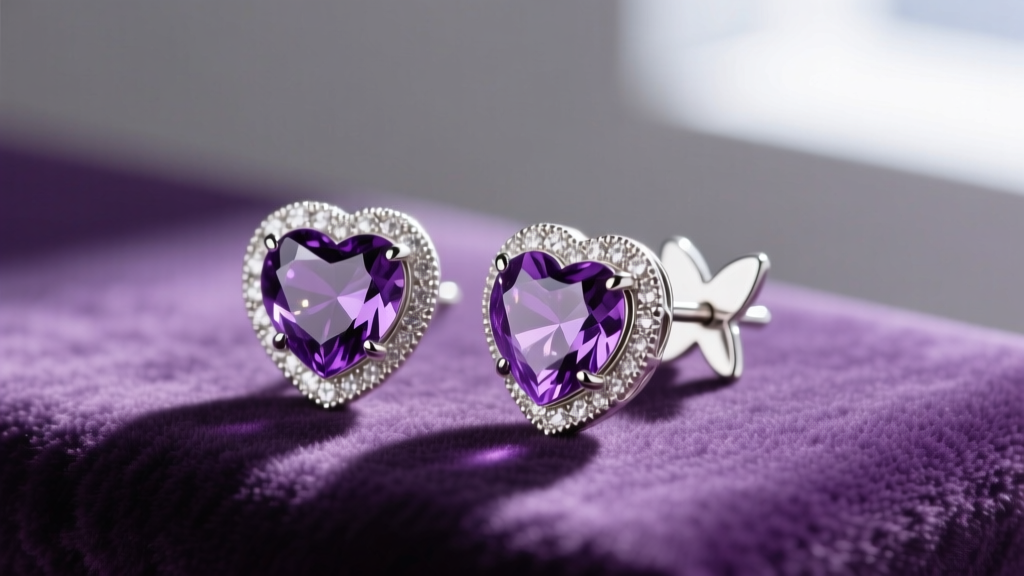
Heart-shaped earrings remain a timeless expression of personal style, but introducing a specific color requirement—purple—adds a layer of gemological complexity to the buying process. In 2026, the market for budget purple heart earrings is saturated with options ranging from $15 fashion pieces to $150 semi-fine jewelry. However, the term "budget" is often weaponized by fast-fashion brands to mask poor material integrity, leading to issues like rapid tarnishing, stone loss, and contact dermatitis.
As a buyer, your goal is not simply to find the lowest price, but to identify the highest value. Value in jewelry is the intersection of material longevity, gemstone authenticity, and structural security. This guide deconstructs the budget purple heart earring market, providing you with a rigorous framework to assess gemstone grades, metal bases, and setting mechanics before you checkout.
Gemstone Breakdown: Amethyst, Sapphire, and Enamel Value Tiers
The "purple" in your heart earrings will typically come from one of four sources: natural amethyst, lab-created purple sapphire, purple cubic zirconia (CZ), or vitreous enamel. Each carries a distinct value proposition and failure profile.
Natural Amethyst: The Sweet Spot for Budget Buyers
Amethyst (a purple variety of quartz) is the most accessible natural purple gemstone. According to the Gemological Institute of America (GIA), amethyst is abundant, which keeps prices low even for clean, well-cut stones. When shopping in the $30 to $80 range, you should expect AAA-grade amethyst. This grade features eye-clean clarity and a strong, saturated purple hue, often with subtle reddish flashes known in the trade as "Siberian" color.
Buyer Beware: Many ultra-cheap "amethyst" earrings under $20 actually use dyed purple quartz or glass. Furthermore, be cautious of stones with extreme color zoning (visible bands of light and dark purple), which indicates a lower AA grade that reputable jewelers usually reserve for larger statement pieces, not precision-cut heart studs.
Lab-Created Purple Sapphire: The Durability Upgrade
If you want a deeper, more regal purple with superior scratch resistance, lab-created purple sapphire is the ultimate value play. Sapphires rank 9 on the Mohs hardness scale (compared to amethyst at 7). While natural purple sapphires are exceptionally rare and expensive, lab-created versions offer identical chemical and physical properties for a fraction of the cost. A pair of 6mm lab-sapphire heart studs set in sterling silver typically retails between $60 and $120, offering a lifetime of wear without the risk of the stone scratching or dulling from daily friction.
Enamel and Cubic Zirconia: The Ultra-Budget Route
For under $30, you will encounter purple CZ and enamel-coated brass or silver. CZ is initially brilliant but has a high refractive index that attracts oils, causing it to look cloudy within months if not cleaned regularly. Enamel provides a vibrant, opaque purple that gemstones cannot replicate, but it is highly susceptible to chipping upon impact. If you choose enamel, ensure it is kiln-fired vitreous enamel rather than cheap cold epoxy, which will yellow and peel within a year.
Metal Bases: Avoiding the "Green Ear" Tax
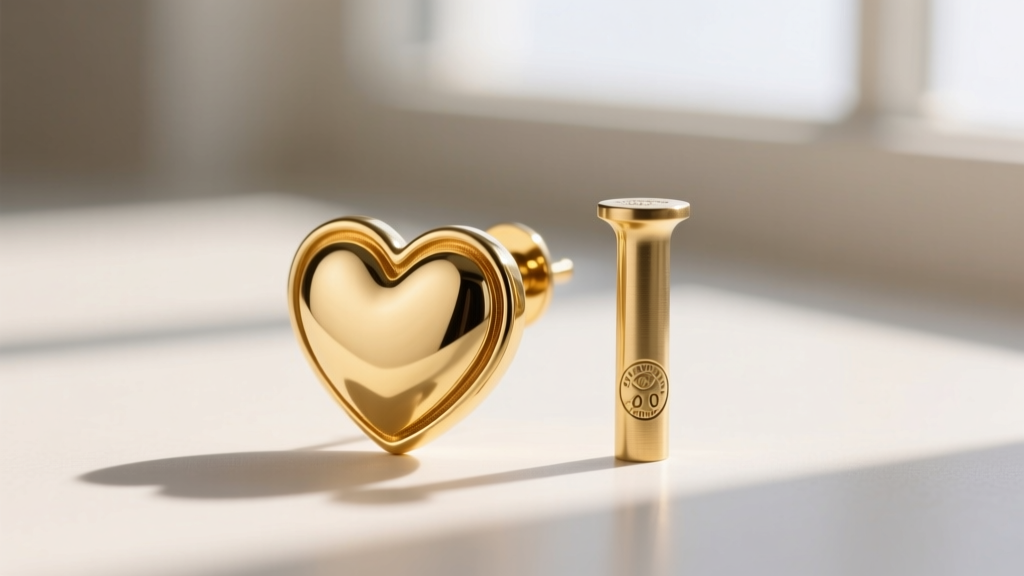
The most common point of failure in budget earrings is the metal base. The "green ear" effect is caused by the oxidation of copper or brass reacting with the acids in your skin. To maximize value, you must scrutinize the metal composition.
- 925 Sterling Silver: The gold standard for budget jewelry. It consists of 92.5% pure silver and 7.5% copper. It will tarnish over time but can be easily polished. Always look for the "925" stamp.
- Gold Vermeil (Pronounced Ver-May): The Federal Trade Commission (FTC) and industry standards dictate that true vermeil must be a sterling silver base plated with at least 2.5 microns of 10k, 14k, or 18k gold. Many budget brands sell "gold plated" earrings, which feature a microscopic 0.5-micron flash of gold over brass. This will wear off in weeks. Always verify the micron thickness and base metal before purchasing vermeil.
- Implant-Grade Titanium (ASTM F-136): If you have sensitive ears or newly pierced lobes, titanium is non-negotiable. While harder to find in intricate heart shapes, a simple titanium bezel-set amethyst heart is the highest-value purchase for hypoallergenic needs, usually priced around $40-$60.
Setting Mechanics: Protecting the Fragile Heart Cut
The heart cut is notoriously fragile. It features a deep "cleft" at the top and a sharp "point" at the bottom. In budget manufacturing, stones are often mass-set using cast prongs that do not securely grip these vulnerable areas.
Prong vs. Bezel Settings
Cheap prong settings frequently leave the bottom point of the heart exposed. If the earring is dropped or snagged on a sweater, the point will chip, ruining the stone. When evaluating budget purple heart earrings, always prioritize bezel or half-bezel settings. A bezel setting wraps a thin rim of metal entirely around the stone's girdle, protecting the fragile cleft and point. While bezel settings require slightly more labor and metal, they drastically reduce the failure rate of heart-shaped stones, making them a superior long-term value.
Gauge Thickness and Clasp Security
Standard lobe piercings accommodate 20-gauge (0.81mm) or 18-gauge (1.02mm) posts. Ultra-budget earrings often use flimsy 22-gauge wire to save on silver costs; these posts bend easily and can tear through the earlobe if snagged. Furthermore, budget earrings rely on cheap stamped "butterfly" friction backs that lose their tension over time. Pro-Tip: Purchase a pack of medical-grade silicone earring O-rings for $3. Slipping these onto the post behind the metal butterfly back provides a secondary, fail-safe lock that prevents the loss of your budget earrings.
Budget vs. Value: A Pricing & Quality Matrix
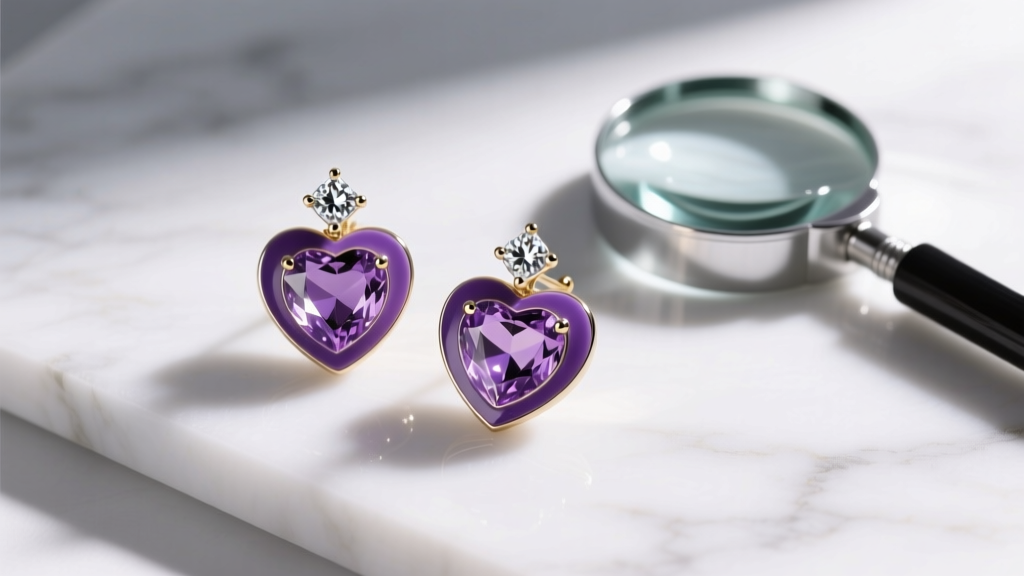
Use the following matrix to benchmark the true value of purple heart earrings you encounter online or in-store. If a product's price does not align with its material claims, it is a red flag.
| Price Tier | Expected Gemstone | Expected Metal Base | Longevity & Failure Modes |
|---|---|---|---|
| Under $25 | Glass, Dyed Quartz, or Cold Enamel | Brass, Copper, or Nickel-Silver | High risk of skin irritation, plating loss within 3 months, enamel chipping. |
| $25 - $60 | AA/AAA Natural Amethyst or Purple CZ | 925 Sterling Silver (Rhodium Plated) | Good value. Silver may tarnish over years. Prong settings may require occasional tightening. |
| $60 - $120 | AAA Amethyst or Lab-Created Purple Sapphire | 925 Silver or True Gold Vermeil (2.5+ microns) | Excellent value. Sapphire will not scratch. Vermeil will last 1-3 years with proper care. |
| $120 - $200 | Premium Amethyst or Lab Sapphire | Solid 10k/14k Gold or Heavy Vermeil | Lifetime piece. Solid gold eliminates tarnish and plating wear issues entirely. |
Final Verdict: Where to Allocate Your Budget
When hunting for budget purple heart earrings in 2026, the smartest allocation of your money is toward a bezel-set, AAA-grade natural amethyst on a 925 sterling silver base with an 18-gauge post. This specific combination typically costs between $40 and $70. It provides the authentic optical depth of a natural gemstone, the hypoallergenic safety of silver, and the structural protection required for the delicate heart shape.
Avoid the temptation of "designer" fashion brands that charge $80+ for gold-plated brass and purple glass. By focusing on metallurgical standards and gemological realities rather than brand names, you can secure a pair of purple heart earrings that offer genuine heirloom potential, even on a strict budget.


