Eagle Earrings: 2026 Avian Jewelry Trend Analysis & Styling
Explore the 2026 eagle earrings trend. Discover styling frameworks, material science, gauge requirements, and pricing for avian jewelry.

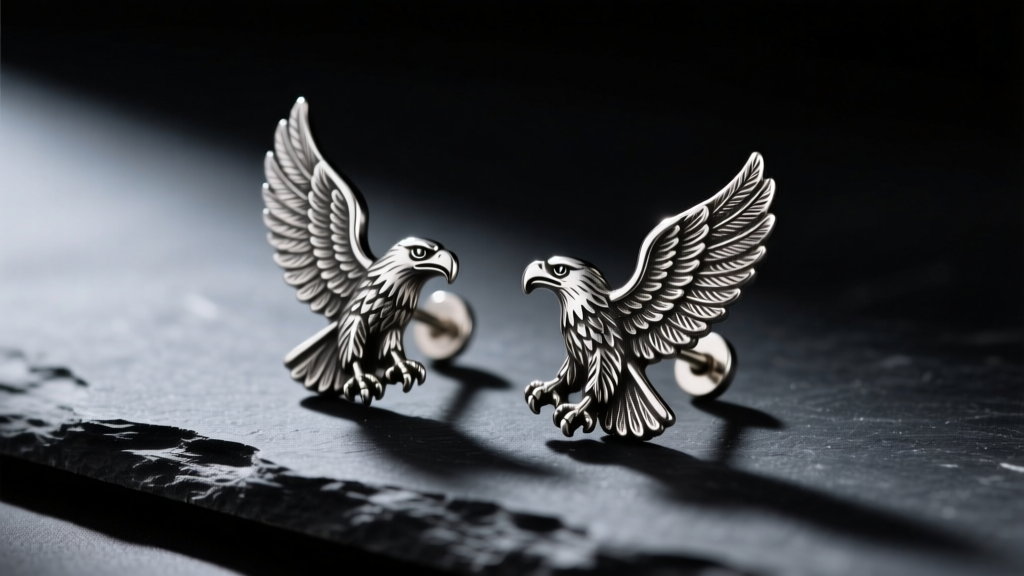
The jewelry landscape of 2026 has seen a dramatic pivot toward bold, symbolic motifs, with raptor-inspired designs taking center stage. Specifically, eagle earrings have transitioned from niche, subcultural accessories into mainstream demi-fine and fine jewelry collections. This shift is not merely aesthetic; it represents a broader cultural desire for jewelry that embodies vision, precision, and resilience. As a senior trend analyst for Jewel Style Radar, I have tracked the evolution of avian jewelry over the past decade. The current iteration of eagle earrings relies heavily on advanced micro-casting techniques, sustainable material sourcing, and biomechanical considerations for long-term wear. This comprehensive guide breaks down the anatomy, material science, and styling frameworks necessary to navigate the eagle earring trend with expertise.
The 2026 Resurgence of Avian Motifs in Fine Jewelry
Historically, bird motifs in jewelry were relegated to delicate, stylized swallows or peacocks. The modern eagle, however, demands architectural precision. According to Vogue's recent trend forecasting, the 'Apex Avian' movement is driven by a consumer base that values assertive, gender-neutral designs. Eagle earrings in 2026 are characterized by hyper-realistic feather texturing, articulated wings that move with the wearer, and the integration of mixed metals. Designers are moving away from flat, stamped silhouettes and utilizing 3D wax printing to achieve undercuts and overlapping feather barbs that were previously impossible in mass production. This technological leap has allowed demi-fine brands to offer pieces that rival heritage houses in detail and texture.
Decoding Eagle Earring Styles: Studs, Cuffs, and Dangles
When selecting eagle earrings, understanding the structural limitations of the ear is paramount. The motif's inherent complexity means that weight distribution varies wildly across different earring types. Below is a technical breakdown of the most prominent styles and their biomechanical requirements.
| Style Category | Ideal Post Gauge | Max Weight Limit | Optimal Placement | Failure Mode Risk |
|---|---|---|---|---|
| Micro Eagle Studs | 20G (0.81mm) | Under 4 grams | Standard Lobe / Upper Lobe | Low (Catching on hair) |
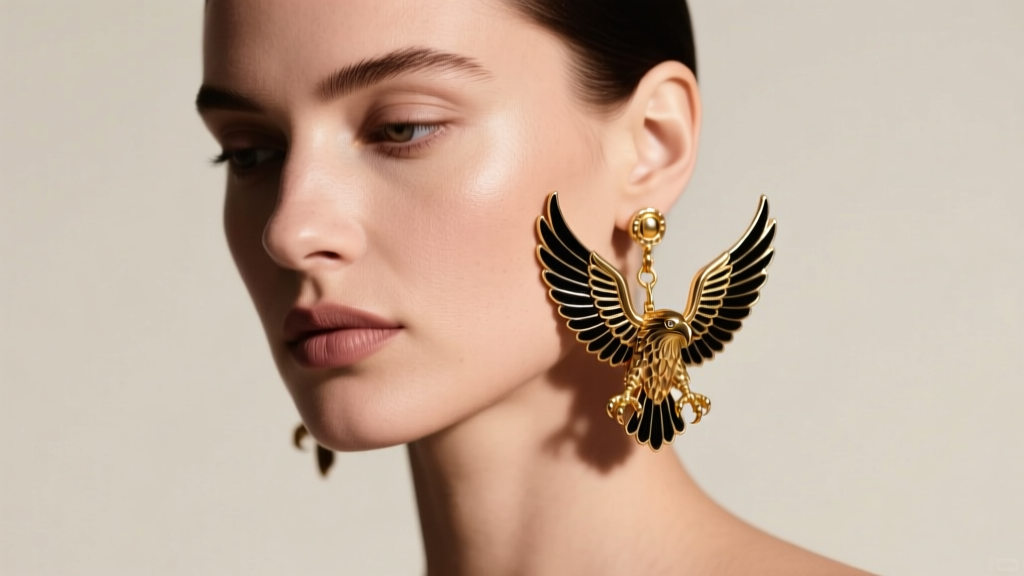
| Articulated Dangles | 18G (1.02mm) | 6 - 10 grams | Primary Lobe Piercing | High (Lobe stretching, post bending) |
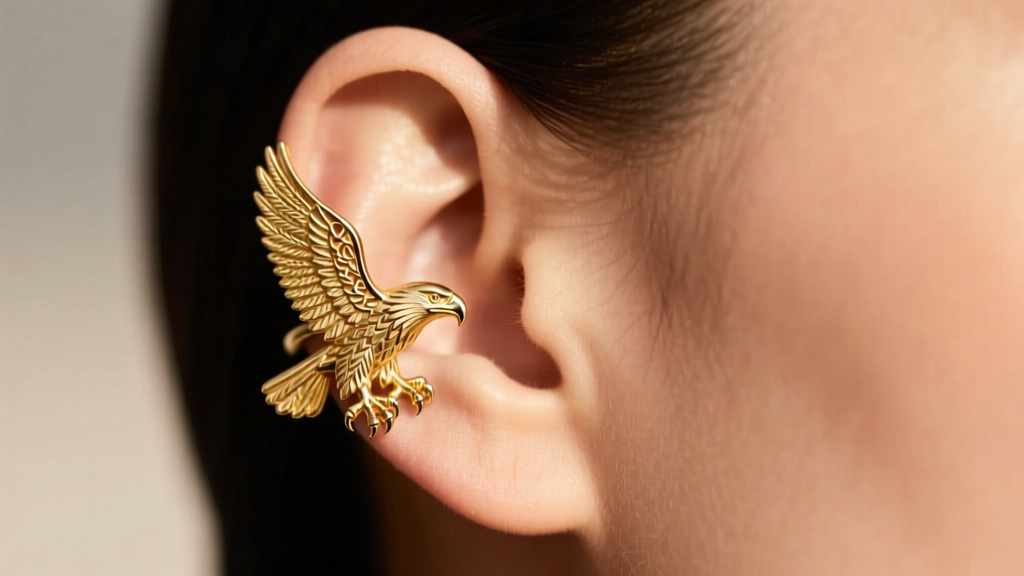
| Helix Eagle Cuffs | N/A (Tension Fit) | Under 8 grams | Upper/Mid Helix Cartilage | Medium (Slipping, cartilage pressure) |
| Ear Climbers | 20G (0.81mm) | 5 - 7 grams | Lobe to Anti-Helix Sweep | Medium (Prong snagging) |
Material Science: Crafting Realistic Feathers and Talons
The realism of an eagle earring hinges entirely on the finishing techniques applied to the base metal. In 2026, 925 sterling silver remains the dominant canvas for high-contrast eagle designs, primarily due to oxidation. Jewelers utilize a diluted liver of sulfur solution to darken the recessed areas between feather barbs, followed by a high-polish tumbling process to leave the raised ridges bright. This contrast mimics the natural shadowing of raptor plumage. According to metallurgical guidelines from Rio Grande, proper oxidation requires precise temperature control; over-oxidizing leads to a brittle, flaky patina that will inevitably rub off against the wearer's skin or hair.
For gold variations, 14k and 18k solid gold are preferred for heirloom pieces, while 18k gold vermeil (a minimum of 2.5 microns of gold over a sterling silver core) dominates the accessible luxury market. Some avant-garde designers are incorporating guilloché or cold enamel in deep indigos and matte blacks to represent the iridescent sheen of an eagle's wings. However, buyers must be warned: cold enamel on high-friction areas like ear cuffs is prone to micro-chipping within six months of daily wear.
The Biomechanics of Heavy Dangles: Preventing Lobe Stretch
The most common complaint regarding raptor dangle earrings is the 'forward droop'—a phenomenon where the weight of the eagle motif pulls the earring post downward, causing the design to face the floor rather than displaying in profile. This is both an aesthetic failure and a biomechanical hazard that can lead to permanent lobe stretching or tearing.
To combat this, expert jewelers engineer eagle dangles with a forward-weighted bail or utilize a flat, wide-backed post design that acts as a lever against the back of the earlobe. If you are purchasing or designing articulated eagle dangles exceeding 8 grams, you must upgrade the post thickness. A standard 20-gauge (0.81mm) post will bend under the kinetic energy of a swinging 10-gram earring. An 18-gauge (1.02mm) or even 16-gauge (1.29mm) post is mandatory for structural integrity. Furthermore, consumers should pair these heavier pieces with bell-shaped silicone earring backs (minimum 6mm diameter) or specialized adhesive support patches to distribute the load across a wider surface area of the lobe.
Styling Framework: Pairing Eagle Earrings with Face Shapes
Because eagle motifs are inherently aggressive and angular, styling them requires a deliberate approach to facial geometry. The goal is to create harmony, not competition, with the wearer's natural bone structure.
- Round Faces: Opt for elongated, geometric eagle profiles (side-view silhouettes) with sharp, sweeping wing dangles. The verticality of a long drop earring draws the eye downward, creating the illusion of a more defined jawline. Avoid wide, front-facing symmetrical eagle studs, which will accentuate facial width.
- Square or Angular Jaws: Soften the strong mandibular angles with eagle earrings that feature curved, articulated wings or teardrop-shaped talon motifs. Huggies with a subtle, curved eagle head wrapping around the lower lobe provide an edgy yet balancing effect.
- Oval Faces: The universal canvas. Oval faces can effortlessly carry the bold, front-facing 'shield' style eagle studs or dramatic, oversized shoulder-dusting eagle dangles. The symmetry of a front-facing raptor complements the natural balance of an oval face shape.
- Heart-Shaped Faces: Choose bottom-heavy designs. Eagle ear climbers that sweep upward toward the anti-helix can draw attention away from a narrow chin and broaden the upper facial profile beautifully.
Sourcing and Price Tiers: What to Expect in 2026
Navigating the market for eagle earrings requires a clear understanding of pricing tiers and what they dictate regarding longevity and material safety. The market is currently segmented into three distinct categories:
1. Fast Fashion & Costume ($15 - $45)
Typically cast from zinc alloys or brass with a thin flash-plating of silver or gold. The 'feather' details are often blurred due to the use of cheap rubber molds rather than silicone. Expert Verdict: Avoid for sensitive ears. The high nickel content in base alloys and the rapid degradation of the plating make these a poor investment for a motif that requires intricate detail.
2. Demi-Fine & Artisan ($80 - $280)
This is the sweet spot for the 2026 trend. Pieces are cast in solid 925 sterling silver or feature heavy gold vermeil. Artisans in this tier use the lost-wax casting method, allowing for crisp, distinct feather barbs and secure prong settings for accent stones. Expert Verdict: Highly recommended. Look for brands that specify their oxidation processes and use hypoallergenic titanium or surgical steel for the actual earring posts, even if the eagle motif is silver.
3. Fine Jewelry & Bespoke ($600 - $2,500+)
Reserved for solid 14k or 18k gold, often featuring micro-pavé diamond accents (typically VS clarity, G-H color melee stones) to represent the glint of light off the eagle's eyes or talons. According to the Gemological Institute of America (GIA), the precision required to set melee diamonds into the tight, curved channels of an eagle's wing demands master-level bench skills. Expert Verdict: An heirloom investment. Ensure the piece comes with a CAD rendering or detailed provenance regarding the diamond sourcing.
Care and Maintenance for Textured Avian Jewelry
The very textures that make eagle earrings visually striking also make them magnets for oils, lotions, and environmental debris. The deep recesses between oxidized feather barbs will trap sebum and cosmetic residues, dulling the contrast over time. Do not use ultrasonic cleaners on oxidized silver eagle earrings; the high-frequency vibrations can strip the liver of sulfur patina right out of the grooves, leaving the piece flat and uniformly gray. Instead, use a soft, dry microfiber cloth for daily buffing. For deeper cleaning, use a baby-soft toothbrush with a single drop of mild, phosphate-free dish soap and lukewarm water, gently brushing in the direction of the feather grain. Dry immediately with compressed air or a lint-free cloth to prevent water spots from forming in the talon crevices. By respecting the material science and structural demands of these pieces, your eagle earrings will remain a powerful, enduring staple in your 2026 jewelry rotation.


