Troubleshooting the Earring of the Solstice: Weight & Tarnish Fixes
Solve common issues with the earring of the solstice. Learn expert fixes for lobe stretching, mixed-metal tarnishing, and crystal clouding.

The Allure and the Agony of Celestial Statement Pieces
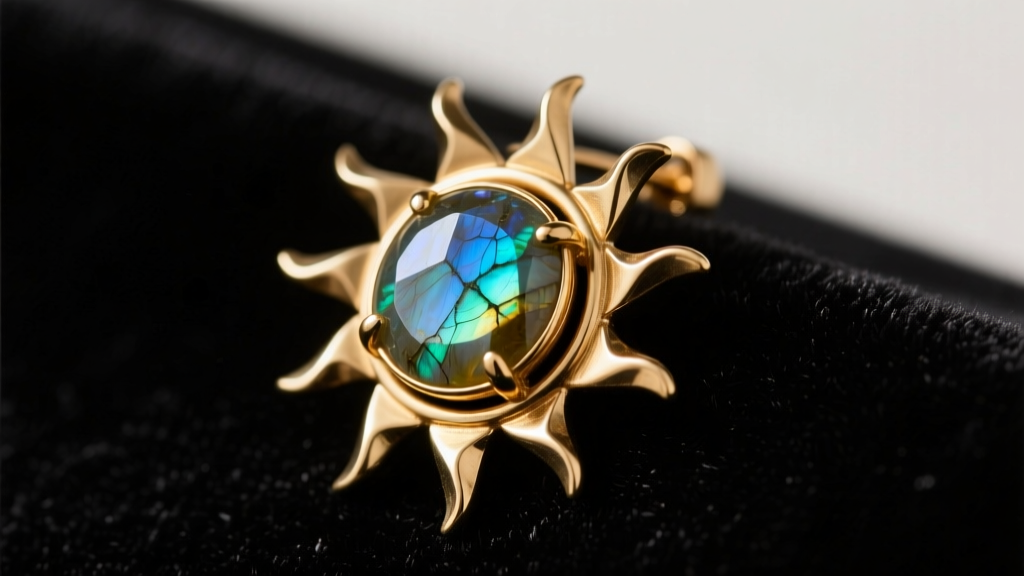
The earring of the solstice has become a hallmark of artisan and fantasy-inspired jewelry. Characterized by intricate celestial motifs—think sunburst halos, crescent moons, and raw, uncut feldspar gemstones like labradorite and moonstone—these pieces are visually stunning. However, their complex construction often leads to a unique set of physical and chemical problems for the wearer. Because they frequently combine heavy mixed metals and porous raw crystals, standard jewelry care routines can actually destroy them. Furthermore, the sheer weight of a fully realized solstice design can wreak havoc on standard earlobe piercings.
If you have invested in an earring of the solstice and are dealing with lobe sagging, mysterious green skin stains, or cloudy gemstones, you are not alone. This comprehensive troubleshooting guide breaks down the exact metallurgical and structural failures common to these pieces and provides actionable, expert-level solutions to restore and protect your jewelry.
Problem 1: Lobe Sagging and the "Cheese Cutter" Effect
The most immediate complaint regarding the earring of the solstice is its weight. A standard, comfortable stud earring weighs between 2 and 5 grams. A fully crafted solstice drop, featuring solid brass sun rays and a thick sterling silver moon base, can easily weigh between 18 and 28 grams. When this weight is suspended from a standard 20-gauge (0.81mm) wire, it creates immense localized pressure on the fistula (the piercing hole).
The Physics of Solstice Weight
This phenomenon is known in the body modification community as the "cheese cutter effect." The downward force of a 25-gram earring concentrated on a 0.81mm wire creates enough pressure to slowly slice through the earlobe tissue over time, leading to irreversible stretching, micro-tears, and eventual lobe splitting. The tissue becomes inflamed, and the piercing migrates downward.
Support Hacks: Ear Chains and Silicone Stabilizers
To troubleshoot this without giving up your favorite statement piece, you must redistribute the physical load. Here are the most effective methods:
- Upsize the Wire Gauge: Take your earring to a professional jeweler and ask them to swap the 20-gauge French hook for an 18-gauge (1.02mm) or 16-gauge (1.29mm) sterling silver leverback. The thicker wire drastically reduces the pressure per square millimeter on your lobe.
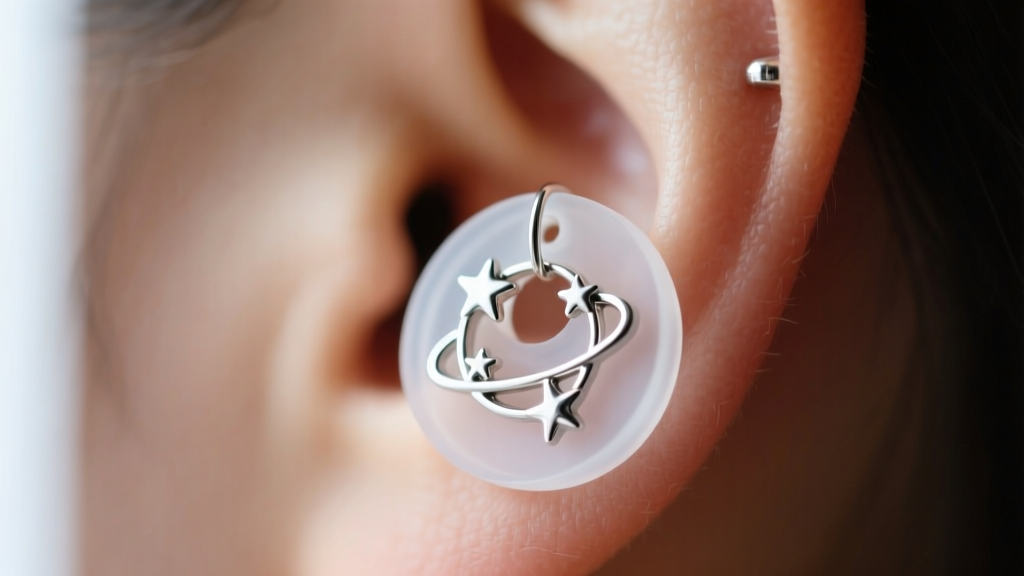
- Silicone Support Discs: Products like Lobe Wonder patches or thick silicone O-rings (often sold as earring stabilizers) sit flush against the back of the earlobe. They increase the surface area bearing the weight, preventing the wire from digging into the tissue.
- Cartilage-to-Lobe Ear Chains: For the heaviest solstice designs (25g+), attach a delicate gold or silver ear chain. This connects the heavy lobe earring to a secondary cartilage piercing (like a helix or tragus), transferring up to 60% of the weight off the soft lobe tissue and onto the rigid cartilage.
Problem 2: Galvanic Corrosion in Mixed-Metal Designs
The earring of the solstice relies heavily on mixed metals to create contrast—typically pairing bright or oxidized sterling silver (the moon) with raw brass or copper (the sun). While beautiful, this creates a perfect storm for galvanic corrosion when exposed to the electrolytes in human sweat.
In a galvanic cell, when two dissimilar metals touch in the presence of an electrolyte (sweat, humidity, or perfume), the more anodic metal (brass/copper) rapidly degrades, while the cathodic metal (silver) remains protected. This results in the brass components pitting, turning a powdery green, and leaving stubborn stains on your skin and clothing.
| Metal Pairing | Anode (Corrodes) | Cathode (Protected) | Corrosion Risk Level |
|---|---|---|---|
| Brass & Sterling Silver | Brass | Sterling Silver | High (Accelerated by sweat) |
| Copper & Sterling Silver | Copper | Sterling Silver | Very High |
| 14k Gold & Sterling Silver | Sterling Silver | 14k Gold | Low to Moderate |
Safe Cleaning Protocols for Oxidized Silver and Brass
Never use liquid silver dips (like Tarn-X) on an earring of the solstice. These harsh thiourea-based chemicals will strip the intentional oxidation (the dark patina in the crevices of the moon design) and can cause raw labradorite to fracture due to chemical shock and rapid temperature changes. According to the Jewelers of America, mixed-metal pieces require isolated, mechanical cleaning.
- For the Silver: Use a dry, treated silver polishing cloth (such as a Sunshine Cloth). Gently buff only the raised high-polish areas, avoiding the darkened recesses.
- For the Brass: Use a cotton swab lightly dampened with white vinegar and salt, apply it strictly to the brass sunburst elements, and immediately neutralize it with a baking soda paste. Rinse with distilled water and dry completely to halt the chemical reaction.
- The Barrier Method: To prevent future galvanic corrosion and skin staining, apply a micro-thin layer of Renaissance Wax or a jewelry-specific clear nano-coating to the brass components. This seals the metal from sweat and oxygen without altering its color.
Problem 3: Labradorite and Moonstone Clouding
The centerpiece of most solstice earrings is a raw or lightly polished feldspar gemstone, prized for its labradorescence (flashes of blue and green) or adularescence (a milky, floating light effect). These stones sit at a 6 to 6.5 on the Mohs hardness scale, making them highly susceptible to micro-scratches and chemical clouding.
When worn against the neck and jawline, these porous stones absorb sebum (skin oils), lotions, and hairspray. Over time, this creates a cloudy, opaque film that completely masks the stone's internal light play. Many owners mistakenly believe their stone has "lost its magic," when in reality, it is simply suffocating under a layer of cosmetic buildup.
The Gemological Institute of America (GIA) Cleaning Standard
The Gemological Institute of America (GIA) strictly advises against ultrasonic and steam cleaning for feldspar gems. The high-frequency vibrations can exploit natural cleavage planes within the raw stone, causing it to split or craze internally. To restore the flash of your solstice earring:
- Mix a few drops of mild, lotion-free dish soap (like original Dawn) into a bowl of lukewarm distilled water.
- Submerge only the gemstone portion of the earring for 3 to 5 minutes to loosen the sebum.
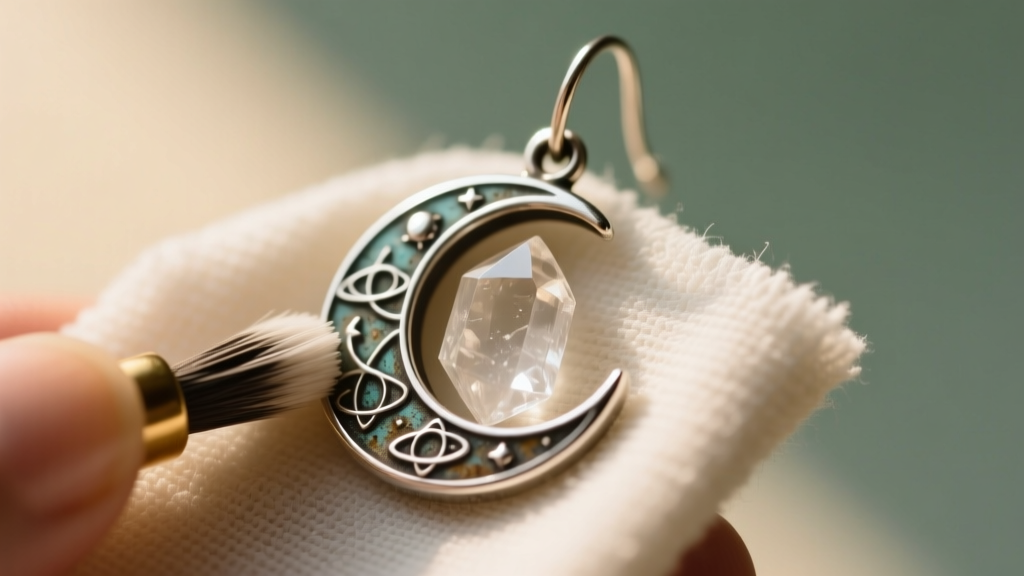
- Use an extra-soft baby toothbrush to gently sweep the crevices where the stone meets the metal bezel.
- Rinse under a gentle stream of lukewarm water and pat dry with a lint-free microfiber cloth. Never air dry, as hard water spots will permanently etch the surface of a raw stone.
Upgrading the Hardware: Swapping Hooks for Leverbacks
A final, critical troubleshooting step for the earring of the solstice involves the suspension hardware. Most artisan makers default to standard French wire hooks to keep costs down and maintain a delicate aesthetic. However, French hooks are notoriously insecure for heavy, front-loaded designs. The weight of the sunburst motif pulls the earring forward, causing the hook to slide upward and eventually slip out of the fistula entirely, leading to lost jewelry.
The Fix: Request a hardware swap to a locking leverback or a saddleback ear wire. A leverback features a hinged closure that snaps securely into a catch on the front of the wire, creating a closed loop that physically cannot slip out of the ear, regardless of how heavy the celestial dangle is. Ensure the leverback is crafted from implant-grade titanium or nickel-free sterling silver to prevent contact dermatitis, which is common when heavy earrings constantly shift and irritate the piercing tract.
Final Thoughts on Preserving Your Artisan Jewelry
The earring of the solstice is more than just an accessory; it is a wearable piece of art that requires specialized maintenance. By understanding the physics of earlobe pressure, the chemistry of mixed-metal galvanic corrosion, and the gemological needs of raw feldspar, you can troubleshoot these common failures and ensure your celestial jewelry remains as radiant as the day you acquired it. Always store your mixed-metal pieces in anti-tarnish ziplock bags with silica gel packets to control ambient humidity, and your solstice earrings will continue to shine for years to come.


