How Long Does It Take for Earring Holes to Close? A Stylist's Guide
Discover how long it takes for earring holes to close based on piercing age and placement. Expert stylist tips for lobe and cartilage care.

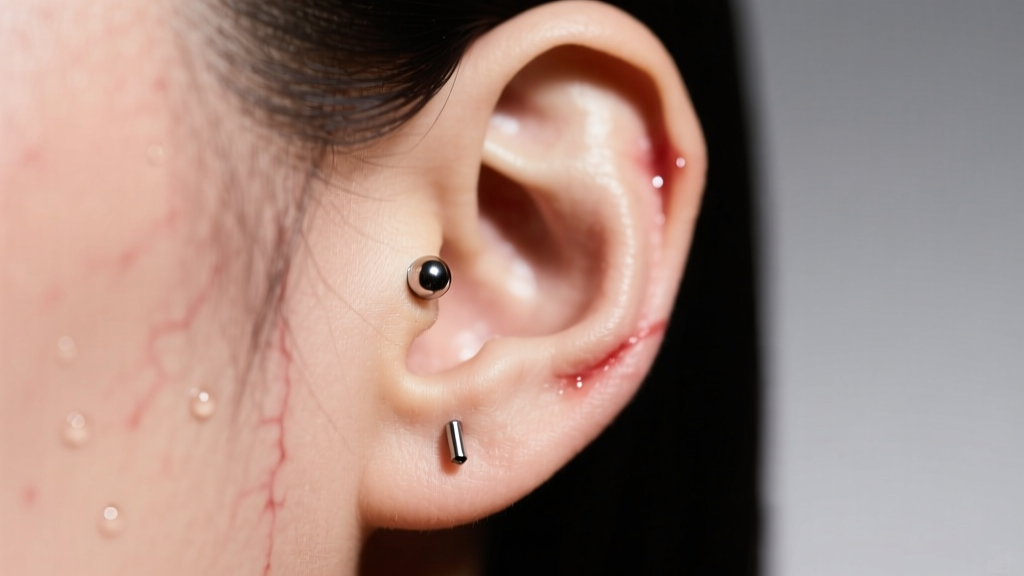
The Anxiety of the Empty Ear: Understanding Piercing Closure
For jewelry enthusiasts and stylists alike, few things induce panic quite like removing a favorite piece of cartilage jewelry, only to feel the hole tightening moments later. Whether you are rotating your curated ear stack, swapping out heavy statement dangles for lightweight huggies, or simply taking a break from wearing earrings, the biology of your piercings dictates your styling freedom. The most common question we field at the studio is: how long does it take for earring holes to close?
The answer is not a simple number. It is a complex interplay of tissue age, anatomical placement, gauge thickness, and individual healing biology. As the trend of multi-piercing "curated ears" dominates 2020s fashion, understanding the mechanics of the fistula (the healed tissue tube) is essential for maintaining your aesthetic without sacrificing your anatomical health.
The Biology of the Fistula: Why Piercings Shrink
When you get pierced, the body treats the jewelry as a foreign object and forms a protective tube of tissue around it, known as a fistula. The Association of Professional Piercers (APP) notes that this tissue is essentially a specialized mucosal lining. When the jewelry is removed, the body's natural wound-healing response triggers the fistula to contract.
Unlike a standard cut that scabs over, a piercing closes from the inside out. The speed of this contraction depends heavily on the vascularity of the tissue. Earlobes, rich in blood vessels and composed of soft adipose and connective tissue, behave very differently from the avascular, dense cartilage of the helix or conch.
Material Matters During the Healing Phase
If you are intentionally leaving a hole empty for a brief period (e.g., during an MRI or a sports game), the material of your placeholder jewelry dictates whether the fistula will inflame and shrink. Always use ASTM F-136 implant-grade titanium or borosilicate glass retainers. Avoid surgical steel, which contains nickel and can cause micro-swelling that mimics the early stages of closure.
Timeline Breakdown: Closure Rates by Piercing Age
To provide actionable styling advice, we must look at the data. Below is a clinical estimation of closure timelines based on the maturity of the fistula. Keep in mind that "closing" in this context means shrinking to the point where standard jewelry cannot be reinserted without a professional taper.
| Piercing Type | Age of Piercing | Estimated Time to Shrink/Closed | Stylist Re-insertion Strategy |
|---|---|---|---|
| Earlobe | Under 6 weeks | 24 to 48 hours | Do not remove; use a taper if forced. |
| Earlobe | 6 months to 1 year | 1 to 2 weeks | Warm compress and 20g taper. |
| Earlobe | Over 5 years | Months (rarely fully closes) | Usually accepts 18g jewelry easily. |
| Cartilage (Helix/Conch) | Under 3 months | 12 to 24 hours | Immediate professional piercer assist. |
| Cartilage | 1 year to 3 years | 3 to 7 days | Glass retainer or 16g taper. |
| Cartilage | Over 5 years | Weeks to months | Taper insertion with jojoba oil. |
Cartilage vs. Lobe: The Structural Styling Differences
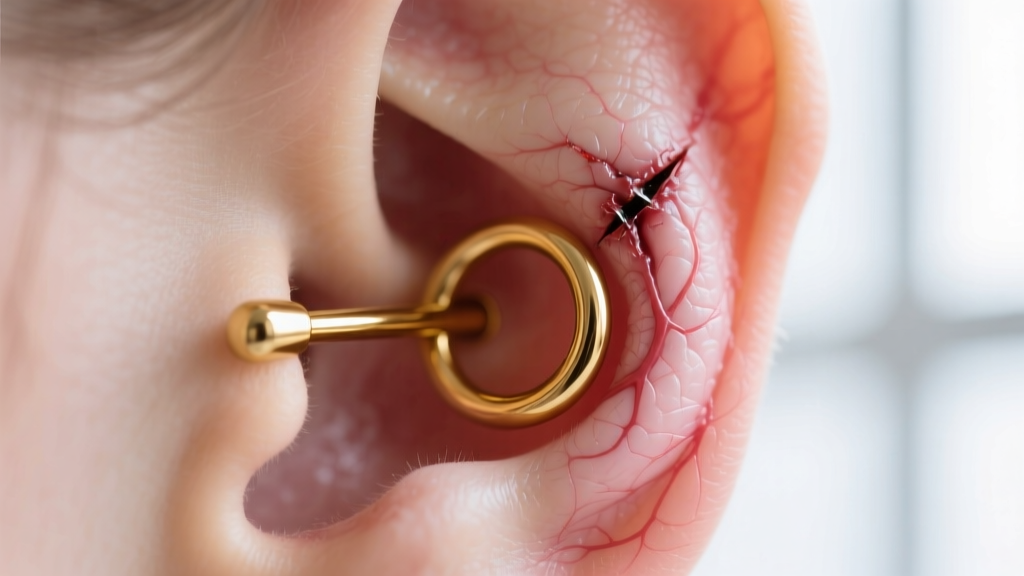
When planning a jewelry rotation, you must respect the anatomical differences between lobes and cartilage. The American Academy of Dermatology (AAD) emphasizes that cartilage lacks its own direct blood supply, relying on the perichondrium (the connective tissue surrounding it) for nutrients. This means cartilage heals slower, swells more violently when irritated, and its fistulas are far more rigid.
Gauge Size and Closure Speed
The thickness of your jewelry directly impacts how quickly a hole becomes unusable. Standard lobe piercings are often done at 20-gauge (0.8mm) or 18-gauge (1.0mm). Because the tissue channel is so narrow, a 20g lobe hole can shrink to an unusable size in a matter of days if left empty. Conversely, modern curated ear projects typically utilize 16-gauge (1.2mm) or 14-gauge (1.6mm) jewelry for cartilage. The wider the fistula, the longer it takes for the walls to touch and fuse shut. However, a 14g conch piercing will still develop a tough, fibrous ring of scar tissue at the opening within 48 hours of removal, making blunt-force reinsertion painful and damaging.
Trend Analysis: The "Curated Ear" and the Fear of Closure
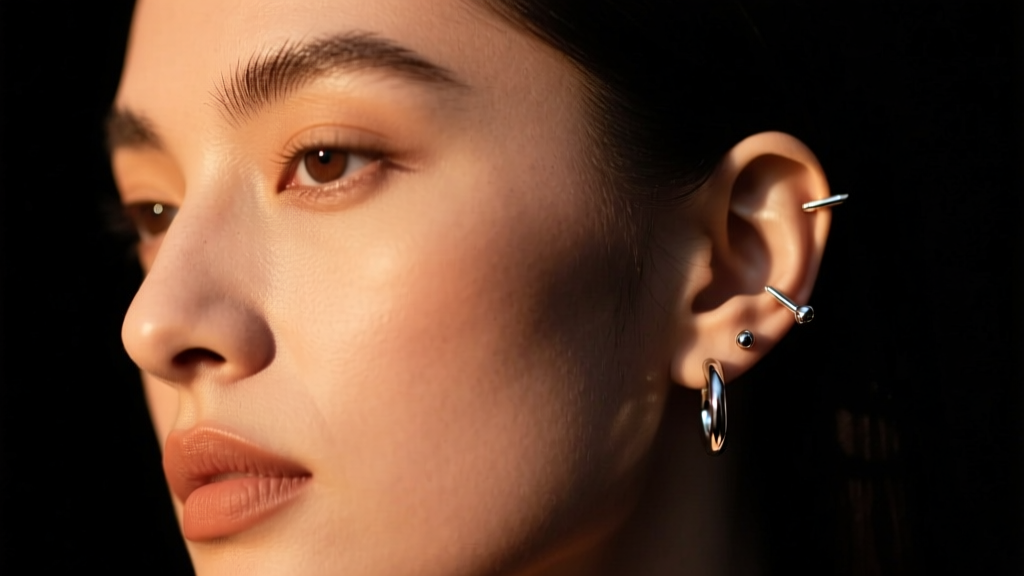
The modern "curated ear" trend—characterized by a constellation of carefully planned helix, flat, tragus, and lobe piercings—has fundamentally changed how stylists approach jewelry design. In the past, wearing heavy chandelier earrings required taking out smaller studs, risking the closure of secondary holes. Today, the fear of losing a hard-earned flat piercing drives the demand for specific jewelry mechanics.
"The rise of threadless jewelry and continuous huggies isn't just an aesthetic choice; it is a structural necessity for clients who want to change their look without risking the closure of their mature cartilage fistulas." - Lead Stylist, JewelStyleRadar
Design Solutions for High-Maintenance Piercings
- Threadless (Press-Fit) Ends: These allow stylists to swap out the decorative front (e.g., changing a simple opal cabochon to an intricate gold flower) without ever removing the titanium post from the ear. This completely eliminates the risk of the hole closing during a style change.
- Clicker Hoops and Huggies: Unlike traditional captive bead rings that require pliers and often stretch or irritate the fistula upon removal, clickers feature a seamless hinge. They keep the 16g or 14g channel fully occupied while offering a sleek, continuous aesthetic.
- Ear Cuffs as Alternatives: For clients who refuse to commit to a new cartilage piercing but want the curated look, high-tension 925 sterling silver or gold-plated ear cuffs provide the illusion of a helix or mid-ear piercing without the biological maintenance.
What to Do If Your Hole Starts to Shrink
If you left your favorite 18k gold hoops out for a week and now the hole feels tight, do not force the jewelry. Forcing blunt jewelry through a shrinking fistula causes micro-tears, leading to hypertrophic scarring (the dreaded "piercing bump").
The Professional Re-insertion Protocol
- Apply a Warm Compress: Soak a clean gauze pad in warm sterile saline and hold it to the ear for 3 minutes. This increases local blood flow and softens the tissue.
- Lubricate: Apply a drop of pure, cold-pressed jojoba oil or sterile water-based lubricant to the piercing opening. Avoid petroleum-based products, which can trap bacteria inside the fistula.
- Use an Insertion Taper: A professional steel or titanium taper features a gradual 10-degree slope. Gently guide the narrow tip through the shrunken hole, slowly stretching the tissue back to its original 16g or 18g diameter.
- Follow with Jewelry: Immediately follow the taper with an internally threaded or threadless titanium post. Never use butterfly-back friction posts for re-stretching, as the blunt post and the clutch will tear the delicate newly stretched tissue.
Final Styling Thoughts
Understanding how long it takes for earring holes to close empowers you to build a more resilient, versatile jewelry collection. By investing in high-quality, biocompatible base metals and utilizing threadless mechanics, you can rotate your styles daily while keeping your meticulously planned piercings healthy and open. Treat your fistulas with the same care you give to your fine jewelry, and your curated ear will remain a permanent canvas for your evolving style.


