Material Guide: Choosing the Best Flower Amethyst Earrings
Discover how metal types and amethyst grades affect durability. Our material guide helps you choose the perfect flower amethyst earrings.

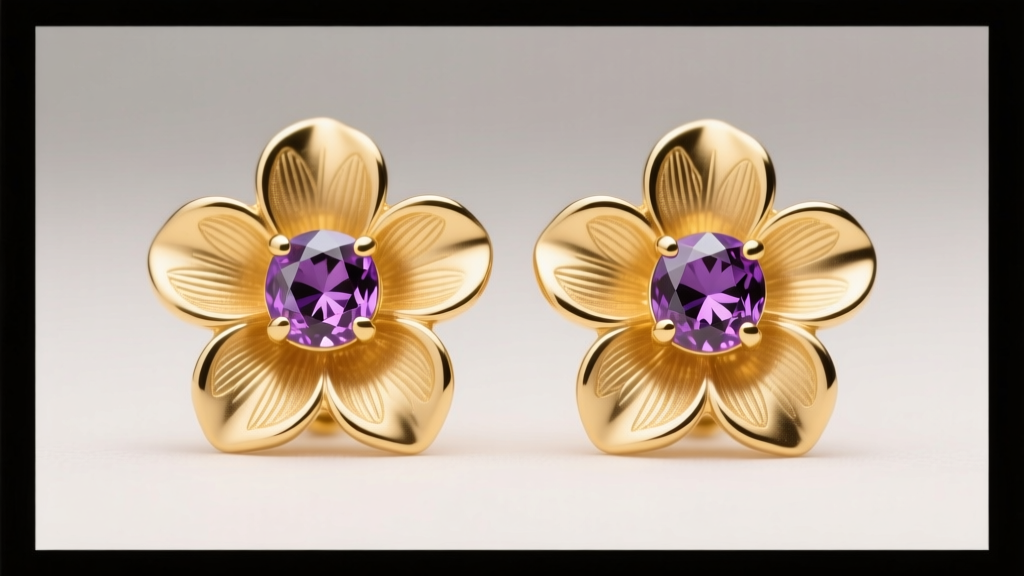
Floral motifs in jewelry have persisted for centuries, but when it comes to combining organic designs with specific gemstones, structural integrity and material science become paramount. Flower amethyst earrings are a staple in both vintage and contemporary collections, yet the longevity of these pieces depends entirely on the metallurgical choices made by the jeweler and the gemological properties of the stone itself. This comprehensive guide breaks down the physical properties, metal pairings, and structural considerations you need to evaluate before investing in floral amethyst ear jewelry.
The Gemological Profile of Amethyst
To understand how to properly set and wear amethyst, we must first look at its physical properties. Amethyst is the purple variety of macrocrystalline quartz, deriving its color from iron impurities (Fe3+) and natural irradiation. According to the Gemological Institute of America (GIA), amethyst registers a 7 on the Mohs scale of mineral hardness. While a 7 is considered durable enough for daily wear, it is crucial to remember that the Mohs scale is relative, not linear. Quartz is significantly softer than corundum (sapphire/ruby) or diamond.
Furthermore, amethyst lacks cleavage, meaning it does not split along defined crystal planes. However, it exhibits a conchoidal fracture, making it brittle and susceptible to chipping if struck against a hard surface at an unfortunate angle. This brittleness directly influences the type of metal and setting required to protect the "petals" and "centers" of floral earring designs.
Metallurgical Showdown: Which Metal Secures the Petals?
The metal used to cast the floral framework of your earrings dictates not only the aesthetic but the tensile strength of the prongs and the tarnish resistance of the piece. Below is a comparative analysis of the most common metals used in floral amethyst jewelry.
| Metal Type | Composition | Hardness (Vickers) | Tarnish Resistance | Avg. Price Range (Per Pair) |
|---|---|---|---|---|
| 925 Sterling Silver | 92.5% Silver, 7.5% Copper | 65 - 75 HV | Low (Requires Rhodium) | $45 - $150 |
| 14k Yellow Gold | 58.5% Gold, Alloy Mix | 135 - 150 HV | High | $250 - $600 |
| 18k Rose Gold | 75% Gold, High Copper | 125 - 140 HV | High | $400 - $900 |
| Gold Vermeil | Sterling Base, 2.5µm+ Gold | 65 - 75 HV (Base) | Medium (Wears over time) | $80 - $200 |
925 Sterling Silver and Rhodium Plating
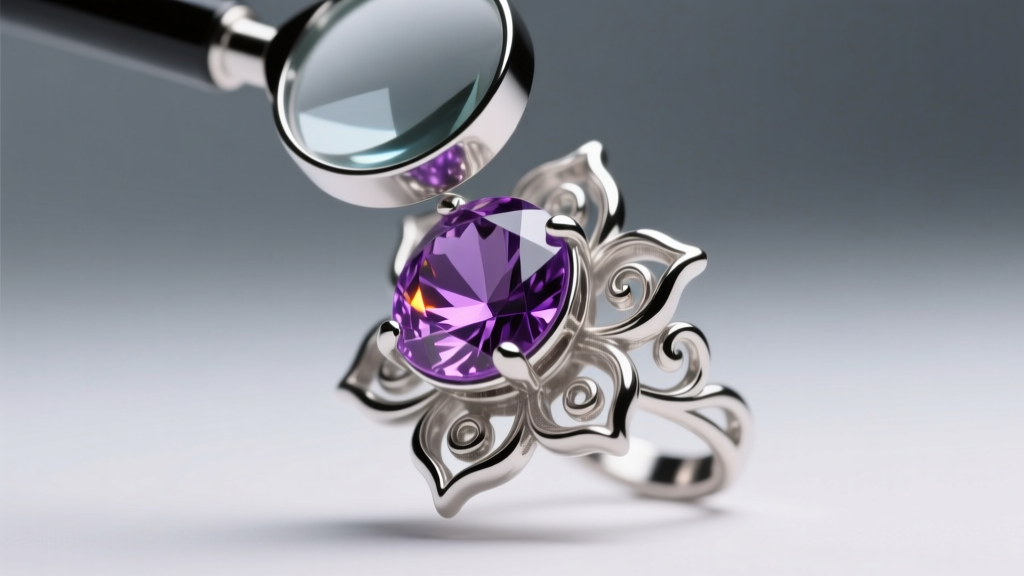
Sterling silver is the most accessible metal for intricate floral castings due to its excellent fluidity when molten. However, the 7.5% copper content makes it highly susceptible to oxidation (tarnish). To combat this, high-quality silver flower amethyst earrings are plated with rhodium, a platinum-group metal that provides a brilliant, tarnish-resistant shield. When purchasing silver floral studs, always verify that the piece has been rhodium-plated; otherwise, the sulfur in the air and the natural acids in your skin will quickly blacken the recessed areas of the flower petals.
14k vs. 18k Gold Alloys
Gold is alloyed to increase its hardness. Pure 24k gold (approx. 25 HV) is far too soft to hold the prongs of a floral setting securely. 14k gold, containing 58.5% pure gold, offers an optimal balance of richness and structural rigidity, making it the premium standard for securing faceted amethyst centers. 18k gold, while richer in color and hypoallergenic, is slightly softer. If you are buying 18k gold flower amethyst earrings with delicate, elongated petals, ensure the jeweler has work-hardened the metal during the finishing process to prevent the petals from bending during daily wear.
Stone Selection: Natural vs. Hydrothermal
The floral design relies heavily on the visual weight and color saturation of the amethyst. When evaluating the stones, you will encounter three primary categories:
- Natural Uruguayan: Known for deep, saturated purple hues with minimal color zoning. Ideal for the central "pistil" of a flower design.
- Natural Zambian: Often exhibits a slightly bluish undertone and higher clarity, making it excellent for faceted petal accents.
- Hydrothermal Lab-Created: Grown in a controlled environment that mimics the earth's crust. These stones are chemically identical to natural amethyst but are completely free of inclusions and color zoning. They are an ethical, budget-friendly choice for large, statement floral drops.
Always ask the jeweler for disclosure regarding heat treatment. While amethyst is rarely heated to improve color (unlike sapphires), some lower-grade stones are heated to alter their hue. The Federal Trade Commission (FTC) mandates that any treatment affecting the value or durability of a gemstone must be disclosed to the consumer.
Structural Integrity: Prong vs. Bezel Settings
The way the amethyst is secured within the floral metalwork dictates both its safety and its brilliance.
The Case for Prong Settings
Prong settings (typically 4 or 6 prongs for round stones) elevate the amethyst, allowing light to enter from the pavilion and crown. This maximizes the stone's vitreous luster and highlights the red and blue flashes characteristic of premium "Siberian" grade amethyst. However, prongs can snag on clothing, and if the metal is too soft (like unhardened sterling silver), a prong can pull back, resulting in a lost stone.
The Case for Bezel Settings
A bezel setting involves wrapping a thin rim of metal entirely around the girdle of the amethyst. In floral designs, the bezel can be shaped to mimic the smooth edge of a flower's center. While a bezel blocks some light entry, reducing brilliance slightly, it offers superior protection against the conchoidal fracturing inherent to quartz. For active lifestyles or cartilage piercings where the earring might be bumped, bezel-set flower amethyst earrings are the superior choice.
Earring Post Gauges and Weight Distribution
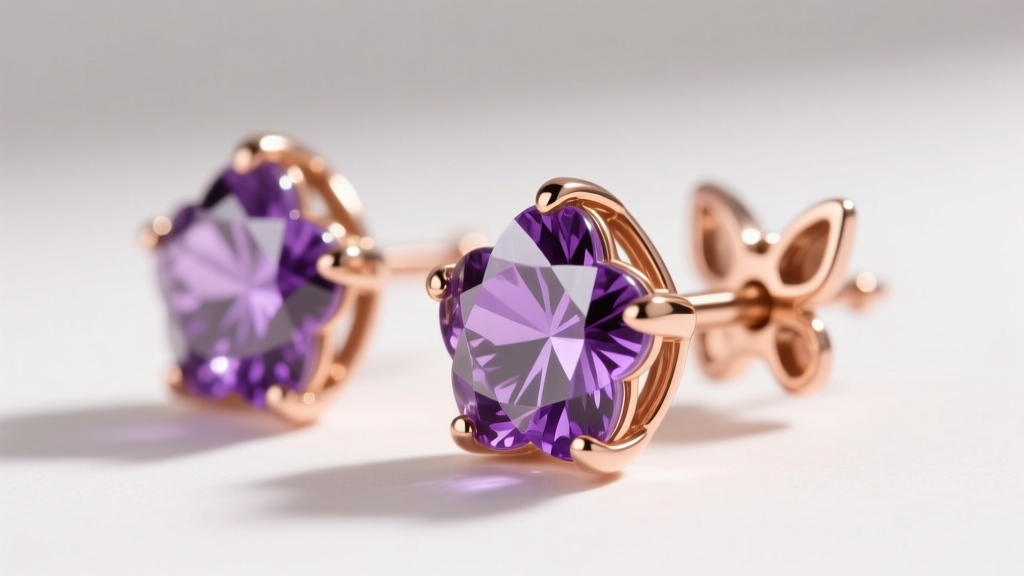
An often-overlooked aspect of material properties is the thickness of the earring post, measured in gauges. The structural weight of a multi-stone floral dangle requires a thicker post than a simple stud.
Expert Rule of Thumb: Standard lobe piercings are typically 20-gauge (0.81mm). However, if your flower amethyst earrings feature heavy metal petals or multiple drop stones, the post should be upgraded to 18-gauge (1.02mm) or even 16-gauge (1.29mm) to prevent the metal from bending and to distribute the weight evenly, preventing earlobe tearing.
Furthermore, the backing mechanism must match the metal's strength. Sterling silver butterfly backs often lose their tension over time due to the metal's softness. Opting for 14k gold backs or screw-back mechanisms ensures the heavier floral drops remain securely on the ear.
Maintenance and Thermal Sensitivity
Caring for your earrings requires an understanding of amethyst's thermal limits. The iron impurities that give amethyst its purple color are highly sensitive to heat. Exposure to temperatures exceeding 300°C can cause the stone to lose its color or turn yellow (effectively becoming citrine).
Because of this thermal sensitivity, never use a steam cleaner on your flower amethyst earrings. While ultrasonic cleaners are generally safe for unfractured amethyst, they can shake loose the adhesives used in some floral cluster settings. The safest and most effective cleaning method is a simple soak in warm water with a few drops of mild, phosphate-free dish soap, gently agitated with a soft-bristled baby toothbrush to remove sebum and lotion buildup from beneath the metal petals.
Final Verdict: Matching Metal to Lifestyle
Choosing the right flower amethyst earrings is an exercise in balancing aesthetics with material science. For heirloom-quality pieces meant to be worn daily, 14k gold with a bezel setting offers the ultimate protection for the Mohs-7 gemstone. For budget-conscious buyers who prioritize brilliance and intricate detailing, rhodium-plated 925 sterling silver with secure prong settings remains a timeless and beautiful option. By understanding the metallurgical and gemological properties at play, you can ensure your floral jewelry blooms for a lifetime.


