Gold Opal Earrings: 2026 Style and Trend Analysis
Discover 2026 trends for gold opal earrings. Explore solid, doublet, and triplet opals in 14k and 18k gold, plus expert styling and care guides.

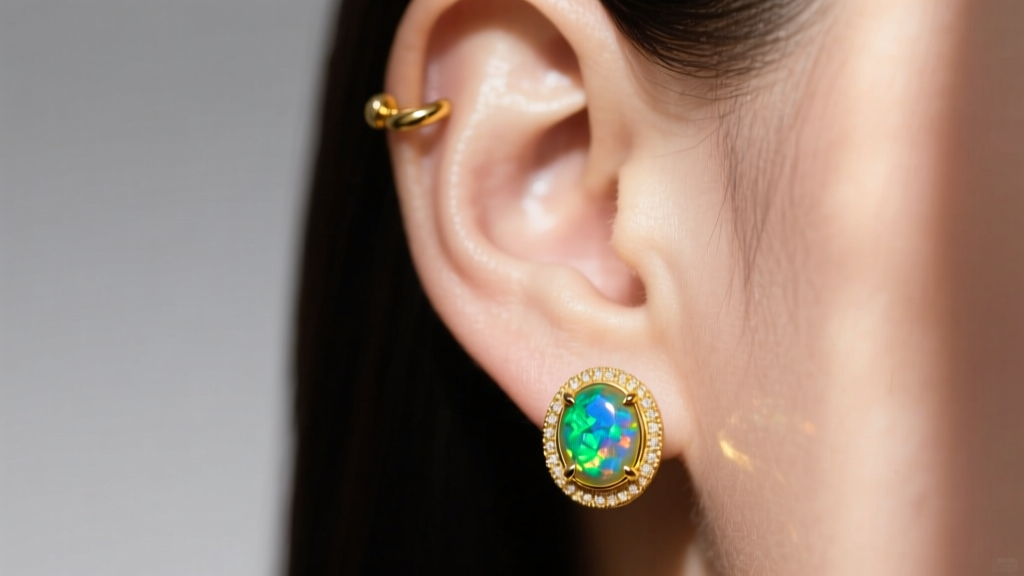
The 2026 Resurgence of Ethereal Aesthetics
As we navigate the jewelry landscape of 2026, the industry has decisively pivoted from the loud, logo-heavy maximalism of the early 2020s toward a trend forecasters are calling "quiet mysticism." At the forefront of this movement are gold opal earrings. No longer relegated to vintage estate sales or bohemian festival wear, opals have been reclaimed by high-end contemporary designers who pair their iridescent play-of-color with architectural gold settings. The modern consumer demands pieces that feel deeply personal and slightly otherworldly, making the unique optical phenomena of opals—specifically when set in warm yellow and rose gold—the ultimate statement of refined individuality. This comprehensive guide breaks down the material science, structural integrity, and styling frameworks you need to master this year's most captivating earring trend.
Material Deep Dive: Solid vs. Doublet vs. Triplet Opals
Understanding the structural composition of the opal in your earrings is critical for both longevity and pricing. According to the Gemological Institute of America (GIA), opals are amorphous silica, meaning they lack a crystalline structure and are inherently more fragile than diamonds or sapphires. When shopping for gold opal earrings, you will encounter three primary categories:
| Opal Type | Composition | Durability & Mohs | Price Range (Studs) | Best Gold Setting |
|---|---|---|---|---|
| Solid (Australian) | 100% natural opal | 5.5 - 6.5 (Stable) | $400 - $1,500+ | Bezel or Semi-Bezel |
| Solid (Ethiopian) | 100% natural (Hydrophane) | 5.5 - 6.5 (Porous) | $150 - $600 | Prong (with caveats) |
| Doublet | Opal slice + black backing | Moderate (Water sensitive) | $80 - $250 | Bezel (Sealed) |
| Triplet | Doublet + clear quartz dome | High (Dome protects) | $50 - $150 | Prong or Bezel |
The most crucial distinction for 2026 buyers is the difference between Australian sedimentary opals and Ethiopian hydrophane opals. Ethiopian Welo opals are breathtakingly vibrant but are hydrophane—they absorb water. If you wear Ethiopian opal earrings in the shower or high humidity, they can temporarily lose their color and turn yellowish-clear, taking weeks to dry out. Australian boulder and white opals are non-hydrophane and far more stable for everyday wear.
Gold Alloys: 14k vs. 18k for Opal Settings
The choice of gold alloy directly impacts the security of the opal. Pure 24k gold is too soft for jewelry, so it is alloyed with metals like copper, silver, and zinc. 18k gold (75% pure) offers a rich, buttery color but has a lower Vickers hardness (approx. 120 HV). 14k gold (58.5% pure) is harder (approx. 135 HV) and more resistant to bending.
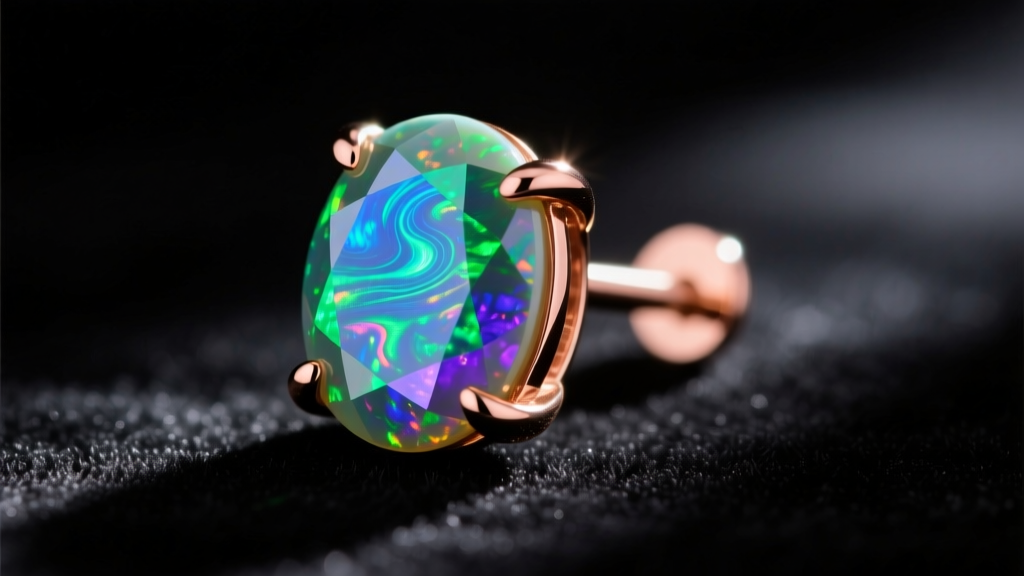
The Bezel vs. Prong Debate
Because opals rank only 5.5 to 6.5 on the Mohs scale, they are highly susceptible to chipping at the girdle (the edge of the stone). Bezel settings in 18k gold are the gold standard for opals. The malleability of 18k gold allows a jeweler to smoothly burnish the metal over the opal's edge without applying the sharp, localized pressure that causes micro-fractures. Prong settings, while allowing more light to enter the stone and enhancing the play-of-color, are risky for solid opals. If you must choose prongs, opt for 14k gold, as the higher tensile strength ensures the prongs won't easily bend back and release the stone if bumped. Never use doublet or triplet opals in prong settings; moisture can seep into the microscopic gap between the glued layers, causing delamination.
Cartilage vs. Lobe: Gauge and Weight Considerations
Ear curation in 2026 heavily features cartilage placements, but opals introduce weight and gauge variables that must be respected to avoid piercing migration.
- Standard Lobes (20g - 18g / 0.81mm - 1.02mm): Ideal for heavier solid boulder opal drops and 18k gold dangles. The lobe tissue is thick and vascular, supporting weights up to 8-10 grams per earring without stretching.
- Helix & Conch (16g - 14g / 1.29mm - 1.63mm): Cartilage piercings are typically done at 16g. A heavy 18k gold opal hoop can cause the piercing channel to angle downward over time (migration). For cartilage, choose lightweight 14k gold bezel-set opal studs or huggies weighing under 2.5 grams.
- Daith & Tragus (16g): These areas experience friction from hair, headphones, and phone receivers. Triplet opals are actually recommended here, as the clear quartz dome can withstand the physical abrasion that would scratch a solid opal.
2026 Styling Frameworks: Face Shape & Ear Curation
Styling gold opal earrings requires balancing the stone's visual weight with your facial geometry and ear anatomy. The "Celestial Constellation" curation is the dominant layout this year, focusing on asymmetrical but thematically linked pairings.
- Round Faces: Avoid circular hoops and round studs, which amplify facial width. Instead, opt for angular 14k yellow gold drop earrings featuring elongated, teardrop-shaped solid opals. The vertical line draws the eye downward, creating a slimming illusion.
- Square Faces: Soften strong jawlines with 18k rose gold huggies featuring cabochon-cut opals. The curved metal and smooth, domed opals introduce organic softness to angular features.
- Heart Faces: Balance a narrower chin with bottom-heavy designs. Chandelier or geometric dangles featuring smaller opal accents at the top and a larger focal opal at the base work beautifully.
"The modern ear curation is less about symmetry and more about narrative. Pairing a raw, matrix-heavy boulder opal stud in the lobe with a delicate, high-clarity hydrophane opal helix crawler tells a story of contrast—earthy grounding meets ethereal light." — 2026 Fine Jewelry Trend Report
Sourcing and Price Guide
When investing in gold opal earrings, transparency in sourcing is paramount. The GIA's Opal Care and Cleaning guidelines emphasize that treatments like oiling or resin impregnation are common but must be disclosed. Expect to pay $300-$800 for high-quality 14k gold settings featuring commercial-grade Australian white opals. For investment-grade black opals from Lightning Ridge set in custom 18k gold, prices easily exceed $3,000 per pair. Always request a breakdown of the opal's origin and whether it is a solid, doublet, or triplet before purchasing.
Care and Maintenance Protocols
Opals require specific maintenance to preserve their structural integrity and optical brilliance. Never use ultrasonic cleaners or steamers on gold opal earrings; the high-frequency vibrations can shatter the silica structure, and the heat can cause the water content within the opal to expand and crack the stone. Instead, clean your earrings using a soft, lint-free microfiber cloth dampened with lukewarm water and a drop of pH-neutral dish soap. Gently wipe the gold setting and the opal surface, then dry immediately. Store your earrings in a padded jewelry box away from direct sunlight and extreme heat, which can cause solid opals to dehydrate and craze (develop a network of fine cracks). By respecting the delicate chemistry of the opal and the metallurgy of the gold, your earrings will remain a cornerstone of your jewelry wardrobe for decades.


