Long Earrings Diamond Trends 2026: The Ultimate Style Guide
Explore 2026 long earrings diamond trends, from kinetic architectural drops to gauge mechanics and face-shape styling frameworks.

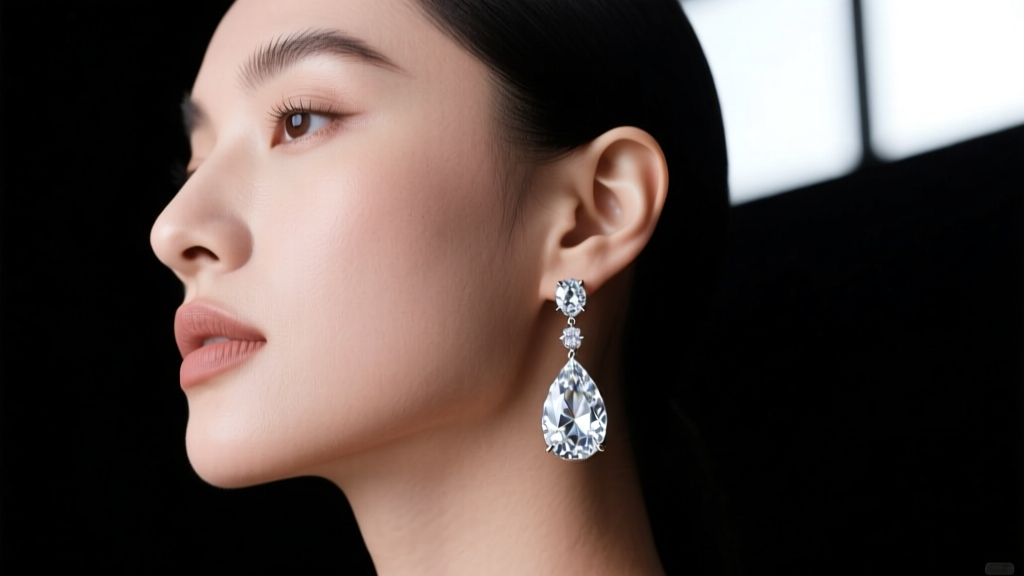
The landscape of fine jewelry is in constant motion, but the 2026 forecast for long earrings diamond styles reveals a fascinating pivot from static, heavy chandeliers to fluid, kinetic designs. As a senior style analyst at Jewel Style Radar, I have tracked the shift toward architectural articulation, advanced lab-grown elongated cuts, and a renewed focus on the biomechanics of the earlobe. This comprehensive guide dissects the current trends, material sciences, and styling frameworks you need to navigate the long diamond earring market this year.
The 2026 Shift: Kinetic and Architectural Diamond Drops
Gone are the days of rigid, oversized chandelier earrings that pull uncomfortably on the ear. The defining trend for long diamond earrings in 2026 is kinetic articulation. Designers are utilizing micro-hinges and invisible tension joints to create multi-tiered drops that move independently with the wearer. This fluid movement maximizes light return, allowing smaller carat weights to produce the visual impact of much larger stones.
Elongated diamond cuts are dominating these kinetic designs. The marquise, pear, and briolette cuts are being set in bezel or half-bezel configurations to prevent snagging on silk and knitwear—a common failure point in older prong-set dangles. According to the Gemological Institute of America (GIA), the faceting patterns of briolette diamonds offer a 360-degree light dispersion that is particularly effective in dangling, articulated settings where the stone is constantly shifting angles.
Furthermore, we are seeing a surge in "ear-jacket" hybrids that transition into long drops. These modular designs allow the wearer to anchor a heavy diamond cascade with a secure, wide-base stud, distributing the weight more evenly across the lobe rather than relying solely on the piercing hole.
Decoding the Anatomy: Gauge, Weight, and Metal Alloys
A beautiful long diamond earring is useless if it destroys your earlobe. The physics of a 3-inch diamond drop requires strict adherence to structural jewelry standards. Many fast-fashion and even mid-tier luxury brands cut corners by using 20-gauge (0.81mm) or 22-gauge (0.64mm) wire for their ear wires. For long earrings featuring over 2.5 carats total weight (CTW), this is a recipe for lobe tearing and stretching.
The 18-Gauge Standard and Backing Mechanics
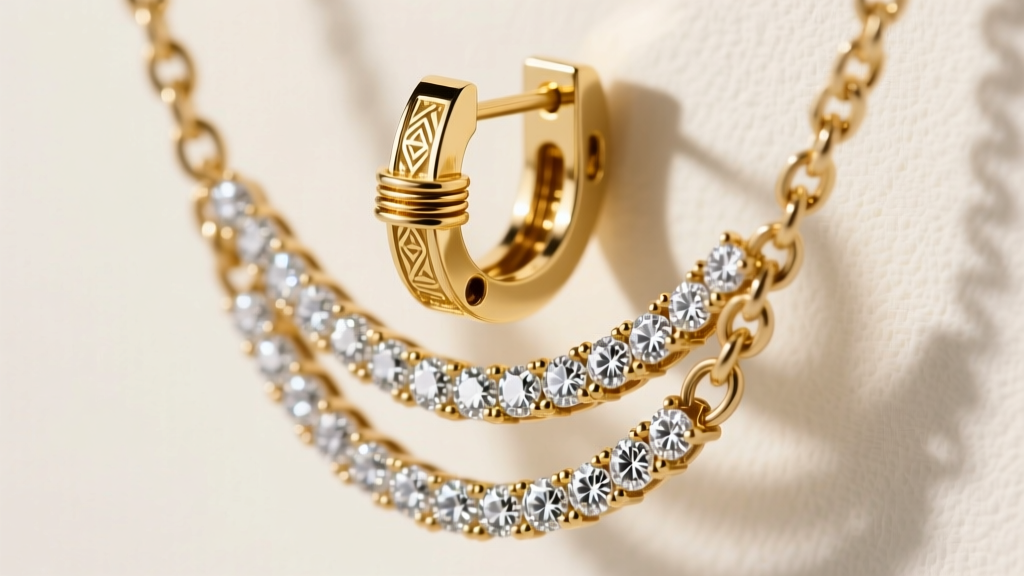
For any long diamond earring exceeding 4 grams per ear, an 18-gauge (1.02mm) or 16-gauge (1.29mm) wire is mandatory. However, thicker wires require careful backing mechanisms. The traditional friction push-back is entirely inadequate for heavy drops; the earring will droop forward, pointing the diamonds toward the floor instead of catching the light.
- Leverback Closures: The gold standard for 2026 long drops. The hinged wire snaps securely into a catch, providing both structural support and a seamless visual line.
- French Wire with Silicone O-Rings: Acceptable for lighter articulated drops, provided the silicone stopper is wide and grips the wire tightly to prevent backward drooping.
- Omega Clip-Backs: Reserved for the heaviest, collarbone-grazing diamond pieces, utilizing a hinged paddle that distributes weight across the back of the earlobe rather than the piercing itself.
Metal Alloy Selection for Elongated Silhouettes
While platinum is highly prized for its durability in rings, its high density makes it a poor choice for long earrings. A platinum setting for a 3-inch diamond drop will cause severe lobe fatigue. In 2026, 18-karat white gold alloyed with palladium is the preferred metal. It offers the bright, rhodium-like finish necessary to make white diamonds pop, while remaining 40% lighter than platinum, ensuring the earring hangs plumb and comfortable.
Lab-Grown vs. Natural: The Elongated Cut Market Reality
The proliferation of lab-grown diamonds has completely disrupted the market for long earrings. Elongated cuts (emerald, marquise, pear) require high clarity grades because their large, open facet patterns make inclusions highly visible to the naked eye. As noted by GIA clarity grading standards, step-cuts like the emerald cut act as windows, demanding VS1 or higher clarity. Sourcing natural, matched pairs of VS1+ elongated diamonds for long earrings has become prohibitively expensive, pushing the 2026 market heavily toward lab-grown alternatives.
| Feature | Natural Elongated Diamonds (Matched Pair) | Lab-Grown Elongated Diamonds (Matched Pair) |
|---|---|---|
| Average Price (2.0 CTW Pear Pair) | $12,000 - $18,500 | $1,800 - $3,200 |
| Clarity Availability (VS1+) | Scarce; requires custom cutting | Abundant; easily matched |
| Color Matching | Difficult; slight tint variations visible in drops | Perfect; identical growth conditions |
| Resale Value Retention | High (40-60% of retail) | Low (10-20% of retail) |
For trend-driven buyers and those prioritizing sheer visual impact and size, lab-grown diamonds are the undisputed winners for long earring designs in 2026. However, for heritage pieces intended as generational assets, natural matched pairs remain the benchmark.
Face Shape & Proportion Matrix
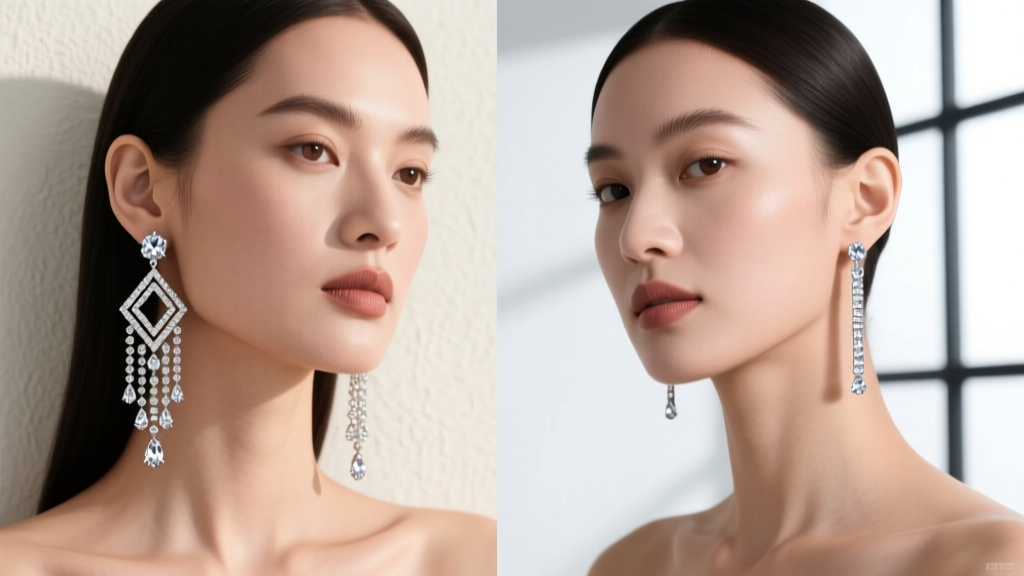
Styling long earrings diamond pieces requires an understanding of facial geometry. The wrong silhouette can exaggerate harsh angles or elongate an already long face. Here is the 2026 proportional framework for styling elongated diamond drops.
Round Faces
The Goal: Create vertical elongation and slim the jawline.
The Strategy: Opt for sleek, linear diamond drops or single-file marquise cascades. Avoid wide chandelier styles or circular hoops with diamond halos, which will mirror and emphasize the roundness of the face. A 2.5-inch linear pear drop is the ideal architectural choice.
Square and Angular Faces
The Goal: Soften the jawline and add curved movement.
The Strategy: Embrace curved chandelier styles, briolette clusters, and teardrop motifs. The kinetic movement of rounded diamond clusters draws the eye downward while softening sharp angles. Avoid rigid, geometric emerald-cut linear drops, which can make angular features appear severe.
Heart-Shaped Faces
The Goal: Balance a wider forehead with a narrower chin.
The Strategy: Choose long diamond earrings that are wider at the bottom than the top. Inverted triangle silhouettes or pear-shaped drops that flare outward at the jawline add necessary visual weight to the lower half of the face.
Oval Faces
The Goal: Maintain natural balance without over-elongating.
The Strategy: Oval faces can pull off almost any long earring style. However, to prevent the face from looking excessively drawn out, keep the length of the diamond drop above the collarbone, ideally grazing the middle of the neck.
Investment & Care: Maintaining Articulated Diamond Jewelry
The intricate mechanics of modern long diamond earrings require specialized maintenance. The micro-hinges and articulation joints used in 2026 designs are susceptible to accumulating skin oils, lotion, and microscopic debris, which can stiffen the movement and dull the diamonds.
Crucial Warning: Never place articulated or tension-set long earrings in an ultrasonic cleaner. The high-frequency vibrations can loosen the specialized micro-prongs used in kinetic joints and cause severe damage to fracture-filled or tension-set stones. Instead, use a soft-bristled brush (like a clean, baby-soft makeup brush) dipped in a mild, ammonia-free degreasing solution to gently sweep the underside of the diamond girdles and the hinge mechanisms.
Finally, schedule a professional prong and hinge inspection every 12 months. The constant swinging motion of a long diamond drop puts lateral stress on the ear wire and the top bail connection. A master jeweler can laser-weld micro-fractures in the wire before a catastrophic failure results in the loss of a priceless diamond cascade.


