Friction Post Back Earrings: Engineering, Gauge Sizes, and Fit
An expert technical deep dive into friction post back earrings, covering post gauge tolerances, clutch tension mechanics, metallurgy, and ergonomic fit.

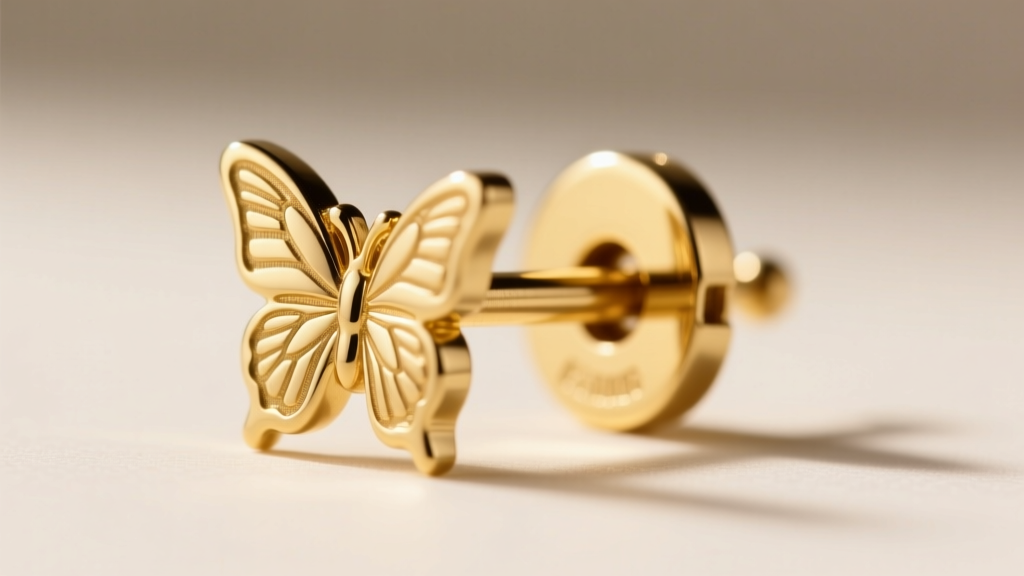
The Mechanics of Tension: How Friction Clutches Actually Work
When discussing friction post back earrings, most consumers focus entirely on the decorative front. However, the structural integrity of the entire assembly relies on a surprisingly complex piece of micro-engineering: the friction clutch, commonly known as the butterfly back. At a technical level, a friction clutch is a spring-tensioned clamping mechanism. It is typically stamped from a single sheet of brass or stainless steel, folded to create two symmetrical wings that act as leaf springs.
When the earring post is inserted, the wings undergo elastic deformation. The internal diameter of the clutch's central tube is manufactured to be roughly 0.02mm to 0.05mm smaller than the outer diameter of the earring post. This interference fit creates the radial clamping force that holds the earring in place. The post itself features a machined groove or notch—usually 0.15mm deep—which the clutch wings snap into, providing a mechanical lock that prevents lateral sliding. Over time, repeated insertion cycles cause metal fatigue in the wings, reducing the elastic memory of the alloy and leading to the dreaded "loose back" phenomenon.
The retention force of a standard 20-gauge brass friction clutch is typically between 800 and 1,200 grams of pull-force when new. After 500 insertion cycles, this tension can degrade by up to 40%.
Post Gauge Tolerances and the "Wobble" Factor
The term "gauge" refers to the thickness of the earring post, and it is the single most critical variable in the stability of friction post back earrings. The jewelry industry largely relies on the Birmingham Gauge (BWG) system, but manufacturing tolerances can vary wildly between mass-market and fine jewelry producers. A post that is even slightly undersized will fail to engage the clutch's tension wings properly, resulting in axial wobble and premature dropout.
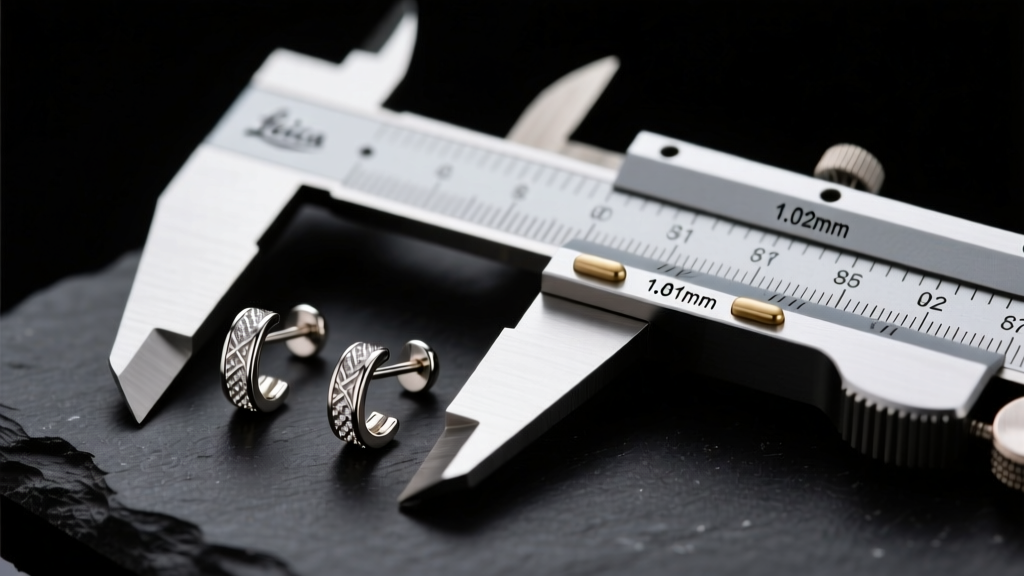
Standard Gauge Dimensions and Applications
| Gauge Size | Millimeter Diameter | Typical Application | Structural Notes |
|---|---|---|---|
| 22 Gauge | 0.64mm | Ultra-lightweight vintage studs | Highly prone to bending; lacks rigidity for heavy gemstones. |
| 20 Gauge | 0.81mm | Standard commercial diamond studs | Industry default. Balances material cost with adequate tension. |
| 18 Gauge | 1.02mm | Fine jewelry, heavy center stones | Superior rigidity. Prevents "droop" in heavy solitaire settings. |
| 16 Gauge | 1.29mm | Cartilage piercings, structural hoops | Rarely used with standard butterfly backs; requires specialized heavy-duty clutches. |
If you are setting a 1-carat or larger diamond, an 18-gauge post is mandatory. The weight of the stone creates a fulcrum effect against the earlobe. A standard 20-gauge (0.81mm) post will physically bend under this dynamic load, altering the angle of the grooves and allowing the friction back to slide off.
Metallurgy and Contact Dermatitis: Why Nickel is the Enemy
The friction mechanism requires a metal with high yield strength and excellent elastic recovery. Historically, this meant using nickel-heavy alloys. However, nickel is the leading cause of allergic contact dermatitis in jewelry wearers. According to the Mayo Clinic, prolonged exposure to nickel-releasing alloys causes severe localized immune responses, particularly in the enclosed, humid microclimate behind the earlobe where the friction back sits.
The Federal Trade Commission Jewelry Guides strictly regulate how metals are labeled, but "surgical steel" remains a largely unregulated marketing term. Most 316L stainless steel contains 8% to 10% nickel. While the chromium oxide layer on 316L passivates the surface, the constant mechanical friction of the clutch sliding against the post physically abrades this protective layer, exposing the nickel underneath to the skin and sweat.
Implant-Grade Titanium vs. Surgical Steel
For hypoallergenic friction post back earrings, the gold standard is ASTM F136 implant-grade titanium (Ti-6Al-4V ELI). Certified by ASTM International, this specific alloy contains zero nickel and is highly resistant to mechanical abrasion. Unlike pure titanium (ASTM F67), which is too soft and will strip its own threading or notches, the F136 alloy maintains the sharp groove edges necessary for the clutch wings to lock into securely. When sourcing friction backs for sensitive ears, both the post and the clutch itself must be F136 titanium or solid 14k/18k gold; a gold post paired with a cheap brass clutch will still trigger a reaction where the clutch touches the back of the ear.
Ergonomic Failure Modes: Why You Lose Your Earrings
Losing a valuable stud is rarely a matter of bad luck; it is almost always a predictable mechanical failure. Understanding the specific failure modes of friction post back earrings allows you to audit your jewelry and prevent loss.
- The Lever-Arm Snag: Standard earring posts are 10.5mm to 11mm long. The average earlobe is only 4mm to 6mm thick. This leaves up to 6mm of exposed post behind the lobe. When hair or clothing snags the protruding post, it acts as a lever, multiplying the pull-out force and easily overcoming the 800-gram retention limit of the clutch.
- Sweat Lubrication: Sebum and sweat reduce the coefficient of friction between the metal post and the clutch tube. During exercise or hot weather, the static friction drops, allowing gravity and minor impacts to slide the back off.
- Notch Degradation: If the post is made of a softer metal (like 24k gold or low-karat alloys), the harder steel clutch wings will slowly file down the locking notch. Once the notch becomes a shallow ramp rather than a sharp groove, the clutch will slide off under minimal tension.
- Wing Asymmetry: Cheaply stamped clutches often have uneven wings. If one wing is bent slightly higher than the other, the clamping force is applied off-axis, creating a torsional twist that slowly unscrews the back from the post over the course of the day.
Upgrading Your Hardware: La Pousette and Screw-Back Alternatives
For high-value jewelry, standard friction backs are an unacceptable risk. The industry has developed two primary mechanical upgrades to solve the inherent flaws of the butterfly clutch.
The La Pousette back (also known as a locking clutch) replaces the simple stamped wings with a dual-spring mechanism. It features two tiny side-tabs that must be squeezed to compress an internal coil spring, allowing the back to slide. When released, the spring pushes a hardened steel pin directly into the post's groove. This provides over 3,000 grams of retention force and is virtually immune to metal fatigue from normal use.
Screw-back earrings eliminate friction entirely, relying on a threaded post and a threaded nut. While highly secure, they require precise manufacturing; a cross-threaded post will ruin the jewelry. Furthermore, the threads can harbor bacteria and require rigorous cleaning with isopropyl alcohol to prevent localized infections.
Final Calibration: Sizing Post Length to Lobe Thickness
The final, often overlooked variable in friction post back earrings is post length relative to tissue thickness. A properly fitted earring should have exactly 1.5mm to 2mm of clearance between the back of the earlobe and the face of the friction clutch.
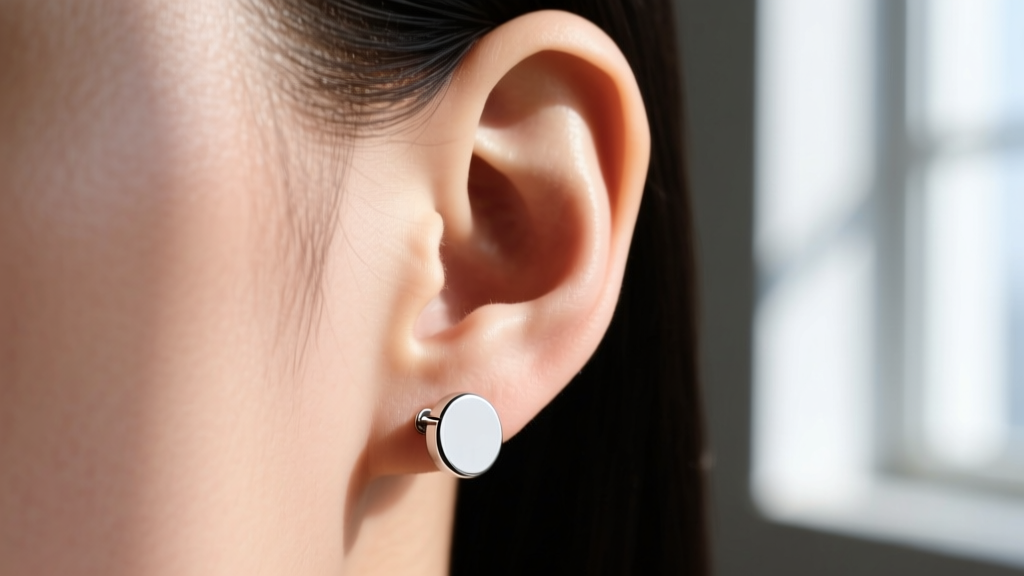
This 2mm gap is critical for vascular health and tissue hygiene. If the post is too short and the clutch is pushed flush against the skin, it restricts capillary blood flow, leading to tissue necrosis in extreme cases, or chronic swelling and embedding in typical cases. Conversely, it traps moisture and dead skin cells against the piercing fistula, creating an environment conducive to staphylococcus bacteria.
If your earlobes are particularly thick (over 7mm) or thin (under 3mm), standard 10.5mm posts will fail to provide the correct ergonomic gap. Fine jewelers can easily swap standard posts for custom-length wire—such as 8mm for thin lobes or 13mm for thick lobes—ensuring that the friction clutch operates within its optimal mechanical parameters while maintaining tissue health. Always measure your lobe thickness with a digital caliper before commissioning bespoke stud earrings to ensure the hardware is perfectly calibrated to your anatomy.


