Gauge Earring Buying Guide: How to Choose the Right Size & Fit
Master the gauge earring sizing system. Learn exact measurements, material grades, and threading types for safe lobe and cartilage piercings.

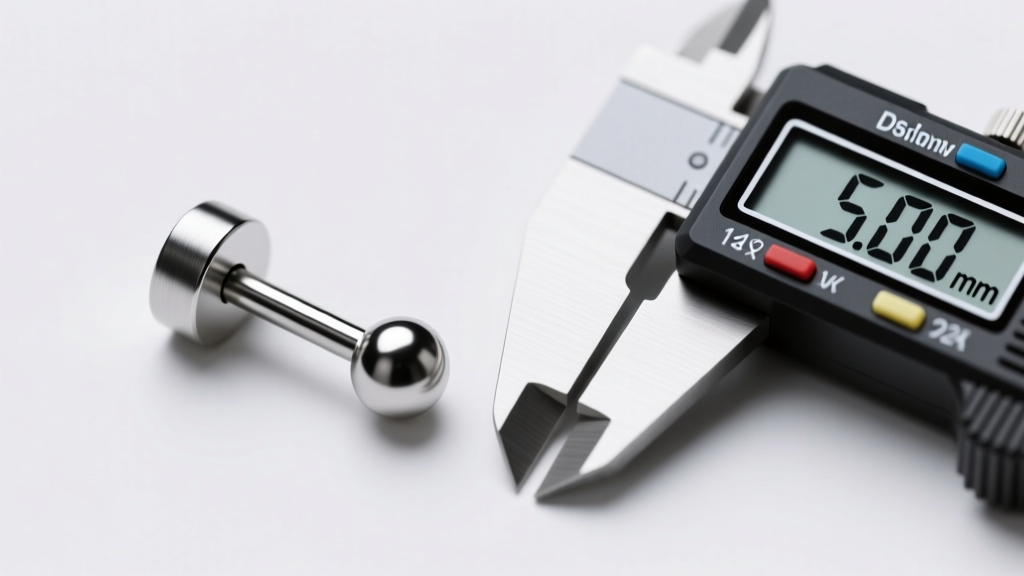
Buying a new earring should be an exciting experience, but it quickly turns frustrating when you realize the post is too thick to fit your piercing, or too thin to support the jewelry's weight. Understanding the gauge earring system is the most critical step in purchasing body jewelry that is safe, comfortable, and aesthetically pleasing. Whether you are shopping for a delicate lobe stud or a bold industrial barbell, selecting the correct thickness prevents tissue damage, rejection, and the dreaded 'cheese cutter' effect.
This comprehensive buying guide breaks down the inverse logic of the gauge system, maps standard sizes to specific ear piercings, and explores the metallurgical and mechanical details you must verify before clicking 'checkout'.
Demystifying the Gauge System for Earrings
The jewelry industry uses the Birmingham Gauge (BWG) system to measure the thickness of the wire or post that passes through your piercing. The most confusing aspect for first-time buyers is that the system is inverse: the higher the gauge number, the thinner the metal.
For example, a 20-gauge earring is significantly thinner than a 14-gauge earring. This counterintuitive scale originates from historical wire-drawing processes, where a higher number indicated the wire had been pulled through a draw plate more times, resulting in a thinner strand. When shopping, always verify both the gauge number and the exact millimeter (mm) equivalent to ensure you are ordering the correct size.
- 20G: 0.81 mm (Standard for traditional earlobe piercings done with a gun)
- 18G: 1.0 mm (Common for standard lobes, some helix, and nose piercings)
- 16G: 1.2 mm (The gold standard for professional needle-pierced lobes and most cartilage)
- 14G: 1.6 mm (Standard for industrials, daiths, rooks, and stretched lobes)
- 12G: 2.0 mm (Often used for conch piercings or early stages of ear stretching)
Standard Gauge Earring Sizes by Piercing Type
Piercing locations dictate the structural requirements of the jewelry. Cartilage is denser and more prone to swelling than the soft tissue of the earlobe, requiring specific thicknesses to promote proper healing and avoid migration. The table below outlines the industry-standard gauge sizes recommended by professional piercers.
| Piercing Location | Standard Gauge | Millimeter (mm) | Notes & Considerations |
|---|---|---|---|
| Standard Earlobe (Gun) | 20G | 0.81 mm | Thin posts; avoid heavy dangles to prevent tearing. |
| Standard Earlobe (Needle) | 16G or 14G | 1.2 / 1.6 mm | Thicker posts provide better support for heavy or statement earrings. |
| Helix / Forward Helix | 16G | 1.2 mm | Most flat-back labrets and hoops for the upper ear are manufactured in 16G. |
| Tragus / Anti-Tragus | 16G | 1.2 mm | Shorter post lengths (5mm-8mm) are usually required alongside the 16G thickness. |
| Conch | 16G or 14G | 1.2 / 1.6 mm | 14G is preferred if wearing large, heavy hoops to distribute weight. |
| Daith / Rook | 16G | 1.2 mm | Curved barbells or clickers must match this precise thickness to avoid cartilage pressure. |
| Industrial | 14G | 1.6 mm | Requires a thicker, rigid bar to maintain alignment across two cartilage points. |
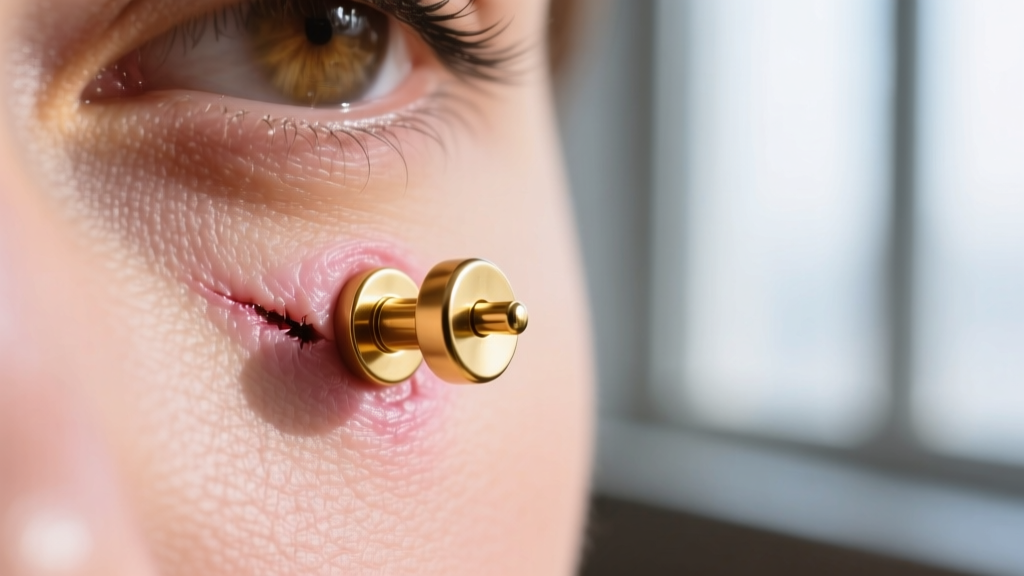
Material Grades: Matching Metal to Your Gauge
When buying a gauge earring, the thickness is only half the equation; the material composition is equally vital. Cheap metals can cause contact dermatitis, swelling, and hypergranulation. According to the Association of Professional Piercers, you should only purchase jewelry that meets specific ASTM or ISO standards for implant-grade materials.
Implant-Grade Titanium (ASTM F136)
This is the undisputed champion of body jewelry. Ti6Al4V ELI (Extra Low Interstitial) titanium is entirely nickel-free, lightweight, and highly biocompatible. If you are buying a 16G or 14G earring for a healing cartilage piercing, ASTM F136 titanium should be your default choice.
Implant-Grade Steel (ASTM F138)
While 316L surgical steel is widely sold, it still contains trace amounts of nickel. High-quality, implant-grade F138 steel is polished to a mirror finish and properly passivated, making it safe for most healed piercings. However, those with known nickel allergies should avoid steel entirely, regardless of the gauge.
Niobium
Niobium is a highly reactive metal that is anodized to create vibrant colors without using toxic paints or platings. It is an excellent, nickel-free alternative to titanium, though it is slightly heavier, which is an important consideration when buying larger gauge hoops.
The Threading Trap: External vs. Internal vs. Threadless
The way the decorative end attaches to the earring post drastically affects both the longevity of the jewelry and the health of your piercing tract.
- Externally Threaded (Avoid): The screw threads are on the post itself. Pushing this through your piercing tears the delicate fistula (the skin tube inside the piercing). Never buy externally threaded gauge earrings, even if they are cheap.
- Internally Threaded (Recommended): The screw threads are inside the decorative end, and the post is completely smooth. This allows the jewelry to glide through the piercing without causing micro-tears. This is the standard for 14G and thicker jewelry.
- Threadless / Press-Fit (Best for 16G & 18G): Threadless jewelry uses a tiny pin on the decorative end that is slightly bent before being pushed into the hollow post. The tension of the bent metal holds the pieces together securely. Brands like NeoMetal and BVLA pioneered this system, which is vastly superior for smaller gauge earrings where internal threading is too fragile.
How to Accurately Measure Your Current Gauge Earring
If you have lost the original packaging and are unsure of your current piercing size, guessing can lead to costly mistakes and tissue trauma. Do not attempt to measure your jewelry with a standard school ruler; the margin of error between 18G (1.0mm) and 16G (1.2mm) is too small for the naked eye.
- Use Digital Calipers: Invest in a cheap pair of digital calipers. Remove the earring, clean it, and gently clamp the caliper jaws around the thickest part of the post (avoiding any decorative bevels or threading).
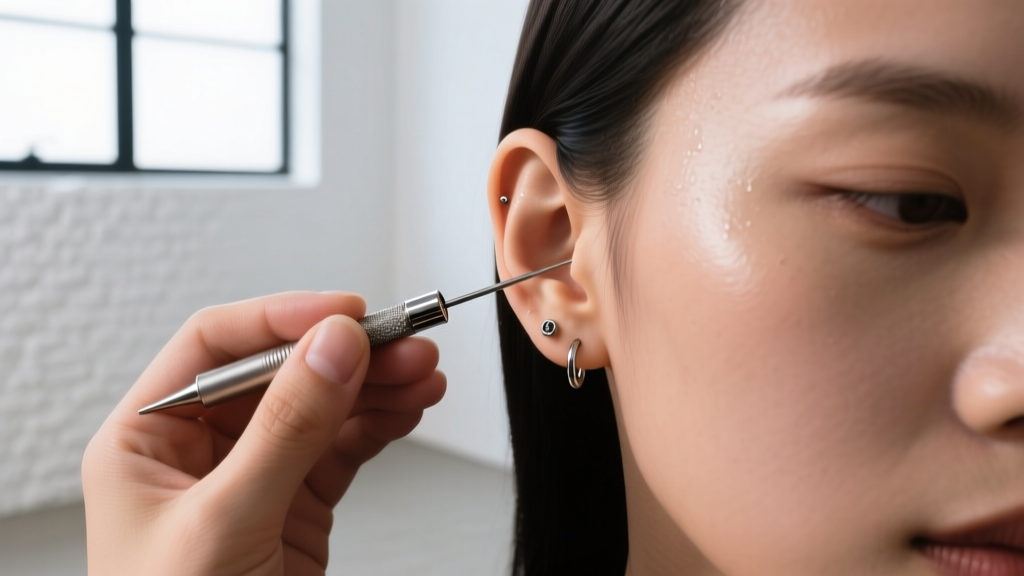
- Visit a Professional Piercer: If you lack calipers, visit an APP-certified piercing studio. Piercers use sterile insertion tapers to gently identify your exact gauge without forcing metal through the tissue.
- Check Your Piercing History: If your earlobes were pierced at a mall kiosk with a gun, you are almost certainly wearing 20G or 18G. If you were pierced by a professional using a hollow needle, you are likely wearing 16G.
Avoiding the 'Cheese Cutter Effect'
One of the most common mistakes buyers make is purchasing heavy, oversized statement earrings in thin gauges (20G or 18G). When a heavy piece of metal rests on a very thin wire, the pressure per square inch increases dramatically. Over time, gravity and the weight of the jewelry will slowly slice through the earlobe tissue, a phenomenon known in the body modification community as the 'cheese cutter effect.'
The Fix: If you want to wear heavy dangles, large gemstone clusters, or thick hoops, ensure your earlobes are pierced at 14G or 16G. The thicker the post, the more surface area there is to distribute the weight, keeping your earlobes safe and intact.
Where to Buy Quality Gauge Earrings
When shopping for body jewelry, avoid fast-fashion retailers and unverified online marketplaces where material claims are rarely backed by metallurgical testing. Instead, look for vendors that explicitly state their ASTM material grades and offer internal threading or threadless designs. Reputable brands favored by professional piercers include BVLA, NeoMetal, Anatometal, and Maria Tash. For custom orders and guaranteed authenticity, purchasing directly from an APP-member studio's retail counter or their verified online storefront is the safest route.
Always prioritize the structural integrity of the post over the flashiness of the gemstone. A beautifully cut diamond set on a poorly machined, externally threaded 20G post is a recipe for a damaged piercing.


