2026 Gift Guide: How to Make Clay Earrings for Every Occasion
Learn how to make clay earrings for personalized 2026 gifts. Match polymer clay styles, colors, and hypoallergenic hardware to any occasion.

The Rise of Handcrafted Clay Jewelry as Personalized Gifts
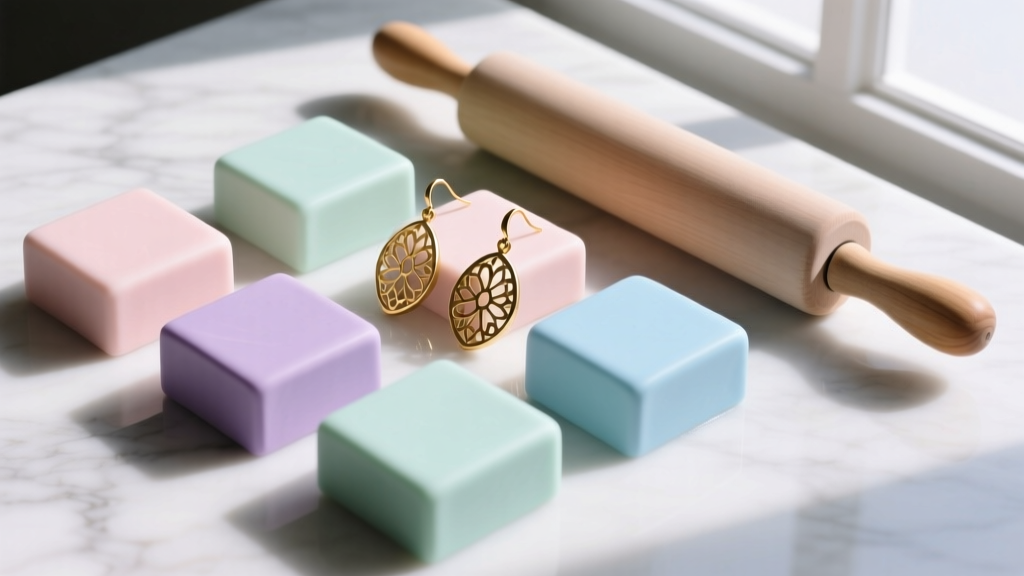
In 2026, the most coveted gifts are not necessarily the most expensive; they are the most intentional. Handcrafted polymer clay jewelry has surged in popularity, bridging the gap between high-fashion aesthetics and deeply personal gifting. Learning how to make clay earrings allows you to tailor every element—from the color palette to the earring post material—to the specific recipient and occasion. Whether you are crafting bridesmaid gifts, teenage birthday surprises, or holiday exchange tokens, polymer clay offers unparalleled versatility. This guide moves beyond basic tutorials, providing a professional framework for designing, curing, and finishing clay earrings that feel like premium, boutique-bought gifts.
Core Materials: Choosing the Right Clay and Hardware
The difference between an earring that feels like a craft project and one that feels like a luxury gift lies in the materials. Polymer clay must be conditioned thoroughly on an acrylic roller to align the polymer chains, preventing post-bake brittleness. Furthermore, selecting the correct clay brand dictates your baking temperature and final finish.
Polymer Clay Brands Compared for Jewelry Making
| Clay Brand | Baking Temp | Best For | Finish |
|---|---|---|---|
| Sculpey Premo | 275°F (135°C) | Durable drops, canes, everyday wear | Satin |
| Fimo Professional | 230°F (110°C) | Intricate details, mica shift techniques | Matte |
| Cernit Number One | 265°F (130°C) | Translucent effects, porcelain looks | Semi-Gloss |
Hypoallergenic Hardware: Gauge Sizes and Metals
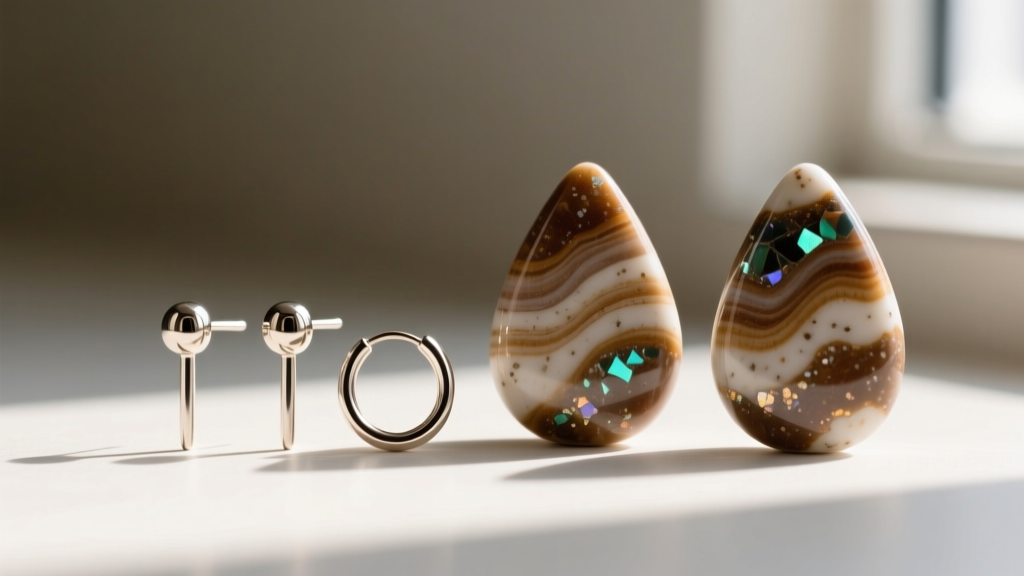
When gifting earrings, you must account for metal sensitivities. According to the American Academy of Dermatology, nickel allergy is one of the most common causes of allergic contact dermatitis. Never use cheap, nickel-plated brass findings for gifts. Instead, invest in 20-gauge or 22-gauge surgical stainless steel, titanium, or niobium posts. Titanium is exceptionally lightweight and biocompatible, making it the gold standard for sensitive lobes. For jump rings connecting the clay piece to the post, use 22-gauge stainless steel to ensure the structural integrity of the drop earring without adding excessive weight.
Step-by-Step: How to Make Clay Earrings for Specific Occasions
Matching the design to the occasion is what elevates your DIY gift. Here are three targeted design frameworks for the most common gifting scenarios.
1. The Bridesmaid Gift: Elegant Marbleized Drops
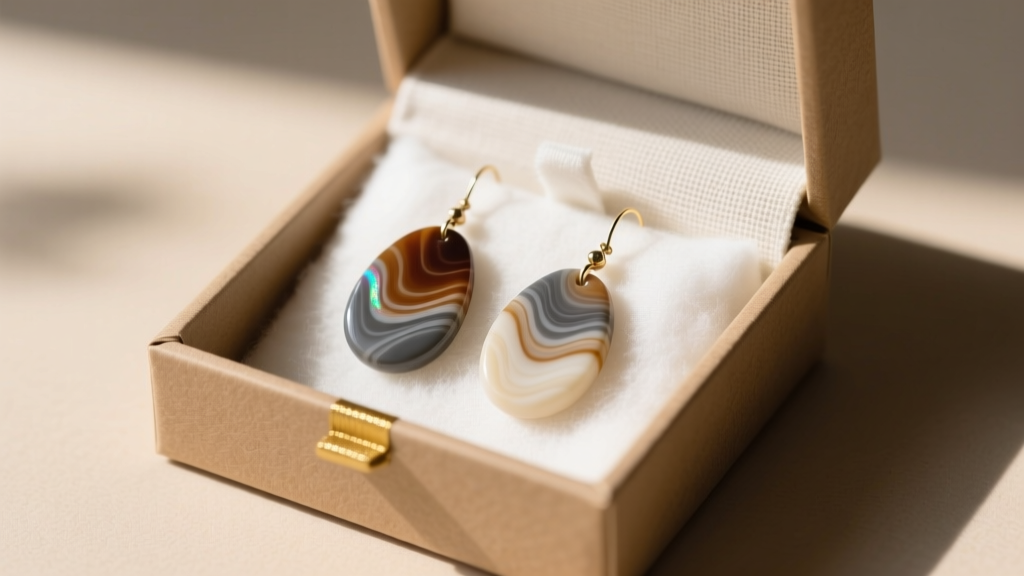
For weddings, the 'quiet luxury' trend dominates. Avoid overly bright colors and opt for a sophisticated marble effect. Technique: Condition a block of translucent Cernit clay and a smaller block of opaque white. Add tiny flecks of gold leaf. Fold and twist the clay without over-mixing to preserve the distinct veins. Roll the sheet to 1/8-inch thickness using clay guides. Cut into elongated teardrops or geometric arches. Bake at 265°F (130°C) for 30 minutes. Once cooled, seal with a high-gloss UV resin to mimic the look of polished marble or glass. Attach to 20-gauge gold-plated titanium posts for a luxurious finish.
2. The Teen Birthday: Trendy Y2K Checkerboard Studs
Gen Z and Gen Alpha recipients in 2026 are heavily influenced by Y2K nostalgia and bold, graphic patterns. Technique: Create a checkerboard cane using Fimo Professional in stark black and optic white. Reduce the cane to a manageable size, then slice it into 2mm thick squares. Alternatively, use a silicone mold to press the checkerboard sheet into chunky, dome-shaped stud bases. Because Fimo bakes at a lower 230°F (110°C), it prevents the white clay from scorching or yellowing. Finish with a matte polyurethane spray to maintain the modern, non-reflective aesthetic popular in streetwear jewelry.
3. The Holiday Exchange: Minimalist Terrazzo Huggie Charms
For office parties or Secret Santa exchanges, versatility is key. Terrazzo charms that clip onto existing huggie hoops are universally flattering and require no new piercings. Technique: Gather all your baked and unbaked clay scraps from previous projects. Chop them into tiny, irregular confetti pieces. Roll out a base sheet of Sculpey Premo in a neutral tone (like oatmeal or slate grey) and embed the scrap pieces. Use a brayer to roll the sheet completely flat, ensuring the scraps are flush with the base. Cut out small 10mm circles or tiny stars. Bake at 275°F (135°C) for 30 minutes. Sand the surface with 600-grit, then 1000-grit wet/dry sandpaper until the terrazzo pieces are seamlessly smooth. Attach a tiny 4mm stainless steel jump ring to the top, allowing the recipient to slide it onto their favorite hoops.
Curing, Sealing, and Packaging for a Professional Finish
The baking process is where most beginners fail. Underbaked clay will snap under the pressure of a heavy jump ring; overbaked clay will scorch and become brittle. Always use a dedicated oven thermometer, as built-in oven dials are notoriously inaccurate. Follow Sculpey's official baking guidelines meticulously. To prevent dark clay from scorching, use the 'tenting' method: fold a piece of aluminum foil into a tent and place it over the clay while it bakes to deflect direct heat from the oven's top element.
After baking, sealing is optional but recommended for gifts. While polymer clay is naturally water-resistant, a coating of UV resin or a water-based polyurethane (like Varathane) protects the surface from makeup, oils, and friction. Avoid aerosol spray sealers, as the propellants can react with the plasticizers in the clay, leaving a permanently tacky surface.
Occasion Matching Cheat Sheet
Birthdays: Match the clay color to the recipient's birthstone or favorite aesthetic (e.g., mica powders for a metallic finish).
Anniversaries: Embed real dried flowers from a shared memory into translucent clay, sealing with clear UV resin.
Teacher Appreciation: Opt for lightweight, small-scale studs (under 15mm) in neutral tones that won't distract in a classroom setting.
Valentine's Day: Skip the cliché red hearts; instead, use a subtle blush-and-cream color palette in abstract, modern shapes.
By mastering how to make clay earrings with a focus on high-quality hardware, precise curing, and occasion-specific design, you transform a simple crafting hobby into a premium gifting strategy. Your recipients will receive a piece of wearable art that is entirely unique to them, crafted with an expert level of care that mass-produced jewelry simply cannot replicate.


