Girl With A Pearl Earring Painter Crossword: Vermeer Pearl Guide
Solve the girl with a pearl earring painter crossword clue (Vermeer) and explore our expert 2026 guide to buying, grading, and styling pearl earrings.

The Crossword Clue Solved: Vermeer and His Muse
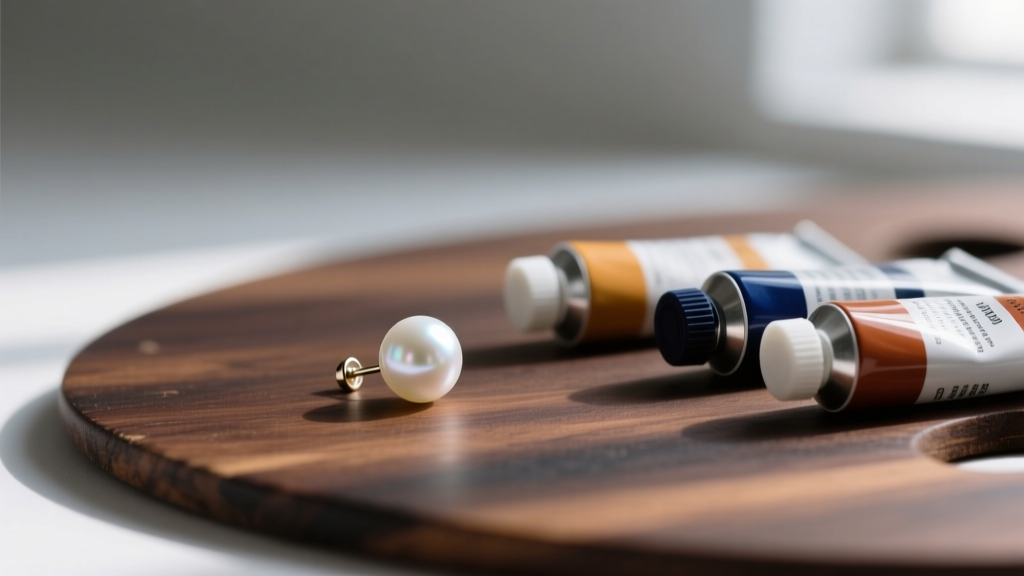
If you are currently staring at a grid and searching for the girl with a pearl earring painter crossword answer, you are in the right place. The answer to this classic art-history crossword clue is VERMEER (7 letters). Johannes Vermeer, the Dutch Golden Age master, painted the iconic tronie Girl with a Pearl Earring around 1665. Today, the masterpiece is housed in The Mauritshuis Museum in The Hague, drawing millions of visitors who are captivated not just by the subject's enigmatic gaze, but by the luminous, oversized piece of jewelry dangling from her ear.
But as jewelry experts and horologists of style, we look at this painting and ask a different question: What kind of pearl was it, and how can you wear a modern equivalent today? Let's bridge 17th-century art history with a comprehensive, beginner-friendly guide to buying, grading, and styling pearl earrings in 2026.
Deconstructing the "Vermeer Pearl": Fact vs. Fiction
The earring in Vermeer's painting is massive—easily an estimated 12mm to 15mm in diameter. In the 1650s, a natural saltwater pearl of that size with such perfect symmetry would have been worth a king's ransom, far beyond the means of a painter who frequently struggled with debt. Art historians and gemologists largely agree on two theories regarding the painting's subject matter:
- The Glass Imitation Theory: During the Dutch Golden Age, Venetian glassmakers perfected the art of coating glass beads with a pearlescent substance made from fish scales (essence d'orient). Vermeer likely used a glass drop to achieve the dramatic light reflection.
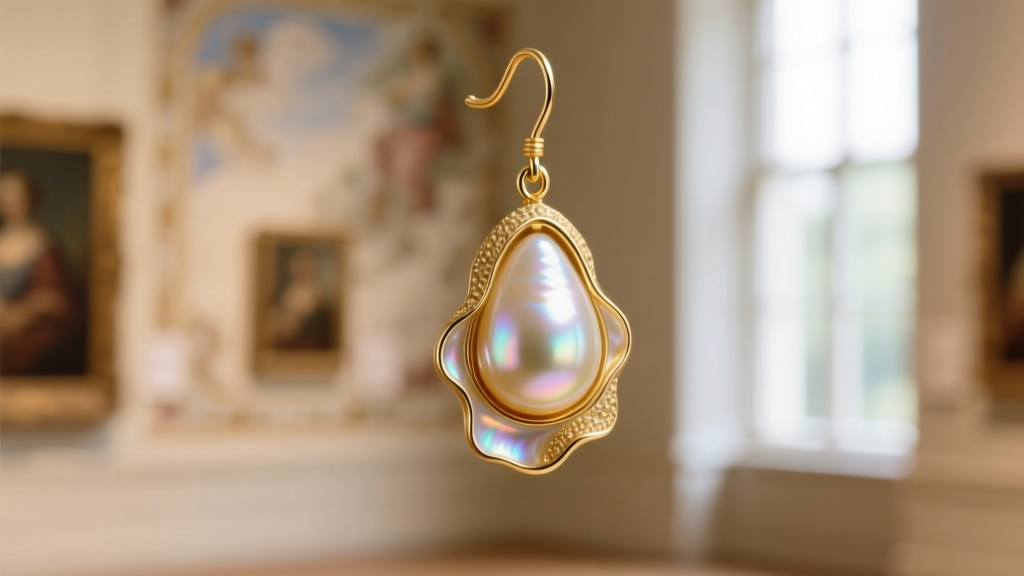
- The Baroque Pearl Theory: It may have been a real, but highly irregular, baroque drop pearl. Vermeer's masterful use of light and shadow (chiaroscuro) could have artificially smoothed out the pearl's natural imperfections to serve his artistic vision.
Regardless of its true origin, the painting cemented the teardrop pearl as an enduring symbol of elegance, mystery, and timeless beauty.
The 2026 Cultured Pearl Earring Market
As of 2026, the cultured pearl market has evolved dramatically. Natural pearls are virtually nonexistent in commercial jewelry, reserved only for high-end auction houses. Instead, the market is dominated by cultured pearls, where human intervention introduces a nucleus into the mollusk. When shopping for pearl earrings today, you will encounter three primary categories. Understanding these is critical to avoiding overpayment and recognizing genuine quality.
1. Freshwater Pearls (The Accessible Classic)
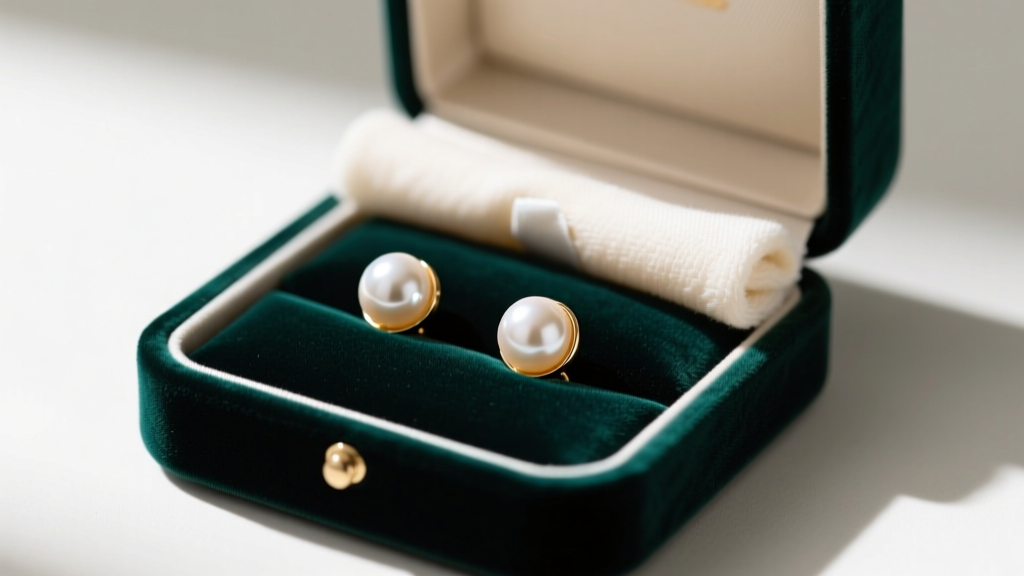
Cultured primarily in China, freshwater pearls are grown in mussels and nucleated with mantle tissue rather than a solid bead. This results in a pearl composed entirely of solid nacre, making them incredibly durable. While older freshwater pearls were distinctly rice-shaped, modern 2026 culturing techniques yield near-perfect rounds that rival saltwater varieties. Best for: Everyday studs, budget-friendly gifts, and buyers seeking high nacre durability. Price Range: $50 – $300 for a matched pair of studs (7mm - 9mm).
2. Akoya Pearls (The Mirror-Like Standard)
Grown in the Pinctada fucata martensii oyster, primarily in Japan and Vietnam, Akoya pearls are bead-nucleated. They are famous for their sharp, mirror-like luster and perfectly round shapes. They typically exhibit a rose, silver, or cream overtone. Because the oyster is small, Akoya pearls rarely exceed 9.5mm. Best for: Formal events, bridal jewelry, and classic round stud earrings. Price Range: $250 – $1,200+ depending on the Hanadama certification and luster grade.
3. South Sea & Tahitian Pearls (The Luxury Investment)
These are the giants of the pearl world. White South Sea pearls (grown in Australia and the Philippines) and dark Tahitian pearls (grown in French Polynesia) are produced by the massive Pinctada maxima and Pinctada margaritifera oysters. They range from 9mm to 16mm+. Best for: Statement drop earrings, heirloom pieces, and luxury collectors. Price Range: $800 – $5,000+ per pair.
Pearl Grading & Sizing Matrix
Unlike diamonds, there is no single, globally standardized grading system for pearls. However, the Gemological Institute of America (GIA) outlines seven value factors: Size, Shape, Color, Luster, Surface, Nacre, and Matching. Below is a practical matrix to help you evaluate pearl earrings when shopping online or in-store.
| Grade | Luster Quality | Surface Blemishes | Nacre Thickness | Typical Earring Use |
|---|---|---|---|---|
| AAA (Gem) | Sharp, mirror-like reflections | 95%+ clean, virtually flawless | Thick (0.4mm+ on Akoya) | Fine jewelry, bridal studs |
| AA+ | High, distinct reflections | 85% clean, minor pinpricks | Medium-Thick | High-end everyday earrings |
| AA | Medium, slightly hazy edges | 70% clean, visible spotting | Medium | Fashion jewelry, dangles |
| A (Commercial) | Dull, chalky appearance | Heavy blemishing, chalky spots | Thin (risk of peeling) | Low-end costume jewelry |
Expert Tip: Never buy thin-nacre pearls. Over time, thin nacre will rub off the bead nucleus, leaving you with a dull, peeling shell. Always ask the jeweler for nacre thickness documentation on expensive purchases.
Styling Pearl Earrings by Face Shape
Vermeer's subject wore a large, heavy drop pearl that drew the eye downward, elongating her face and neck. When selecting your own pearl earrings in 2026, consider your facial geometry to achieve a similarly flattering effect:
- Round Faces: Avoid perfectly round, oversized studs which can emphasize facial width. Instead, opt for baroque teardrop drops or elongated dangles that create a vertical line and elongate the jawline.
- Square Faces: Soften strong, angular jawlines with round Akoya studs (7mm-8mm) or curved huggie hoops featuring small pearl accents. Avoid harsh geometric shapes.
- Heart-Shaped Faces: Balance a narrower chin with bottom-heavy pearl earrings, such as chandelier styles or inverted teardrops that add visual weight to the lower half of the face.
- Oval Faces: The universal face shape. You can effortlessly pull off everything from classic 9mm round studs to avant-garde ear cuffs featuring irregular baroque pearls.
Hardware, Gauges, and Failure Modes
A common beginner mistake is ignoring the metal and hardware that holds the pearl. Pearl earrings require specific engineering to prevent catastrophic failure.
Post Gauge Sizing
Standard pearl stud earrings are typically mounted on 20-gauge (0.81mm) or 18-gauge (1.02mm) posts. If you have recently stretched earlobe piercings or sensitive healing lobes, ensure you purchase 18-gauge options, as flimsy 22-gauge wires can bend under the weight of a 9mm South Sea pearl.
The Epoxy Failure Mode
Pearl studs are constructed by gluing a pearl with a flat bottom (or a half-drilled hole) onto a metal cup-and-post setting using jeweler's epoxy. Acetone, harsh perfumes, and hairspray will degrade this epoxy bond over time. If you apply hairspray while wearing your pearls, the chemical solvents will eventually eat the glue, and the pearl will pop off the post and be lost. Always apply cosmetics and fragrances before putting on your pearl earrings.
Caring for Your Pearls: The Golden Rules
Pearls are organic gemstones, scoring a mere 2.5 to 3.0 on the Mohs hardness scale. They are highly susceptible to acids, abrasion, and dehydration. To ensure your pearls outlive you, follow these non-negotiable care rules:
The Golden Rule: Pearls should be the last thing you put on when getting dressed, and the first thing you take off when you get home.
- Never use ultrasonic cleaners: The high-frequency vibrations will literally shatter the nacre layers or shake the pearl right off its epoxy mount.
- Wipe after wearing: Human skin is naturally acidic. Wipe your pearl earrings with a damp, lint-free microfiber cloth after every wear to remove body oils and sweat before storing them.
- Store separately: Never toss pearls into a jewelry box with diamonds or sapphires. Harder gems will easily scratch the soft nacre surface. Store them in a soft silk or velvet pouch that allows for slight humidity exchange (avoid airtight plastic bags, which can cause pearls to dry out and crack).
Final Thoughts
Whether you are filling in the final boxes of a Sunday crossword puzzle or searching for the perfect pair of AAA-grade Akoya studs, the legacy of Vermeer's masterpiece endures. The pearl earring remains a masterclass in light, luxury, and understated elegance. By understanding pearl origins, grading matrices, and proper structural care, you can invest in pieces that will reflect light—and admiration—for generations to come.


