How to Clean Givenchy Earrings Vintage Pieces Safely
Expert care and cleaning tips for vintage Givenchy earrings. Learn to safely clean Gripoix glass, faux pearls, and gold-tone metals without causing damage.

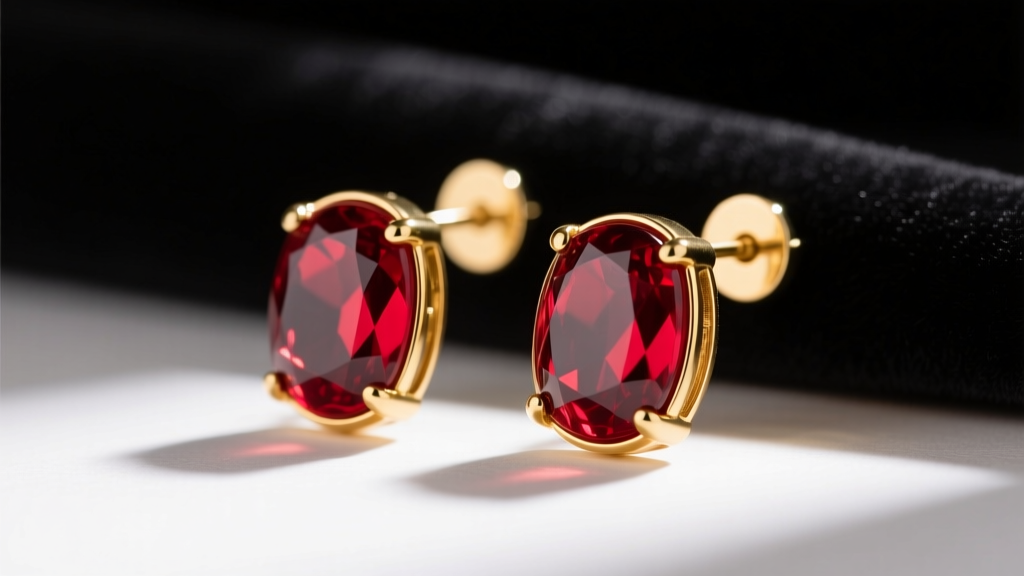
Collecting vintage designer jewelry is a pursuit of history, artistry, and enduring style. Among the most coveted pieces in the secondary market are vintage Givenchy earrings, celebrated for their bold silhouettes, intricate metalwork, and exceptional use of simulated gemstones. As of 2026, the demand for 1970s and 1980s Givenchy pieces has surged, transforming these accessories into serious investment assets. However, the very materials that give these earrings their distinctive mid-century and late-century charm—such as Gripoix glass, faux pearls, and gold-tone base metals—are highly susceptible to improper cleaning.
Unlike fine jewelry crafted from solid 18k gold and natural diamonds, vintage costume jewelry requires a specialized, conservative approach to maintenance. Using standard jewelry dips or ultrasonic cleaners will instantly destroy the foil backing of a rhinestone or strip the delicate nacre coating from a faux pearl. In this comprehensive guide, we will explore the exact material compositions of vintage Givenchy earrings and provide actionable, museum-grade protocols for cleaning and preserving them.
Understanding the Anatomy of Vintage Givenchy Earrings
To properly care for your collection, you must first understand what you are handling. Hubert de Givenchy collaborated with master artisans, most notably the legendary Atelier Gripoix and the Scemama workshop, to produce jewelry that mimicked the opulence of fine gems using innovative alternative materials.
- Base Metals: Most vintage Givenchy earrings are cast in brass, pewter, or white metal alloys, then heavily electroplated with gold or silver. This plating is durable but can be worn away by abrasive polishes.
- Gripoix Glass (Pâte de Verre): A hallmark of 1980s Givenchy designs, this technique involves pouring molten glass directly into metal molds. The glass is often backed with metallic foil or paint to enhance its luminosity.
- Faux Pearls: Givenchy frequently used high-quality glass beads coated with essence d'orient (a crystalline substance derived from fish scales) or durable plastic beads with a pearlescent lacquer.
- Rhinestones: Lead glass or acrylic chatons, often featuring an Aurora Borealis (AB) chemical coating, set into pronged or glued metal settings with delicate silver foil backing.
The Golden Rules of Vintage Jewelry Conservation
Before applying any cleaning agent, adhere to these fundamental rules of vintage jewelry conservation, endorsed by institutions like the Victoria and Albert Museum. The primary goal is to stabilize the piece and remove surface oils without compromising the original patina or structural adhesives.
Never submerge vintage costume jewelry in water. Moisture is the enemy of foil-backed stones, water-soluble glues, and base metal alloys prone to oxidation.
Always remove earrings before applying cosmetics, perfumes, or hairspray. The alcohol and volatile organic compounds (VOCs) in modern beauty products can cloud acrylic stones and degrade pearl coatings over time. When handling your Givenchy earrings, hold them by the metal edges or the clasp mechanism rather than the stones to prevent transferring sebum to the facets.
Material-Specific Cleaning Protocols
Different materials react violently to specific chemicals. Below is a decision matrix to help you select the correct cleaning agent based on the primary material of your vintage Givenchy earrings.
| Material | Safe Cleaning Agent | Dangerous Agents | Recommended Tool |
|---|---|---|---|
| Gripoix Glass | Dry Microfiber | Water, Ultrasonic, Ammonia | Untreated Soft Cloth |
| Faux Pearls | Damp Cloth (Water Only) | Alcohol, Acetone, Vinegar | Cotton Swab |
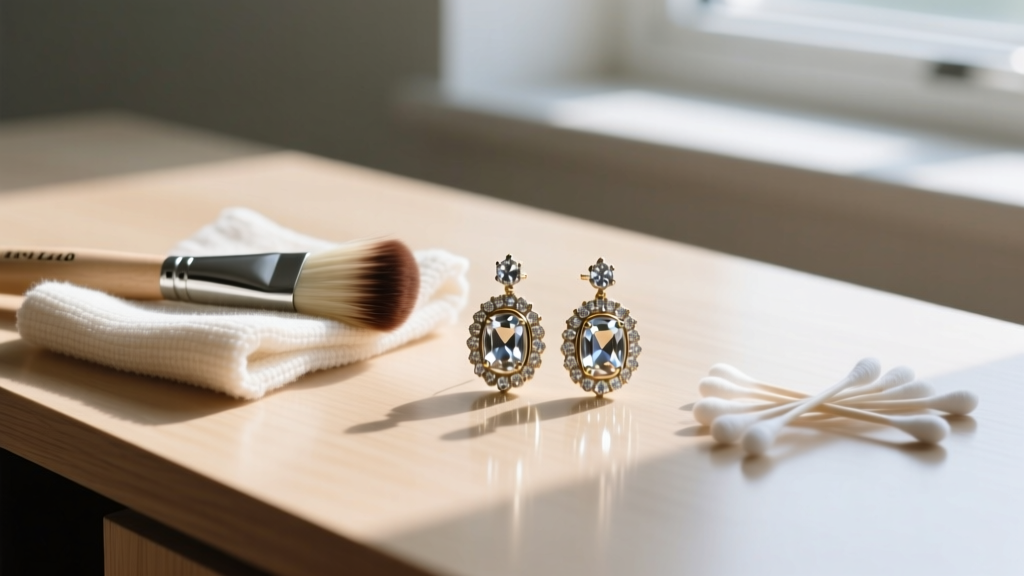
| Rhinestones | Dry Soft Brush | Any Liquid, Glass Cleaner | Clean Makeup Brush |
| Gold-tone Metal | Mild Soap Suds (Avoid Stones) | Brasso, Dip Cleaners, Baking Soda | Microfiber Cloth |
Restoring Gripoix Glass and Enamel
Gripoix glass is remarkably stable on the surface, but the danger lies in the setting. If water seeps between the glass and the metal bezel, it will oxidize the foil backing, turning it permanently black and dulling the stone's brilliance. To clean Gripoix cabochons, use a dry, lint-free microfiber cloth. For stubborn grime in the crevices of the metal setting, use a wooden toothpick or a dry cotton swab to gently dislodge the dirt. Never use liquid solvents, as they can dissolve the historic shellac or epoxy adhesives holding the glass in place.
Reviving Rhinestones and Aurora Borealis Finishes
The Gemological Institute of America (GIA) frequently warns against using ultrasonic cleaners on treated or fractured stones, and this rule is magnified tenfold for vintage rhinestones. The Aurora Borealis (AB) finish is a microscopically thin layer of vaporized metal. Wiping it with a damp cloth or chemical polish will strip the iridescence, leaving a dull, clear stone. Use a pristine, soft-bristled makeup brush to gently sweep away dust and skin cells from the facets. If a stone appears cloudy from the inside, the foil backing has likely oxidized due to past moisture exposure; this requires professional re-foiling, not aggressive surface cleaning.
Caring for Faux Pearls
Givenchy's faux pearls are masterpieces of illusion, but their organic or lacquered coatings are highly sensitive to acids and alkalis. Human sweat is slightly acidic and can slowly eat away at the pearlescent finish, causing it to peel or crack. After wearing pearl earrings, gently wipe them with a soft, dry cloth. If they require deeper cleaning, dip a cotton swab in distilled water (never tap water, which contains chlorine and minerals), roll it over the pearl, and immediately dry it with a separate soft cloth. Never use jewelry polishing cloths treated with micro-abrasives, as they will sand the pearl coating right off the glass bead.
Maintaining Clasps and Tension Mechanisms
Vintage Givenchy earrings heavily feature omega-backs, lever-backs, and tension clip-ons. The mechanical components of these clasps are often made of steel or spring-tempered copper alloys, which are highly prone to rust and verdigris (green corrosion).
To maintain the tension and function of a clip-on earring:
- Use a can of compressed air to blow out dust and debris from the hinge mechanism.
- Apply a microscopic drop of synthetic watch oil or sewing machine oil to the hinge pin using a needle.
- Work the clasp open and closed to distribute the lubricant.
- Wipe away any excess oil immediately to prevent it from migrating onto porous stones or fabric elements.
Never bend the metal of a vintage clip-on to adjust the tension. Base metals suffer from metal fatigue; repeated bending will cause the arm to snap entirely.
Archival Storage for the Modern Collector
Proper storage is the final, crucial step in your maintenance routine. As the vintage market matures in 2026, collectors are moving away from traditional jewelry boxes, which often contain acidic glues and synthetic velvets that off-gas and tarnish metals.
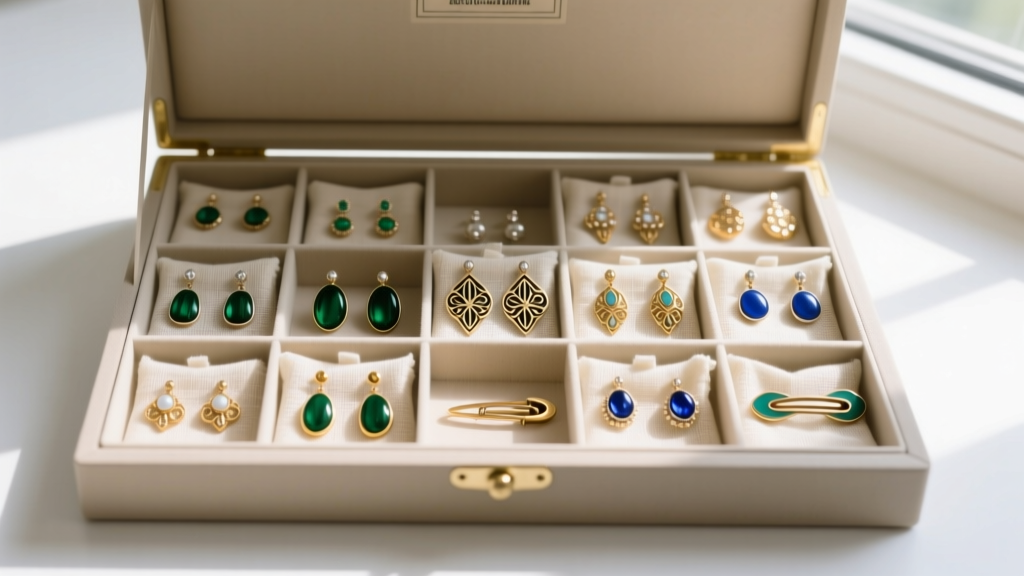
Store your cleaned Givenchy earrings in an acid-free, archival-quality plastic box with individual compartments. Wrap each piece in unbleached muslin or acid-free tissue paper to prevent metal-to-metal scratching. Include 3M anti-tarnish strips or Pacific Silvercloth tabs in the storage container to absorb atmospheric sulfur and hydrogen sulfide, the primary culprits behind gold and silver plating tarnish. Keep the storage box in a climate-controlled environment, aiming for a relative humidity of 45% to 50% to prevent both metal oxidation and the drying out of structural adhesives.
When to Seek Professional Restoration
While routine cleaning can be safely performed at home, certain issues require the intervention of a professional vintage jewelry conservator. If you notice rhinestones falling out, do not attempt to glue them back in with modern cyanoacrylate (Super Glue), as the fumes will permanently cloud the surrounding stones. Similarly, if the gold plating is severely worn, revealing the base metal beneath, a professional can carefully re-plate the piece using period-accurate 22k gold wash techniques. By respecting the historical integrity of these materials and employing gentle, targeted cleaning methods, you ensure that your vintage Givenchy earrings will continue to captivate and retain their value for decades to come.


