Givenchy Lock Earrings: Authentication, Weight & Material Deep Dive
An expert technical guide to Givenchy lock earrings, covering vintage hallmarks, gold-plate micron thickness, weight, and authentication.

The Anatomy of Givenchy Lock Earrings
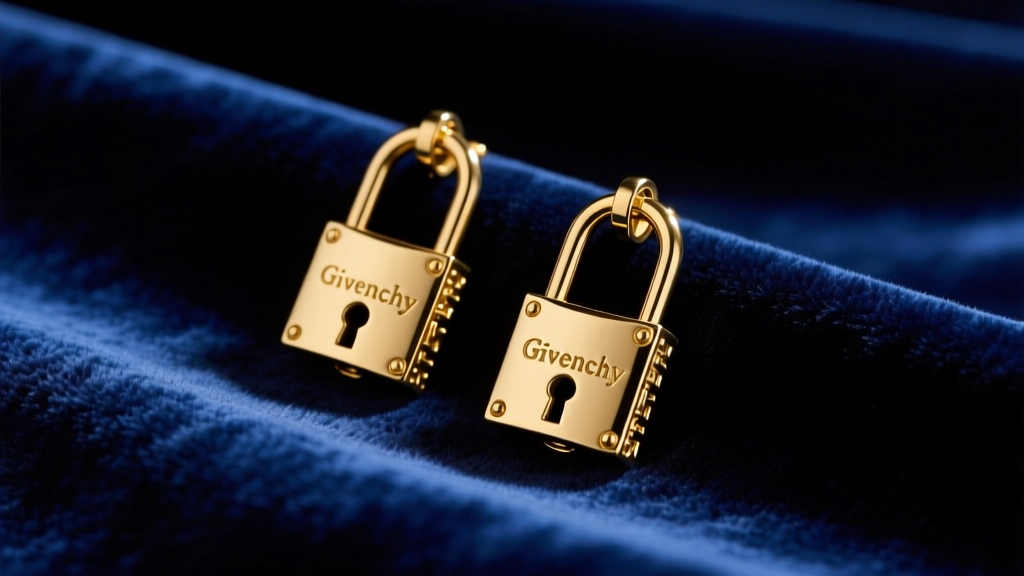
When discussing luxury hardware in the realm of high-fashion costume jewelry, few motifs carry the architectural weight and historical prestige of the Givenchy lock earrings. Originating prominently during the opulent 1980s Parisian runway era under Hubert de Givenchy, the padlock and heavy-link lock motifs were designed to project power, security, and unapologetic opulence. Unlike delicate fine jewelry that relies on precious gemstones for value, these statement pieces derive their status from sheer scale, structural integrity, and masterful metallurgical finishing. Today, as collectors and stylists in 2026 continue to source these archival pieces, understanding the precise anatomy of these earrings is critical. The design typically features a robust upper clasp mechanism—often an omega clip or a reinforced hinged snap-back—suspended by a rigid or semi-rigid drop chain that terminates in a fully three-dimensional, cast-metal padlock. The locks themselves are rarely hollow; they are dense, tactile objects that catch the light across beveled edges and recessed keyholes, demanding a rigorous technical evaluation before acquisition.
Metallurgy and Plating: What Are They Actually Made Of?
To the untrained eye, vintage Givenchy lock earrings appear to be solid gold. In reality, the base metal is typically a high-density pewter, brass, or Zamak (a zinc-aluminum alloy) chosen specifically for its ability to hold intricate cast details without warping. The magic lies in the surface treatment. According to historical manufacturing standards documented by the Gemological Institute of America (GIA), premium French costume jewelry of the 1980s often utilized heavy gold electroplating rather than the ultra-thin 'flash' plating seen on lower-tier accessories. Authentic vintage Givenchy pieces frequently boast a gold layer measuring between 1.0 and 2.5 microns thick, often layered over a nickel or copper barrier to prevent the base zinc or brass from migrating to the surface. This specific micron thickness yields the deep, buttery 'champagne gold' or 'aurora borealis' finish that is highly prized by modern archivists. However, because these are not solid karat gold, the structural integrity of the plating is entirely dependent on how the piece was stored and worn over the last four decades. Friction points, particularly where the lock bail rubs against the drop ring, are the first areas to exhibit base-metal bleed-through.
Technical Authentication: Hallmarks and Clasp Mechanics
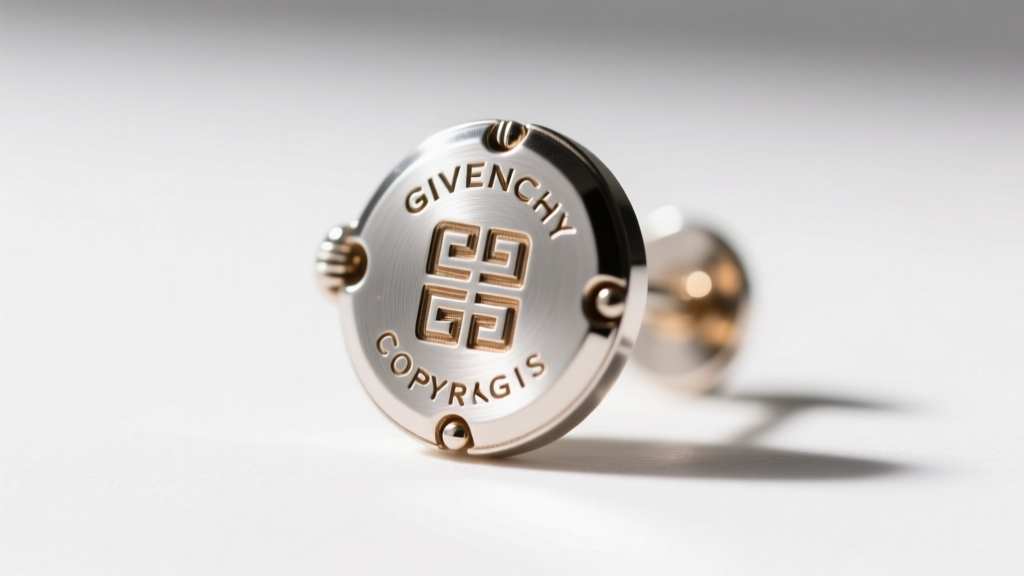
Authentication of Givenchy lock earrings requires a forensic approach to hallmark tracking and clasp evaluation. Counterfeiters frequently replicate the visual weight of the padlock but fail to accurately reproduce the precise typography and placement of the copyright stamps. The evolution of the Givenchy hallmark is a reliable timeline for dating these pieces, which directly impacts their market valuation in the vintage sector.
| Era | Hallmark Configuration | Clasp Type & Hardware Notes |
|---|---|---|
| 1970s - Early 1980s | "Givenchy © Paris" (Often accompanied by a VGC or patent number) | Standard friction posts with heavy brass bullet clutches; early omega clips. |
| Mid 1980s - 1990s | "Givenchy ©" (Frequently featuring the four-leaf clover or specific collection symbols) | Hinged snap-backs, reinforced omega clips with tension springs. |
| 2000s - Present | "Givenchy" (Simpler, often laser-etched or stamped without the © Paris designation) | Standard post and clutch, or integrated click-hinges on modern hardware. |
Beyond the stamps, the clasp mechanics offer vital authentication clues. Vintage omega clips on authentic Givenchy lock drops possess a distinct, high-tension spring mechanism that requires deliberate force to open, ensuring the heavy earring remains secured to the earlobe. Fakes often utilize loose, low-tension wire clips that fail to support the weight of the lock. For comprehensive market valuation and auction histories of these specific hallmarks, the Bonhams Costume Jewelry Department archives remain an indispensable resource for serious collectors.
Ergonomics and Lobe Biomechanics
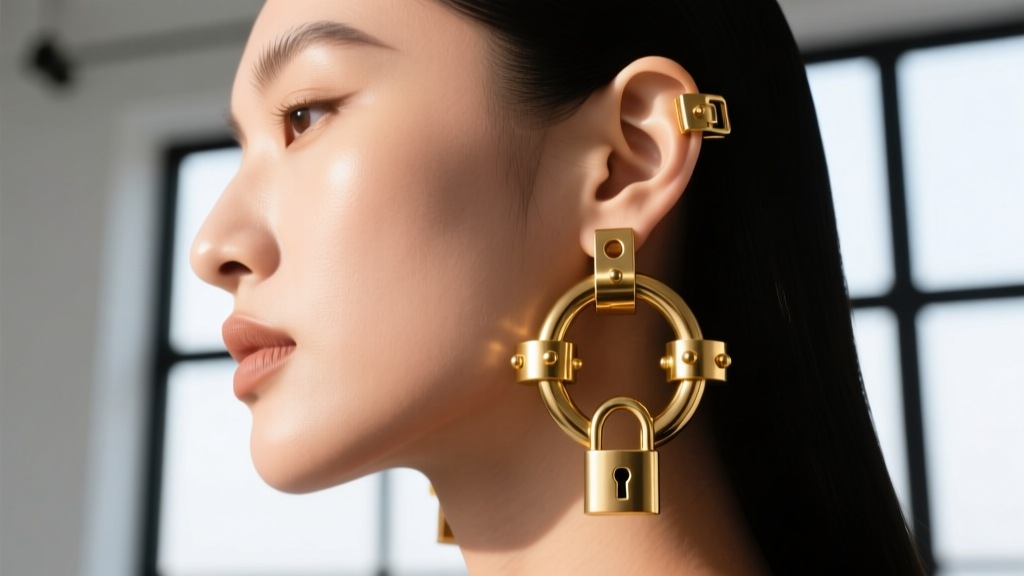
Wearing Givenchy lock earrings is an exercise in biomechanical endurance. A single vintage padlock drop earring can weigh anywhere from 18 to 26 grams. For context, the average human earlobe begins to experience micro-tearing and long-term elongation when subjected to continuous loads exceeding 15 grams. The sheer mass of the lock creates a pendulum effect; with every turn of the head, the kinetic energy transfers directly to the piercing fistula. To mitigate this, vintage Givenchy designs heavily favored the omega clip or a wide-gauge hinged hoop (typically 1.2mm to 1.4mm in thickness) rather than a standard 0.8mm friction post. The omega clip distributes the weight across a broader surface area of the lower lobe cartilage rather than concentrating it entirely on the piercing hole. For modern wearers styling these archival pieces, it is highly recommended to use transparent silicone earring support patches or adhesive lobe supports. These patches act as a secondary load-bearing membrane, preventing the dreaded 'stretched lobe' effect while allowing the heavy gold hardware to hang at the intended, flattering angle against the jawline.
Modern vs. Vintage Hardware: A 2026 Perspective
While the vintage 1980s Paris pieces remain the holy grail for purists, the contemporary iterations of Givenchy lock earrings introduced over the last decade utilize vastly different manufacturing techniques. Modern hardware often abandons traditional electroplating in favor of PVD (Physical Vapor Deposition) coating over surgical-grade stainless steel or titanium bases. PVD offers superior scratch resistance and eliminates the risk of nickel allergies, which can sometimes be triggered by the copper barrier layers in vintage electroplated pieces. Furthermore, modern artistic directors have reinterpreted the lock motif into sleek, minimalist 'U-Lock' geometric shapes, reducing the overall weight to a more ergonomic 8 to 12 grams per earring. While these modern pieces offer superior daily wearability and hypoallergenic safety, they lack the dense, hand-finished artisanal gravity and the deep, warm gold tones that characterize the original Hubert de Givenchy era, as frequently noted in the Vogue Fashion Archives.
Maintenance: Preventing Verdigris and Plating Wear
Preserving the structural and aesthetic integrity of vintage Givenchy lock earrings requires strict adherence to specialized cleaning protocols. Because the padlock designs feature deep crevices, recessed keyholes, and intricate bail connections, they are highly susceptible to trapping moisture, lotions, and acidic skin oils. When these contaminants interact with exposed base metals (brass or copper), they trigger a rapid oxidation process known as verdigris—a toxic, green crusting that can permanently ruin both the jewelry and the wearer's skin.
- Never use ultrasonic cleaners: The high-frequency vibrations will fracture the brittle vintage gold plating and cause immediate delamination from the zinc or pewter base.
- Avoid chemical dips: Commercial silver or gold dips contain harsh thiourea compounds that will strip the micron-thin gold layer down to the base metal in seconds.
- Dry-brushing protocol: Use a clean, ultra-soft cosmetic brush to dislodge dust and skin cells from the padlock keyhole and bail crevices after every wear.
- Micro-surfactant cleaning: If degreasing is necessary, use a single drop of pH-neutral dish soap diluted in distilled water, applied with a microfiber swab, followed immediately by thorough drying with compressed air to ensure no moisture remains trapped in the hardware joints.
- Wax sealing: For long-term archival storage, applying a microscopic layer of museum-grade microcrystalline wax (such as Renaissance Wax) over the metal surfaces will create an inert barrier against atmospheric humidity and oxygen.
By treating these earrings not merely as accessories, but as archival artifacts of 20th-century metallurgical artistry, collectors can ensure that the heavy, golden padlocks of Givenchy continue to secure their place in fashion history for decades to come.


