Glinda Earring Guide: Wicked-Inspired Statement Jewelry 2026
Discover how to style the iconic Glinda earring trend for 2026. Learn expert tips on supporting heavy statement pieces, material grades, and lobe care.


The Magic of the Glinda Earring: Decoding the Trend
The cultural resurgence of the Wicked universe has firmly cemented the "glinda earring" as a definitive jewelry trend for 2026. Characterized by opulent, ethereal motifs—most notably the starburst halo, the crown silhouette, and the cascading crystal chandelier—this style is a masterclass in maximalist glamour. But wearing a piece of Shiz University royalty on your earlobes requires more than just a good outfit; it demands an understanding of weight distribution, material science, and facial geometry. Whether you are attending a formal gala, diving into high-end cosplay, or simply elevating a minimalist wardrobe, this beginner-friendly guide will teach you how to wear heavy statement earrings safely and stylishly.
Starburst vs. Chandelier: Which Silhouette Suits Your Face Shape?
Not all glinda earrings are created equal. The two dominant silhouettes in this trend are the geometric starburst and the fluid chandelier. Choosing the right one depends heavily on your facial structure:
- Round Faces: Opt for angular, elongated starburst designs. The sharp, radiating lines create an optical illusion that lengthens the face and adds structural definition to soft jawlines.
- Square Faces: Choose cascading chandelier styles with teardrop or oval crystal terminals. The curved, fluid movement softens strong mandibular angles and draws the eye downward gracefully.
- Oval Faces: You have the versatility to pull off any glinda earring style. However, a wide, symmetrical halo starburst will beautifully accentuate your natural facial balance.
- Heart-Shaped Faces: Look for chandelier earrings that are wider at the bottom than at the top. This adds visual weight to the lower half of your face, balancing a narrower chin.
The Heavy Earring Dilemma: Protecting Your Lobes
The most common failure mode for statement jewelry is earlobe trauma. A true glinda earring, packed with cubic zirconia or lab-grown diamonds and cast in solid metals, can easily weigh between 15 and 30 grams per ear. For context, a standard everyday stud weighs less than 2 grams. Prolonged wear of heavy earrings without proper support leads to "earlobe droop," micro-tears in the fistula (the piercing hole), and eventual stretching. According to dermatological guidelines on skin tension, continuous sheer force on the delicate earlobe tissue accelerates collagen breakdown, causing permanent sagging.
Weight Distribution and Support Methods
To wear heavy earrings safely, you must match the earring's weight to the appropriate support mechanism. Use the table below to determine what your earlobes need:
| Earring Weight | Recommended Support Method | Ideal Wire Gauge |
|---|---|---|
| Under 7g | Standard friction back or silicone stopper | 20g (0.81mm) |
| 7g - 15g | Omega backs or wide-disc silicone clutches | 18g (1.02mm) |
| 15g - 25g | Adhesive earlobe support patches | 16g (1.29mm) |
| Over 25g | Harness chains (wrapping around the ear) or clip-ons | N/A |
Gauge Sizes and the "Cheese Wire" Effect
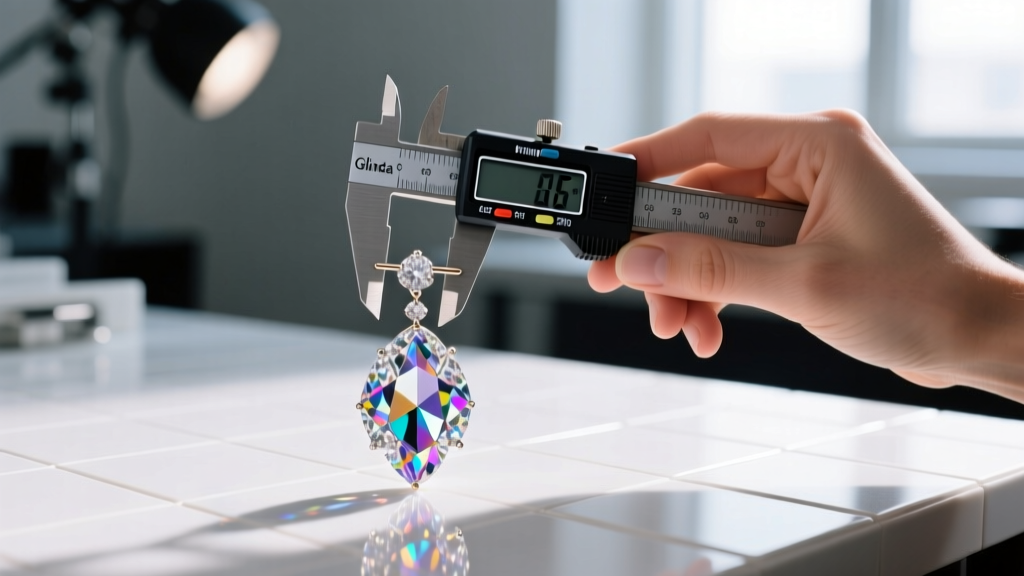
Most commercial fashion jewelry is manufactured with a 20-gauge (0.81mm) post. When you hang a 20-gram glinda earring on a 20-gauge wire, the pressure per square millimeter on your piercing tissue is immense. Over a few hours, gravity turns that thin wire into a cheese cutter, slicing through the bottom of your piercing channel. When shopping for high-quality statement pieces, actively seek out 18-gauge or 16-gauge posts. The thicker wire distributes the sheer force across a wider surface area of tissue, drastically reducing the risk of tearing and increasing comfort for all-day wear.
Material Matters: What to Look for in 2026
The ethereal sparkle of a glinda earring relies heavily on the interplay between the metal setting and the gemstones. In 2026, the market is saturated with both high-end fine jewelry and mass-produced costume pieces. Here is how to decode the materials.
The Metal: Rhodium-Plated Sterling Silver
Pure silver is too soft to hold heavy gemstone settings, which is why 925 sterling silver is the industry standard. However, sterling silver tarnishes when exposed to sulfur and moisture. The best glinda earrings are plated with rhodium, a precious metal from the platinum family. Rhodium plating not only provides a brilliant, reflective white finish that mimics platinum, but it also acts as a hypoallergenic barrier, preventing the nickel allergies that often plague fashion jewelry wearers.
The Stones: Cubic Zirconia vs. Lab-Grown Diamonds
While the untrained eye might not see the difference, the physics of light refraction separates CZ from lab diamonds. According to the Gemological Institute of America (GIA), cubic zirconia has a refractive index of 2.15 to 2.18, while a diamond sits at 2.42. This means lab-grown diamonds will exhibit superior "fire" (the dispersion of light into spectral colors). If you are buying a glinda earring for occasional cosplay or formal events, high-grade 5A CZ is perfectly acceptable and keeps the price under $150. If this is an investment piece for weddings and galas, opt for lab-grown diamonds, which offer identical optical and chemical properties to mined diamonds at a fraction of the cost.
Expert Cleaning Tip: Never put rhodium-plated silver with porous or fractured-filled gemstones in an ultrasonic cleaner. The high-frequency vibrations can shatter the stones and strip the rhodium plating. Instead, use a mild dish soap, lukewarm water, and a baby-soft toothbrush to gently clean the pavé settings.
Troubleshooting Common Fit Issues
Even with the perfect pair, beginners often encounter mechanical issues when wearing oversized statement earrings. Here is how to troubleshoot the most common complaints.
The Forward Tilt
The Problem: The earring post is perfectly straight, but the heavy front ornament pulls the earring downward, making it look like it is falling off your ear.
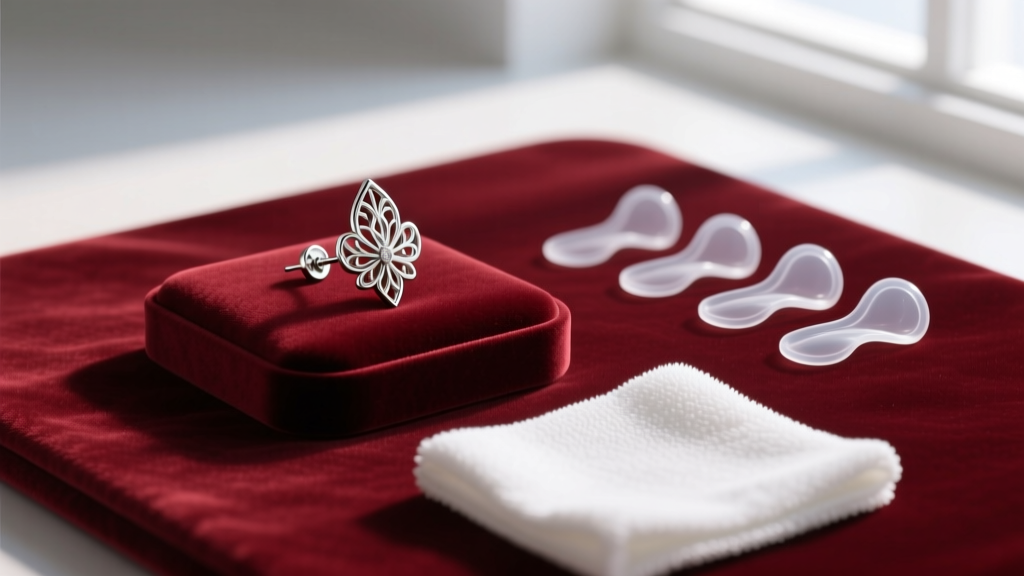
The Fix: This happens when the center of gravity is too far forward for a standard butterfly back to counterbalance. Switch to a heavy-duty silicone disc back or a metal omega back. The wider surface area grips the post tighter and pushes the earlobe forward, correcting the angle.
The Slipping Post
The Problem: The earring back constantly slides down the post, putting you at risk of losing the piece.
The Fix: Friction backs fail when the post lacks adequate notches (grooves). If your glinda earring has a smooth post, abandon friction backs entirely. Use a threaded screw-back (if the post is threaded) or a silicone O-ring stopper that grips the smooth metal via tension rather than grooves.
Earlobe Fatigue and Redness
The Problem: After three hours of wear, the back of your earlobe is red, tender, and throbbing.
The Fix: You are experiencing pressure necrosis. The American Academy of Dermatology advises against ignoring persistent skin tension, as it can lead to contact dermatitis or localized infections. Immediately remove the earrings, massage the lobe to restore blood flow, and apply a cold compress. For future wear, you must utilize adhesive earlobe support patches. These invisible, medical-grade tape patches adhere to the back of the earlobe; you pierce the earring directly through the tape, which acts as a structural splint, bearing the weight of the metal rather than your flesh.
Day-to-Night Transitioning
The beauty of the glinda earring trend is its versatility. To transition these maximalist pieces from a high-fashion daytime look to evening glamour, let the earrings do the heavy lifting. During the day, pair a scaled-down starburst glinda earring with a structured blazer, a crisp white t-shirt, and sleek, pulled-back hair. The contrast between casual menswear-inspired tailoring and ethereal jewelry creates a striking, editorial aesthetic. As evening approaches, swap the blazer for a velvet or silk slip dress, let your hair down in soft waves, and allow the chandelier terminals to catch the ambient light. By understanding the mechanics, materials, and styling geometry of your jewelry, you can wear the magic of the glinda earring with absolute confidence and comfort.


