How to Treat and Prevent an Allergy to Fake Earrings
Suffering from an allergy to fake earrings? Learn how to treat contact dermatitis, identify toxic base metals, and find safe hypoallergenic alternatives.

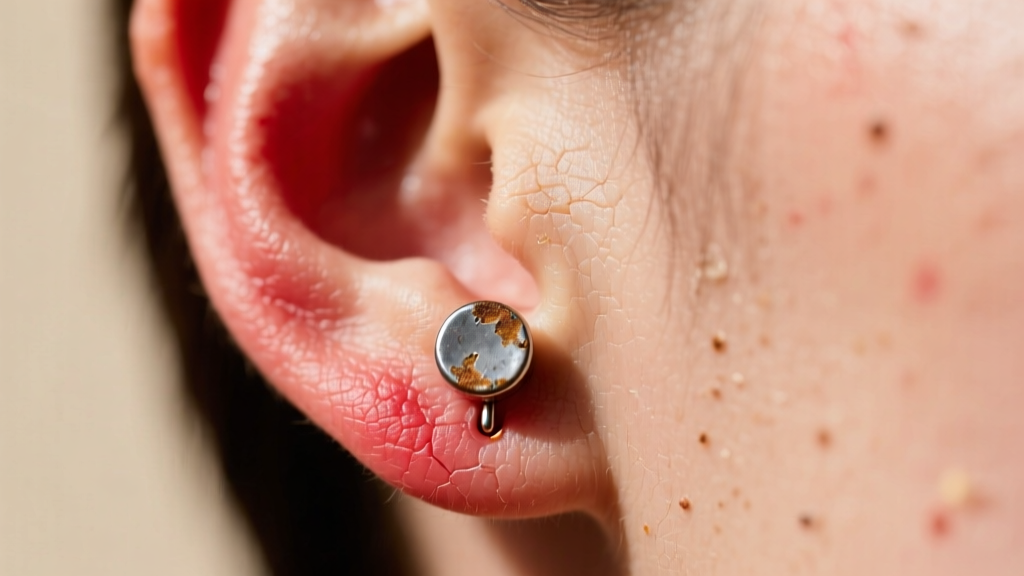
The Metallurgy of Fashion Jewelry: What You Are Actually Wearing
When consumers search for relief from an allergy to fake earrings, they are rarely dealing with a single, uniform material. "Fake" or fashion earrings are typically manufactured from inexpensive base metal alloys that are flash-plated with microscopic layers of gold, silver, or rhodium. Once this plating wears away—often within days of contact with skin acidity and friction—the underlying alloy is exposed to the epidermis.
The primary culprit behind allergic contact dermatitis (ACD) in jewelry is nickel, but it is rarely acting alone. Common base metals include Zamak (a zinc alloy containing aluminum, magnesium, and copper), brass (copper and zinc), and low-grade "surgical steel" (which can contain 10% to 14% nickel). According to the National Institute of Health (NIH), nickel allergy is the most common contact allergy worldwide, affecting up to 20% of the general population. When nickel ions leach from the earring post and penetrate the stratum corneum, they bind to skin proteins, triggering a localized immune response known as haptenization.
Decoding the Base Metal Spectrum
Not all "hypoallergenic" labels are created equal. Fast-fashion brands frequently use unregulated marketing terms that offer zero protection for sensitive ears. Below is a breakdown of common alloys found in cheap earrings and their actual risk profiles.
| Material / Marketing Term | Actual Composition | Nickel Leach Risk | Failure Mode |
|---|---|---|---|
| "Nickel-Free" Plated Brass | Copper/Zinc core with a palladium or tin barrier layer | Moderate to High | Barrier layer micro-cracks under friction; core oxidizes. |
| "Surgical" Stainless Steel | 316L Steel (contains 10-14% Nickel) | High | Sweat and sebum break down the chromium oxide passivation layer. |
| Tibetan / Alpaca Silver | Copper, Nickel, Zinc, and Tin alloys | Extreme | Contains up to 20% nickel; causes rapid, severe ACD flare-ups. |
| ASTM F136 Titanium | Ti-6Al-4V ELI (Implant-Grade) | Zero | Biologically inert; will not oxidize or leach ions in the body. |
The European Union's Nickel Directive strictly limits nickel release from jewelry to 0.5 µg/cm²/week. However, many international fast-fashion manufacturers bypass these testing protocols, leaving consumers to act as the ultimate guinea pigs.
Immediate Triage: Treating an Active Flare-Up
If your earlobes are currently weeping, crusting, or radiating heat, you are in the acute phase of contact dermatitis. The Mayo Clinic advises immediate removal of the offending allergen to halt the immune cascade.
Step 1: Extraction and Cleansing
Remove the earring immediately. Do not force it if the fistula (piercing hole) has swollen shut; seek a professional piercer or dermatologist to avoid tearing the tissue. Cleanse the area twice daily using a sterile 0.9% sodium chloride (saline) wound wash. Avoid harsh antibacterial soaps, rubbing alcohol, or hydrogen peroxide, which destroy newly forming keratinocytes and delay re-epithelialization.
Step 2: Pharmacological Intervention
Apply an over-the-counter 1% hydrocortisone ointment (not cream, as creams contain preservatives that can sting compromised skin) to the exterior of the lobe twice daily for up to 7 days. This suppresses the localized T-cell response and reduces pruritus (itching).
Step 3: Avoid the "Clear Nail Polish" Myth
"Coating earring posts in clear nail polish is a dangerous, outdated hack. Nail polishes contain toluene, formaldehyde, and dibutyl phthalate—known contact allergens themselves. Furthermore, the polish creates micro-tears as it chips, trapping bacteria and moisture directly inside the fistula."
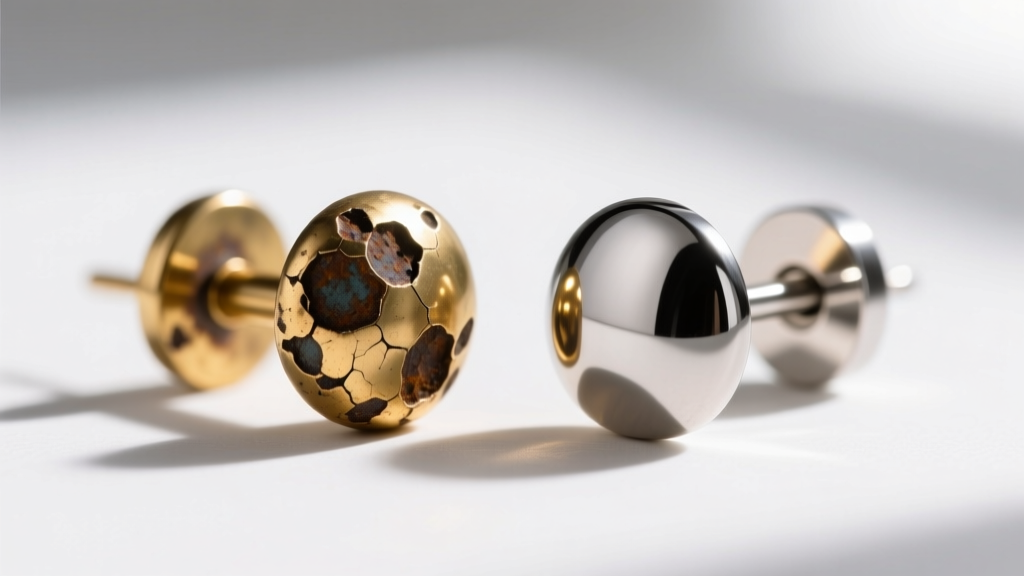
Sourcing True Hypoallergenic Alternatives
Once the acute inflammation has subsided (usually 7 to 14 days), you must carefully reintroduce jewelry to keep the piercing patent. Transitioning away from an allergy to fake earrings requires strict adherence to verified, implant-grade materials.
- ASTM F136 Titanium (Grade 23): This is the gold standard for medical implants and fresh piercings. It is entirely nickel-free and highly biocompatible. Look for jewelers who provide mill certificates verifying their titanium grade.
- Niobium: A highly reactive elemental metal that is naturally hypoallergenic. It is softer than titanium, making it excellent for seamless hoops and clickers, though it cannot be internally threaded.
- 14k or 18k Yellow Gold: Alloyed with silver and copper, high-karat yellow gold is generally safe. Avoid white gold entirely, as it is almost always alloyed with nickel or palladium to achieve its silvery hue, posing a massive risk for ACD sufferers.
Mechanical Irritation vs. Chemical Allergy
Not all ear pain is an allergy. Often, what consumers diagnose as an "allergy" is actually mechanical trauma exacerbated by poor jewelry engineering. Standard fashion earrings are typically stamped out at 22-gauge or 20-gauge (0.64mm to 0.81mm thick). These ultra-thin posts act like cheese wires, migrating through the tissue and causing micro-tears that mimic the redness of an allergic reaction.
Furthermore, cheap earrings utilize external threading (where the screw pattern is on the post). Dragging sharp, jagged threads through a delicate fistula causes internal scarring and inflammation. Always upgrade to internally threaded or threadless (press-fit) jewelry, where the post is perfectly smooth, and the threading is hidden inside the decorative end or backing.
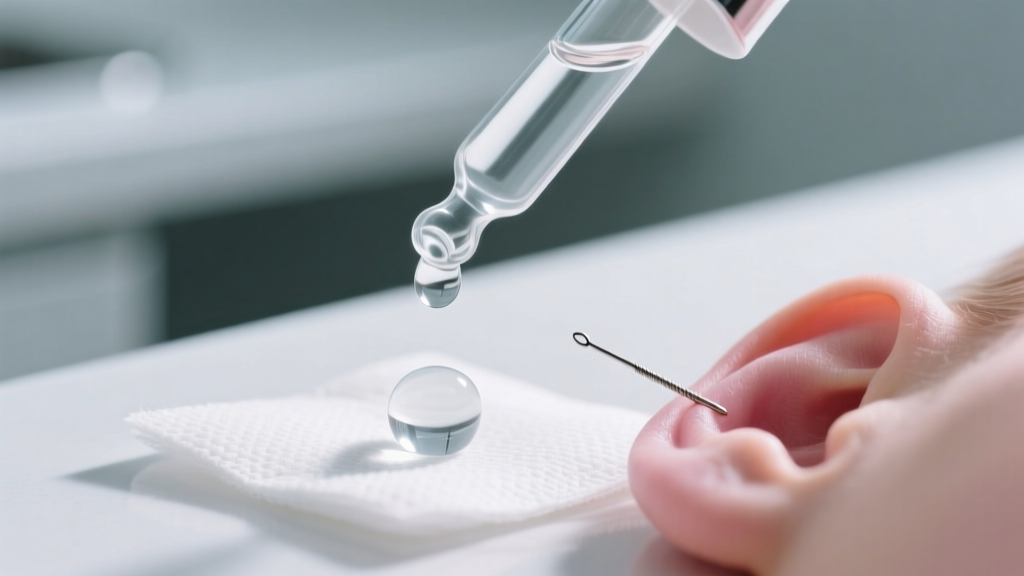
Long-Term Ear Lobe Rehabilitation
Rebuilding the skin barrier inside the piercing channel takes time. For the first month after a severe reaction, wear only continuous, high-polish ASTM F136 titanium labret studs or flat-back earrings. The flat disc prevents pressure necrosis on the back of the earlobe while you sleep, a common issue with traditional butterfly clasps that trap dead skin cells and sebum.
If you suspect a broader metal sensitivity, consult a board-certified dermatologist for a patch test through the American Contact Dermatitis Society. This will map your exact reactivity to cobalt, chromium, and specific gold salts, allowing you to curate a permanent, pain-free jewelry wardrobe free from the hazards of fast-fashion metallurgy.


