Gold Disk Earrings: A Technical Guide to Alloys and Gauges
Explore the technical specs of gold disk earrings. Compare 14k vs 18k alloys, post gauges, flat back mechanics, and casting methods for optimal fit.

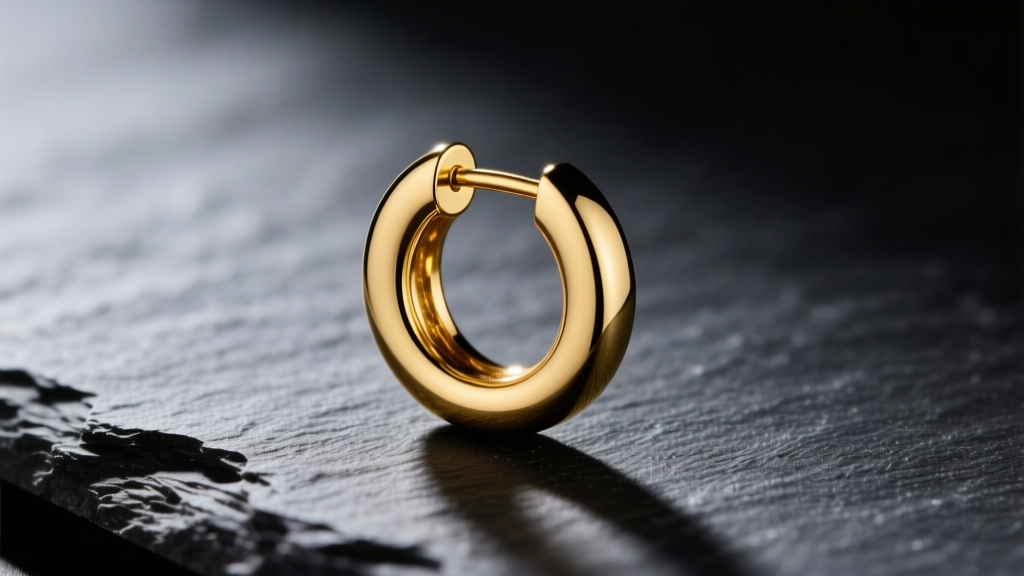
The Anatomy and Structural Integrity of Gold Disk Earrings
While gold disk earrings are a ubiquitous staple in modern jewelry, the structural engineering that separates a lifelong heirloom from a disposable accessory is rarely discussed. At its core, a disk earring consists of three critical components: the face (the disk itself), the shaft (the post), and the securing mechanism (the backing). The most common point of catastrophic failure in mass-market gold disk earrings is the solder joint where the post meets the disk.
In high-end manufacturing, this joint is secured using laser welding, which penetrates the metal deeply without requiring excessive heat that could warp the flat surface of the disk. Conversely, cheap torch-soldered joints often leave a visible bead of solder or, worse, create a brittle connection that snaps under the lateral pressure of sleeping or changing clothes. When evaluating gold disk earrings, always inspect the underside of the disk. A seamless transition or a precisely machined recessed pad indicates superior structural integrity.
Metallurgy Breakdown: 14k vs. 18k Gold Alloys
Pure 24-karat gold is entirely unsuitable for functional body jewelry due to its extreme malleability (roughly 25 on the Vickers Hardness scale). To create durable gold disk earrings, gold must be alloyed with metals like copper, silver, zinc, and occasionally palladium. According to the Gemological Institute of America (GIA), the specific alloy mix not only dictates the color but fundamentally alters the tensile strength and biocompatibility of the earring.
| Karat | Gold Purity | Vickers Hardness (HV) | Best Application | Allergy Risk |
|---|---|---|---|---|
| 14k Yellow | 58.3% | 130 - 150 HV | Everyday lobe wear, high friction | Low (if nickel-free) |
| 18k Yellow | 75.0% | 120 - 135 HV | Cartilage, sensitive healed piercings | Very Low |
| 14k White | 58.3% | 140 - 160 HV | High-impact areas, secure clasps | Moderate (often contains nickel) |
| 18k Rose | 75.0% | 115 - 130 HV | Aesthetic lobe wear, low friction | Low (copper-heavy, nickel-free) |
For individuals with reactive skin, 18k gold is generally superior because the higher gold content leaves less room for reactive alloy metals. However, 14k gold offers better resistance to scratching and denting, making it the pragmatic choice for large-diameter disk earrings (8mm and above) that are more prone to accidental impacts.
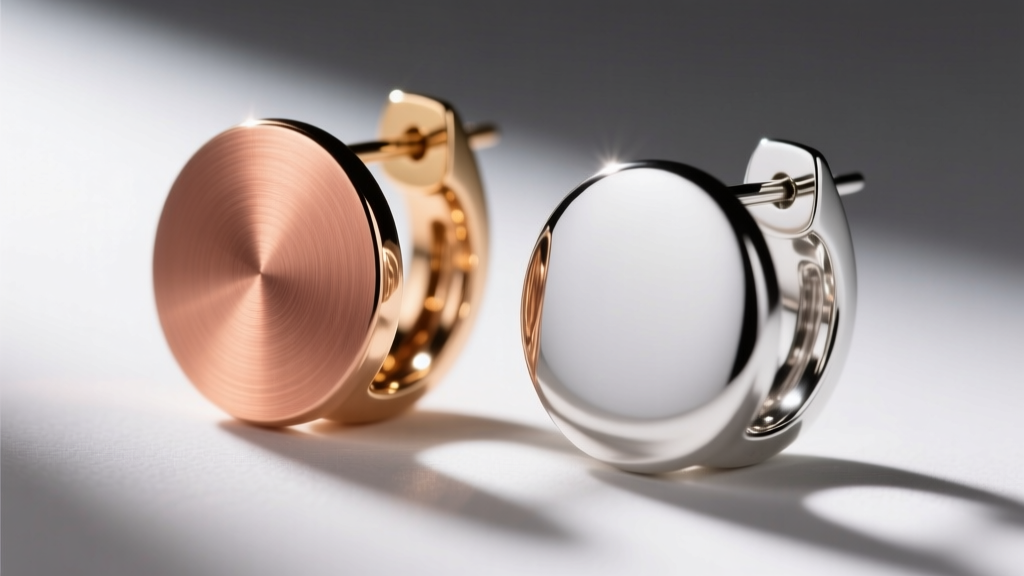
Post Gauges and Biomechanical Considerations
The thickness of the earring post—measured in gauges—is arguably the most critical technical specification for long-term piercing health. The Association of Professional Piercers (APP) strictly outlines gauge requirements based on the anatomical location of the piercing to prevent migration and tissue tearing.
The 'Cheese Cutter Effect' in Cartilage
Wearing a thin 20-gauge (0.81mm) or 18-gauge (1.02mm) post in a cartilage piercing (such as the helix, tragus, or conch) creates a biomechanical vulnerability known as the cheese cutter effect. Because cartilage is dense and lacks the elasticity of the earlobe, a thin wire under tension will slowly slice through the tissue over time. For cartilage placements, gold disk earrings must feature a minimum 16-gauge (1.29mm) or 14-gauge (1.63mm) post to distribute the physical load across a wider surface area.
Lobe vs. Cartilage Backing Mechanics
- Butterfly Clutches (Friction Backs): Acceptable for standard 20G or 18G lobe piercings. However, the crevices trap sebum and dead skin, making them unsuitable for cartilage or unhealed piercings.
- Flat Backs (Labret Posts): The gold standard for cartilage. A flat titanium or gold disc sits flush against the back of the ear, eliminating pressure points during sleep and removing crevices where bacteria accumulate.
Manufacturing Techniques: Stamped vs. Cast Disks
The method used to form the gold disk dramatically impacts its density, surface finish, and longevity. Understanding these manufacturing processes allows you to assess the true value of the piece.
Die Stamping
Stamped gold disk earrings are punched from a solid sheet of gold alloy using high-pressure hydraulic presses. This process induces 'work hardening,' compressing the grain structure of the metal and making the disk significantly denser and more resistant to bending. Stamped disks typically feature perfectly sharp, uniform edges and a highly reflective surface, though they are limited to flat or simple domed geometries.
Lost-Wax Casting
Casting involves injecting wax into a mold, encasing it in investment plaster, burning out the wax, and pouring molten gold into the cavity. Casting allows for complex textures—such as hammered, matte, or granulated disk faces. However, cast gold is inherently softer than stamped gold and is susceptible to microscopic porosity (tiny air bubbles trapped during cooling). If a cast disk is not properly polished or sealed, these pores can harbor moisture and bacteria against the skin.
Threading and Tension Mechanics
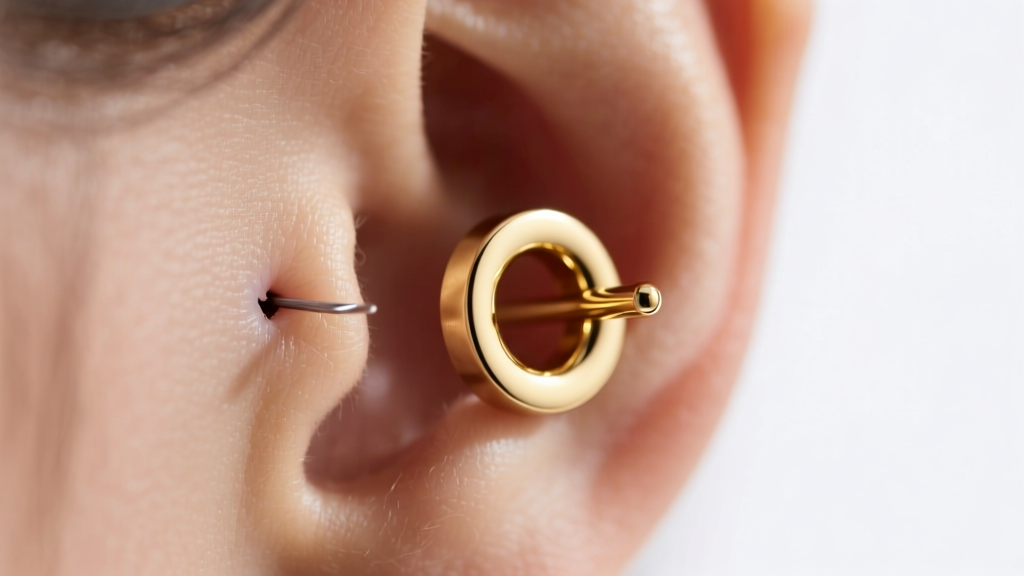
How the backing attaches to the post is a vital detail often overlooked by consumers. Externally threaded earrings—where the screw threads are cut directly into the post shaft—act like a file, tearing the delicate fistula (the skin tube of the piercing) every time they are inserted or removed.
Expert Standard: Never use externally threaded gold disk earrings. Always opt for internally threaded or threadless (tension-fit) mechanisms to preserve tissue health and ensure a secure fit.
Threadless (Push-Pin) Systems: Utilizing a slightly bent pin that slides into a hollow post, threadless earrings rely on the spring tension of the metal to stay locked in place. This is currently the most secure and tissue-friendly option on the market, entirely eliminating the risk of cross-threading or losing the backing during sleep.
Quality Control Checklist for Buyers
When sourcing high-quality gold disk earrings, bypass marketing jargon and verify the following technical specifications:
- Hallmark Verification: Look for stamped '585' (14k) or '750' (18k). Ensure the hallmark is on the post or the backing, not just the display card.
- Nickel Compliance: If purchasing white gold, demand proof of compliance with the EU Nickel Directive (less than 0.5 micrograms of nickel release per square centimeter per week).
- Edge Finishing: Run a cotton swab along the edge of the disk. If the cotton snags, the edges are poorly finished and will eventually catch on hair or clothing.
- Post Straightness: Roll the post on a flat glass surface. Any wobble indicates poor manufacturing tolerances, which will cause insertion friction and tissue irritation.
By prioritizing metallurgical integrity, correct gauge sizing, and advanced threading mechanics, you can secure gold disk earrings that are not only visually striking but biomechanically optimized for lifelong wear.


