Material Breakdown: Inside Menphina's Earring Alloys & Metals
Discover the metallurgy behind Menphina's earring designs. We compare oxidized silver, raw brass, and titanium against fine jewelry standards.

The Metallurgy of Artisanal Jewelry: Decoding Menphina's Earring
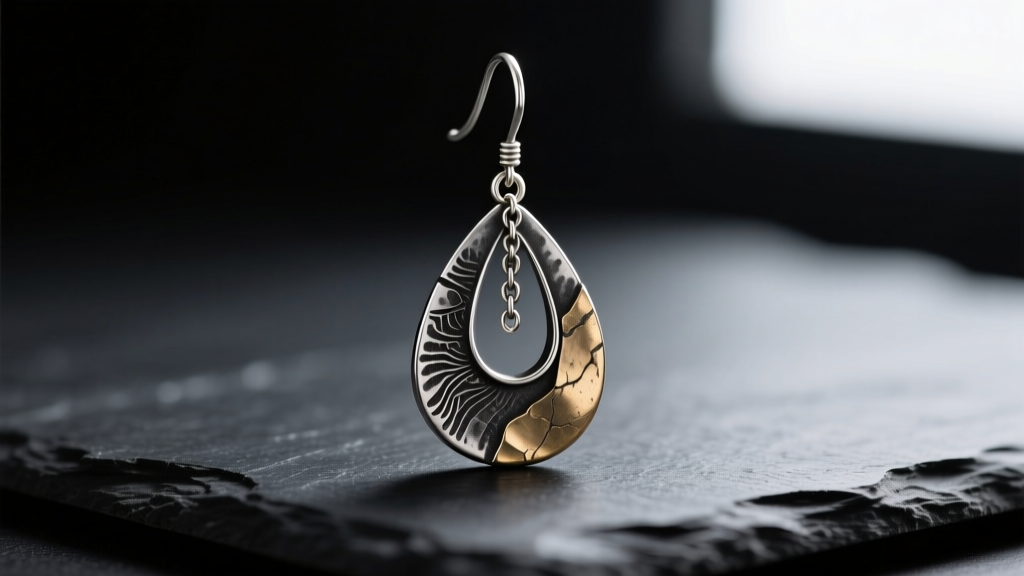
In the contemporary jewelry landscape of 2026, the shift toward brutalist, mixed-media, and artisanal aesthetics has redefined what collectors expect from their accessories. At the forefront of this movement is the signature menphina's earring aesthetic—a design philosophy that intentionally blends raw, unrefined textures with precise structural engineering. Unlike traditional fine jewelry that relies heavily on high-polish 14k gold or rhodium-plated surfaces, Menphina's designs utilize a complex matrix of oxidized sterling silver, raw brass, and biocompatible titanium anchors.
Understanding the material properties of these pieces is crucial for both collectors and everyday wearers. The interplay between different alloys dictates not only the visual patina and aging process of the jewelry but also its biocompatibility, tensile strength, and long-term wearability. In this deep-dive material comparison, we break down the exact metallurgical choices behind these artisanal designs and how they stack up against conventional fine jewelry standards.
Core Material 1: Oxidized .925 Sterling Silver vs. Rhodium-Plated Silver
The foundational metal in many of these artisanal drops is .925 sterling silver, but it is rarely left in its bright, polished state. Instead, the silver undergoes a controlled chemical oxidation process using liver of sulfur (potassium polysulfide). This treatment intentionally accelerates the formation of silver sulfide (Ag2S) on the surface, creating deep charcoal and black crevices that highlight the sculptural textures of the metal.
From a metallurgical standpoint, standard .925 silver has a Vickers hardness (HV) of approximately 65 HV in its annealed state. However, through the mechanical work-hardening processes of rolling, forging, and tumbling, the hardness can be increased to roughly 120 HV. This is significantly softer than the rhodium plating typically applied to commercial sterling silver, which boasts a hardness of 800 to 1000 HV. While rhodium provides a highly scratch-resistant, bright white barrier, it eventually wears away, requiring costly re-plating. Oxidized silver, conversely, embraces wear. The high points of the earring naturally polish against the skin and clothing over time, creating a dynamic, high-contrast finish that evolves with the wearer.
According to the Gemological Institute of America (GIA), silver tarnish is a surface-level chemical reaction that does not compromise the structural integrity of the underlying alloy. However, wearers must avoid harsh chemical dips, which will strip the intentional oxidation and leave the silver with a flat, unnatural white appearance.
Core Material 2: Raw Brass and the Patina Evolution
To introduce warmth and contrast to the cool tones of oxidized silver, Menphina's designs frequently incorporate raw brass elements. The specific alloy typically used is C26000, commonly known as Cartridge Brass, which consists of 70% copper and 30% zinc. This specific ratio is chosen for its excellent cold-working properties, allowing artisans to stamp, fold, and texture the metal without it cracking or splitting.
Raw brass is a reactive metal. When exposed to the oxygen, moisture, and trace salts in the environment, it develops a rich, organic patina. However, this reactivity is a double-edged sword. When raw brass comes into prolonged contact with human sweat—which contains lactic acid and urea—the copper in the alloy can undergo chelation, forming copper lactate. This is the chemical responsible for the notorious "green skin" phenomenon associated with unpainted brass jewelry.
To mitigate this while preserving the raw, matte aesthetic of the brass, high-end artisanal jewelers treat the finished components with a microcrystalline wax sealant, such as Renaissance Wax. Originally developed by the British Museum for artifact preservation, this wax forms a stable, moisture-resistant barrier that prevents the copper from reacting with the skin's acids, while still allowing the metal to look and feel entirely natural and uncoated.
The Biocompatible Anchors: Titanium and Niobium
While the decorative bodies of the earrings utilize reactive metals like brass and oxidized silver, the components that actually pierce the skin—the posts, hooks, and ear wires—demand strict biocompatibility. The signature menphina's earring designs utilize ASTM F136 compliant Ti-6Al-4V ELI (Extra Low Interstitial) titanium for all piercing elements.
Unlike standard 316L "surgical steel," which contains 8% to 10.5% nickel and can leach heavy metals into the fistula causing contact dermatitis, implant-grade titanium is entirely nickel-free. The ELI grade features reduced levels of interstitial elements like oxygen, nitrogen, carbon, and iron, which vastly improves its fracture toughness and corrosion resistance in the chloride-rich environment of the human body. For collectors with hyper-sensitive piercings, this material distinction is non-negotiable.
Comparative Data: Artisanal Mix vs. Traditional Fine Metals
To contextualize the physical properties of these mixed-material earrings, the table below compares the core alloys against traditional fine jewelry benchmarks. Data sourced from The Silver Institute and ASTM International standards.
| Material | Vickers Hardness (HV) | Tensile Strength (MPa) | Nickel Content | Best Use Case in Earrings |
|---|---|---|---|---|
| Oxidized .925 Silver | ~120 (Work-Hardened) | 300 - 350 | 0% | Textured drop bodies, sculptural shields |
| C26000 Raw Brass | ~105 | 310 - 400 | 0% | Geometric accents, hammered halos |
| ASTM F136 Titanium | ~350 | 860 - 965 | 0% | Piercing posts, structural ear wires |
| 14k Yellow Gold | ~135 | 400 - 500 | Varies (often 0-5%) | Traditional fine jewelry, cast settings |
| 316L Surgical Steel | ~220 | 485 - 515 | 8% - 10.5% | Mass-market body jewelry (not recommended for sensitive lobes) |
Gauge, Weight Distribution, and the "Cheese Cutter" Effect
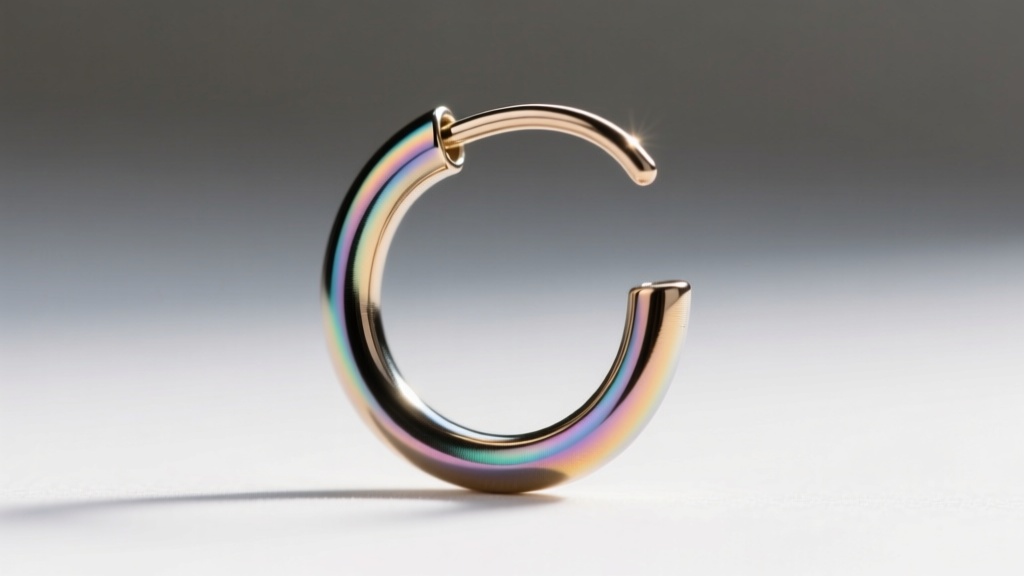
A critical, often overlooked aspect of earring design is the relationship between the total weight of the piece and the gauge (thickness) of the wire passing through the earlobe. Artisanal mixed-metal earrings, particularly those featuring solid brass and thick silver components, can easily weigh between 8 and 15 grams per earring.
If a 12-gram earring is suspended on a delicate 22-gauge (0.64mm) wire, the pressure exerted on the fistula (the piercing hole) is highly concentrated. In physics, Pressure = Force / Area. The minuscule surface area of a 22-gauge wire pressing against the soft tissue of the earlobe can trigger the "cheese cutter effect," where the wire slowly migrates downward through the tissue, causing elongation, tearing, and permanent lobe damage.
To counteract this, the structural hooks on these heavy artisanal drops are engineered at 18-gauge (1.02mm) or even 16-gauge (1.29mm). This seemingly small increase in diameter more than doubles the surface area distributing the weight, drastically reducing the localized pressure on the earlobe and ensuring the piercing remains healthy and comfortable during all-day wear.
Care, Failure Modes, and Longevity
Owning mixed-media, reactive metal jewelry requires a shift in maintenance habits. Unlike inert platinum or high-karat gold, these materials interact with their environment. Understanding the specific failure modes will ensure your pieces last a lifetime.
- Abrasive Polishing on Oxidized Silver: Never use liquid silver dips or abrasive polishing rouge on intentionally oxidized silver. These chemicals and compounds will strip the silver sulfide layer from the crevices, ruining the high-contrast aesthetic. Clean only with a soft, dry microfiber cloth or a mild, non-lotion dish soap and water.
- Verdigris Buildup on Brass: If raw brass is exposed to high humidity without its wax sealant, it can develop verdigris—a toxic, fuzzy green copper carbonate. If this occurs, it can be safely removed with a soft brass brush and a mild acidic solution (like diluted white vinegar), followed by a thorough rinse and a fresh application of microcrystalline wax.
- Galvanic Corrosion: When two dissimilar metals (like silver and brass) are in direct physical contact in the presence of an electrolyte (sweat or water), galvanic corrosion can occur, where the more anodic metal (brass) degrades rapidly. Artisanal jewelers prevent this by using mechanical cold-connections (rivets or tension folds) rather than soldering the brass directly to the silver, and by keeping the metals slightly separated or sealed.
Final Verdict for the Collector
The appeal of Menphina's earring designs lies in their unapologetic embrace of material reality. By combining the dark, moody depths of oxidized silver, the warm, evolving patina of raw brass, and the uncompromising biocompatibility of implant-grade titanium, these pieces offer a masterclass in functional metallurgy. For the collector who values jewelry that tells a story, ages gracefully, and respects the biology of the piercing, this mixed-material approach represents the pinnacle of modern artisanal ear styling.


