Door Knocker Earrings Gold: Expert Guide to Weight, Gauges & Styling
Master the mechanics of gold door knocker earrings. Explore gauge sizes, weight distribution, gold purity, and structural styling for lobe health.

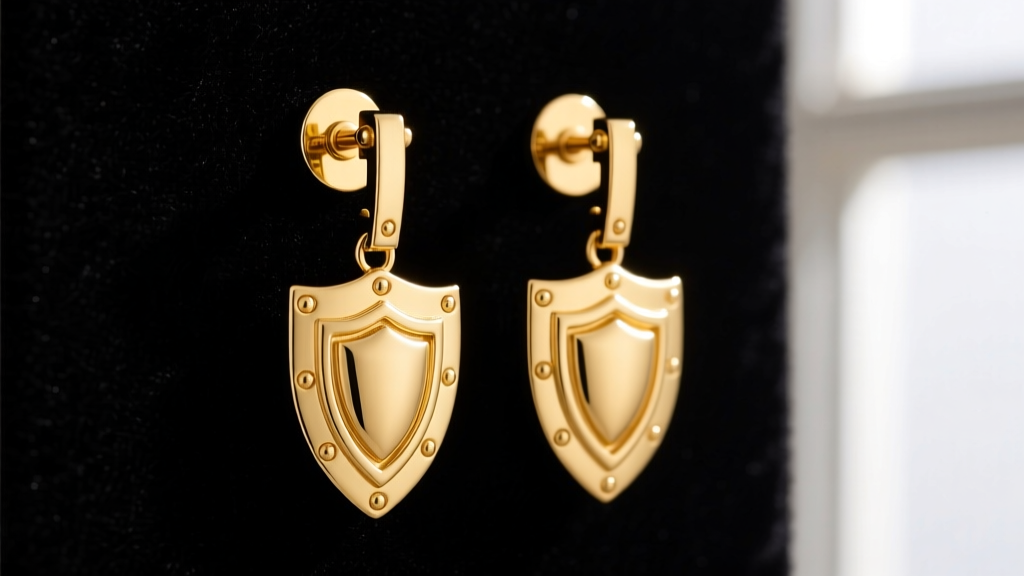
The Anatomy and Kinetic Physics of Door Knockers
Door knocker earrings represent a masterclass in kinetic jewelry design. Unlike static studs or continuous hoops, door knockers are engineered with an articulated hinge that connects a primary upper element (usually a stud or small hoop) to a larger, heavier geometric drop. This design creates a pendulum effect, allowing the lower plate to swing freely and catch the light with every movement. However, this kinetic energy introduces complex biomechanical challenges for the earlobe.
The defining characteristic of the door knocker is its center of gravity. Because the bulk of the metal mass sits below the fistula (the piercing channel), the earring generates rotational torque. In 2026, modern jewelry manufacturers utilize advanced CAD modeling to balance the upper stud against the lower drop, ensuring the earring rests flush against the lobe rather than pulling forward. Understanding the structural anatomy of these pieces is critical for both jewelers and collectors looking to invest in high-quality gold iterations.
Material Science: Gold Alloys and Structural Integrity
When evaluating gold door knocker earrings, purity is not just a measure of value; it is a measure of structural viability. According to the Gemological Institute of America (GIA), pure 24-karat gold is exceptionally soft, registering a mere 25 on the Vickers Hardness (HV) scale. While 24k gold offers a rich, saturated yellow hue, it is entirely unsuitable for the load-bearing components of heavy drop earrings. Under the stress of a swinging door knocker, a 24k post or hinge will rapidly deform, leading to catastrophic failure and lost jewelry.
To counteract this, expert jewelers rely on alloyed gold. By mixing pure gold with metals like copper, silver, and zinc, the tensile strength and hardness of the material increase dramatically. The Rio Grande Metals Guide outlines how specific karatages behave under mechanical stress, informing best practices for earring construction.
Gold Purity vs. Structural Application Table
| Alloy (Karat) | Gold Purity | Approx. Hardness (HV) | Best Structural Application in Door Knockers |
|---|---|---|---|
| 24k | 99.9% | ~25 HV | Decorative inlay or soft bezel settings only |
| 22k | 91.6% | ~70 HV | Lightweight, solid knockers (under 5 grams) |
| 18k | 75.0% | ~125 HV | Main knocker plates, thick structural wires |
| 14k | 58.3% | ~160 HV | Posts, hinges, jump rings, and clasp mechanisms |
For optimal longevity, the ideal gold door knocker earring features an 18k gold main plate for color and prestige, paired with a 14k gold post and hinge mechanism to withstand shear stress and repetitive friction.
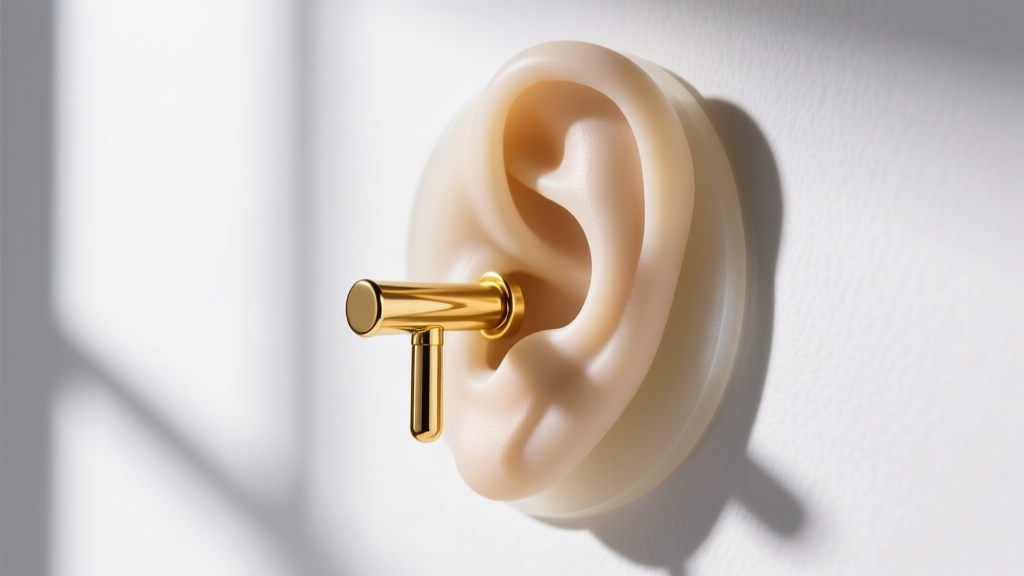
Biomechanics of the Earlobe: Gauge, Weight, and Tension
The human earlobe is composed of adipose tissue and skin, lacking the cartilaginous support found in the upper ear. When a heavy gold door knocker is worn, the post acts as a fulcrum. If the post is too thin and the earring too heavy, the resulting shear stress causes the "cheese-cutter effect," where the metal slowly migrates downward through the tissue, eventually tearing the lobe entirely.
Weight Thresholds and Gauge Requirements
- Under 7 Grams (Lightweight): Can be safely supported by a standard 20-gauge (0.81mm) or 18-gauge (1.02mm) post. Suitable for all-day wear without auxiliary support.
- 7 to 15 Grams (Mid-Weight): Requires a minimum of an 18-gauge (1.02mm) or 16-gauge (1.29mm) post. The wider surface area distributes the downward force across a larger section of the fistula wall. For wear exceeding four hours, silicone lobe support patches are highly recommended.
- Over 15 Grams (Heavyweight): Demands a 16-gauge (1.29mm) or 14-gauge (1.63mm) post. Earrings in this weight class must feature an omega-back clasp or a specialized ear jacket that cups the back of the lobe to transfer the kinetic load away from the piercing channel and onto the broader surface of the ear.
When shopping for solid gold door knockers, always request the exact gram weight and post gauge from the jeweler. Hollow-formed 18k gold knockers can provide the visual volume of a 25-gram earring while weighing only 8 grams, significantly reducing lobe fatigue.
Clasp Engineering: Preventing Pendulum Loss
The swinging motion of a door knocker generates continuous micro-vibrations that can loosen traditional friction clasps. A standard "butterfly" or push-back clutch relies on the tension of two small metal loops gripping a notched post. Over time, the pendulum kinematics of a heavy gold drop will wear down these notches and loosen the clutch, resulting in lost earrings.
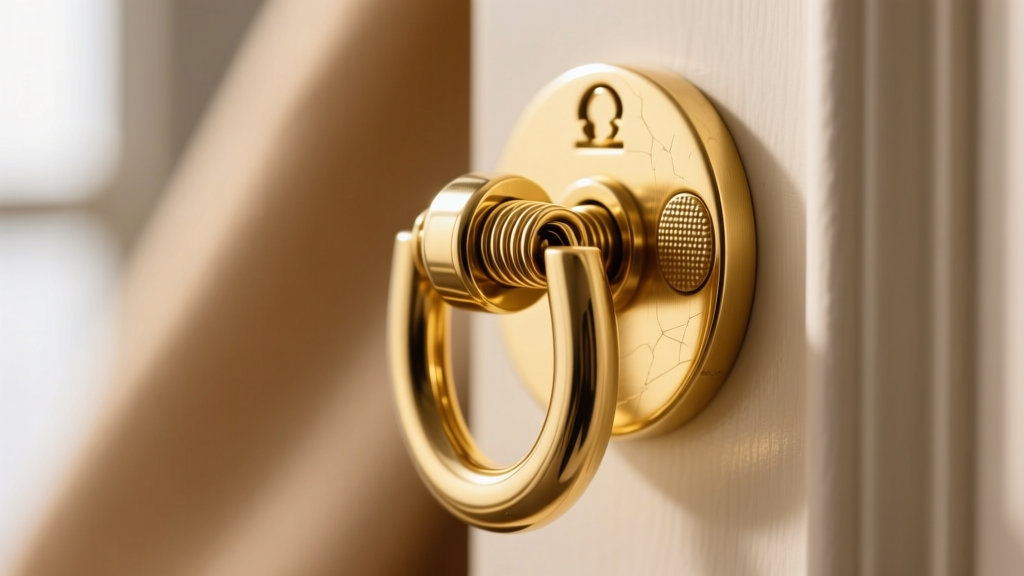
Superior Clasp Mechanisms for Heavy Drops
- Omega Backs: The gold standard for heavy door knockers. An omega back features a hinged, spring-loaded loop that clamps securely against the back of the lobe. The tension spring provides a constant, adjustable clamping force that resists the rotational torque of the swinging drop.
- Leverbacks with Tension Hinges: Ideal for door knockers that utilize a wire hook rather than a post. High-end leverbacks feature a snapping closure mechanism that locks the wire into a catch, preventing the earring from slipping out during active movement.
- La Pousette (Locking) Backs: A mechanical upgrade to the standard push-back. These clasps feature dual spring-loaded buttons that lock securely into a deep groove on the post, requiring a deliberate pinch to release. They are virtually immune to vibration-induced loosening.
Geometric Styling and Facial Proportions
Beyond mechanics, the geometry of the door knocker's lower plate plays a vital role in facial framing. Because these earrings draw the eye downward, the shape of the drop should contrast with the natural lines of the face to create visual balance.
- Round Faces: Opt for elongated, rectangular, or sharp square door knockers. The vertical lines and harsh angles will add definition and lengthen the facial silhouette.
- Square or Angular Faces: Choose circular, oval, or softly rounded shield-shaped knockers. The curved edges will soften a strong jawline and add fluidity to the profile.
- Heart-Shaped Faces: Teardrop or triangular door knockers that are wider at the bottom help to visually balance a narrower chin and wider forehead.
Maintenance and Lobe Rehabilitation
Maintaining heavy gold door knockers requires specific care protocols. Ultrasonic cleaners, while excellent for solid gold, can cause severe damage to hollow-formed knockers by trapping moisture inside the sealed cavities, leading to internal corrosion or structural weakening. Instead, use a soft-bristled brush with a mild, phosphate-free dish soap and warm water, focusing on the hinge mechanism where skin oils and cosmetics accumulate.
If you have experienced lobe stretching or thinning from wearing heavy gold knockers in the past, incorporate a lobe rehabilitation routine. Use medical-grade silicone support patches during the day to redistribute weight, and apply a peptide-rich firming serum to the earlobe tissue at night to encourage collagen production and restore tissue density. By respecting the biomechanics of the ear and the material science of gold alloys, you can enjoy the bold, kinetic elegance of door knocker earrings safely and sustainably.


