Gold Earring Holder Engineering: Secure Backs, Clasps & Storage
Explore the micro-engineering of gold earring holder mechanisms, from 14k friction back tension to archival storage materials that prevent alloy degradation.

The Dual Definition of a Gold Earring Holder
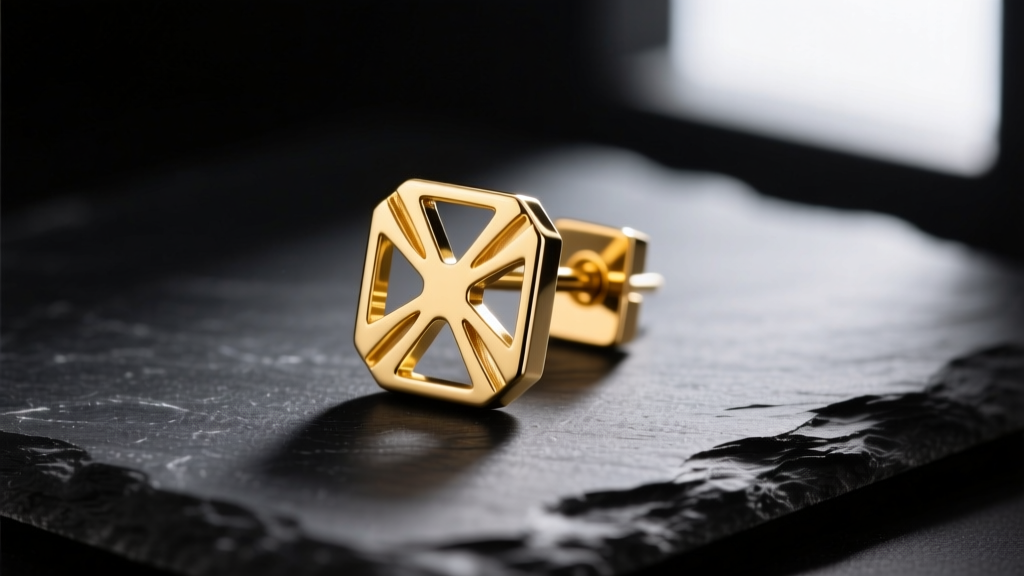
When jewelry collectors and metallurgy enthusiasts search for a 'gold earring holder,' they are typically navigating two entirely different engineering disciplines. The first refers to the mechanical holder—the micro-engineered clasps, friction backs, and omega mechanisms that physically secure the earring to the earlobe. The second refers to the archival storage holder—the display stands and organizational mounts designed to protect high-karat gold from environmental degradation, scratching, and galvanic corrosion.
As a domain expert in fine jewelry architecture, I frequently see collectors ruin heirloom pieces by mismatching the metallurgical properties of their gold earrings with inferior mechanical backs or chemically reactive storage displays. This deep dive explores the exact material grades, tension metrics, and conservation standards required to properly hold and preserve fine gold earrings.
The Metallurgy of Tension: Engineering the Mechanical Holder
The most common gold earring holder is the friction back (often called a butterfly back). Its primary function is to grip the earring post via spring tension. However, pure gold is inherently soft, registering a mere 25 on the Vickers Hardness (HV) scale. This creates a massive engineering challenge: how do you create a gold holder that possesses enough 'spring' to grip a post without permanently deforming?
Karat Hardness and Interference Fits
To solve this, manufacturers alloy gold with metals like copper, silver, and zinc. According to the Gemological Institute of America (GIA), the alloy mixture drastically alters the metal's work-hardening capabilities. A 14k gold friction back (typically 58.5% gold) registers around 150-170 HV, providing excellent spring memory. An 18k gold back (75% gold) sits around 120-140 HV, making it more prone to stretching over time.
The security of the holder relies on an interference fit. A standard 20-gauge earring post measures exactly 0.812mm in diameter. The internal dimples of a high-quality 14k gold friction holder are stamped and laser-calibrated to a gap of 0.78mm. This 0.032mm interference forces the gold alloy to flex outward when pushed onto the post, creating a continuous radial clamping force that prevents the earring from slipping off during sleep or movement.
Beyond Friction: Omega and Screw-Back Mechanics
For heavier gold drop earrings or high-value diamond studs, friction backs are insufficient. Here, specialized gold earring holders take over:
- Omega Backs: These utilize a hinged, spring-loaded wire that snaps into a grooved saddle. The internal spring cannot be made of standard gold alloy due to metal fatigue; it is typically forged from a resilient beryllium-copper or palladium-nickel core, plated or encased in gold to maintain the aesthetic while surviving over 10,000 articulation cycles.
- Screw Backs: These require a threaded post and a matching threaded barrel holder. The threads are cut at a precise 60-degree angle. The primary failure mode here is cross-threading, which strips the soft gold threads. To mitigate this, premium manufacturers use 14k white gold for the threaded components, as the nickel or palladium alloys provide superior shear strength compared to yellow gold.
Archival Storage Holders: Protecting High-Karat Gold
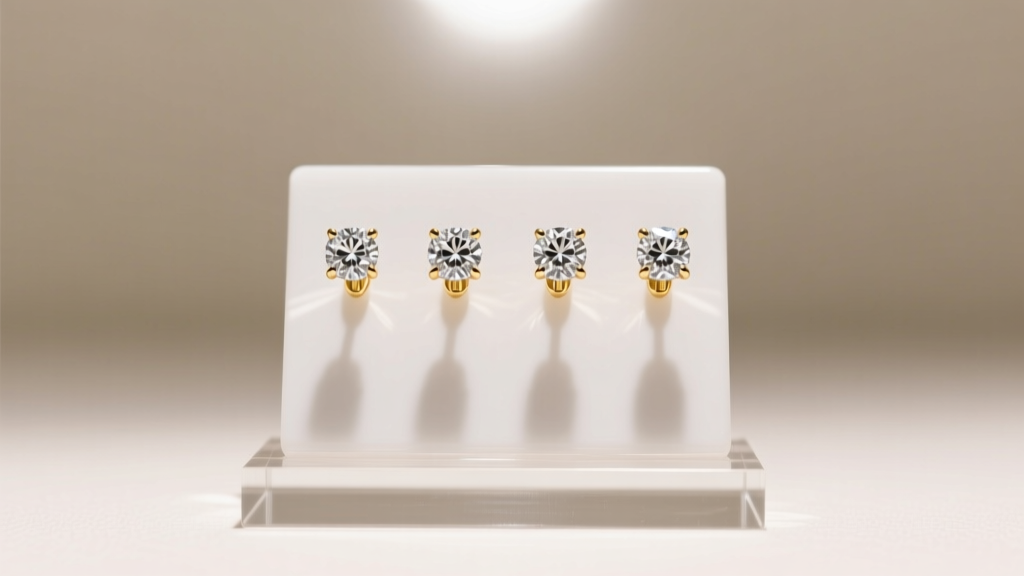
When transitioning from the ear to the jewelry box, the 'holder' becomes a display or storage stand. Many collectors mistakenly believe that gold is impervious to environmental damage. While pure 24k gold does not tarnish, 14k and 18k gold contain copper and silver, which are highly susceptible to sulfur-induced tarnishing and micro-pitting.
'The greatest threat to fine gold jewelry in storage is not physical scratching, but the invisible off-gassing of plasticizers and sulfur compounds from cheap synthetic display holders and velvet linings.' — Conservation Principles in Horology and Jewelry.
Material Compatibility Chart for Gold Storage
When selecting an archival gold earring holder stand, you must evaluate the materials using museum-grade conservation standards, such as the Oddy Test, which detects harmful off-gassing. The Library of Congress Preservation Guidelines emphasize the use of chemically inert materials for metallic artifacts.
| Holder Material | Chemical Reactivity with Gold Alloys | Archival Verdict |
|---|---|---|
| PVC / Vinyl Plastics | High. Off-gasses hydrochloric acid and phthalates, causing severe micro-pitting on copper-alloyed gold. | Never Use |
| Standard Synthetic Velvet | Moderate to High. Traps ambient moisture and often contains sulfur-based dyes that tarnish 14k/18k gold. | Avoid |
| Polyethylene (HDPE/Ethafoam) | None. Chemically inert, non-abrasive, and does not off-gas. The gold standard for museum mounts. | Highly Recommended |
| Unbleached Cotton Muslin | Low. Safe for short-term storage, but must be unbuffered to prevent alkaline transfer to specific gemstone settings. | Recommended |
| Acrylic (PMMA) | Very Low. Excellent for display stands, provided the acrylic is fully cured and edges are flame-polished to prevent micro-abrasions. | Recommended |
Galvanic Corrosion in Mixed-Metal Display Holders
A critical, often overlooked failure mode occurs when a gold earring is placed in a display holder that utilizes exposed steel or copper armatures. If the environment has high humidity, the moisture acts as an electrolyte. Because gold is a noble metal (high on the galvanic series), it will force the less noble metal (like a steel display pin) to corrode rapidly. This corrosion can transfer iron oxides onto the surface of your gold earrings, creating stubborn rust stains that require professional ultrasonic and chemical cleaning to remove. Always ensure your gold earring holder stand uses brass, stainless steel (316L grade), or completely coated armatures.
Troubleshooting Common Gold Earring Holder Failures
Even the best-engineered mechanical holders require maintenance. Here is how to troubleshoot the most common issues with gold earring backs and clasps:
- Loose Friction Backs: Over time, the 14k gold tension slits stretch. Do not use standard steel pliers to squeeze them, as this will mar the polished finish and work-harden the gold to the point of snapping. Instead, slide the back onto a tapered steel mandrel and gently tap it with a rawhide mallet to compress the internal dimples back to the 0.78mm specification.
- Sticky Omega Hinges: Sebum and dead skin cells accumulate in the hinge pin of omega backs, causing the spring mechanism to fail. Clean the hinge using a drop of naphtha (lighter fluid) applied with a micro-brush, followed by a microscopic drop of synthetic watch oil (like Moebius 9010) on the pin.
- Stripped Screw Backs: If the internal threads of a gold screw-back holder are stripped, the barrel must be replaced. Attempting to re-cut the threads with a tap will remove too much material, compromising the structural integrity of the gold barrel.
Final Verdict: Matching the Holder to the Earring
Whether you are evaluating the mechanical grip of a 14k gold butterfly back or sourcing a polyethylene display mount for a museum-grade collection, the term 'gold earring holder' demands a rigorous approach to material science. Always match the Vickers hardness of the mechanical clasp to the weight of the earring, and ensure your archival storage holders are rigorously tested for chemical inertness. By respecting the metallurgy and conservation requirements of fine gold, you ensure that both the security and the legacy of your jewelry remain uncompromised.