The Ultimate Lotus Earring Buying Guide: Styles & Metals
Discover how to choose the perfect lotus earring. Our expert buying guide covers metal grades, gauge sizes, placements, and pricing tiers.

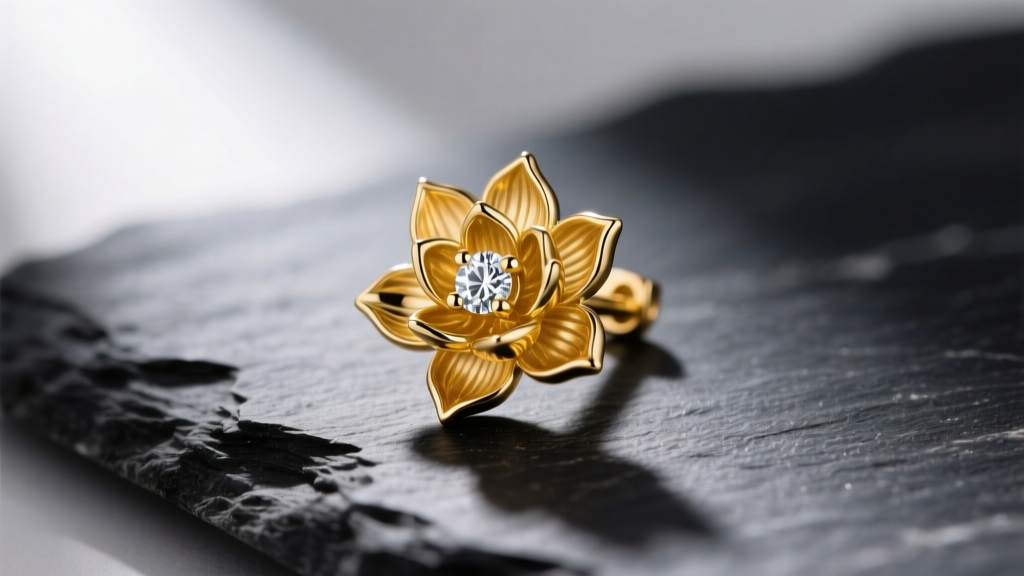
The lotus flower has long been revered across Eastern cultures as a symbol of purity, resilience, and spiritual rebirth. Because it roots in deep mud yet blossoms flawlessly above the water, the lotus motif translates beautifully into fine jewelry, serving as a daily talisman of personal growth. In 2026, the lotus earring has evolved beyond basic stamped charms into highly engineered, anatomically correct pieces of body jewelry. Whether you are looking for a delicate lobe stud, a cartilage-clicker, or an intricate ear cuff, understanding the metallurgy, gauge requirements, and structural mechanics of floral jewelry is essential for long-term wear and piercing health.
Decoding Lotus Design Variations
Not all floral jewelry is created equal. The manufacturing technique used to form the lotus petals drastically impacts the earring's weight, durability, and cleaning requirements. When shopping, you will generally encounter three primary design categories:
- Openwork Filigree: These designs use negative space to outline the petals, reducing the overall weight of the earring. This is critical for cartilage piercings (like the helix or conch), where heavy jewelry can cause migration or angle distortion over time.
- Champlevé Enamel: A technique where troughs are carved into the metal and filled with vitreous enamel. This adds vibrant, opaque color to the lotus petals. However, enamel is essentially glass and can chip if dropped on hard surfaces or exposed to ultrasonic cleaners.
- Pavé & Prong-Set: High-end lotus earrings often feature melee diamonds or sapphires set into the petals. Look for micro-prong settings rather than bead-set (flush) settings, as prongs allow more light to enter the stones, maximizing the sparkle of the tiny gems.
Metallurgy Matters: Choosing the Right Alloy
The metal grade of your lotus earring dictates its biocompatibility and structural integrity. According to the Gemological Institute of America (GIA), the alloy mix in gold jewelry changes its physical properties significantly. For intricate floral designs with delicate petal tips, you need a metal that balances malleability with tensile strength.
| Metal Grade | Vickers Hardness (Approx) | Biocompatibility | Best Application |
|---|---|---|---|
| Implant-Grade Titanium (ASTM F136) | 330-360 HV | Excellent (Nickel-Free) | Fresh piercings, severe metal allergies, threadless ends |
| 14k Solid Gold | 120-140 HV | Very Good | Intricate prong settings, daily wear lobe studs |
| 18k Solid Gold | 90-110 HV | Excellent | Healed piercings, rich color preference, bezel settings |
| Sterling Silver (925) | 60-80 HV | Poor (Contains Copper/Nickel) | Avoid for body jewelry; tarnishes and causes argyria |
For those with sensitive ears or fresh piercings, the Association of Professional Piercers (APP) strictly recommends ASTM F136 implant-grade titanium or niobium. Avoid sterling silver entirely for lotus earrings meant for prolonged wear, as the copper content reacts with skin acidity, leading to irritation and localized skin discoloration.
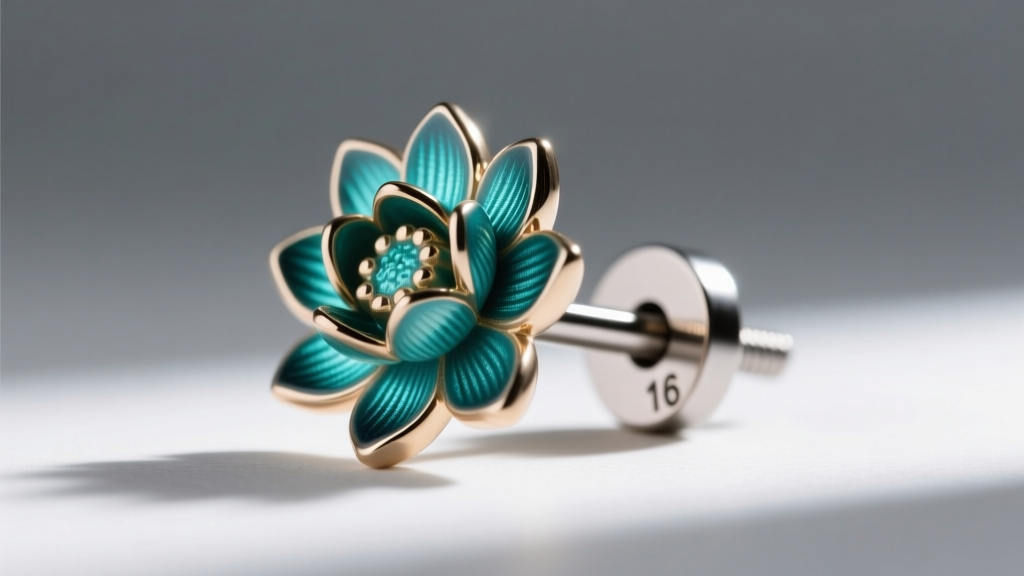
Gauge Sizing and Anatomical Placement
A common mistake buyers make is purchasing a lotus earring without verifying the post gauge. Piercings are not universally sized, and forcing a mismatched post can tear the fistula or cause hypertrophic scarring.
Standard Lobe Piercings (20G - 18G)
Standard earlobe piercings are typically done at 20-gauge (0.81mm) or 18-gauge (1.02mm). Lotus studs for the lobe usually range from 5mm to 8mm in diameter. If you are buying a lotus dangle earring for a standard lobe, ensure the jump ring connecting the flower to the hook is soldered shut; otherwise, the weight of the dangle will pull the ring apart over time.
Cartilage Piercings: Helix, Conch, and Flat (16G - 14G)
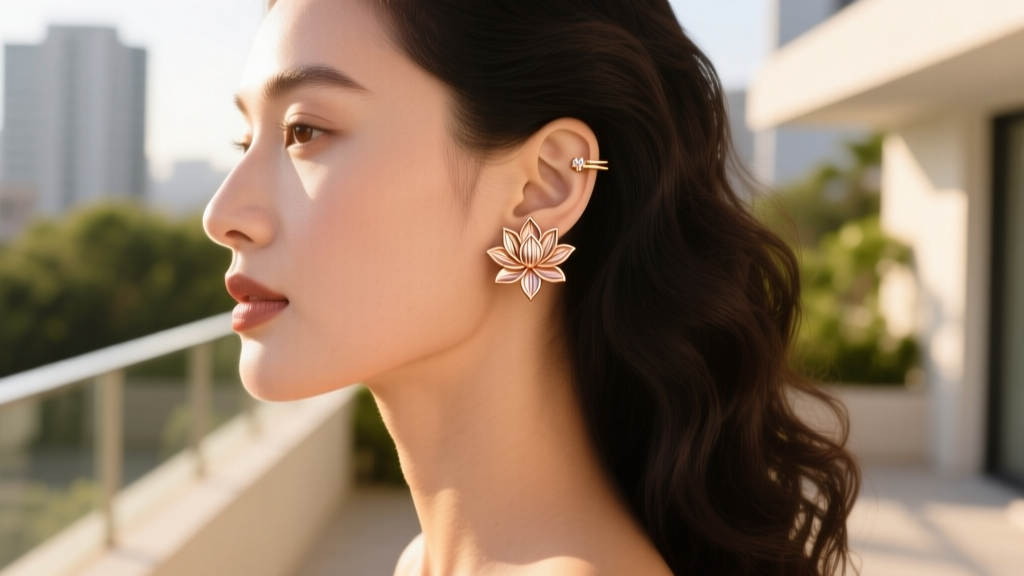
Cartilage piercings require thicker jewelry to prevent the "cheese-cutter effect," where thin wire slowly migrates through the tissue. Most professional cartilage piercings are 16-gauge (1.29mm) or 14-gauge (1.63mm). If you want a lotus motif on your upper ear, you must look for flat-back labret posts or clicker rings specifically manufactured in 16G or 14G. A 6mm to 9mm lotus end is ideal for the helix, providing enough surface area to cover the piercing hole without overlapping the ear's natural folds.
The Mechanics of Security: Backing Systems
The backing of your earring is just as important as the lotus design itself. Intricate floral ends are notoriously difficult to clean if debris gets trapped between the post and the backing mechanism.
- Threadless (Push-Pin) Systems: The gold standard for 2026 body jewelry. A slightly bent titanium pin inserts into a hollow post, creating tension-based friction. This is the safest option for lotus ends, as there are no external threads to scrape the piercing channel during insertion or removal.
- Internally Threaded Posts: The threads are located on the inside of the decorative lotus end, and the post is smooth. This is highly recommended for healed piercings, ensuring no sharp metal edges pass through the tissue.
- Friction Posts (Butterfly Backs): Common in mall-kiosk jewelry. The butterfly backing traps dead skin cells and sebum against the earlobe, creating an anaerobic environment that leads to foul odors and contact dermatitis. Avoid these for high-end lotus pieces.
Pricing Tiers & Market Expectations
Understanding the market tiers will help you identify authentic craftsmanship versus mass-produced drop-shipped items.
- Budget ($15 - $45): Typically gold-plated brass or sterling silver. The lotus design is often die-struck with slightly blurred petal edges. Plating will wear off within 3 to 6 months of daily wear, exposing the reactive base metal.
- Mid-Range ($60 - $150): Solid 14k gold or anodized titanium. You will find high-quality threadless ends in this tier, often featuring precision CNC-machined petals and synthetic or low-grade natural gemstones.
- Fine Jewelry ($200 - $800+): Hand-fabricated 18k gold or platinum featuring VS-clarity melee diamonds. The prongs will be microscopically tight, and the lotus petals will have hand-polished, beveled edges that catch the light from multiple angles.
Maintenance: Cleaning Intricate Floral Prongs
Lotus earrings, particularly those with pavé diamonds or champlevé enamel, require specific maintenance routines. The overlapping nature of the petals creates micro-crevices where lotions, hairspray, and natural sebum accumulate, dulling the metal and gemstones.
What to Avoid
Never place an enameled lotus earring in an ultrasonic cleaner. The high-frequency vibrations will cause the vitreous enamel to fracture and separate from the metal base. Similarly, avoid harsh chemical dips (like silver polish) on oxidized or blackened gold lotus designs, as these chemicals will strip the intentional antique patina from the petal grooves.
The Proper Cleaning Protocol
- Mix a few drops of mild, fragrance-free dish soap (like Dawn) into a bowl of warm distilled water.
- Soak the lotus earring for 5 to 10 minutes to loosen cosmetic buildup.
- Use an extra-soft baby toothbrush to gently sweep along the petal outlines and underneath the diamond prongs.
- Rinse thoroughly under warm running water and pat dry with a lint-free microfiber cloth. Avoid tissue paper, as the microscopic wood fibers will snag on the lotus prongs.
By prioritizing implant-grade materials, verifying your exact gauge requirements, and selecting secure, threadless backing mechanisms, your lotus earring will remain a stunning, irritation-free staple in your jewelry rotation for decades.


