Gold Fan Earrings: Alloy, Plating & Material Comparison
Discover the best metal grades for gold fan earrings. Compare 14k, 18k, vermeil, and gold-filled options for durability, weight, and sensitive ears.

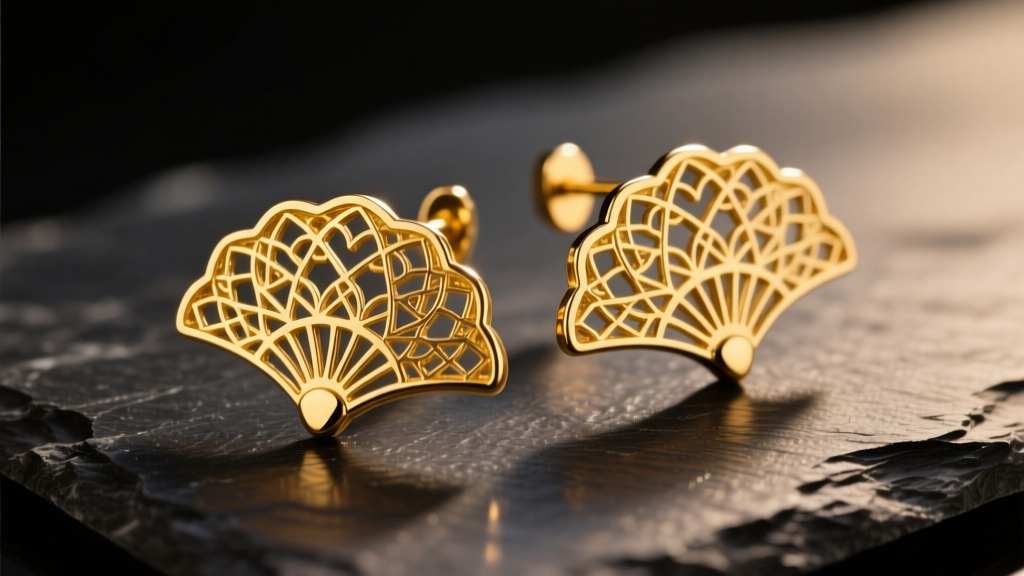
The Architectural Demands of Fan-Shaped Silhouettes
Fan earrings are a masterclass in jewelry geometry. Whether inspired by the sweeping arcs of Art Deco architecture, traditional Asian folding fans, or the iridescent spread of peacock plumage, these earrings rely on a wide, expansive silhouette. However, this broad surface area introduces unique structural and metallurgical challenges that do not apply to simple studs or small hoops. When shopping for gold fan earrings, the choice of material dictates not only the color and price but the structural integrity, weight distribution on the earlobe, and long-term wearability of the piece.
A wide fan shape acts like a sail, catching on hair, scarves, and clothing. If the gold alloy is too soft, the intricate latticework or outer edges will easily warp and bend out of shape. Conversely, if the metal is too dense and heavy, the sheer leverage of a 2-inch or 3-inch fan drop will stretch the earlobe piercing over time, leading to discomfort and permanent tissue thinning. Understanding the specific properties of gold alloys and plating methods is essential for selecting a pair of fan earrings that balance visual drama with everyday practicality.
Solid Gold Alloys: Purity vs. Structural Integrity
When jewelers refer to 'solid gold,' they are speaking about a homogenous alloy where gold is mixed with other metals to enhance durability. Pure 24k gold (99.9% gold) has a Mohs hardness of just 2.5—roughly the same as a fingernail. According to the Gemological Institute of America (GIA), pure gold is entirely unsuitable for the delicate, extended wires and thin sheets required for fan-shaped earrings, as it will collapse under its own weight. Therefore, alloying is mandatory.
14k Gold: The Filigree Standard
Comprising 58.3% pure gold and 41.7% alloy metals (typically copper, silver, and zinc), 14k gold is the undisputed workhorse for intricate gold fan earrings. The addition of copper and silver increases the Mohs hardness to approximately 3.5 to 4.0. This enhanced rigidity allows jewelers to execute complex filigree, milgrain detailing, and ultra-thin cutouts without the metal warping. For large, lightweight fan drops that require structural memory (the ability to bend slightly and snap back), 14k gold is the superior choice. Furthermore, 14k gold is significantly lighter in density than higher-karat options, reducing the gravitational pull on the earlobe.
18k Gold: The Heirloom Choice
With 75% pure gold, 18k gold offers a richer, warmer, and more saturated yellow hue that is highly prized in luxury jewelry. However, it is softer and roughly 20% denser than 14k gold. When applied to large fan earrings, this extra density translates to noticeable weight. If you are purchasing solid 18k gold fan earrings, look for designs that incorporate strategic cutouts or a 'hollow-backed' construction to reduce the overall gram weight. 18k gold is best reserved for smaller, stud-style fan earrings or huggie fans that sit tightly against the earlobe, where the weight is fully supported by the surrounding cartilage and tissue.
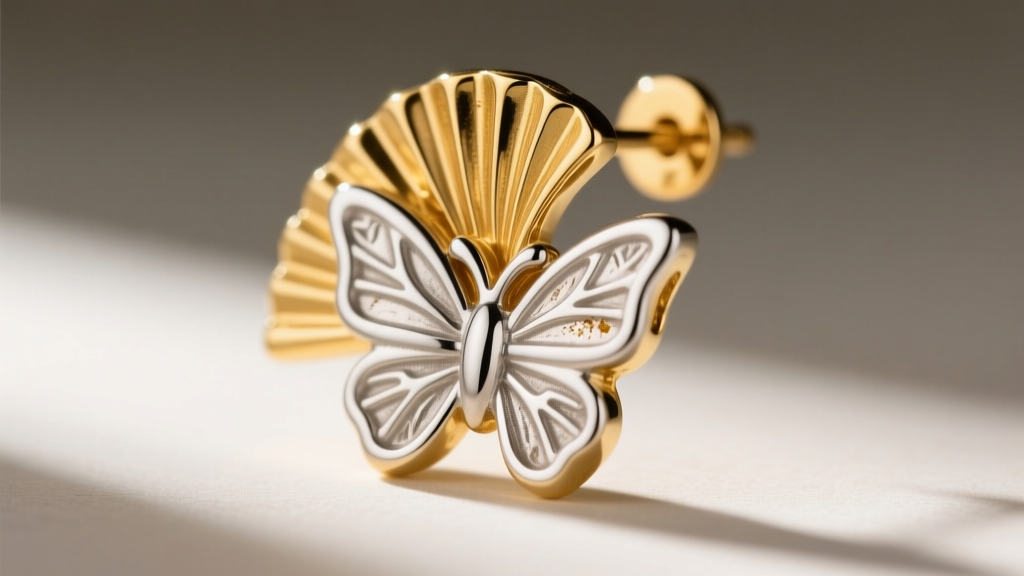
The Plating Spectrum: Vermeil, Gold-Filled, and Flash Plating
For those seeking the luxurious look of gold fan earrings without the investment-grade price tag of solid gold, plated alternatives offer a viable route. However, the expansive surface area of a fan shape means there is more metal exposed to friction from hair, skin oils, and clothing. Consequently, the thickness of the gold layer is the single most critical factor in determining the lifespan of the earrings. The Federal Trade Commission (FTC) strictly regulates the terminology used for these materials, ensuring consumers know exactly what they are purchasing.
| Material Type | Gold Thickness / Ratio | Base Metal | Estimated Price (2-inch Drop) | Lifespan |
|---|---|---|---|---|
| Solid 14k Gold | 100% (58.3% Pure Gold) | N/A (Alloyed with Copper/Silver) | $350 - $800 | Lifetime |
| Gold-Filled | 5% by weight (1/20) | Jeweler's Brass | $80 - $150 | 10 - 30 Years |
| Gold Vermeil | 2.5 Microns Minimum | Sterling Silver (.925) | $120 - $250 | 2 - 5 Years |
| Gold Plated | 0.5 Microns (Flash) | Brass or Steel | $20 - $60 | 6 Months - 1 Year |
Why Gold-Filled Beats Vermeil for Fan Drops
Gold-filled wire and sheet metal are created by mechanically bonding a thick layer of solid gold (at least 5% of the total weight) to a brass core using extreme heat and pressure. Because the gold layer is up to 100 times thicker than standard flash plating, gold-filled fan earrings can withstand years of daily wear. The edges of a fan earring are high-friction zones; when a gold-filled piece eventually wears down after a decade, the brass core beneath is less likely to cause severe skin reactions compared to the nickel or copper often found in cheap plated bases.
Gold vermeil, while more expensive upfront, requires a sterling silver base. While silver is hypoallergenic, the 2.5-micron gold layer can wear away on the high-contact edges of a wide fan silhouette within a few years of heavy use, requiring professional re-plating to maintain the uniform golden aesthetic.
Weight Distribution, Ear Wires, and Gauge Sizing
The material of the fan itself is only half the equation; the finding (the part that goes through the ear) must be engineered to support the specific weight and aerodynamics of the fan shape.
- French Wire Hooks (20g - 22g): Standard for lightweight, hollow, or gold-filled fan drops. A 22-gauge wire is thin enough to slide effortlessly through a standard 20-gauge lobe piercing but may bend if the fan catches on a sweater.
- Leverback Closures (18g - 20g): The superior choice for solid 14k or 18k gold fan earrings. The secure locking mechanism prevents the heavy fan from slipping out of the earlobe if the earring is bumped. The thicker 18-gauge wire provides the necessary structural support to prevent the hook from warping under the fan's pendulum-like swinging motion.
- Flat Disc Friction Backs: For fan-shaped studs, standard butterfly backs concentrate pressure on a single point, which can cause the stud to droop forward. Upgrading to flat, wide disc backs (8mm or 10mm) distributes the weight of the gold fan evenly across the back of the earlobe, keeping the design perfectly upright.

Hypoallergenic Realities: White Gold and Nickel Sensitivities
When selecting white gold fan earrings, material composition becomes a vital health consideration. White gold is not a naturally occurring metal; it is created by alloying yellow gold with white metals like palladium, silver, or nickel. In many mass-produced 14k and 18k white gold earrings, nickel is used as the primary bleaching agent to achieve a stark white color. To mask the slightly yellowish tint of the alloy and provide a mirror finish, the jewelry is plated with rhodium.
Because fan earrings have a large surface area, they generate more heat and trap more moisture against the neck and jawline than smaller pieces. This micro-environment accelerates the breakdown of the rhodium plating. Once the rhodium wears thin on the wide edges of the fan, the nickel-bearing alloy beneath is exposed to the skin, frequently triggering contact dermatitis. If you have sensitive skin but desire the icy look of white gold fan earrings, explicitly seek out 'nickel-free white gold' (alloyed with palladium) or opt for platinum, which is naturally white, hypoallergenic, and possesses the density required to hold intricate fan shapes securely.
Final Verdict: Matching Material to Your Lifestyle
Choosing the right gold fan earrings requires balancing your budget, your skin's sensitivity, and how you plan to wear them. For everyday, lightweight statement pieces that won't stretch your lobes, 14k gold-filled or 14k solid gold offers the best structural integrity and longevity. If you are investing in a luxury, heirloom-quality pair for special occasions, 18k solid gold provides an unmatched richness of color, provided the design incorporates weight-saving cutouts. Avoid flash-plated brass for wide fan silhouettes, as the expansive edges will inevitably wear down, leaving you with a tarnished, unwearable piece of costume jewelry.


