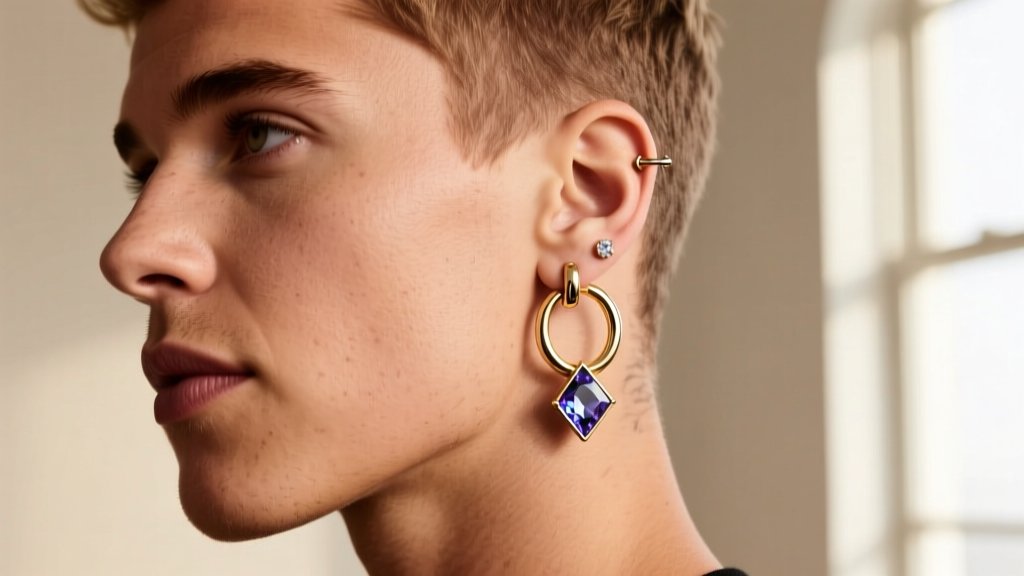
How to Clean, Wear, and Care for Tanzanite Hoop Earrings
Learn how to safely clean, store, and style your tanzanite hoop earrings. Expert steps to protect this rare gemstone from chipping and fading.

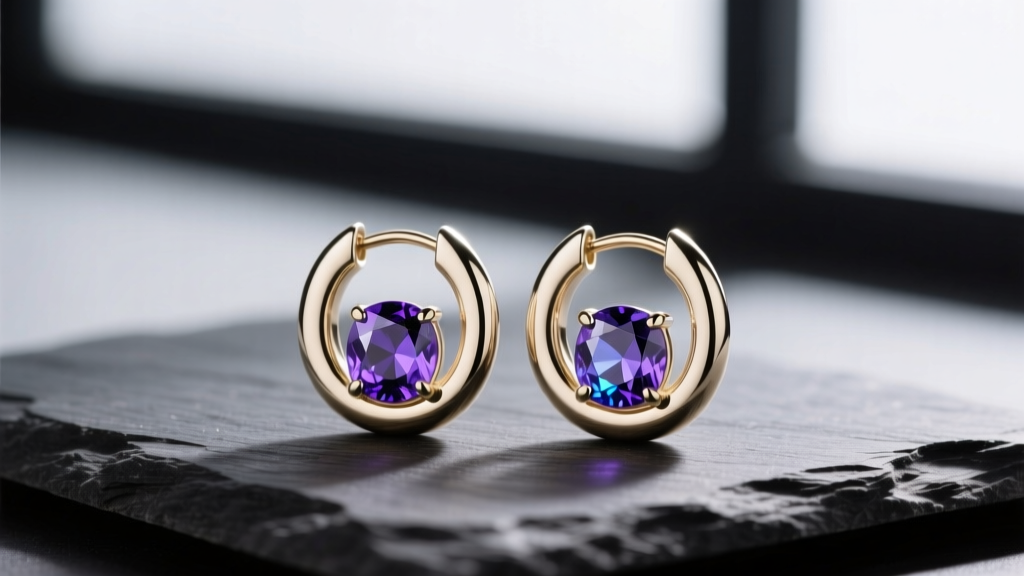
Tanzanite is a breathtakingly rare gemstone, found in only one place on Earth: the Merelani Hills of Tanzania. As we move through 2026, the emphasis on ethical sourcing and the preservation of heirloom-quality jewelry has made tanzanite more coveted than ever. When set into hoop earrings, tanzanite offers a dynamic, kinetic display of its famous pleochroic colors—shifting between deep violet, royal blue, and flashes of burgundy as the hoops swing. However, this striking movement introduces unique risks. Hoop earrings are inherently active jewelry; they catch on hair, brush against collars, and are prone to accidental impacts. Learning how to properly clean, wear, and care for tanzanite hoop earrings is not just about maintaining their sparkle—it is about preserving the structural integrity of a relatively delicate gemstone.
Understanding Tanzanite's Vulnerabilities in Hoop Settings
Before diving into maintenance routines, it is critical to understand the physical properties of tanzanite. According to the Gemological Institute of America (GIA), tanzanite ranks between 6.5 and 7 on the Mohs scale of mineral hardness. While this makes it suitable for everyday earrings, it is significantly softer than diamonds (10), sapphires (9), or even cubic zirconia (8.5). Dust and airborne debris often contain microscopic quartz particles (hardness 7), which can easily scratch a tanzanite surface over time if wiped improperly.
More concerning than its hardness is tanzanite's perfect cleavage in one direction. Cleavage refers to the tendency of a crystal to break or split along specific structural planes. A sharp, direct knock to a tanzanite hoop earring—such as bumping it against a car door, a desk edge, or a steering wheel—can cause the stone to fracture or chip entirely, even if the metal setting remains perfectly intact. Because hoops extend outward from the earlobe, they act as levers, increasing the likelihood of the gemstone striking a hard surface compared to snug stud earrings.
Step-by-Step Guide to Cleaning Tanzanite Hoops
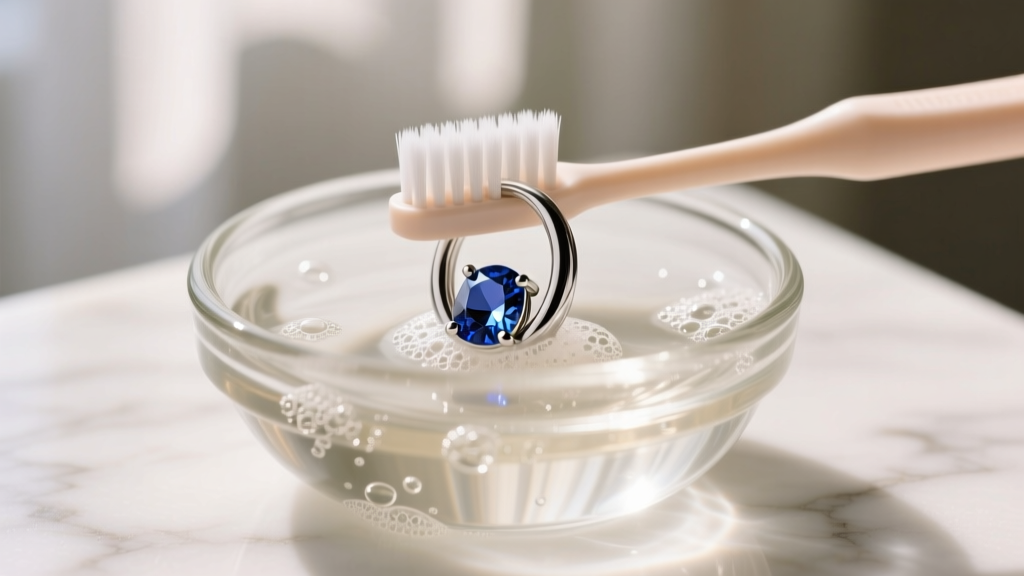
Never use ultrasonic or steam cleaners on tanzanite. The high-frequency vibrations of an ultrasonic machine can easily shatter the stone along its cleavage planes, and sudden temperature changes from steam can cause thermal shock. Instead, follow this safe, manual cleaning protocol recommended by the Jewelers of America.
The Safe Lukewarm Soap Method
- Prepare the Solution: Fill a small glass bowl with one cup of distilled, lukewarm water. Add exactly one drop of mild, pH-neutral liquid dish soap (avoid soaps with heavy moisturizers or citrus degreasers).
- Soak Briefly: Submerge your tanzanite hoop earrings in the solution for no more than 3 to 5 minutes. This loosens body oils, hairspray residue, and skincare buildup without compromising the metal or stone.
- Agitate Gently: Using an extra-soft baby toothbrush, gently sweep the bristles over the metal settings and the back of the gemstones. Do not scrub the face of the tanzanite aggressively; let the soapy water do the heavy lifting.
- Rinse with Distilled Water: Rinse the hoops under a gentle stream of lukewarm distilled water. Avoid tap water if you live in an area with hard water, as calcium deposits can leave a cloudy film on the gems.
- Dry and Polish: Pat the earrings dry with a lint-free microfiber cloth. Ensure the hinge and clasp mechanisms are completely dry to prevent moisture buildup, which can degrade the metal tension over time.
How to Secure and Wear Hinged Hoop Mechanisms
The security of your tanzanite is only as reliable as the hoop's closure mechanism. A lost earring is a financial and sentimental tragedy. When wearing tanzanite hoops, you must regularly audit the physical hardware. Below is a breakdown of common hoop closures and their security profiles for gemstone-bearing jewelry.
| Closure Type | Security Level | Best For | Maintenance Need |
|---|---|---|---|
| Hinged Snap-Back | High | Medium to Heavy Gemstone Hoops | Check hinge pin for looseness every 6 months. |
| Click-Top / Hinged Post | Very High | Huggies and Small Hoops | Listen for the 'click'; clean post groove regularly. |
| Continuous / Endless | Low | Plain Metal Hoops (Avoid for Gems) | High risk of bending; metal fatigue at the seam. |
| Latch-Back (French Wire) | Medium | Dangle and Drop Hoops | Ensure the latch catches the wire groove securely. |
Pro-Tip for 2026: If your tanzanite hoops feature a hinged snap-back, apply a microscopic drop of synthetic watch oil to the hinge pin once a year using a toothpick. This prevents the hinge from seizing up due to soap scum and skin oils, which often forces wearers to yank the earring open, eventually warping the metal and loosening the gemstone prongs.
Styling and Wardrobe Pairing Framework

Styling tanzanite hoop earrings requires an understanding of the stone's optical properties and the metal alloys used in the setting. Tanzanite is strongly trichroic, meaning it exhibits three different colors depending on the angle from which it is viewed. The way you style your wardrobe can either enhance or mute this effect.
Metal Pairings and Skin Tone
- White Gold & Platinum: These cool-toned metals amplify the violet and sapphire-blue hues of tanzanite. This pairing is highly formal and works exceptionally well with stark white, charcoal, or black evening wear.
- Yellow Gold (14k or 18k): Yellow gold creates a striking complementary contrast against the blue-violet stone, pulling out the subtle burgundy and plum undertones. This is ideal for warm autumn palettes, earth tones, and cream-colored cashmeres.
- Rose Gold: A modern choice that softens the intense blue of the tanzanite, creating a romantic, vintage aesthetic. Best paired with blush, dusty rose, or soft grey fabrics.
The Neckline Rule for Hoops
Because tanzanite hoops command attention through both color and movement, your neckline should frame them without competing. V-necks, scoop necks, and off-the-shoulder silhouettes provide the necessary negative space. Avoid high, ruffled collars or heavily beaded necklaces, which can physically snag the hoop closures and create visual clutter that obscures the gemstone's color shifts.
Long-Term Storage and Professional Maintenance
'Tanzanite requires a proactive approach to preservation. I always advise my clients to treat their tanzanite hoops like fine silk—beautiful to wear, but requiring deliberate care when put away.' — Master Bench Jeweler
How you store your earrings is just as important as how you clean them. Never toss tanzanite hoops into a communal jewelry box where they can rub against diamonds, sapphires, or even other metal jewelry. The friction will inevitably result in surface abrasions and scratched facets.
The Ideal Storage Protocol
- Individual Compartments: Store each hoop in its own soft, fabric-lined compartment or an individual anti-tarnish flannel pouch.
- Climate Control: Keep the jewelry box in a climate-stable room. Extreme fluctuations in humidity and temperature can stress the metal prongs holding the tanzanite, potentially causing them to expand or contract and loosen their grip on the stone.
- Positioning: Lay the hoops flat. Hanging heavy gemstone hoops on a jewelry tree can place uneven stress on the ear wire or hinge over time.
Annual Professional Audits
Take your tanzanite hoop earrings to a certified gemologist or bench jeweler at least once a year. The jeweler will use a microscope to inspect the prongs or bezel walls for microscopic wear. In hoop settings, the bottom-most prong often catches on scarves and sweaters, slowly lifting away from the gemstone's girdle. Catching a lifted prong during an annual check-up is a $30 repair; replacing a lost, custom-cut tanzanite can cost thousands and take months to source.
By respecting the physical limits of tanzanite and adhering to these meticulous cleaning, wearing, and storage protocols, your tanzanite hoop earrings will remain a vibrant, secure, and breathtaking staple in your jewelry collection for decades to come.