Justin Bieber Earrings: 2026 Trends & Sizing Fixes
Replicate Justin Bieber's iconic earring styles without the damage. Expert troubleshooting for lobe tearing, cartilage bumps, and pearl care.
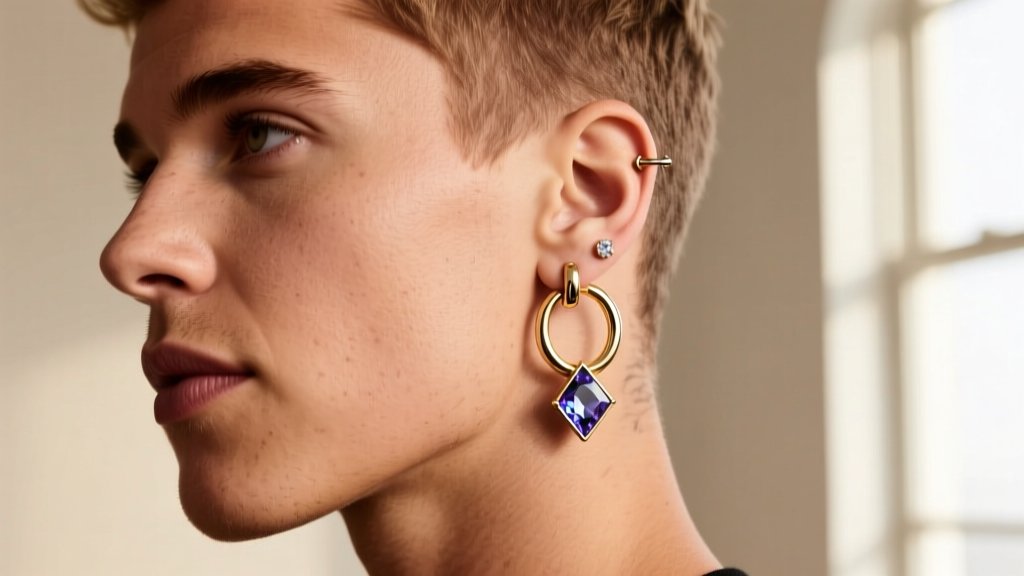

The Evolution of the Bieber Aesthetic: Beyond the 2010s Mall Brands
When you search for justin bieber earrings, the internet is still flooded with outdated 2012 tutorials on how to style heavy, oversized cross dangles. But as we move through 2026, the pop icon’s jewelry game has radically matured. Today, his aesthetic is defined by curated cartilage stacks, minimalist Tiffany & Co. diamond studs, and the ubiquitous single pearl earring. However, fans attempting to replicate these high-end, precision-placed looks frequently run into severe physical and stylistic roadblocks. Heavy lobes tear, cartilage piercings develop stubborn irritation bumps, and expensive pearls lose their luster within months. This guide bypasses the fluff and provides expert-level troubleshooting to help you achieve the modern Bieber ear curation safely, focusing on exact gauge specifications, metallurgy, and structural support.
Troubleshooting the Heavy Lobe Tear (The Early 2010s Mistake)
While Bieber has moved on to lightweight huggies and bezel-set diamonds, many fans still want to incorporate the heavier, statement-making dangles from his "Believe" and "Purpose" eras into their modern rotation. The primary failure mode here is lobe migration and stretching. Standard fashion earrings are typically 20-gauge (0.81mm) or 22-gauge (0.64mm). When you hang a 15-gram brass or silver cross from a 22-gauge wire, gravity acts like a cheese wire, slowly slicing through the tissue and causing irreversible blowouts.
The Structural Fix: Gauge and Backing Upgrades
To safely wear heavier statement pieces without stretching your lobe, you must alter the physics of the earring. First, upgrade the wire thickness. Any earring weighing over 8 grams must be worn on an 18-gauge (1.0mm) or 16-gauge (1.2mm) post. If your piercing is currently a standard 20g, visit a professional piercer to have it safely tapered to 16g. Second, abandon standard butterfly push-backs. They concentrate the weight on a tiny 2mm point of friction. Instead, use silicone o-ring backings or specialized support patches (like the brand EarSecrets) which distribute the weight across a 10mm surface area behind the lobe. This simple mechanical fix prevents the dreaded "slit lobe" syndrome while allowing you to rock the heavier archival Bieber looks.
Cartilage Stack Irritation: Solving the "Drew House" Piercing Bumps
Bieber’s current 2026 ear curation heavily features the helix, flat, and tragus, often stacked with seamless hoops and flat-back labrets. The most common troubleshooting issue we see in our clinic and inbox is the development of hypertrophic scarring (irritation bumps) when fans attempt this look using cheap "sleeper" hoops or mystery metals.
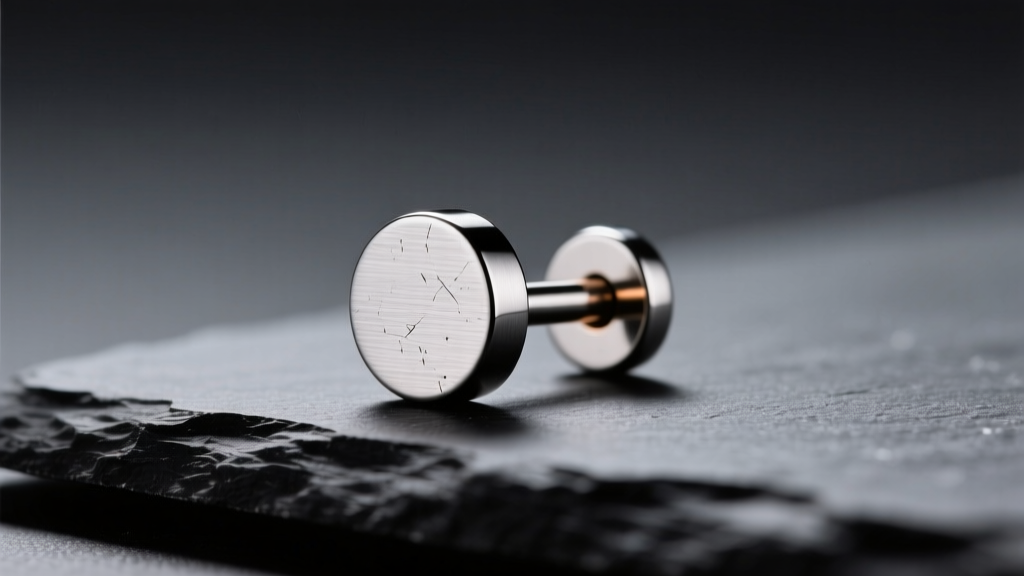
Material Science and The Hoop Trap
The root cause of 90% of cartilage bumps is micro-movement combined with nickel exposure. Seamless clicker hoops, while visually appealing, rotate constantly through the fistula (the piercing channel), dragging bacteria and causing friction. Furthermore, many budget brands sell "surgical steel" (316L), which contains up to 14% nickel. According to the Association of Professional Piercers (APP), 316L steel is entirely unsuitable for fresh or easily irritated cartilage piercings due to nickel leaching.
| Material | ASTM Standard | Nickel Content | Irritation Risk | Best Use Case |
|---|---|---|---|---|
| 316L Surgical Steel | N/A (Commercial) | 8% - 14% | High | Fully healed, non-sensitive lobes only |
| Implant-Grade Titanium | ASTM F136 | 0% (Trace) | Lowest | Fresh piercings, irritation bump recovery |
| Niobium | N/A (Pure Element) | 0% | Very Low | Anodized color hoops, sensitive skin |
| 14k/18k Solid Gold | N/A (Alloy) | Varies (Palladium alloy preferred) | Low | Long-term curated stacks, high-end aesthetic |
The Troubleshooting Protocol: If you have a bump on your helix or flat, immediately swap the hoop for an ASTM F136 implant-grade titanium flat-back labret. The flat disc eliminates micro-movement, and the lack of nickel removes the allergic trigger. Cleanse only with sterile 0.9% sodium chloride wound wash—never tea tree oil or rubbing alcohol, which cause chemical burns and worsen the bump.
The Pearl Earring Dilemma: Preventing Yellowing and Degradation
Perhaps the most influential trend Bieber cemented for men in the 2020s is the single pearl stud. However, pearls are organic gemstones composed of nacre (calcium carbonate and conchiolin). The most frequent complaint we troubleshoot is the pearl losing its luster, yellowing, or pitting after just a few months of daily wear.
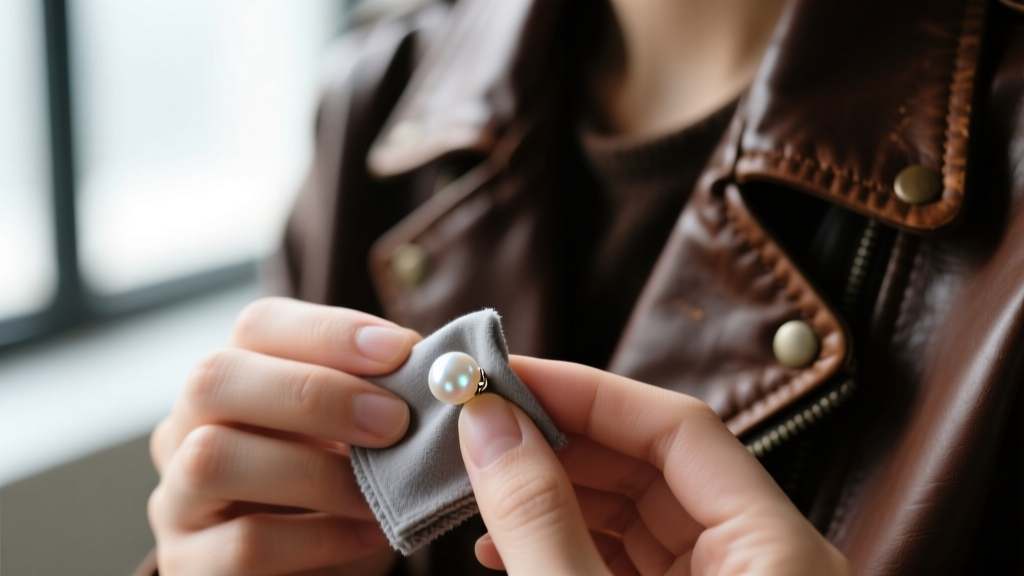
Chemical Warfare: Cologne, Sweat, and Nacre
The primary enemy of the pearl is acid. Human sweat is slightly acidic, and the alcohol/chemical compounds in modern colognes will literally dissolve the nacre layer over time, leaving a dull, chalky bead. Furthermore, many men toss their pearl earrings into ultrasonic jewelry cleaners—a catastrophic mistake that will vibrate the nacre right off the bead nucleus.
- The Sizing Rule: For the exact Bieber proportion, opt for an 8mm to 9mm round or near-round freshwater pearl. Anything smaller (4-5mm) reads as a traditional women's stud; anything larger (12mm+) looks costumey on most male earlobes.
- The Post Spec: Ensure the pearl is drilled and set on a 19-gauge or 18-gauge gold post. Pearls are heavy; a standard 20g silver post will bend under the weight of an 8mm pearl, causing the earring to droop forward awkwardly.
- The Maintenance Protocol: After every wear, wipe the pearl with a damp, lint-free microfiber cloth to remove sweat and skin oils. Never apply cologne to your neck or earlobes until after the pearl earring is removed.
For a deep dive into organic gemstone care, the Gemological Institute of America (GIA) provides extensive guidelines on preserving nacre integrity against environmental acids and improper storage.
Sourcing the Look: Budget vs. High-End Alternatives
A major roadblock for fans is the pricing. Bieber’s custom Chrome Hearts and Tiffany & Co. pieces often retail between $2,500 and $15,000. The troubleshooting challenge is finding pieces that mimic the exact visual weight and material quality without the luxury markup, while avoiding the trap of "gold vermeil" which will inevitably tarnish and cause green skin.
"The secret to the modern men's ear stack isn't the brand name; it's the precision of the cut and the solidity of the metal. A 2mm bezel-set diamond in solid 14k gold from a specialized body jeweler will outlast and outshine a hollowed-out luxury brand piece every time."
To achieve the 2026 Bieber aesthetic on a realistic budget, look for brands specializing in fine body jewelry rather than traditional fashion accessories. Brands like BVLA, Maria Tash, and Anatometal offer the exact 14k solid gold threadless ends, 2mm diamond bezels, and precision-machined huggies that Bieber wears, typically ranging from $150 to $600 per piece. By focusing on the specifications (14k solid gold, 16g post, 2mm VS1 diamond) rather than the logo, you can build a curated, irritation-free ear stack that perfectly mirrors the icon's current style, while keeping your tissue healthy and your wallet intact.


