The Ultimate Buying Guide for Earrings Gold Flower Designs
Discover how to choose the perfect earrings gold flower pieces. Learn about karat weights, floral motifs, casting methods, and pricing in this expert guide.

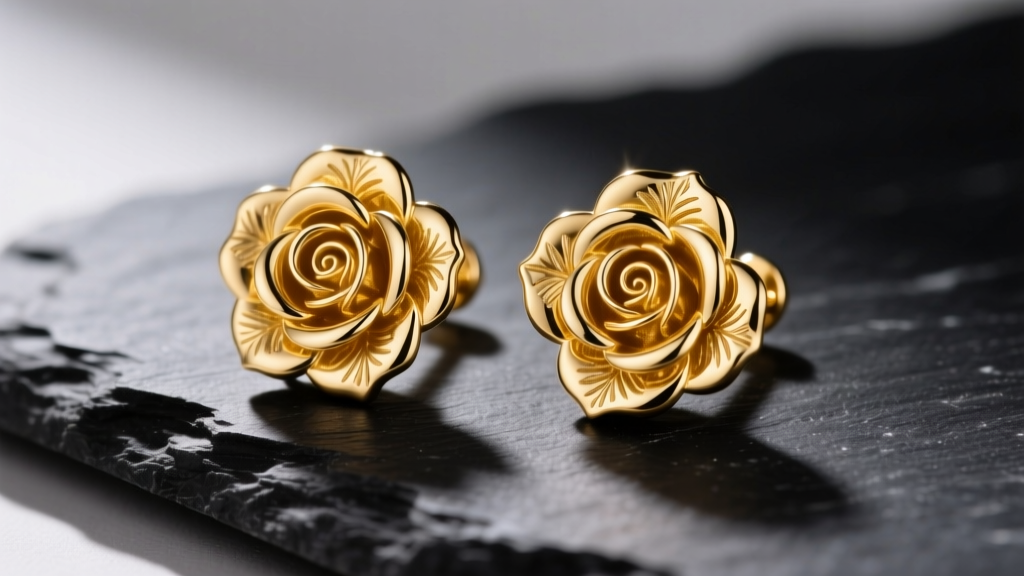
The Timeless Appeal of Floral Gold Jewelry
Floral jewelry has transcended seasonal trends, cementing itself as a permanent staple in fine jewelry collections. When typing 'earrings gold flower' into search engines, buyers are often met with a chaotic mix of cheap plated alloys and solid gold masterpieces. Navigating this landscape requires a keen eye for metallurgy, structural integrity, and design proportions. As we move through 2026, the trend has shifted heavily toward hyper-realistic botanical replicas and sculptural, abstract floral forms, moving away from the flat, cartoonish daisies of the early 2010s. Whether you are looking for a subtle lobe stud or a dramatic cartilage cuff, understanding the anatomy of floral gold jewelry is essential for making a purchase that lasts a lifetime.
Decoding Gold Purity: 14K vs. 18K for Floral Petals
The purity of the gold dictates not only the color and price of the earring but, more importantly, its structural viability for delicate floral shapes. According to the Gemological Institute of America (GIA), pure 24K gold is far too soft for jewelry, necessitating the addition of alloy metals like copper, silver, and zinc.
14K Gold (58.5% Pure Gold)
For intricate wire-wrapped petals, thin cast edges, or elongated floral dangles, 14K gold is the superior choice. The higher percentage of alloy metals provides exceptional tensile strength. A 14K gold orchid petal will resist bending and warping if snagged on a sweater or hair. Furthermore, 14K rose gold (alloyed heavily with copper) offers a natural pinkish hue that perfectly mimics the interior of a real rose or lotus blossom without the need for fragile enamel coatings.
18K Gold (75% Pure Gold)
18K gold offers a richer, deeper yellow color and is hypoallergenic for those with nickel sensitivities. However, it is significantly softer. If you are buying earrings gold flower styles in 18K, opt for solid, compact designs like a tightly closed rosebud or a thick, geometric daisy. Avoid 18K gold for large, sprawling, ultra-thin petals, as they will easily dent or deform under minor pressure.
Manufacturing Techniques: Stamped, Cast, or Hand-Fabricated?
The way a gold flower is manufactured drastically affects its weight, durability, and price. Large floral earrings must be lightweight to prevent earlobe stretching, while small studs benefit from a solid, premium feel.
| Manufacturing Method | Best Floral Application | Weight Profile | Durability & Detail |
|---|---|---|---|
| Die-Striking (Stamped) | Large 30mm+ dangles, hollow hoops with floral charms | Ultra-Lightweight | High durability, lower micro-detail |
| Lost-Wax Casting | 10mm-15mm solid studs, intricate 3D roses | Medium to Heavy | Excellent detail, prone to porosity if poorly done |
| Hand-Fabricated | Bespoke botanical replicas, wire-wrapped vines | Variable | Superior structural integrity, highest detail |
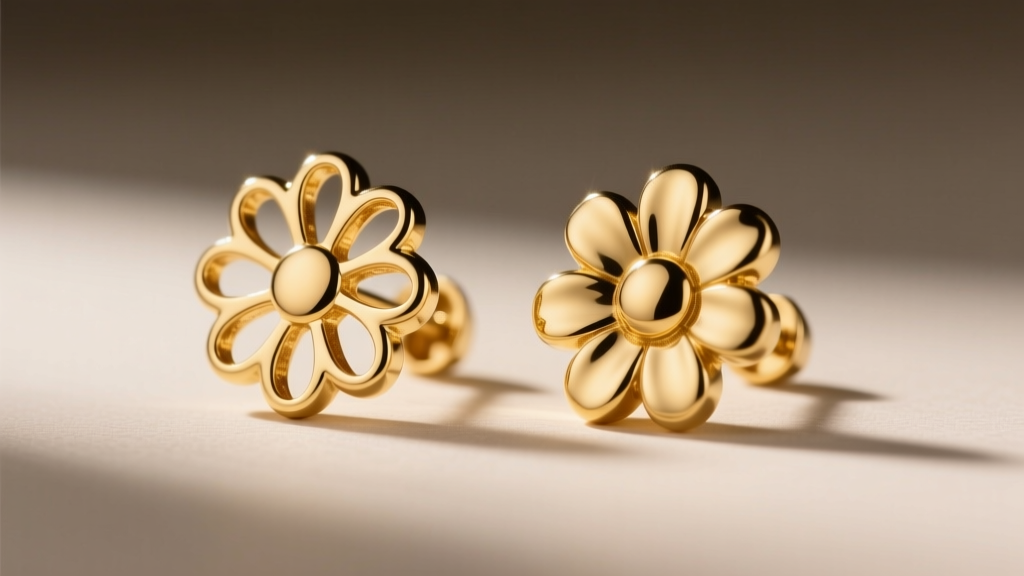
Popular Floral Motifs and Sizing Guidelines
Choosing the right flower is about more than just personal preference; it is about proportion and face shape compatibility. Here is a breakdown of the most sought-after botanical motifs and how to wear them:
- The Rose (8mm - 14mm): Dense, layered, and romantic. Because cast gold roses are heavy, keep them under 14mm for standard lobe piercings. They pair beautifully with square and heart-shaped faces, softening strong jawlines.
- The Daisy (10mm - 20mm): Flat, geometric, and cheerful. Often die-struck to keep them lightweight, larger daisy drops are excellent for round faces as they add vertical length and structure.
- The Lotus (15mm - 25mm): Symmetrical and spiritual. Lotus designs often feature upward-curving petals. These make stunning ear cuffs or helix cartilage pieces, as the wide base anchors well to the ear's ridge.
- The Orchid (20mm - 35mm): Asymmetrical and exotic. Due to their sprawling, uneven shapes, orchids are best rendered in 14K gold for strength. They are a bold choice for oval faces that can handle dramatic, sweeping lines.
Finding the Right Backing and Gauge
A common mistake buyers make when shopping for fine floral jewelry is ignoring the post thickness and backing mechanism. Standard lobe piercings are typically 20-gauge (0.81mm) or 18-gauge (1.02mm). If you are purchasing large, solid gold flower drops that weigh over 4 grams per earring, you must opt for an 18-gauge post. A thin 20-gauge post supporting a heavy 5-gram gold flower will cause the 'cheese-cutter effect,' slowly migrating downward through the earlobe tissue over time due to gravity and momentum.
Furthermore, avoid standard butterfly friction backs for heavy florals. The constant pulling of a heavy gold bloom will cause friction backs to slip, risking the loss of your jewelry. Instead, look for La Pousette (locking) backs, which feature a mechanical spring-loaded grip, or traditional screw-backs for maximum security.
Pricing Expectations and Brand Tiers
Understanding the pricing matrix for gold jewelry prevents overpaying for brand names while ensuring you receive genuine materials. As noted by Brilliant Earth's gold education resources, the intrinsic value of the metal is tied to the global spot price, but craftsmanship dictates the final retail cost.
Expert Pricing Tip: Mass-market 14K gold-plated or vermeil flower earrings range from $40 to $120. Solid 14K gold small studs (1-2 grams) start around $150 to $250. Intricate, solid 18K gold artisan dangles (5+ grams) will easily command $600 to $1,500+. Always calculate the melt value of the gold weight to ensure the artisan markup is justified by the complexity of the casting and finishing.
Care and Maintenance for Intricate Gold Blooms
Floral designs are notorious for trapping lotion, dead skin cells, and environmental dust in the deep crevices between petals. This buildup not only dulls the gold's luster but can also cause localized skin irritation.
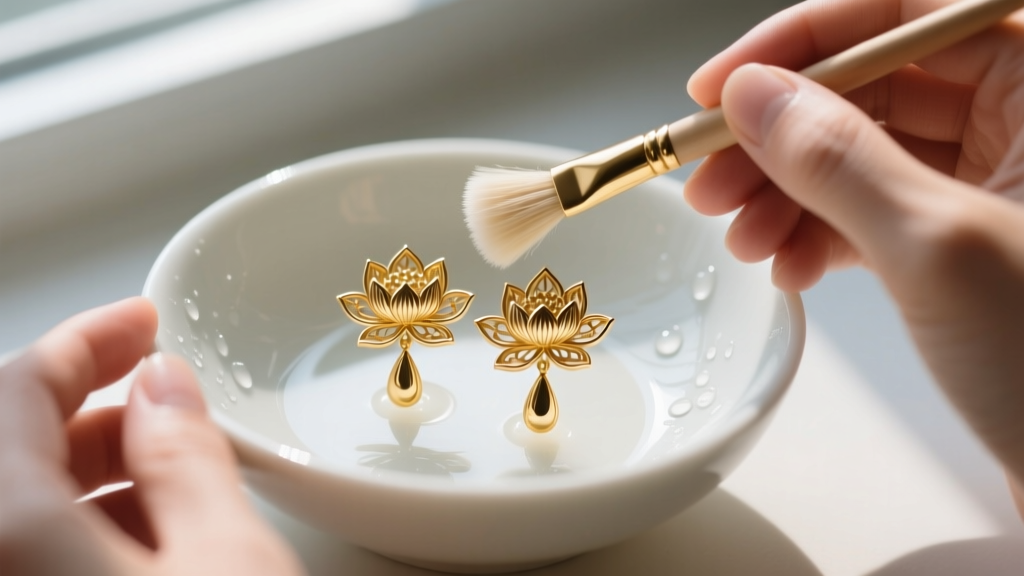
To clean your earrings gold flower pieces safely, avoid ultrasonic cleaners if the design features micro-pave diamonds, delicate seed pearls, or fired enamel. The high-frequency vibrations of an ultrasonic bath can easily shake small stones loose from their prongs or crack fragile enamel accents. Instead, create a solution of warm water and a few drops of mild, phosphate-free dish soap. Soak the earrings for 15 minutes, then gently agitate the crevices using a soft-bristled baby toothbrush. Rinse thoroughly with distilled water to prevent hard water spots, and dry completely with a lint-free microfiber cloth before storing them in an anti-tarnish pouch.
Final Verdict
Investing in floral gold earrings is a celebration of nature's geometry rendered in precious metal. By prioritizing 14K gold for delicate, sprawling designs and reserving 18K gold for compact, solid studs, you ensure your jewelry survives daily wear. Pay close attention to the gauge thickness and locking backings for heavier pieces, and always verify the manufacturing method to ensure you are getting the right balance of detail and weight. Armed with this knowledge, you can confidently curate a botanical jewelry collection that blooms year-round.

