Gold Starburst Earrings: A 2026 Value & Pricing Guide
Discover the true value of gold starburst earrings in 2026. We break down pricing tiers, metal purity, and craftsmanship to help you buy smart.

The Allure and Economics of the Starburst Motif
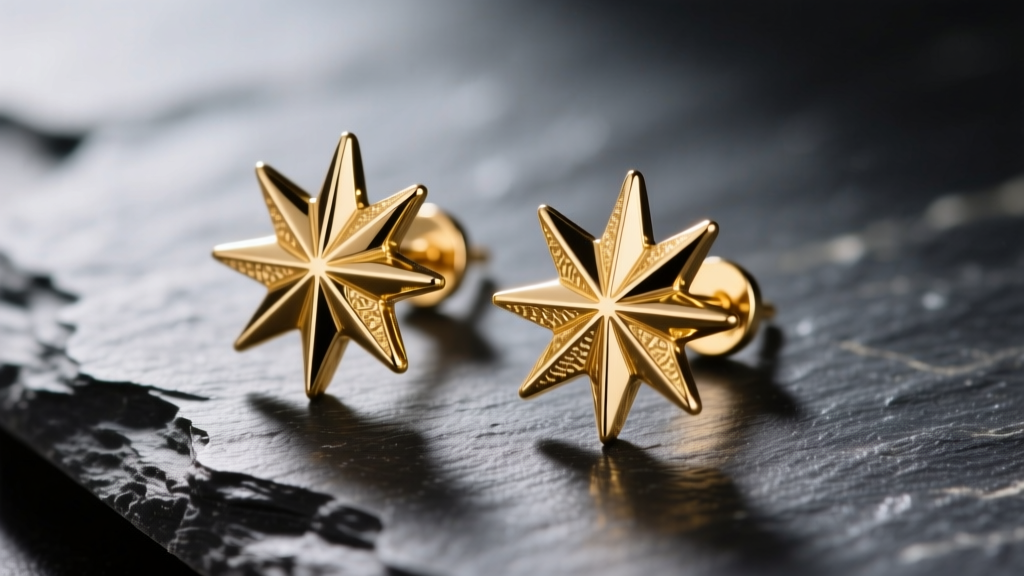
The starburst motif—characterized by radiating lines emanating from a central point—has been a staple in jewelry design since the mid-century modern era. In 2026, gold starburst earrings remain highly sought after for their ability to catch light and create the illusion of movement, even in a static stud or drop design. However, the intricate geometry of radiating rays presents unique manufacturing challenges. From a budget and value assessment perspective, not all starbursts are created equal. The market is currently flooded with fragile, mass-cast pieces masquerading as premium jewelry, making it critical for buyers to understand the intersection of metal purity, structural integrity, and retail pricing.
With raw gold prices experiencing significant volatility and upward pressure over the last few years, the retail landscape for solid gold jewelry has shifted dramatically. Assessing the true value of gold starburst earrings requires looking past the karat stamp and evaluating the manufacturing method, the post gauge, and the brand's markup over melt value. This guide provides a comprehensive framework for evaluating these celestial designs, ensuring your investment aligns with the actual quality of the piece.
Decoding the Price Tiers: What Are You Actually Paying For?
When shopping for gold starburst earrings, you will generally encounter three distinct pricing tiers. Each tier represents a different balance of material cost, labor, and expected lifespan.
Tier 1: Gold-Plated & Vermeil ($35 - $95)
At the entry-level, you will find brass or sterling silver bases coated in gold. According to the Federal Trade Commission (FTC) Jewelry Guides, a piece can only be legally marketed as 'gold vermeil' if it features a sterling silver base with a gold plating of at least 2.5 microns thick, and a minimum purity of 10K. While vermeil starbursts offer the aesthetic of solid gold at a fraction of the cost, the thin, radiating rays of the design are highly susceptible to friction. Within 12 to 18 months of daily wear, the high points of the starburst will inevitably show base metal wear, rendering the piece unpolishable without removing the remaining gold layer entirely.
Tier 2: 10K & 14K Solid Gold Hollow-Cast ($180 - $400)
The mid-tier is dominated by 10K (41.7% pure gold) and 14K (58.5% pure gold) starbursts produced via lost-wax casting. To keep retail prices accessible despite rising gold markets, manufacturers often use 'hollow-casting' or electroforming techniques. This creates a lightweight, voluminous starburst that looks substantial but is structurally compromised. If you accidentally drop a hollow-cast starburst earring on a hard tile floor, the thin rays are prone to denting or snapping. The value here lies primarily in the design and the scrap gold weight, but the durability is heavily compromised.
Tier 3: 14K & 18K Solid Die-Struck & Hand-Finished ($450 - $1,200+)
The premium tier features 14K and 18K (75% pure gold) starbursts that are die-struck or meticulously hand-fabricated. The Gemological Institute of America (GIA) notes that die-striking compresses the gold alloy, aligning its molecular structure and resulting in a significantly denser, harder, and more durable metal compared to casting. A die-struck 14K gold starburst will feature crisp, sharp rays that will not bend under normal pressure. The premium you pay in this tier is for the labor-intensive finishing—hand-polishing each individual ray—and the structural longevity of the piece.
The Craftsmanship Checklist: Manufacturing Methods Compared
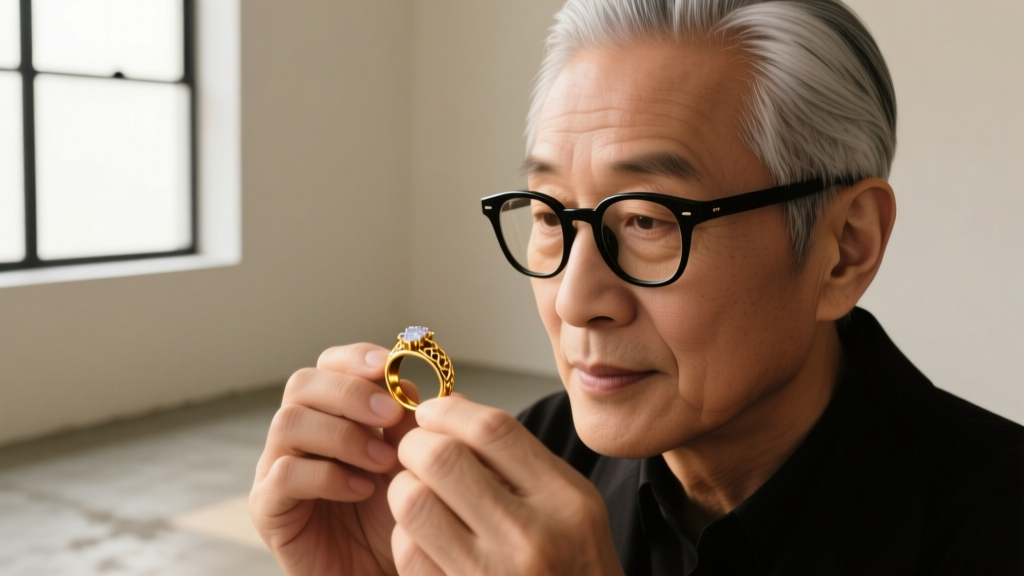
Understanding how the earring was made is the single most important factor in assessing its long-term value. Use the table below to evaluate the manufacturing method of the starburst earrings you are considering.
| Manufacturing Method | Durability & Density | Typical Price Premium | Best Use Case |
|---|---|---|---|
| Lost-Wax Casting | Low to Medium (Prone to porosity and bending) | Base Retail Price | Occasional wear, lightweight drops |
| Electroforming | Very Low (Hollow, easily crushed) | 10% - 20% above base | Large, statement starbursts on a budget |
| Die-Striking | High (Dense, crisp edges, impact resistant) | 40% - 80% above base | Everyday wear, heirloom-quality studs |
| Hand-Fabricated | Very High (Custom solder joints, precise) | 150% - 300% above base | Bespoke designs, collector pieces |
Hidden Costs and Structural Failure Modes
Starburst designs possess inherent structural vulnerabilities that budget manufacturers often ignore. When assessing value, inspect the piece for the following common failure modes:
- The Lever-Action Post Snap: Because starbursts are wide and extend far from the earlobe, they act as a lever. If bumped, the force is multiplied at the solder joint where the post meets the back of the earring. Budget earrings use thin 20-gauge (0.81mm) posts with basic torch soldering, which frequently snaps. High-value pieces utilize thicker 18-gauge (1.02mm) posts and laser-welded joints for superior shear strength.
- Ray Tip Porosity: In cast pieces, the molten gold cools fastest at the extreme tips of the starburst rays. This rapid cooling can trap gas bubbles, creating microscopic porosity. Over time, these porous tips become brittle and snap off when snagged on clothing or hair.
- Friction Back Slippage: The top-heavy nature of a wide starburst stud pulls downward on the earlobe. Standard butterfly friction backs often fail to support the weight, leading to lost earrings. High-value assessments should factor in the inclusion of secure screw-backs or heavy-duty jumbo clutches.
Calculating Melt Value vs. Retail Premium
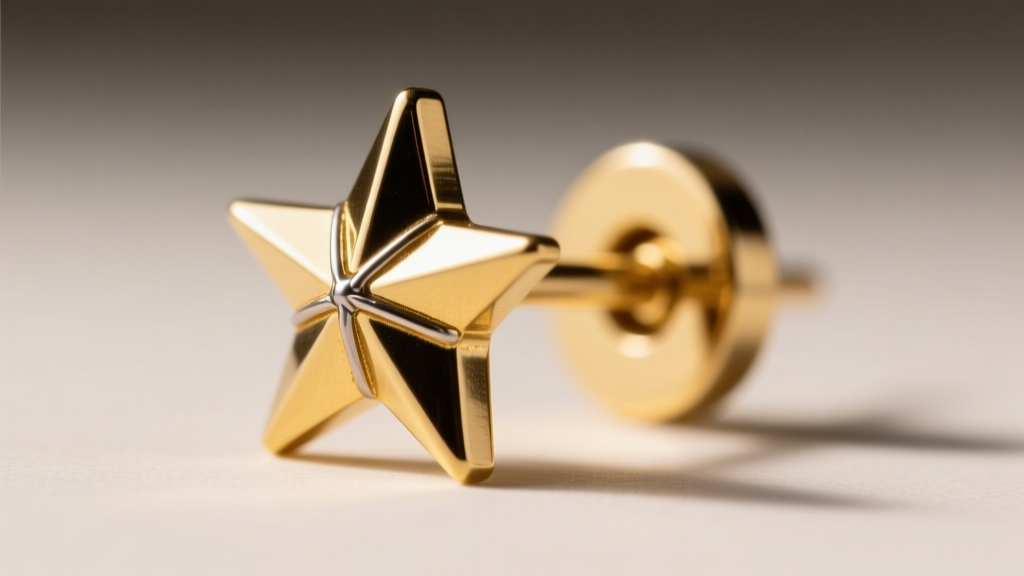
To truly assess the budget and value of solid gold starburst earrings, you must understand the difference between intrinsic melt value and retail markup. Let us break down the math for a standard pair of 14K solid gold starburst studs weighing 2.4 grams total (1.2 grams each).
First, determine the pure gold content. 14K gold is 58.5% pure. Multiply the total weight by the purity: 2.4g × 0.585 = 1.404 grams of pure 24K gold. Next, apply the current spot price of gold. Assuming a 2026 market rate of approximately $80 per gram for pure gold, the intrinsic melt value of the metal is roughly $112.32.
If a retailer is selling these exact 2.4-gram 14K starburst earrings for $650, the retail premium is nearly 475% over the melt value. Is this justified? If the earrings are die-struck, feature hand-polished rays, include 18-gauge laser-welded posts, and come with a lifetime structural warranty, the premium reflects skilled labor, quality control, and overhead. However, if the earrings are porous, lightweight castings with flimsy 20-gauge friction posts, you are overpaying for the brand name rather than the craftsmanship. Always request the exact gram weight from the jeweler before purchasing to run this calculation yourself.
Final Verdict: Maximizing Your Budget
When evaluating gold starburst earrings, the best value is rarely found at the absolute bottom or the absolute top of the market. The 'sweet spot' for budget-conscious buyers seeking longevity lies in vintage or estate 14K solid gold pieces from the 1970s and 1980s. During this era, die-striking was the industry standard for commercial jewelry, meaning you can frequently find incredibly dense, durable starburst studs on the secondary market for just 20% to 30% above their melt value—bypassing the massive retail markups of modern boutique brands.
Expert Tip: If you are buying new and prefer the look of a large, dramatic starburst but have a strict budget, opt for a high-quality 14K gold vermeil pair with a sterling silver base, but commit to wearing them strictly for evening or occasional use. Reserve your solid gold budget for smaller, die-struck 14K starburst studs that can withstand the rigors of daily wear without losing their luster or structural integrity.
Ultimately, the true value of gold starburst earrings is defined by how well the manufacturing method respects the fragility of the design. By prioritizing post gauge, joint integrity, and metal density over sheer size or brand prestige, you can secure a piece that remains a staple in your wardrobe for decades.


