The Golden Earring When the Lady Smiles: 2026 Trend Guide
Discover why the golden earring when the lady smiles defines 2026 trends. Explore kinetic gold alloys, ergonomic weights, and face-framing styles.
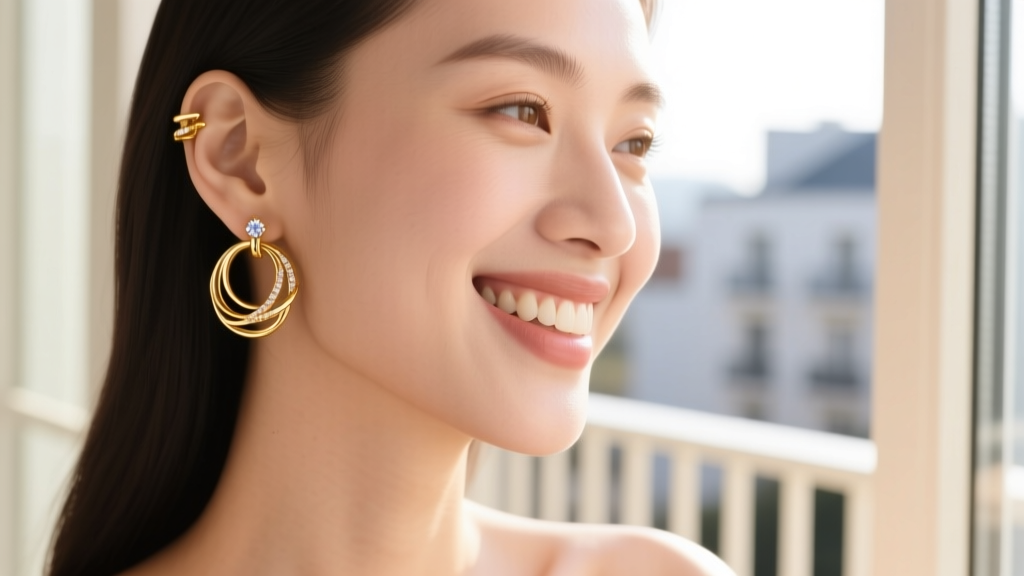
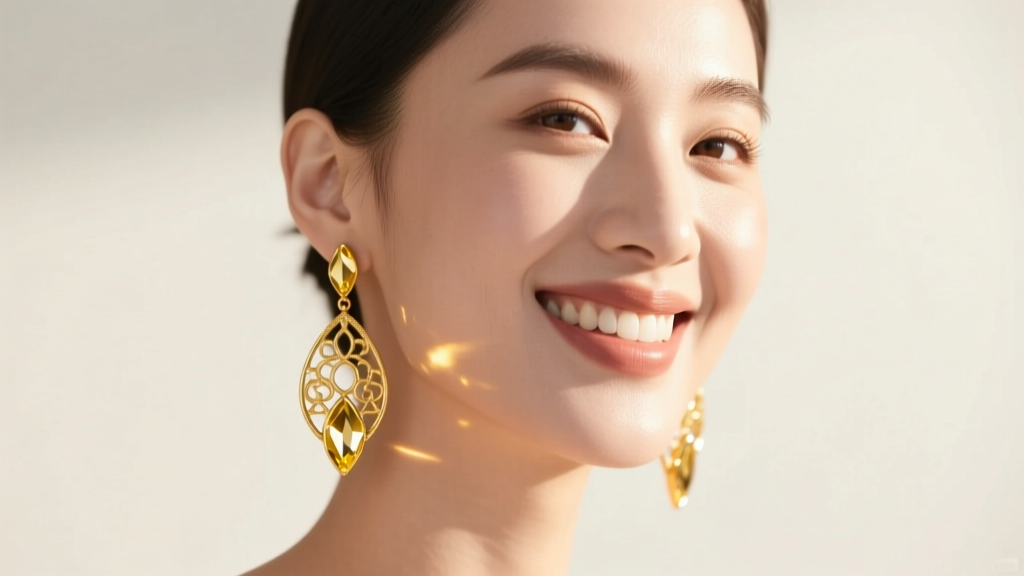
There is a distinct, almost cinematic magic to the golden earring when the lady smiles—a phenomenon that has completely taken over 2026 jewelry trend forecasting. This is not merely about wearing gold; it is about the intersection of facial kinetics, light refraction, and metallurgical warmth. When the zygomaticus major muscle contracts during a genuine smile, the cheeks lift, the jawline shifts, and the earlobe tilts slightly upward. In 2026, the most coveted earrings are those specifically engineered to catch the light and sway in harmony with this micro-movement, creating a radiant, face-framing halo effect.
As style analysts and jewelers, we are moving past static aesthetics. The modern consumer demands jewelry that lives and breathes with them. This comprehensive guide breaks down the metallurgy, ergonomics, and styling frameworks behind the year's most captivating earring trend, ensuring your collection aligns with the cutting edge of kinetic gold design.
The Anatomy of the "Radiant Smile" Aesthetic
The concept of the "radiant smile" aesthetic hinges on luminosity and motion. When a woman smiles, the natural flush of her skin alters her undertone, often pulling warmer, more vibrant hues to the surface. Yellow gold, with its inherent solar reflectivity, amplifies this natural warmth. However, not all gold earrings achieve this effect. The trend specifically favors high-polish, unblemished metal surfaces or deeply textured finishes that scatter light dynamically, rather than matte or heavily oxidized pieces which can look flat against glowing skin.
"In 2026, we are designing for movement, not just the mannequin. An earring must be evaluated on how it behaves when the wearer laughs, speaks, and smiles. The golden earring when the lady smiles is the ultimate stress test for kinetic jewelry design." — Lead Metallurgist at the Milan Jewelry Guild
Metallurgy & Light: Why 18k and 14k Yellow Gold Lead the Trend
To achieve the perfect golden hue that complements a smiling complexion, the alloy composition is paramount. Pure 24k gold is too soft for kinetic earrings and lacks the structural integrity to maintain a high-polish mirror finish over time. According to the Gemological Institute of America (GIA), the ideal balance of color saturation and durability for face-framing drops is found in 18k and 14k yellow gold alloys.
An 18k yellow gold alloy typically consists of 75% pure gold, 12.5% copper, and 12.5% silver. This specific copper-to-silver ratio yields a rich, buttery yellow that mimics the warmth of natural sunlight, making it the premier choice for the "radiant smile" effect. Conversely, 14k gold (58.3% pure gold) offers a slightly paler, more durable finish, ideal for everyday huggies that require resistance to scratching and deformation.
| Karat | Gold Purity | Alloy Composition | Best Application | Avg. Price Range (per gram) |
|---|---|---|---|---|
| 14k Yellow | 58.3% | Gold, Silver, Copper, Zinc | Everyday Huggies, Cartilage Hoops | $45 - $65 |
| 18k Yellow | 75.0% | Gold, Copper (12.5%), Silver (12.5%) | Kinetic Drops, Statement Dangles | $75 - $110 |
| 22k Yellow | 91.6% | Gold, Copper, Silver | Static Studs, Cultural Heirlooms | $115 - $140 |
Ergonomics of Expression: Weight, Gauge, and Movement
A critical, often overlooked element of this trend is ergonomics. The golden earring when the lady smiles loses its magic if the earring is too heavy, causing the lobe to drag downward and creating a static, tired silhouette. For an earring to sway beautifully with the upward lift of a smile, it must adhere to strict weight and gauge parameters.
The 7-Gram Rule for Kinetic Drops
For drop and dangle earrings designed to move with facial expressions, the total weight should ideally fall between 4 and 7 grams per ear. Anything exceeding 10 grams will stretch the piercing hole over time and inhibit the natural "bounce" of the earring. Designers in 2026 are utilizing hollow-forming techniques and intricate filigree to create voluminous, light-catching silhouettes without adding prohibitive weight.
Post Gauge and Clasp Security
The thickness of the earring post (gauge) dictates how the piece sits in the ear. Standard lobe piercings are typically 20g (0.81mm) or 18g (1.02mm). Using an 18g post for a kinetic drop provides a slightly more rigid anchor, preventing the earring from drooping forward. Furthermore, security is vital; a smiling, active wearer needs reliable closures. Leverback wires and hinged snap-backs have largely replaced friction push-backs in premium 2026 collections, ensuring the earring stays perfectly positioned to catch the light.
Face-Shaping Styles That Catch the Light
To maximize the visual impact of the golden earring when the lady smiles, the silhouette must complement the shifting geometry of the face. Here are the top three styles dominating the current market:
- The Asymmetric Teardrop: Featuring a high-polish 18k gold teardrop on one ear and a textured 14k huggie on the other. The teardrop acts as a pendulum, swinging gently to draw the eye toward the corner of the mouth and the lifting cheekbone.
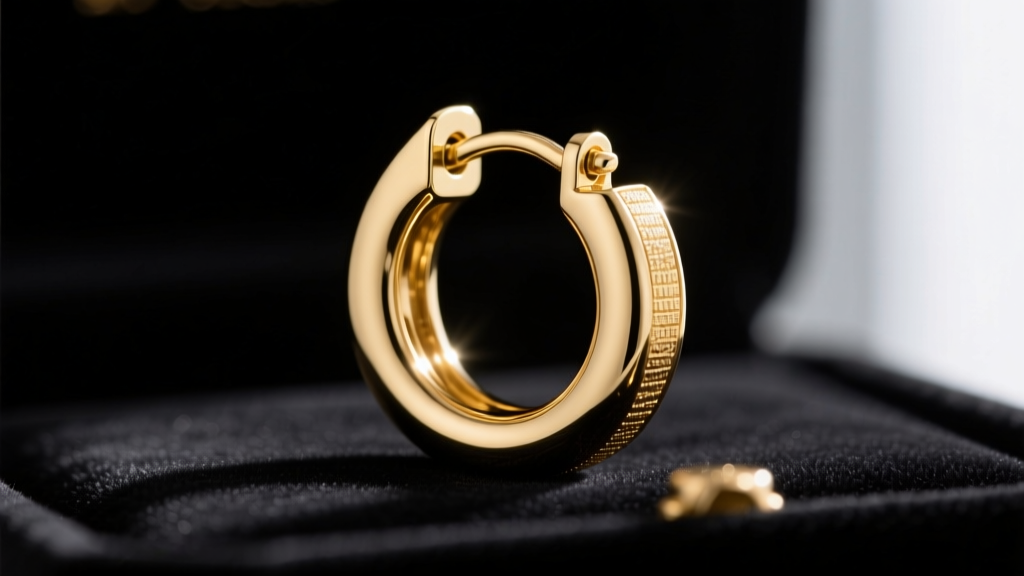
- The Hammered Oval Hoop: A medium-sized hoop (25mm-30mm diameter) with a hand-hammered finish. The microscopic divots in the metal act as individual light reflectors, creating a shimmering halo effect around the jawline when the head turns during conversation.
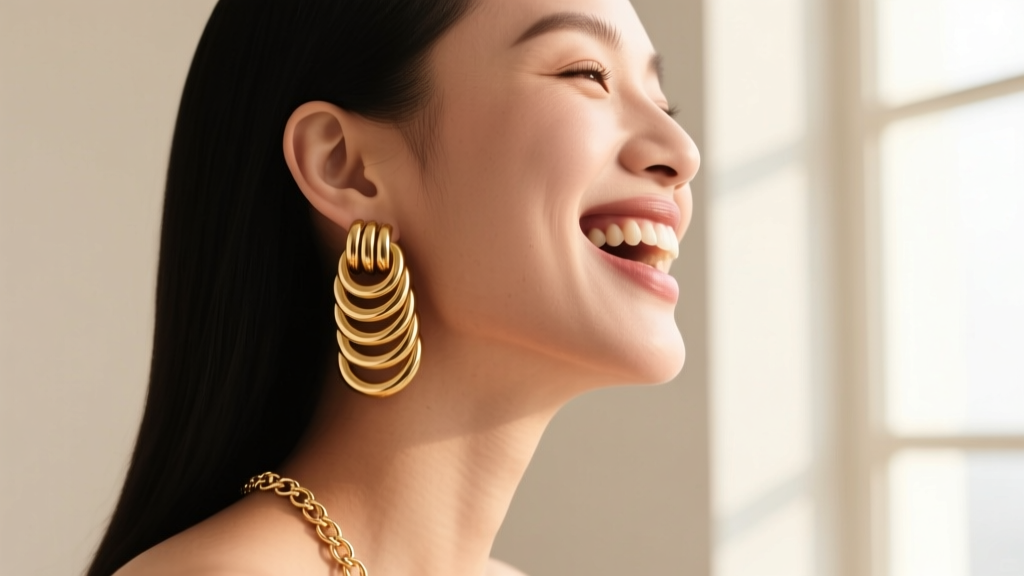
- The Lobe-to-Cartilage Chain: A delicate 18k gold chain connecting a lobe stud to a 16g cartilage cuff. This style frames the entire ear and moves fluidly, emphasizing the elegant line of the neck when the wearer tilts their head back in laughter.
Sourcing & Pricing: Investing in the 2026 Gold Standard
As demand for high-quality, kinetic gold jewelry surges, the World Gold Council notes a significant shift in consumer preference toward solid gold over heavy gold plating or vermeil. Vermeil, while affordable, eventually wears down, losing the high-polish reflectivity required for the "radiant smile" aesthetic.
When sourcing or investing in these pieces, look for the 750 hallmark (for 18k) or 585 hallmark (for 14k). Expect to pay between $250 and $450 for a high-quality pair of 18k kinetic drops from independent designers, while mass-market 14k huggies typically range from $120 to $200. Always ensure the pieces are nickel-free, as the copper and silver alloys used in premium yellow gold eliminate the need for nickel whiteners, making them hypoallergenic and safe for sensitive, active ears.
Styling Framework: Matching Gold Tones to Smile Dynamics
The final element of mastering this trend is understanding how different lighting environments interact with the gold and the wearer's expression. In warm, indoor lighting (2700K-3000K), 18k yellow gold will appear deeply saturated, almost orange, which beautifully complements a warm, genuine smile in evening settings. In harsh, cool daylight (5000K+), the same 18k gold provides a striking, high-contrast pop against the skin, making it the ultimate power accessory for daytime professional environments.
Ultimately, the phenomenon of the golden earring when the lady smiles is a testament to jewelry's ability to enhance human emotion. By prioritizing kinetic movement, precise metallurgical alloys, and ergonomic weight distribution, the 2026 earring landscape ensures that your jewelry is not just an accessory, but an active participant in your most radiant moments.


