Greek Eye Earrings Explained: A Beginner's Style Guide
Discover everything about Greek eye earrings. Learn about mati symbolism, best metals for sensitive ears, gauge sizes, and how to style them daily.

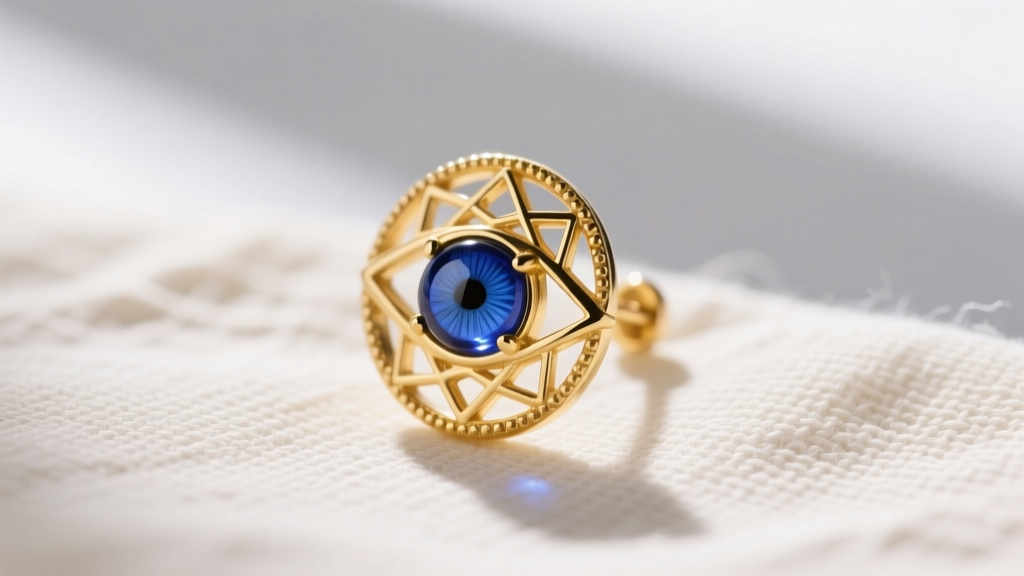
If you are looking to build a jewelry collection that balances everyday versatility with deep cultural symbolism, Greek eye earrings are an essential addition. Often referred to as the mati (the Greek word for "eye"), these talismanic pieces have transcended their ancient apotropaic roots to become a staple in modern ear curation. However, navigating the market can be tricky for beginners. From distinguishing authentic cobalt glass from cheap enamel to selecting the correct gauge for your specific piercing, there is a science to choosing the perfect pair.
This beginner-friendly explainer breaks down the anatomy, materials, and styling frameworks you need to confidently wear and care for Greek eye earrings.
What Are Greek Eye Earrings? Understanding the Mati
While often conflated with the Turkish nazar or the Middle Eastern hamsa, the Greek mati has its own distinct heritage. Historically, the mati is designed to ward off the "evil eye"—a curse believed to be cast by a malevolent glare, usually given to a person when they are unaware. The traditional Greek design features concentric circles, most commonly in a specific sequence: a dark blue outer ring, a white middle ring, a light blue or black inner ring, and a dark blue or black pupil.
In contemporary jewelry, Greek eye earrings serve a dual purpose: they act as a personal protective amulet and a striking geometric accessory. The circular motif naturally draws the eye, making it an excellent focal point for both minimalist lobe piercings and elaborate cartilage setups.
Material Science: Glass, Enamel, and Gemstones
The "eye" component of the earring can be crafted from several materials, each with distinct durability and aesthetic profiles. Understanding these differences is crucial for making a long-term investment.
1. Traditional Cobalt Glass
Authentic Greek matia are crafted from glass colored with cobalt oxide, which yields that signature, vibrant dark blue. Glass offers a beautiful, glossy depth that synthetic materials struggle to replicate. However, glass is inherently fragile. If you opt for glass Greek eye earrings, look for pieces where the glass is protected by a raised metal bezel to prevent chipping upon impact.
2. Cold and Fired Enamel
For everyday wear, enamel is the most practical choice. Fired enamel (vitrous enamel) is essentially powdered glass fused to metal at high temperatures, making it highly scratch-resistant. Cold enamel (epoxy resin) is cheaper and more prone to yellowing or chipping over time. Always check the product specifications to ensure you are getting fired enamel for longevity.
3. Gemstone Alternatives
High-end jewelers often replace the traditional glass with gemstones like lapis lazuli, turquoise, or blue sapphires. While beautiful, porous stones like turquoise require specialized care to prevent discoloration from skin oils and cosmetics.
The Metal Base: Hypoallergenic Requirements
The metal holding the mati is just as important as the eye itself, especially for those with contact dermatitis or nickel allergies. According to the Association of Professional Piercers, the safest metals for prolonged skin contact are implant-grade titanium (ASTM F136), niobium, and solid 14k or 18k gold. Avoid "gold-plated" brass or mystery alloys, as the thin plating will eventually wear off, exposing the reactive base metal to your piercing channel.
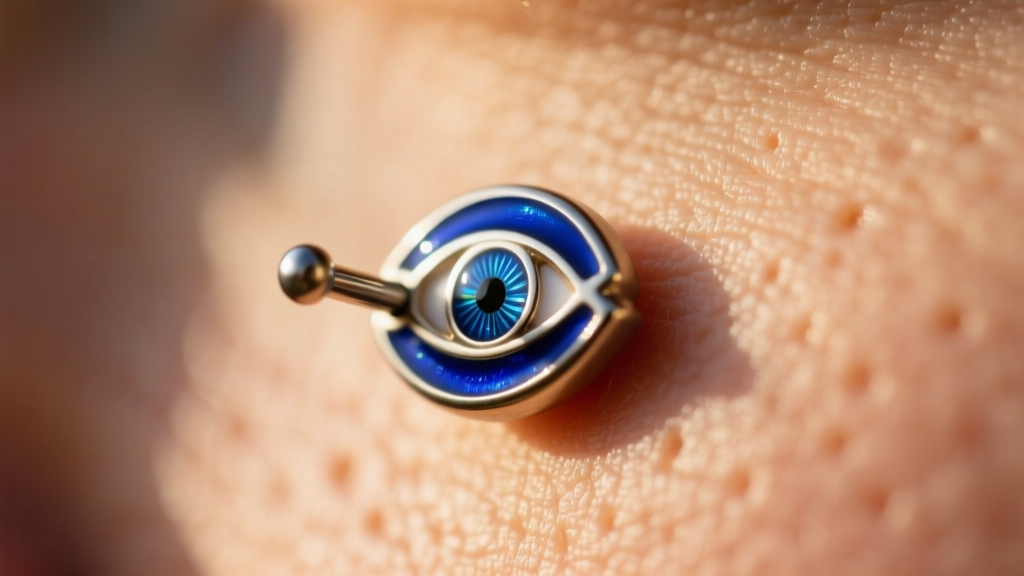
Piercing Compatibility and Gauge Sizing
One of the most common mistakes beginners make is buying earrings without verifying the post thickness (gauge) against their specific piercing. Greek eye earrings are available across various styles, from delicate studs to heavy dangles. Use the table below to match your piercing type with the correct earring specifications.
| Piercing Type | Standard Gauge (Thickness) | Best Greek Eye Style | Recommended Backing |
|---|---|---|---|
| Standard Earlobe | 20G (0.8mm) or 18G (1.0mm) | Bezel-set studs, small hoops | Butterfly clutch or silicone O-ring |
| Upper Lobe / Flat | 18G (1.0mm) or 16G (1.2mm) | Flat-back labret studs | Threadless or internally threaded flat back |
| Helix / Cartilage | 16G (1.2mm) | Mini mati cartilage studs | Flat-back labret (to avoid sleeping pressure) |
| Tragus / Conch | 16G (1.2mm) | Solitaire Greek eye studs | Flat-back labret |
Pro Tip: If you are buying Greek eye huggies or hoops for a cartilage piercing, ensure the inner diameter is at least 8mm to 10mm to accommodate the natural swelling and curvature of the helix without pinching the tissue.
Styling Frameworks: Matching Face Shapes and Aesthetics
Greek eye earrings are incredibly versatile, but the silhouette you choose should complement your facial geometry and personal style.
- Round Faces: Opt for elongated Greek eye drop earrings or dangles. The vertical movement creates an optical illusion that lengthens the face. Avoid large, perfectly round mati hoops, which can exaggerate facial roundness.
- Square Faces: Soften a strong jawline with rounded Greek eye huggies or medium-sized circular hoops featuring a central mati charm. The curves balance angular features.
- Heart-Shaped Faces: Teardrop-shaped Greek eye earrings or bottom-heavy dangles work beautifully, adding visual weight to the lower half of the face to balance a narrower chin.
- The "Curated Ear" Approach: If you have multiple piercings, use a single, high-quality Greek eye stud in your primary lobe piercing as the "anchor" piece. Complement it with plain titanium or gold ball studs in your secondary and tertiary holes to let the mati stand out without creating visual clutter.
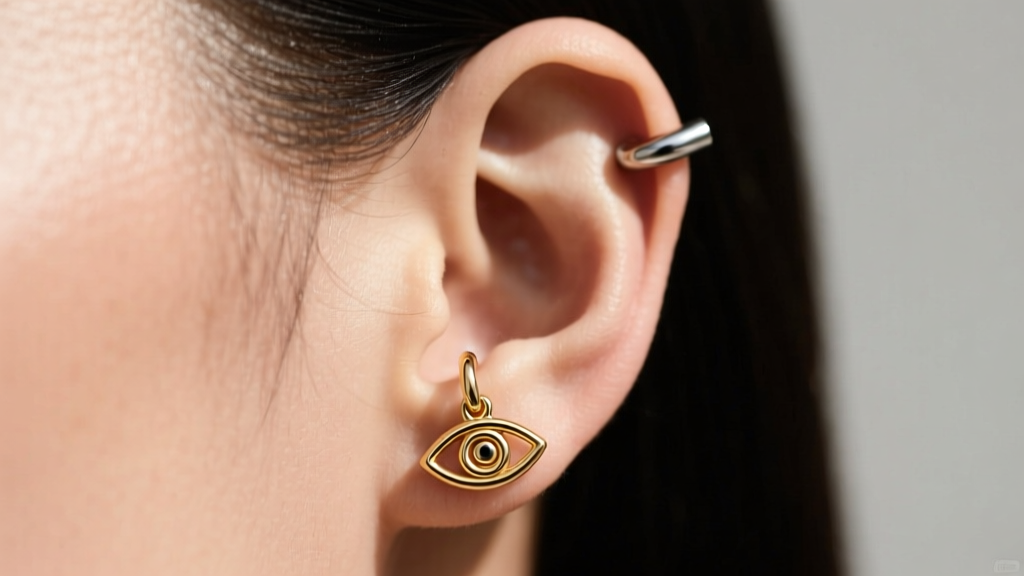
Price Tiers and Investment Value
Understanding the pricing landscape will help you avoid overpaying for costume jewelry disguised as fine pieces.
- Fashion Tier ($20 - $50): Typically made of sterling silver with cold enamel or gold vermeil (a thick layer of gold over sterling silver). Great for trend-testing, but vermeil will eventually require re-plating if worn daily in the shower.
- Bridge Tier ($80 - $200): Features solid 14k gold-filled components, genuine Greek cobalt glass, or fired enamel. These offer excellent longevity and are safe for most sensitive ears.
- Fine Jewelry Tier ($300 - $800+): Crafted in solid 14k or 18k gold, often replacing the traditional glass pupil with a genuine diamond or sapphire. These are heirloom-quality pieces that retain intrinsic metal value.
Maintenance and Care Protocols
Because Greek eye earrings combine metals with glass, enamel, or porous stones, a one-size-fits-all cleaning approach will damage them. Never use ultrasonic cleaners on glass matia or turquoise stones, as the high-frequency vibrations can cause micro-fractures or shatter the glass.
For routine cleaning, use a few drops of mild, phosphate-free dish soap in warm water. Gently scrub the metal settings with a soft-bristled baby toothbrush. As noted by the Gemological Institute of America (GIA), porous gemstones like turquoise and lapis lazuli should never be soaked in water or exposed to harsh chemicals, perfumes, or hairsprays, as they will absorb the liquids and permanently alter their color matrix. Always wipe gemstone Greek eye earrings with a dry, lint-free microfiber cloth after wearing them to remove acidic skin oils.
By prioritizing implant-grade metals, selecting the correct gauge for your unique anatomy, and adhering to material-specific care routines, your Greek eye earrings will remain a vibrant, protective, and stylish fixture in your collection for years to come.


