How to Style, Balance, and Care for a Dorsey Earring
Learn how to style, balance, and maintain your Dorsey earring. This step-by-step guide covers face shape matching, metal care, and outfit pairing.

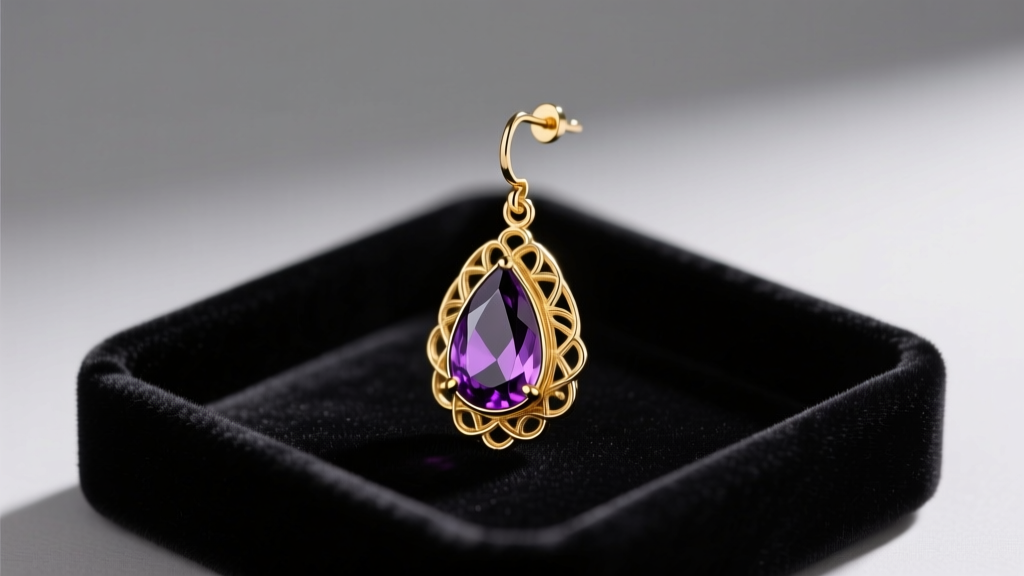
The Dorsey earring is a masterclass in articulated jewelry design. Characterized by its elongated, tapering silhouette and intricate mid-century-inspired metalwork, the Dorsey style bridges the gap between vintage glamour and contemporary minimalism. As we move through 2026, the revival of statement drops has made the Dorsey a staple in curated ear stacks and formal styling alike. However, because of its unique center of gravity and delicate filigree components, wearing and maintaining a Dorsey earring requires specific technical knowledge.
This comprehensive, step-by-step guide will walk you through the anatomy of the Dorsey drop, how to balance its weight on your lobe, and the exact chemical protocols required to clean its mixed-material construction without causing micro-abrasions.
The Anatomy of a Dorsey Earring
Before styling, it is crucial to understand the structural engineering of a genuine Dorsey earring. Unlike a standard dangle, a true Dorsey features an articulated hinge or a micro-jump ring connecting the primary stud (or French wire hook) to the elongated body. This articulation allows the earring to move fluidly with the wearer, catching light at multiple angles.
- The Hook/Post: Typically crafted from 18-gauge (1.0mm) or 20-gauge (0.8mm) wire. For heavier Dorsey designs exceeding 8 grams, an 18-gauge hook is essential to prevent the wire from bending forward under the weight of the drop.
- The Articulation Point: A 2mm to 3mm jump ring or concealed barrel hinge. This is the highest stress point on the earring and requires periodic inspection with a 10x jeweler's loupe.
- The Filigree Body: The tapering metalwork, often cast in 925 sterling silver, 14k gold vermeil, or raw brass, featuring open-work designs that reduce overall weight while maximizing visual volume.
- The Terminal Drop: The focal point, usually a teardrop or marquise-cut gemstone (such as amethyst, onyx, or turquoise) set in a bezel or prong setting.
Step-by-Step Guide to Styling the Dorsey Drop
Styling a Dorsey earring is an exercise in visual geometry. Because the earring draws the eye vertically, it dramatically alters the perceived proportions of your face and neckline.
Step 1: Match the Drop Length to Your Face Shape
The elongated nature of the Dorsey earring makes it a powerful tool for facial contouring. Use these precise measurements to select the right drop length:
- Round Faces: Opt for a Dorsey drop measuring 2.5 to 3.5 inches. The sharp vertical line creates an optical illusion that lengthens the face and softens the cheekbones. Avoid wide, chandelier-style Dorseys, which add unnecessary horizontal volume.
- Square Faces: Choose a Dorsey with a curved, teardrop terminal stone and a length of 2.0 to 2.5 inches. The rounded bottom of the earring will soften a strong, angular jawline.
- Oval Faces: You have the versatility to wear any length, but a classic 1.5-inch Dorsey maintains your natural facial balance without over-elongating your profile.
- Heart-Shaped Faces: Look for Dorseys that are wider at the bottom than the top (a true teardrop shape) to add visual weight to a narrower chin. Keep the length under 2.5 inches.

Step 2: Balance the Neckline and Collarbone
The Dorsey earring demands negative space to truly shine. The golden rule of styling articulated drops is to avoid visual competition around the jaw and collarbone.
Ideal Necklines: Deep V-necks, scoop necks, and off-the-shoulder silhouettes provide the perfect canvas. The vertical line of a V-neck mirrors the elongation of the Dorsey earring, creating a cohesive, harmonious look.
Necklines to Avoid: High turtlenecks, ruffled Victorian collars, and heavy cowl necks. Not only do these clash visually with the intricate filigree of the Dorsey, but they also present a severe snag hazard. The open-work metal can easily catch on knitwear, potentially bending the articulation jump ring or tearing the garment.
Step 3: Coordinate with Secondary Piercings
If you have a curated ear stack, the Dorsey earring must act as the undisputed focal point in your primary lobe piercing. To achieve this, follow the 'Rule of Diminishing Scale':
- Upper Lobe (2nd piercing): Use a simple 3mm or 4mm bezel-set stud or a seamless 16-gauge huggie hoop.
- Helix/Forward Helix: Opt for flat-back labret studs in 18g or 16g titanium with a low-profile 2mm gemstone. Avoid dangling charms in the cartilage, which will compete with the movement of the Dorsey.
- Tragus/Conch: Keep these completely bare or use flush-fitting 14g clickers to maintain a clean, uncluttered canvas.
Material Care and Maintenance Protocols
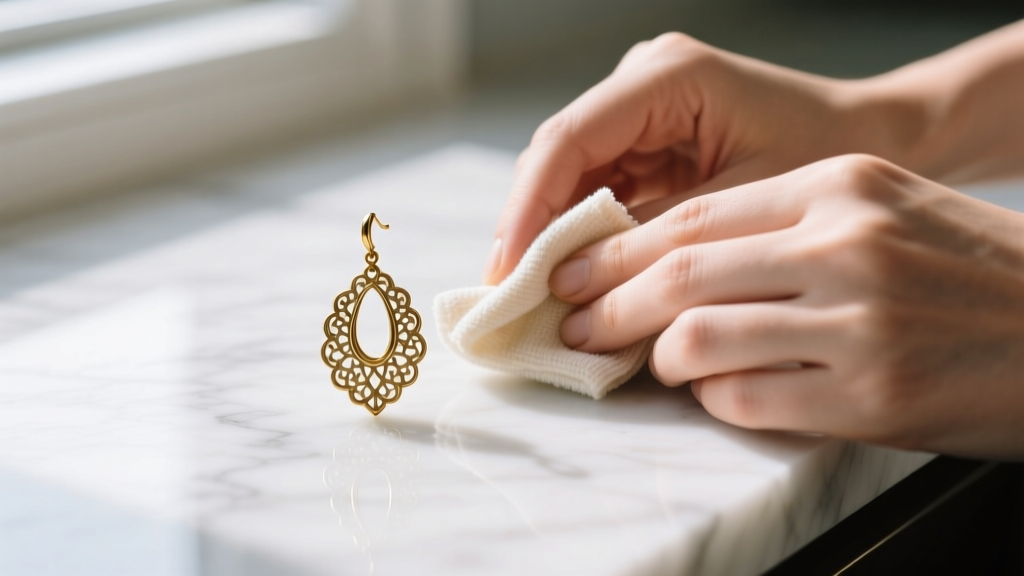
Because Dorsey earrings often combine base metals, precious metal plating, and porous gemstones, a one-size-fits-all cleaning approach will ruin the piece. According to the Gemological Institute of America (GIA), improper cleaning is the leading cause of micro-fractures in treated gemstones and the premature stripping of gold vermeil.
Below is a strict maintenance matrix based on the specific material composition of your Dorsey earring.
| Material Component | Approved Cleaning Agent | Tool | Frequency |
|---|---|---|---|
| 14k/18k Gold Vermeil | Lukewarm water + 1 drop pH-neutral dish soap | Ultra-soft baby toothbrush | Monthly |
| 925 Sterling Silver (Oxidized) | NO liquids. Dry polishing only. | Untreated microfiber cloth | Weekly |
| Raw Brass / Bronze Filigree | Lemon juice & baking soda paste (apply only to metal, avoid stones) | Cotton swab (Q-tip) | As needed for tarnish |
| Porous Stones (Turquoise, Opal, Pearl) | Dry, soft lint-free cloth ONLY. Never submerge. | Jeweler's polishing cloth | After every wear |
Pro Tip: Never use ultrasonic cleaners on a Dorsey earring. The high-frequency vibrations can easily loosen the adhesive used in the terminal drop's bezel setting and cause microscopic stress fractures in the articulation jump rings. For more on safe ultrasonic practices, refer to guidelines from JewelryWise.
Troubleshooting Common Wear Issues
Even the highest-quality Dorsey earrings present unique physical challenges due to their elongated design. Here is how to troubleshoot the most common issues reported by wearers.
Issue 1: Lobe Droop and Forward Tilt
The Cause: The center of gravity on a 2.5-inch Dorsey earring sits far below the piercing hole. This creates a lever effect, pulling the lobe downward and causing the earring to tilt awkwardly forward, hiding the front-facing filigree.
The Fix: Do not rely on standard metal butterfly backs. Instead, use silicone earring support patches (such as Lobe Wonder pads). These adhesive discs distribute the weight of the 18-gauge hook across a wider surface area of the earlobe, providing structural support and keeping the Dorsey perfectly upright. Alternatively, swap the standard back for a heavy 10mm silicone disc back to act as a counterweight.
Issue 2: Hair Snagging in the Filigree
The Cause: The open-work metal design and the articulation jump ring are natural traps for fine hair strands.
The Fix: First, inspect the earring with a 10x jeweler's loupe. Ensure that all jump rings are completely flush-closed; even a 0.5mm gap will catch hair. If the rings are flush but the filigree is still catching, apply a microscopic layer of clear, hard-drying jewelry wax or a specialized metal sealant to the interior edges of the open-work design to smooth out microscopic casting burrs.
Issue 3: Skin Discoloration from Brass Components
The Cause: Many vintage-inspired Dorsey earrings are cast in raw brass or bronze. The copper content reacts with the natural acidity and salts in your skin, leaving a green or black residue on the neck and jawline.
The Fix: Paint the back of the earring's terminal drop and the interior of the hook with a thin layer of clear, hypoallergenic nail polish or a specialized jewelry shielding liquid (like Jewelerskin). Allow it to cure for 24 hours before wearing. Reapply every 3 to 4 weeks as the coating wears down from friction.
Final Thoughts on Mastering the Dorsey Silhouette
The Dorsey earring is not merely an accessory; it is a structural statement piece that requires intentional styling and meticulous care. By respecting the physics of its drop weight, matching its geometry to your facial structure, and adhering to strict, material-specific cleaning protocols, you can ensure your Dorsey earrings remain a flawless, head-turning element of your jewelry wardrobe for decades to come. Whether you are pairing a heavy brass Dorsey with a minimalist silk slip dress or styling a delicate gold vermeil pair for the office, mastering these fundamentals guarantees both comfort and sartorial elegance.


