A Step-by-Step Guide to Styling Emma Lincoln Earrings
Learn how to style, secure, and care for Emma Lincoln earrings. Our step-by-step guide covers face shapes, heavy dangle support, and cleaning.


Understanding the Anatomy of Emma Lincoln Drop Earrings
Emma Lincoln earrings are celebrated for their vintage-inspired, Art Deco, and bridal aesthetics, frequently featuring intricate crystal pavé, glass pearls, and dramatic chandelier silhouettes. However, their elaborate designs often result in a heavier earring that requires specific styling and care techniques. Before diving into how to wear them, it is crucial to understand their construction.
Most Emma Lincoln dangle and drop styles are crafted from a brass base metal that is heavily plated with rhodium (typically between 0.5 to 1.0 microns thick) to mimic the look of white gold or platinum while providing a tarnish-resistant barrier. The posts that pass through the earlobe are generally made of 925 sterling silver to minimize allergic reactions, usually fashioned in a standard 20-gauge (0.81mm) or 18-gauge (1.02mm) thickness. The stones are typically lead-free precision-cut crystal or AAA-grade cubic zirconia, while the pearls are often high-luster freshwater or shell-based simulated pearls.
Because of the dense brass core and the sheer volume of crystal settings, a single Emma Lincoln chandelier earring can weigh anywhere from 8 to 15 grams. For context, a standard stud earring weighs less than 2 grams. This significant weight differential is the primary reason why a dedicated step-by-step approach to securing and styling these pieces is necessary to prevent lobe stretching and discomfort.
Step-by-Step Guide to Securing Heavy Dangle Earrings
Wearing heavy vintage-inspired drops requires more than just pushing the post through your piercing and attaching a standard metal butterfly back. The weight of the earring will cause it to droop, pulling the decorative elements below the earlobe and putting undue stress on the piercing channel. Follow these steps to ensure a secure, comfortable, and visually balanced fit.
Step 1: Inspect the Post and Friction Back
Before inserting the earring, check the 20G or 18G sterling silver post for any bends. Heavy earrings can easily bend the post if dropped. If the post is curved, gently roll it on a flat glass surface; if it wobbles, it needs to be carefully straightened with nylon-jaw jewelry pliers to avoid tearing the earlobe. Discard standard metal butterfly backs, as their small surface area will dig into the back of your neck and fail to support the earring's front-heavy center of gravity.
Step 2: Utilize Silicone Support Stoppers
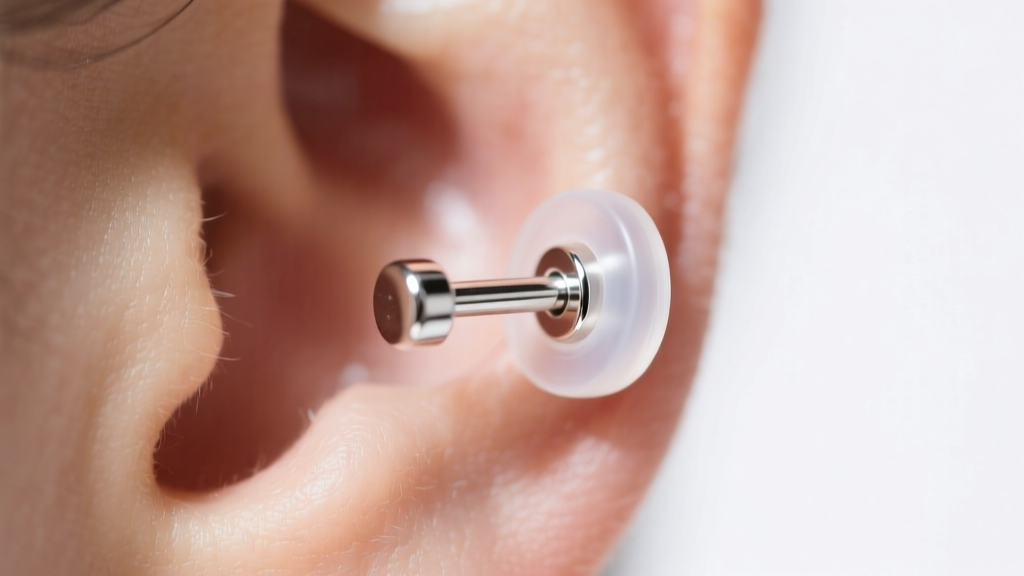
Swap the metal back for a wide-disk silicone friction back or a specialized earring support patch (such as BlingDots). These silicone stoppers distribute the 10+ gram weight of the Emma Lincoln earring across a wider surface area of the earlobe. Push the silicone back firmly against the earlobe until the earring sits flush and parallel to the ground, rather than tilting forward.
Step 3: The Two-Finger Support Method
When inserting heavy dangles, do not let the earring hang freely the moment the post clears the back of the piercing. Use your non-dominant hand to pinch the earlobe gently, supporting the weight of the crystal drop from underneath while your dominant hand slides the silicone stopper onto the post. This prevents the sudden downward jerk that can micro-tear the piercing channel over time.
How to Match Emma Lincoln Styles to Your Face Shape
The dramatic silhouettes of Emma Lincoln earrings can profoundly impact your facial proportions. Because these designs range from geometric Art Deco chandeliers to elongated pearl teardrops, selecting the correct style for your face shape is a critical styling step.
| Face Shape | Recommended Emma Lincoln Silhouette | Styling Rationale |
|---|---|---|
| Round | Elongated Crystal Teardrops | Vertical lines and sharp crystal points draw the eye downward, creating the illusion of a longer, more oval face shape. |
| Square | Curved Pearl and Crystal Hoops | Soft, rounded edges and the organic luster of pearls help to soften a strong, angular jawline. |
| Heart | Bottom-Heavy Art Deco Chandeliers | Width at the bottom of the earring balances a narrower chin and wider forehead, creating visual symmetry. |
| Oval | Geometric Stud-Drops or Climbers | Oval faces are highly versatile; structured, medium-length geometric drops highlight the natural balance of the face without overwhelming it. |
Cleaning and Storing Rhodium-Plated Crystal Earrings
Proper maintenance is non-negotiable for preserving the brilliance of lead-free crystals and the integrity of rhodium plating. Many owners mistakenly treat rhodium-plated brass jewelry like solid sterling silver, leading to irreversible damage. According to the Gemological Institute of America (GIA), porous materials like pearls and delicate crystal settings require highly specific, non-abrasive cleaning protocols.
The Safe Cleaning Protocol
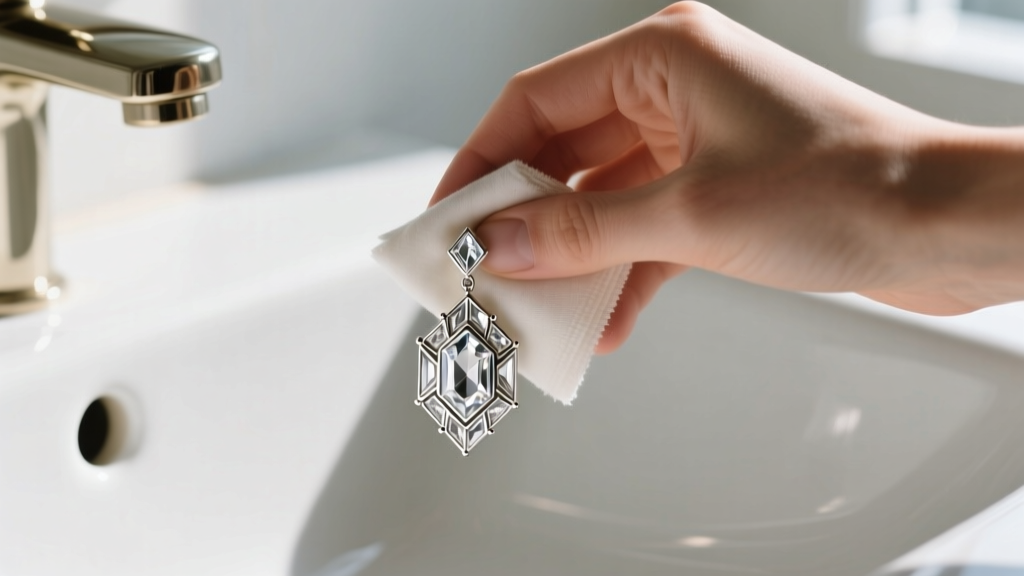
- Prepare a Mild Solution: Mix a few drops of pH-neutral dish soap (like Dawn) into a bowl of lukewarm distilled water. Avoid tap water, as the chlorine and hard minerals can leave a cloudy film on the crystal facets.
- Soft Brush Application: Dip a baby-soft toothbrush into the solution and gently agitate the bristles over the crystal pavé settings. Do not scrub the brass prongs aggressively, as this can wear down the 0.5-micron rhodium plating.
- Rinse and Dry: Dip the earring briefly into a bowl of clean distilled water to rinse. Immediately pat dry with a lint-free microfiber cloth. Never let the earrings air dry, as water spots will form in the intricate crevices of the Art Deco metalwork.
Critical Warning: Never place Emma Lincoln earrings in an ultrasonic cleaner. The high-frequency vibrations will shatter the tension-set crystals and strip the rhodium plating from the brass base. Furthermore, avoid all commercial silver dips, which contain harsh thiourea chemicals that will instantly discolor the simulated pearls.
Troubleshooting Common Wear Issues
Even with meticulous care, vintage-inspired fashion jewelry can present specific wear issues. Here is how to troubleshoot the most common problems associated with heavy, plated drop earrings.
Issue 1: Skin Discoloration (The "Green Ear" Effect)
If the skin behind your earlobe turns green or black, it is not an infection. It is a chemical reaction between the copper in the brass base metal and the acids in your sweat, occurring when the rhodium plating on the back of the earring has worn thin. According to the American Academy of Dermatology, while this discoloration is generally harmless, it can be accompanied by contact dermatitis if nickel is present in the base alloy. The Fix: Apply a thin coat of clear, hypoallergenic nail polish to the back of the earring where it touches the skin, or have a local jeweler re-plate the piece with a fresh layer of rhodium.
Issue 2: Cloudy or Foggy Crystals
Over time, hairspray, perfume, and natural skin oils build up on the pavilion (the bottom facets) of the crystals, blocking light return and making the stones look dead. The Fix: Use a specialized, alcohol-free jewelry cleaning pen with a micro-felt tip to trace the individual facets of the crystals. Avoid rubbing alcohol, which can degrade the foil backing often used in vintage-style crystal settings to enhance sparkle.
Issue 3: Loose Prongs and Rattling Stones
The weight of a 15-gram earring swinging throughout the day creates kinetic stress on the tiny metal prongs holding the crystals. If you hear a faint rattle, a stone is loose. The Fix: Stop wearing the earring immediately to prevent losing the stone. Use a 10x jeweler's loupe to identify the lifted prong. If you are experienced, use a smooth-jaw prong pusher to gently fold the metal back over the stone's girdle. Otherwise, take it to a bench jeweler for a quick, low-cost prong tightening.
Final Thoughts on Long-Term Storage
How you store your Emma Lincoln earrings when they are not on your ears dictates their lifespan. Never toss them into a communal jewelry box where the hard crystals can scratch the rhodium plating of adjacent pieces. Store each pair individually in a soft, anti-tarnish flannel pouch. Keep them in a climate-controlled environment with low humidity, and consider adding a small silica gel packet to your jewelry drawer to absorb ambient moisture, ensuring your vintage-inspired drops remain brilliant for years to come.


