Beginner Guide to 15mm Hoop Earrings: Sizing & Styles
Discover everything about 15mm hoop earrings. Learn about gauge sizes, cartilage vs lobe placement, and the best hypoallergenic materials.


The Anatomy of a 15mm Hoop: Understanding the Basics
When navigating the vast world of ear jewelry, precision sizing is the difference between a comfortable, stylish fit and an irritating, unwearable piece. For beginners, the 15mm hoop earring represents a highly versatile middle ground. Measuring just under 5/8 of an inch (0.59 inches), a 15mm diameter is slightly smaller than a standard US dime (17.91mm). In the jewelry industry, this size bridges the gap between a tight 'huggie' and a traditional small hoop.
However, purchasing a 15mm hoop is not as simple as picking a number. The way this earring sits on your ear depends entirely on your unique anatomy, the piercing placement, the gauge thickness, and the clasp mechanism. This comprehensive explainer will break down the exact specifications you need to know before buying your next pair of 15mm hoops.
Inner Diameter (ID) vs. Outer Diameter (OD)
One of the most common beginner mistakes is confusing how hoops are measured. Reputable jewelers and professional piercers measure hoop earrings by their Inner Diameter (ID). This means the 15mm measurement refers only to the empty space inside the circle, not including the thickness of the metal wire itself.
Why does this matter? Because the thickness of the wire (the gauge) eats into that 15mm space. If you buy a 15mm hoop made from a thick 14-gauge wire, the actual open space for your ear tissue is significantly reduced compared to a 15mm hoop made from a thin 20-gauge wire. Always verify that the retailer lists the ID, not the OD, to ensure the hoop will actually fit your piercing without squeezing the tissue.
Piercing Placement: Where Does a 15mm Hoop Fit Best?
A 15mm hoop is a shapeshifter. Depending on where your piercing is located, it will behave completely differently. Below is a structural breakdown of how a 15mm inner diameter interacts with various ear placements.
| Piercing Location | 15mm Fit Profile | Recommended Gauge | Best Clasp Type |
|---|---|---|---|
| Standard Lobe | Snug Huggie / Small Hoop | 20G or 18G | Hinged or Continuous |
| Upper Lobe (2nd/3rd) | Classic Small Hoop | 18G | Clicker or Hinged |
| Helix (Cartilage) | Snug Hug (may flip up) | 16G | Clicker (Segment) |
| Forward Helix | Tight Hug / Flush | 16G or 18G | Clicker |
| Tragus | Loose Dangle / Oversized | 16G | Threadless or Clicker |
| Conch | Too Small (Usually) | N/A | N/A (Opt for 10mm+ OD studs) |
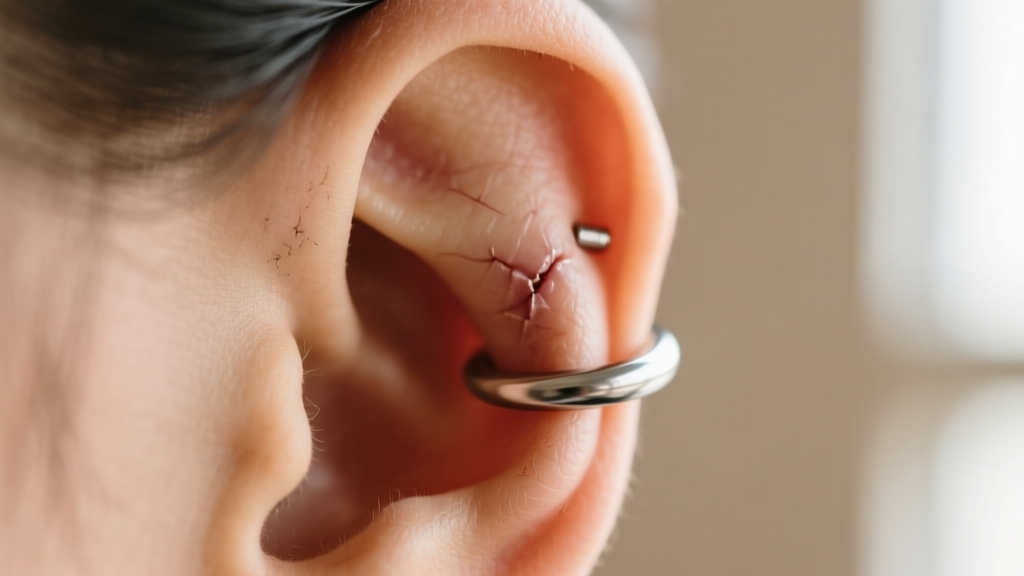
For cartilage piercings like the helix, a 15mm hoop is often considered the minimum size required to prevent the jewelry from pressing against the healing fistula and causing irritation bumps. If your helix is pierced at a steep angle, you may actually need a 16mm or 17mm hoop to allow the jewelry to hang straight down rather than hugging the cartilage edge.
The Gauge Factor: Thickness Changes Everything
Gauge refers to the thickness of the wire that passes through your piercing. The higher the gauge number, the thinner the wire. Understanding gauge is critical when buying 15mm hoop earrings, as it dictates both the structural integrity of the hoop and the comfort of the fit.
20-Gauge (0.81mm)
This is the standard for basic fashion jewelry and standard lobe piercings done with a piercing gun (though professional piercers strongly advise against guns). A 20G 15mm hoop will feel lightweight and leave plenty of open space inside the 15mm circle. It is ideal for delicate, minimalist lobe stacks but lacks the rigidity needed for cartilage.
18-Gauge (1.02mm)
The sweet spot for versatility. An 18G wire is robust enough to hold its circular shape without bending easily, yet thin enough to fit through most standard lobe and some cartilage piercings. If you are buying a 15mm hoop for a secondary lobe piercing, 18G is generally the safest and most comfortable bet.
16-Gauge (1.29mm)
The gold standard for cartilage piercings (helix, forward helix, tragus). A 16G wire is thick, durable, and minimizes the 'cheese-cutter effect'—a phenomenon where thin wire slowly migrates through the tissue due to weight and tension. A 15mm hoop at 16G will feel noticeably snugger than an 18G hoop of the same diameter because the thicker wire reduces the inner open space.
Material Science: Protecting Your Piercings
When wearing hoops, the jewelry moves constantly, rotating through the fistula and dragging environmental debris with it. This friction makes material biocompatibility non-negotiable. According to the Association of Professional Piercers (APP), only specific implant-grade materials should be worn in sensitive or healing piercings.
- Implant-Grade Titanium (ASTM F-136): The absolute best choice for sensitive ears and healing cartilage. It contains zero nickel, is highly polished, and is lightweight. Expect to pay between $30 and $60 for a high-quality titanium 15mm clicker.
- Niobium: A highly reactive metal that is anodized to create vibrant colors without using toxic paints or platings. It is hypoallergenic and an excellent alternative to titanium, though slightly heavier.
- Solid 14k or 18k Gold: Must be nickel-free and alloyed for biocompatibility. Avoid gold-plated or gold-filled hoops, as the friction of a rotating hoop will quickly wear away the thin outer layer, exposing the reactive base metals underneath. Solid gold 15mm huggies typically range from $120 to $350+.
- Surgical Steel (316L): Often marketed as 'hypoallergenic,' 316L stainless steel actually contains 8-10% nickel. The American Academy of Dermatology notes that nickel is the leading cause of contact dermatitis. As the steel degrades microscopically from friction, nickel leaches into the piercing, causing itching, swelling, and crusting.
Clasp Mechanics: Hinged, Clicker, and Continuous
The closure mechanism of a 15mm hoop dictates how easy it is to put in, how secure it is during sleep, and how seamless the design looks.
The Clicker (Segment Ring)
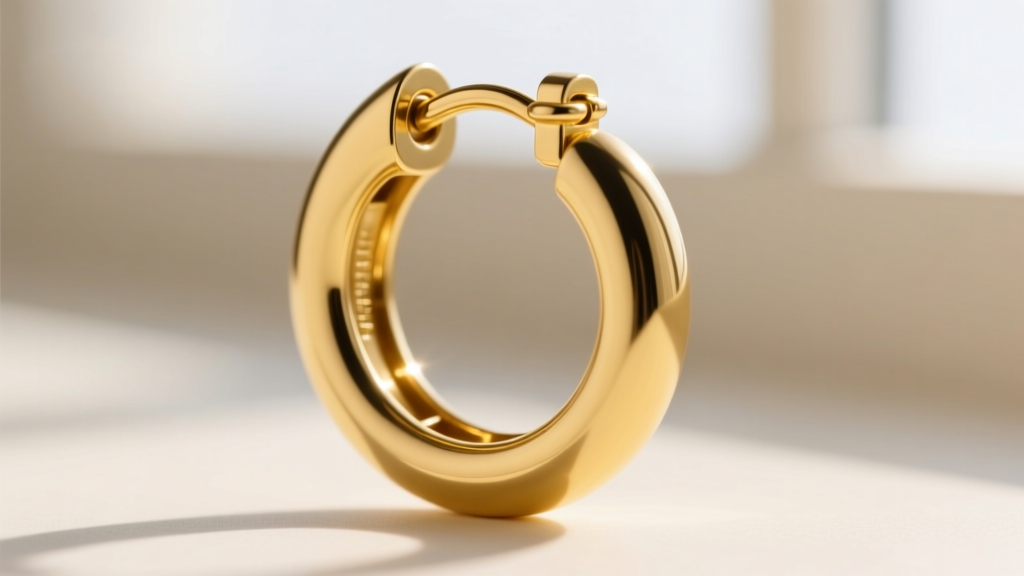
A clicker features a hinged segment that snaps securely into a machined groove, producing an audible 'click.' This is the premier choice for cartilage piercings. Because there is no clasp protruding from the design, a 15mm clicker offers a seamless, continuous circle that won't snag on hair or clothing. However, opening a high-quality clicker requires a specific technique (using your thumbnails or specialized ring opening pliers) to avoid bending the metal.
The Hinged Huggie
Huggies feature a tiny latch that hooks over a catch on the opposite side of the hoop. They are incredibly user-friendly and easy to snap shut with one hand, making them the top choice for standard lobe piercings. The drawback is the visible latch line, which interrupts the seamless circle, and the potential for the latch to catch on long hair.
The Continuous (Endless) Hoop
These feature a thin, slightly curved wire that slides into a hollow receiving tube on the other end of the hoop. While they offer the most minimalist, invisible closure, they are notoriously difficult to insert, especially in hard-to-reach cartilage piercings. Furthermore, if the wire is bent even slightly during insertion, it will never close flush again, creating a sharp edge that can tear the fistula.
Troubleshooting Common 15mm Hoop Issues
Even with perfect sizing, beginners often encounter a few hurdles when transitioning to small hoops.
The 'Flipping' Phenomenon in Cartilage
If your 15mm hoop constantly flips upward and rests horizontally against your helix rather than hanging vertically, your piercing angle is likely the culprit. Piercings done at a steep upward angle will force small hoops to flip. To combat this, you can either size up to a 16mm or 17mm hoop to give the jewelry enough clearance to hang, or use a small, sterilized silicone O-ring on the back of the post (if using a captive bead ring) to stabilize it, though clickers are generally preferred to avoid O-rings.
Sleeping and Snagging
A 15mm hoop is small enough that it generally won't tangle in your pillowcase like a 30mm dangle hoop. However, if you are a side sleeper, the pressure can push the hoop upward into the piercing channel, causing morning tenderness. For side sleepers, a hinged huggie with a smooth, flush latch is vastly superior to a captive bead ring, which features a protruding ball that will press directly into your skin while you sleep.
Expert Tip: Never use household pliers to open or close your 15mm hoop earrings. Standard metal pliers will scratch the finish and compromise the structural integrity of the clasp. Always invest in a pair of coated, jewelry-specific ring opening and closing pliers, or visit your local professional piercer for adjustments.
Final Takeaways for the Beginner
Mastering the 15mm hoop earring requires looking beyond just the diameter. By pairing the 15mm inner diameter with the correct gauge (18G for lobes, 16G for cartilage), selecting biocompatible materials like ASTM F-136 titanium or solid 14k gold, and choosing the right clasp for your specific anatomy, you ensure a comfortable, secure, and stylish fit. Treat your jewelry specifications with the same precision as your piercing placement, and your 15mm hoops will become a seamless, irritation-free staple in your daily rotation.


