How to Wear Big Dangle Earrings Without Stretching Your Lobes
Learn how to style big dangle earrings safely. Discover weight limits, gauge sizes, and lobe-support hacks to prevent stretching and tearing.


The Allure and the Hidden Cost of Statement Ear Jewelry
There is nothing quite like the dramatic sweep of big dangle earrings to elevate a simple outfit into a red-carpet-ready moment. Whether you are drawn to cascading chandeliers, oversized geometric brass shapes, or shoulder-grazing beaded fringe, statement dangles offer unparalleled visual impact. However, as any seasoned jewelry lover knows, this high-fashion aesthetic comes with a hidden anatomical cost: lobe fatigue, stretching, and in severe cases, permanent tearing.
The human earlobe is composed of soft, fatty tissue with a delicate network of blood vessels and collagen. It was simply not designed to bear heavy loads for extended periods. If you have ever taken off a pair of heavy earrings at the end of the night only to find your lobes red, throbbing, and visibly elongated, you have experienced micro-trauma to the tissue. This beginner-friendly explainer will break down the physics of earring weight, the exact gauge sizes you need, and the professional hacks that allow you to wear your favorite oversized pieces safely and comfortably.
The Physics of the "Cheese Cutter" Effect
To understand why big dangle earrings cause damage, we have to look at basic physics: Pressure = Force / Area. The "force" is the weight of your earring, and the "area" is the thickness of the wire resting against the bottom of your piercing hole.
Most standard fashion earrings are crafted with 20-gauge wire, which measures a mere 0.81 millimeters in diameter. When you hang a 15-gram brass dangle from a 0.81mm wire, all of that downward gravitational force is concentrated onto a microscopic slice of your skin. Over time, this creates what piercers call the "cheese cutter effect." The thin wire slowly slices through the tissue, migrating the piercing downward and thinning the lower lobe. According to guidelines discussed by the Association of Professional Piercers, minimizing this pressure requires increasing the surface area (using thicker wire) or decreasing the force (reducing the earring's weight).
Understanding Weight Limits and Gauge Sizes
Before you buy your next pair of dramatic drops, you need to understand the relationship between earring weight and wire thickness. For context, a standard US quarter coin weighs approximately 5.67 grams. Use this as your mental benchmark when shopping.
| Earring Weight | Minimum Wire Gauge | Wire Diameter | Safe Wear Time | Support Required? |
|---|---|---|---|---|
| Under 5g (Light) | 20g or 18g | 0.81mm - 1.02mm | 12+ Hours | No |
| 5g - 12g (Medium) | 18g or 16g | 1.02mm - 1.29mm | 4 - 8 Hours | Recommended |
| 12g - 20g (Heavy) | 16g or 14g | 1.29mm - 1.63mm | 2 - 4 Hours | Yes |
| 20g+ (Extreme) | 12g or Harness | 2.05mm+ | 1 - 2 Hours | Mandatory |
Why Thicker Wire is Non-Negotiable for Heavy Dangles
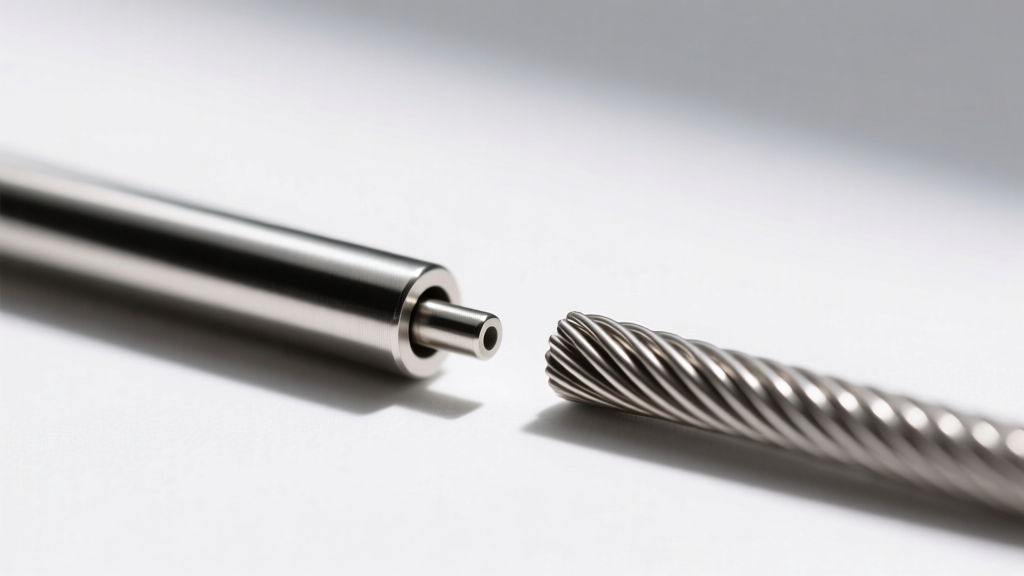
If you are purchasing or commissioning big dangle earrings that weigh more than 10 grams, you must ensure the ear wire is at least 16-gauge (1.29mm). Many mass-market jewelry brands ignore this rule to save on metal costs, resulting in beautiful but structurally dangerous earrings. If you own a heavy pair with thin wires, take them to a local bench jeweler to have the hooks swapped out for thicker, 16-gauge or 14-gauge leverbacks or French wires.
Material Science: Choosing Lightweight Volume
The secret to wearing massive dangles without pain lies in material selection. Not all metals are created equal when it comes to density and weight.
1. Aerospace-Grade Titanium (Ti6Al4V ELI)
Titanium is the undisputed king of lightweight strength. Grade 23 titanium (often referred to as implant-grade) is highly biocompatible, meaning it will not cause allergic contact dermatitis—a common issue when stretched lobes become micro-torn and exposed to nickel alloys. Titanium is nearly 45% lighter than steel and significantly lighter than gold, making it the ideal base metal for large, architectural dangles.
2. Electroformed (Hollow) Gold
Solid gold is incredibly dense (19.3 g/cm³). A solid 18k gold dangle the size of a golf ball would weigh down your lobe to the point of immediate pain. The jewelry industry solves this through electroforming. This process involves electroplating gold over a wax or resin mold, which is later melted or dissolved away. The result is a massive, voluminous gold earring that is completely hollow and weighs a fraction of its solid counterpart. The Gemological Institute of America (GIA) notes that electroformed pieces offer the exact same karat purity and visual brilliance as cast gold, but with vastly superior ergonomics for statement pieces.
3. Acetate and Bio-Resin
For extreme volume—think 4-inch geometric discs or thick hoop-dangle hybrids—cellulose acetate and bio-resins are your best friends. These materials can be dyed in vibrant, translucent tortoiseshell or neon patterns, offering massive visual footprint with virtually zero gravitational drag on the earlobe.
4 Foolproof Hacks to Support Heavy Lobes
Sometimes, you simply cannot resist a heavy, solid-brass vintage dangle. When material substitution isn't an option, you must rely on mechanical support. Here are four professional styling hacks to distribute the weight.
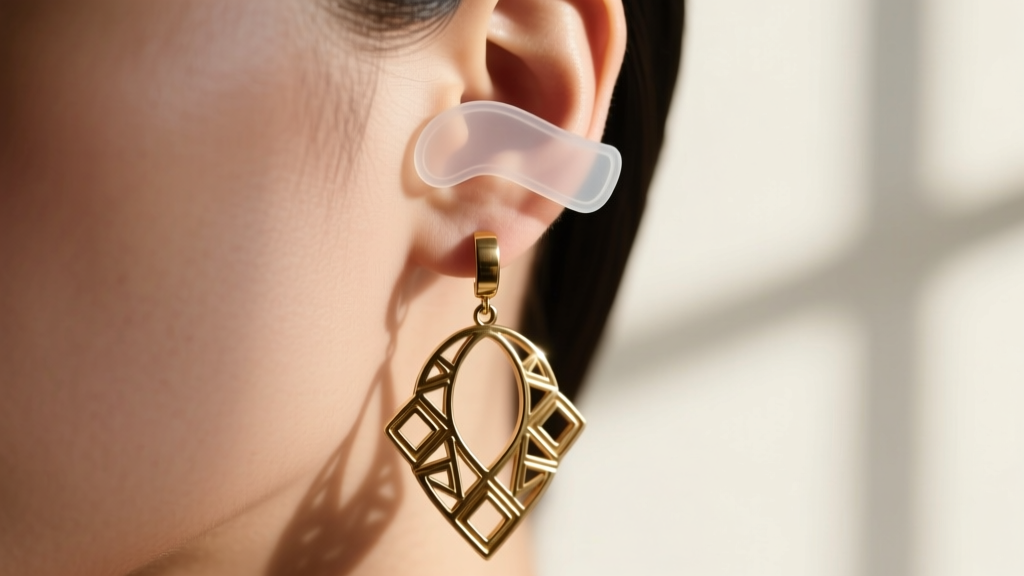
- Silicone Support Patches: Brands like BlingDots manufacture medical-grade, adhesive silicone discs with a pre-cut slit in the center. You slide the earring wire through the slit and stick the patch to the back of your earlobe. This creates a wide, supportive "shelf" that distributes the weight across a two-inch area of skin rather than a single millimeter of pierced tissue.
- The Ear Chain Method: This is a high-fashion, editorial trick. Wear a lightweight, comfortable stud earring in your primary lobe piercing, and a secondary small hoop or stud in your upper lobe or helix. Connect the two with a delicate, adjustable gold ear chain. The upper cartilage piercing absorbs 50% of the downward drag from the heavy dangle hanging below.
- French Wire Hooks vs. Leverbacks: For heavy earrings, always choose leverbacks that click securely shut. Heavy dangles tend to swing and shift; an open French wire hook can easily slip out of a temporarily stretched hole, resulting in a lost earring and a torn lobe.
- The O-Ring Trick: Slide a tiny, clear silicone O-ring (available at craft stores or hardware shops) onto the earring wire before closing the clasp. This prevents the heavy earring from sliding back and forth along the wire, keeping the center of gravity stable and reducing kinetic friction against the piercing hole.
Face Shape Pairing for Oversized Dangles
Because big dangle earrings draw the eye vertically, they have a profound impact on facial proportions. Here is a quick framework for choosing the right silhouette based on your bone structure:
Pro Tip: The general rule of thumb is contrast. You want the shape of your earring to contrast with the shape of your jawline to create visual balance and harmony.
Round Faces
Avoid circular hoops or wide, bulbous chandeliers that mimic your face shape. Instead, opt for long, linear, and angular dangles. Elongated rectangles, thin metallic fringe, or sharp geometric drops will visually lengthen your face and highlight your cheekbones.
Square Faces
A strong, angular jawline benefits from softening elements. Look for big dangle earrings with curved lines, teardrop shapes, or cascading floral motifs. The organic movement of curved dangles softens the lower half of the face.
Heart-Shaped Faces
With a wider forehead and a narrow, pointed chin, the goal is to add visual weight to the bottom half of the face. Chandelier earrings, wide-bottomed teardrops, or dangles that flare out at the jawline are incredibly flattering.
Oval Faces
The universal face shape. Oval faces can carry off virtually any style of big dangle earring, from massive sculptural studs with dangling elements to extreme shoulder-dusters.
When to Take Them Off: Warning Signs of Lobe Fatigue
Even with the best support hacks and perfect gauge sizes, gravity always wins eventually. It is crucial to listen to your body and recognize the early warning signs of lobe fatigue before permanent damage occurs. Remove your big dangle earrings immediately if you experience:
- Throbbing or Heat: A pulsing sensation indicates restricted blood flow and inflammation.
- Visible Thinning: If you look in a hand mirror and the strip of skin below your piercing looks noticeably translucent or stretched like a rubber band, take them off.
- Redness or Micro-Tearing: Any sign of crusting or redness around the exit hole means the skin barrier has been compromised.
Lobe Rehabilitation
If you have overstretched your lobes after a long night of wearing heavy dangles, give them a "detox" period. Switch to ultra-lightweight titanium studs or sleepers for at least 72 hours. Gently massage the lobes twice a day with pure Vitamin E oil or jojoba oil to promote collagen production and restore tissue elasticity. By respecting the physical limits of your anatomy and utilizing smart material choices, you can enjoy the dramatic flair of big dangle earrings for a lifetime without sacrificing the health of your piercings.


