Wire Wrapped Earrings Buying Guide: Metals, Gauges & Stones
Discover what to look for when buying wire wrapped earrings. Learn about wire gauges, metal grades, stone security, and fair pricing in our expert guide.

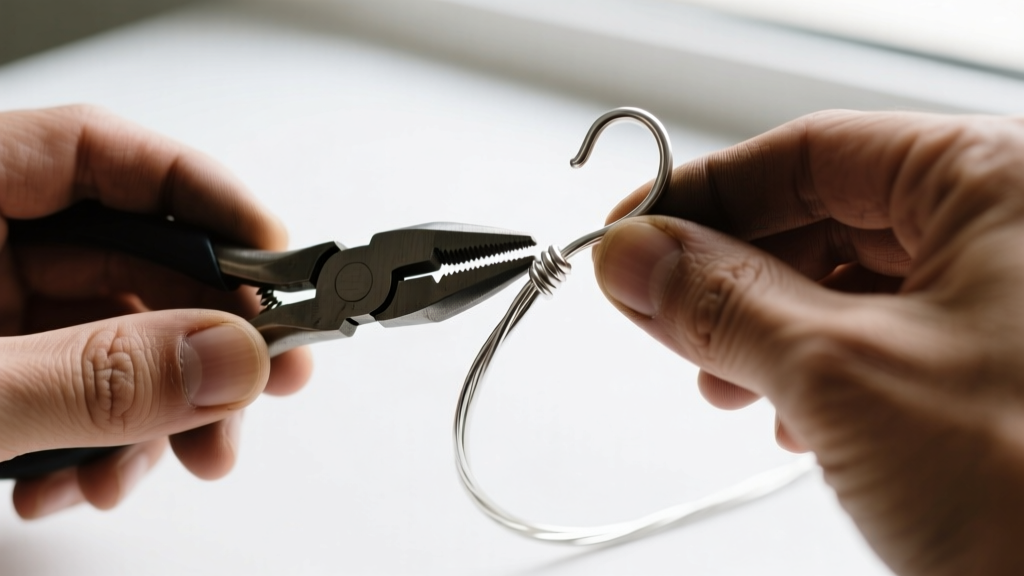
The Art and Engineering of Wire Wrapped Earrings
Wire wrapping is one of the oldest jewelry-making techniques, dating back to ancient Mesopotamia and the Sumerian Empire. Unlike cast or soldered jewelry, true wire wrapped earrings rely entirely on the mechanical tension, weaving, and structural geometry of the metal to secure gemstones. In 2026, the market is flooded with both authentic artisan pieces and mass-produced, machine-stamped imitations. Knowing the difference is critical for your wallet, your ear health, and the longevity of the jewelry. This buying guide breaks down the exact metallurgical and structural details you must evaluate before purchasing wire wrapped earrings, ensuring you invest in pieces that are both beautiful and structurally sound.
Decoding Wire Gauges and Temper
The foundation of any wire wrapped earring is the wire itself, measured in the American Wire Gauge (AWG) system. Counterintuitively, the higher the gauge number, the thinner the wire. A master jeweler selects specific gauges for specific structural roles. If a seller uses wire that is too thin for a structural frame, the earring will bend and lose its shape within days.
| AWG Size | Millimeter (mm) | Primary Use in Earrings |
|---|---|---|
| 18-Gauge | 1.02mm | Heavy structural frames, thick ear hooks for stretched lobes |
| 20-Gauge | 0.81mm | Standard ear wires, primary structural bezels, heavy clasps |
| 22-Gauge | 0.64mm | Thinner ear wires, wrapping larger cabochons, jump rings |
| 24-Gauge | 0.51mm | Binding wire, securing briolettes, weaving over 20g frames |
| 26 to 28-Gauge | 0.40mm - 0.32mm | Micro-weaving, intricate coiling, decorative accents |
Beyond thickness, you must consider the temper (hardness) of the wire. According to the Fire Mountain Gems Wire Encyclopedia, wire comes in dead-soft, half-hard, and full-hard tempers. Dead-soft wire is highly malleable and used for weaving and wrapping, but it will not hold a shape under stress. Half-hard wire has been work-hardened and is the absolute minimum requirement for ear hooks and structural frames. If a product description does not specify the use of half-hard wire for the ear hook, avoid the purchase; the hook will stretch open under the weight of the gemstone.
Metal Purity: Navigating Allergies and Tarnish
The metal alloy used in wire wrapping dictates both the aesthetic aging process and your skin's reaction. Earlobes and cartilage are highly vascular and sensitive, making metal purity a non-negotiable factor.
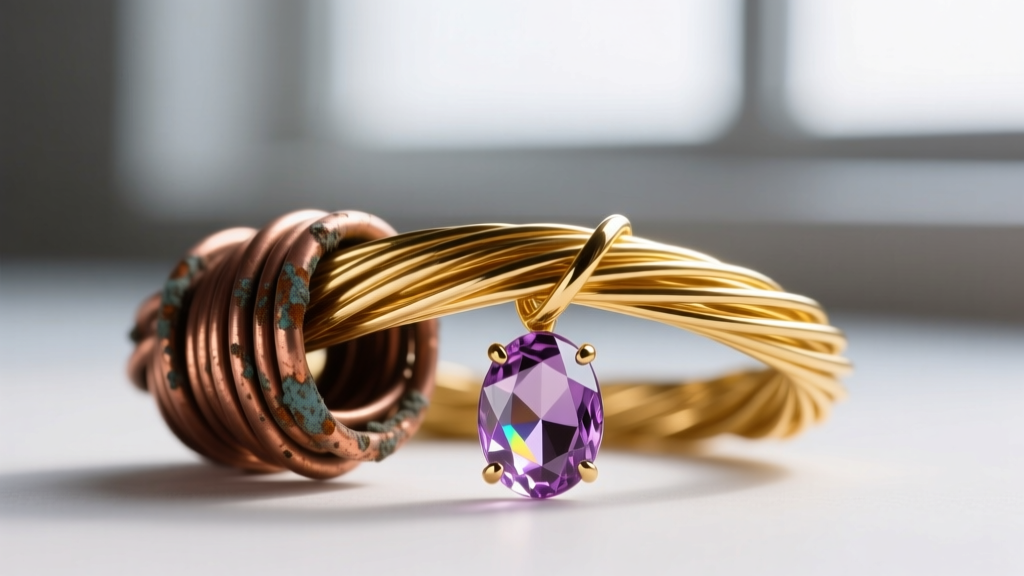
The Hypoallergenic Hierarchy
- Niobium and Titanium: The gold standard for hyper-sensitive ears. Niobium is highly reactive to anodization, allowing artisans to create vibrant, permanent colors without dyes or plating. It is 100% nickel-free.
- 14/20 Gold-Filled: Not to be confused with gold-plated. Gold-filled wire contains a thick outer layer of 14k gold mechanically bonded to a brass core, comprising at least 5% of the total weight. It will not flake or wear off like plating and is generally safe for sensitive ears.
- .925 Sterling Silver: An alloy of 92.5% pure silver and 7.5% copper. While beautiful, the copper content guarantees it will oxidize (tarnish) over time, especially in humid environments. It is safe for most, but those with severe copper allergies should avoid it.
- Warnings (Alpaca, Tibetan Silver, Nickel-Silver): These are base metal alloys that often contain high levels of nickel and lead. As noted by the American Academy of Dermatology, nickel is the leading cause of allergic contact dermatitis. Never wear these in fresh or sensitive piercings.
Evaluating Stone Security and Wrap Tension
A common failure point in poorly crafted wire wrapped earrings is stone loss. Because there is no solder or glue holding the gemstone in place, the security relies entirely on the artisan's understanding of tension and geometry.
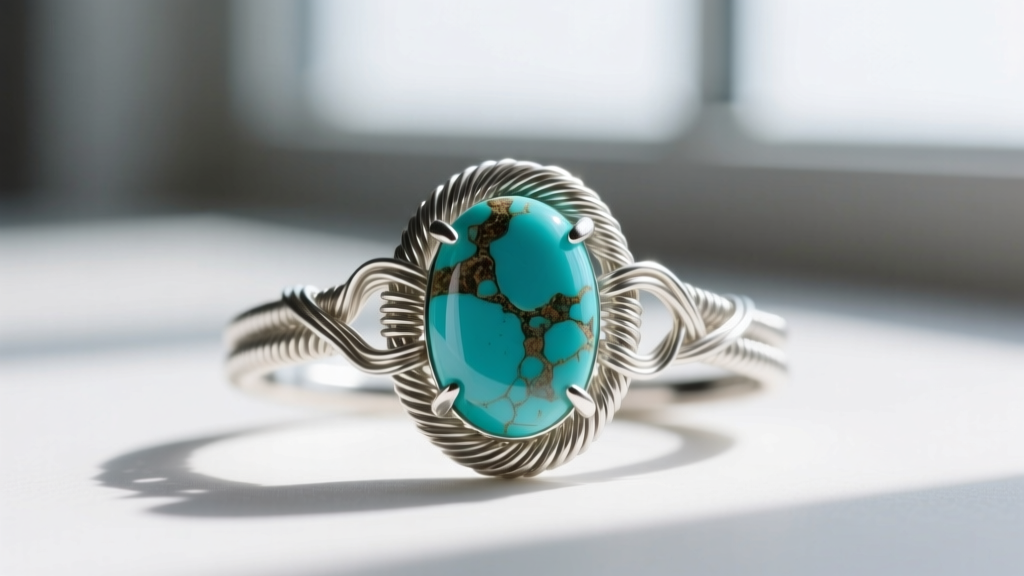
When evaluating photos or inspecting a piece in person, look for the following structural hallmarks:
- The Cross-Lock: For teardrop or briolette stones, the binding wire should cross over itself at the top of the stone before coiling around the bail. This prevents the wire from sliding down the sloped shoulders of the gem.
- Tucked Ends: Every single cut end of the wire must be filed flush and tucked tightly against the frame or woven into the back of the design. A protruding wire end will snag on clothing and eventually unravel the entire piece.
- Bezel Tension: If the earring features a cabochon (a flat-backed, domed stone), the wrapping wire should act as a bezel, pressing firmly against the slope of the stone's dome. If the wire sits flat against the vertical side of the stone without pressing inward, the stone will eventually pop out.
Pricing Framework: Handmade Value vs. Mass Production
The term 'wire wrapped' is frequently hijacked by overseas factories that use casting molds to create metal pieces that merely look like woven wire. True handmade wire wrapping is incredibly labor-intensive. An intricate woven bezel earring can take an artisan 2 to 4 hours to complete.
True artisan wire wrapping leaves microscopic tool marks and slight asymmetries. If a pair of complex woven earrings looks mathematically perfect and is priced under $25, it is almost certainly a cast imitation.
Expected 2026 Pricing Tiers:
- Simple Briolette Wraps (Copper/Brass): $15 - $30
- Simple Briolette Wraps (Sterling/Gold-Filled): $35 - $65
- Complex Woven Cabochon Drops (Sterling/Gold-Filled): $85 - $180+
- Master-Level Micro-Weaving with Rare Gems: $250 - $500+
Long-Term Care and Maintenance
Because wire wrapped earrings feature intricate crevices where wires overlap, they are prone to trapping lotions, oils, and moisture, which accelerates tarnishing. To maintain the structural integrity and shine of your earrings, store them in an airtight container with anti-tarnish silica strips. According to the Gemological Institute of America (GIA), porous gemstones frequently used in wire wrapping—such as turquoise, opal, and pearls—should never be cleaned with ultrasonic cleaners or harsh chemical dips. Instead, gently polish the metal wires with a dry, treated jeweler's cloth, taking care not to pull the cloth across the delicate binding wires, which could lift them away from the stone.


