The Beginner's Guide to Styling 2 Inch Gold Hoop Earrings
Discover how to choose, wear, and care for 2 inch gold hoop earrings. Learn about gauge sizes, metal grades, and lightweight options for daily comfort.


The Anatomy and Appeal of the 50mm Hoop
When stepping into the world of statement jewelry, few pieces command attention quite like 2 inch gold hoop earrings. Measuring approximately 50 millimeters in outer diameter, this specific size sits in the "Goldilocks zone" of jewelry design: large enough to frame the face and create a striking silhouette, yet manageable enough for regular wear if engineered correctly. For beginners, navigating the transition from subtle studs to large-scale hoops requires an understanding of structural mechanics, metal purity, and earlobe physiology.
The 50mm diameter creates a continuous geometric frame that complements angular, square, and oval face shapes by softening the jawline and drawing the eye horizontally. However, the physical reality of wearing a two-inch metal ring suspended from a delicate piercing means that buyers must prioritize weight distribution and gauge thickness over mere aesthetics. In 2026, the jewelry industry has heavily favored advanced hollow-tubing techniques, allowing consumers to achieve the bold look of solid gold without the devastating lobe fatigue associated with vintage or poorly manufactured heavy hoops.
Material Grades: Solid Gold vs. Vermeil vs. Gold-Filled
Understanding what you are actually buying is the first step in building a sustainable jewelry wardrobe. The Federal Trade Commission (FTC) Jewelry Guides strictly regulate how gold content is marketed, yet confusing terminology still plagues the beginner market. Here is how the most common materials perform in large-format hoops.
| Material Type | Composition & Standards | Estimated Price Range | Durability for 2" Hoops |
|---|---|---|---|
| 14k Solid Gold | 58.5% pure gold, alloyed with copper/zinc | $250 - $600+ | Excellent. Hard enough to resist bending upon impact. |
| 18k Solid Gold | 75% pure gold, softer alloy mix | $400 - $900+ | Good, but prone to warping if the large hoop is dropped or snagged. |
| Gold Vermeil | Sterling silver base, minimum 2.5 microns of gold plating | $60 - $150 | Moderate. The silver core provides rigidity, but plating will eventually wear at the friction points. |
| Gold-Filled | Brass base, mechanically bonded with 5% gold by weight | $40 - $120 | High. Thicker gold layer than vermeil, but the brass core can cause reactions in sensitive ears. |
According to the Gemological Institute of America (GIA), the alloy metals mixed with pure gold dictate the hardness of the final piece. For 2 inch gold hoop earrings, 14k solid gold is widely considered the superior choice by master jewelers. Pure 24k gold is far too soft, and even 18k gold can easily bend out of its perfect circular shape if a two-inch hoop is bumped against a hard surface. The copper and zinc alloys in 14k gold provide the necessary Vickers hardness to maintain structural integrity over years of daily wear.
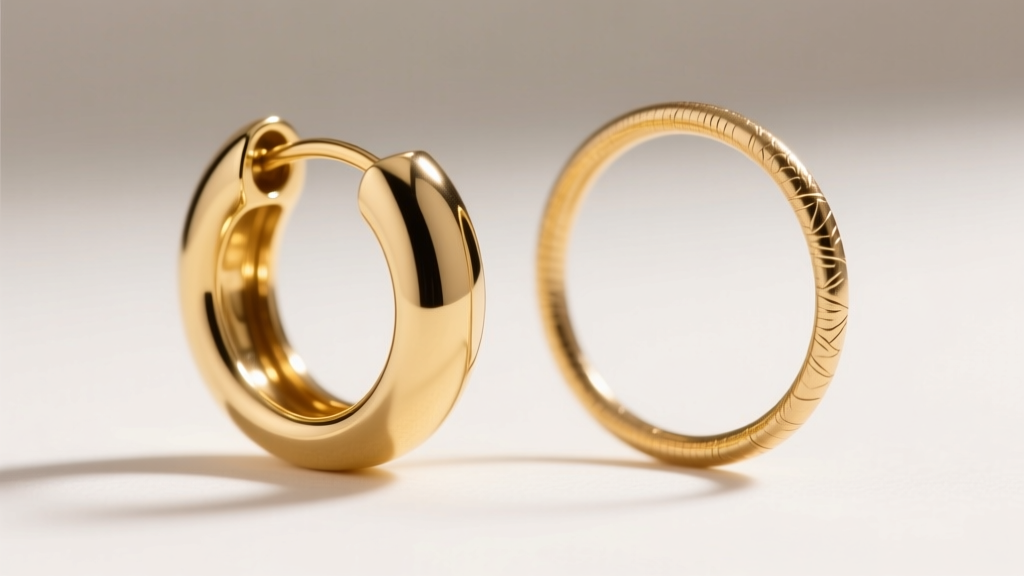
Gauge Thickness and the "Cheese-Cutter" Effect
The gauge of an earring refers to the thickness of the wire or tubing that passes through your piercing. This is arguably the most critical factor in preventing long-term earlobe damage. Standard lobe piercings are typically done at 20-gauge (0.81mm) or 18-gauge (1.02mm).
- 20-Gauge (0.81mm): Common in lightweight, budget-friendly hoops. While it fits easily into standard piercings, a thin wire bearing the weight of a 50mm hoop can trigger the "cheese-cutter effect." Over time, the downward force of gravity causes the thin wire to slowly slice through the earlobe tissue, permanently stretching or tearing the piercing.
- 18-Gauge (1.02mm): The ideal sweet spot for large hoops. It provides a wider surface area to distribute the weight of the earring across the inside of the piercing, drastically reducing the risk of tissue migration.
- 16-Gauge (1.29mm) and Thicker: Generally too thick for standard, un-stretched lobe piercings. Attempting to force a 16G wire into an 18G hole will cause micro-tears, inflammation, and potential blowouts.
To mitigate weight while maintaining a thicker visual profile, high-end jewelers utilize hollow tube construction. A solid 14k gold wire hoop at 50mm in diameter and 2mm thick can weigh upwards of 8 to 10 grams per earring. Conversely, a hollow 14k gold tube of the exact same dimensions weighs merely 2.5 to 3.5 grams. This 70% reduction in weight is what makes modern 2 inch gold hoop earrings viable for all-day wear without inducing headaches or lobe soreness.
Closure Mechanisms: Security vs. Aesthetics
Large hoops catch on hair, scarves, and collars. The closure mechanism must withstand lateral pulling forces without snapping or popping open. Beginners should familiarize themselves with the three primary closures used in large-format hoops:
1. The Latch-Back (Hinged Lever)
This mechanism features a hinged post that swings up and clicks securely into a V-shaped catch on the opposite side of the hoop. It is the most secure option for heavy or large-diameter hoops, as the mechanical lock prevents accidental opening if the earring is snagged.
2. The Continuous (Endless) Hoop
A continuous hoop features a thin, flexible wire that threads entirely through the piercing and bends upward to lock into the hollow tube of the hoop. While this offers a seamless, invisible aesthetic, it is a structural liability in 2-inch sizes. Repeated bending to open and close the wire weakens the metal at the stress point, eventually leading to a clean snap.
3. The Saddleback
A variation of the hinge, the saddleback features a curved backing that snaps over the post, distributing pressure across a wider area of the earlobe. This is highly recommended for sleepers or those who frequently wear over-ear headphones.
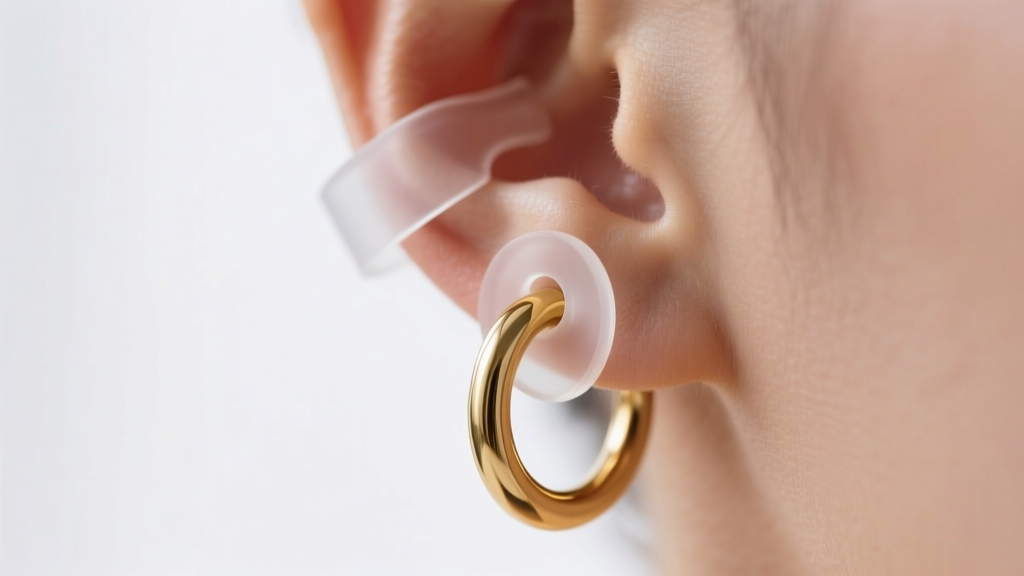
Beginner Troubleshooting: Preventing Lobe Fatigue
Even with lightweight hollow tubing and an 18-gauge thickness, wearing 50mm hoops for 14 hours a day will eventually cause lobe fatigue. The earlobe is composed of adipose tissue and skin, lacking the cartilage structure found in the upper ear to support sustained weight. Here are professional troubleshooting protocols to protect your piercings:
"Never sleep in large-diameter hoops. The lateral pressure of your head against a pillow can bend the metal, warp the hinge, or tear the piercing channel while you are unconscious. Always downsize to a flat-back labret stud or a 10mm huggie for sleeping."
Utilize Silicone Support Patches: If you have inherited slightly stretched piercings or plan to wear your 2 inch gold hoop earrings to a multi-hour event, apply clear silicone earring support patches (often called "lobe wonders") to the back of the earlobe. These invisible stickers feature a reinforced mesh that disperses the gravitational pull of the earring across a two-inch surface area of skin, entirely eliminating the point-load stress on the piercing hole.
Rotate Your Wardrobe: Treat large hoops as a rotation piece rather than a permanent fixture. Alternate days between 50mm hoops, lightweight threadless studs, and small 15mm huggies to allow the collagen fibers in your earlobe to recover and maintain their elasticity.
Final Verdict for First-Time Buyers
Investing in your first pair of 2 inch gold hoop earrings is a milestone in personal style. To ensure your purchase is a lifelong asset rather than a painful mistake, prioritize 14k solid gold in a hollow-tube construction, insist on an 18-gauge thickness to protect your tissue, and always opt for a mechanical latch-back closure. By respecting the physics of large-format jewelry and the biology of the earlobe, you can confidently wear bold, sweeping silhouettes with absolute comfort.


