Self Piercing Earrings: Technical Safety & Material Guide
An expert technical analysis of self piercing earrings, covering ASTM metal grades, gauge mechanics, clutch failure modes, and safe healing protocols.

The Mechanics of Self Piercing Earrings: How They Actually Work
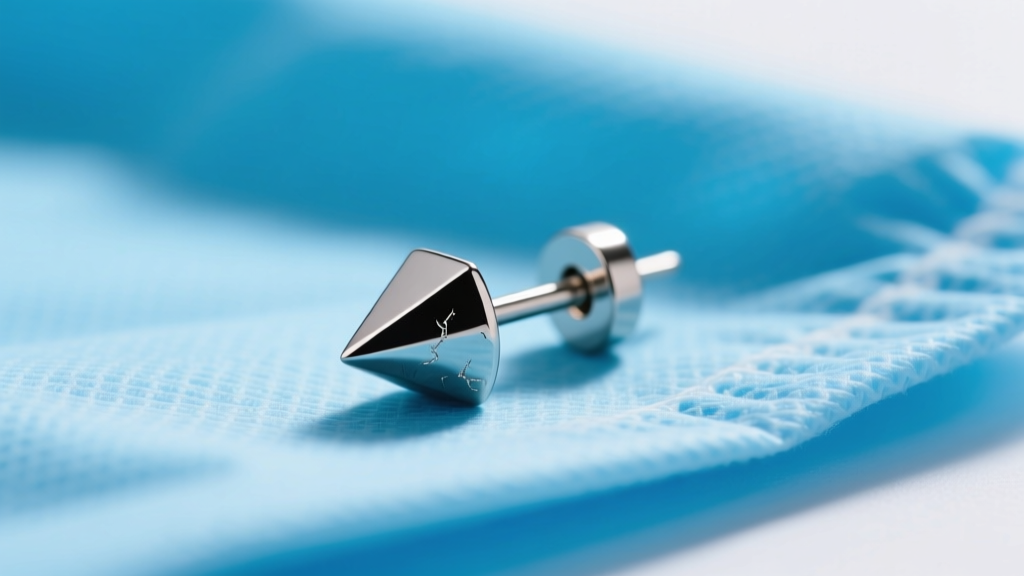
Self piercing earrings—frequently distributed in pre-sterilized, single-use cassettes designed for mechanical spring-loaded devices—represent a highly specific subset of body jewelry engineered for high-velocity insertion. Unlike traditional body jewelry, which is inserted into a pre-existing fistula created by a hollow needle, self piercing earrings must serve a dual purpose: they act as both the cutting instrument and the permanent implant. This dual-role requirement introduces fundamental compromises in both post geometry and tissue interaction.
Post Geometry and Penetration Force
The tip of a standard self piercing earring is rarely a true cutting edge. Instead of a beveled, scalpel-like hollow needle that cleanly removes a crescent of tissue, the stud features a wedge-shaped or sharply tapered point. When the mechanical device releases its kinetic energy (often exceeding 40 pounds of instantaneous pressure), this wedge forcefully displaces and compresses the earlobe tissue rather than excising it. From a biological standpoint, this results in blunt force trauma, causing localized crushing of the dermal matrix, micro-hemorrhaging, and a significantly more aggressive inflammatory response during the initial 72 hours of healing.
Metallurgy and Biocompatibility: Decoding the Alloys
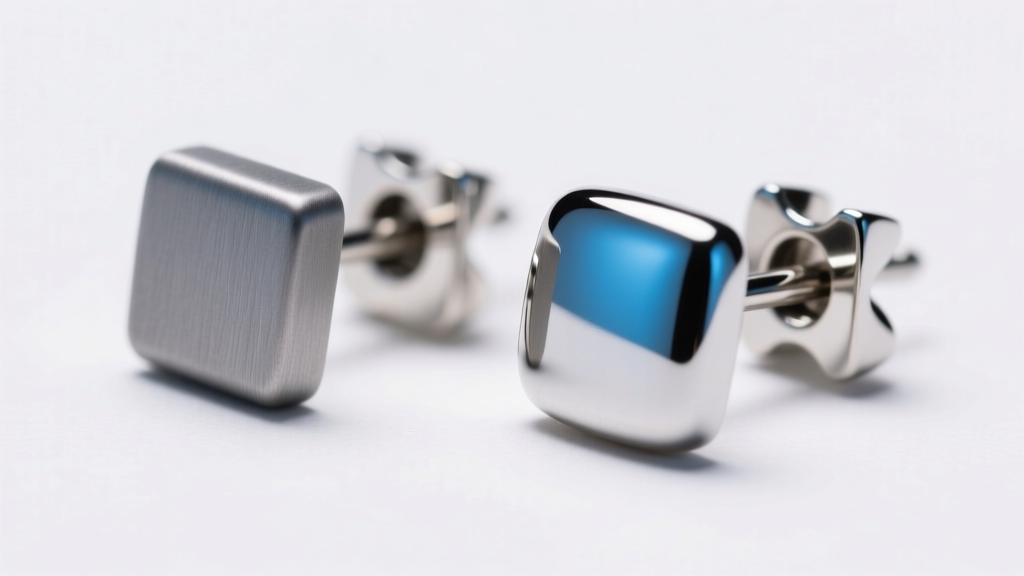
The most critical variable in any piercing procedure is the biocompatibility of the implant material. Because self piercing earrings remain in the tissue immediately following acute trauma, the metal must exhibit absolute corrosion resistance in the presence of blood, lymph, and interstitial fluids. In 2026, the professional standard mandates adherence to specific ASTM (American Society for Testing and Materials) guidelines, yet many commercial self piercing kits still rely on ambiguous metallurgical claims.
| Material Designation | ASTM Standard | Nickel Content | Biocompatibility & Failure Risks |
|---|---|---|---|
| Implant-Grade Titanium (Ti-6Al-4V ELI) | ASTM F136 | 0% (Trace) | Exceptional. Highly corrosion-resistant, non-magnetic, and promotes osseointegration. The absolute gold standard for fresh piercings. |
| Implant-Grade Steel (316LVM) | ASTM F138 | 10-14% (Bound) | Good, but risky for fresh trauma. The chromium oxide passivation layer protects the bound nickel, but surface scratching during high-velocity insertion can expose the tissue to nickel ions. |
| 'Surgical' or 'Stainless' Steel | None / Unregulated | Variable (Often >10%) | Poor. Lacks the vacuum-melted (VM) purity of F138. High risk of contact dermatitis and localized tissue necrosis due to heavy metal leaching. |
According to the Association of Professional Piercers (APP), only ASTM F136 titanium or ASTM F138 steel should be used for initial piercings. Many mass-market self piercing earrings utilize unregulated 'surgical steel' to cut costs, which frequently triggers nickel sensitization—a permanent allergy documented extensively in dermatological literature, including research indexed by the National Center for Biotechnology Information (NCBI) regarding allergic contact dermatitis.
Gauge, Length, and the Swelling Matrix
The dimensions of the earring post dictate the mechanical stability of the healing fistula. Most self piercing earrings are manufactured in 20-gauge (0.81mm) or 18-gauge (1.02mm) thicknesses. From a structural engineering perspective, a 20-gauge post is dangerously thin for a fresh earlobe piercing. The localized pressure exerted by a thin wire against swollen, healing tissue creates a 'cheese-cutter' effect, where the jewelry can slowly migrate and slice through the dermal tissue, especially during sleep or if snagged on clothing.
Furthermore, post length is a frequent point of failure. The standard post length for self piercing studs is 8mm. However, the human earlobe undergoes severe edema (swelling) during the acute inflammatory phase (days 1 through 5). An average lobe thickness is 6mm to 7mm. An 8mm post leaves merely 1mm to 2mm of clearance for swelling. When the tissue expands beyond this threshold, the back of the earring compresses the lobe, restricting blood flow (ischemia) and potentially causing the metal to embed entirely within the tissue, requiring surgical removal.

Clutch Engineering and Failure Modes
The retention mechanism of self piercing earrings is almost universally the 'butterfly' or 'friction' clutch. This design is fundamentally hostile to the healing environment. The butterfly clutch features multiple tight crevices and a high surface area that presses directly against the posterior exit wound. These crevices trap dead skin cells, sebum, lymph, and moisture, creating an ideal anaerobic breeding ground for pathogens such as Staphylococcus aureus and Pseudomonas aeruginosa.
Troubleshooting Common Complications
- Embedding: If the lobe swells past the 8mm post capacity, the clutch will bite into the skin. Technical Fix: The jewelry must be immediately upsized to a 10mm or 12mm flat-back labret post by a professional to restore circulation.
- Angle Migration: Mechanical devices often fire at an inconsistent angle relative to the lobe's natural plane. Technical Fix: Once the initial 6-week healing phase concludes, the jewelry should be swapped to a properly angled post to prevent long-term tissue rejection.
- Galvanic Corrosion: Mixing a titanium post with a cheap metal clutch in the presence of saline wound wash creates a micro-galvanic cell, accelerating metal degradation. Technical Fix: Ensure the retention back is made of the exact same alloy as the post.
Professional Verdict: Tissue Trauma and Epithelialization
The biological process of epithelialization—the formation of the protective skin tube (fistula) inside the piercing channel—requires a stable, low-trauma environment. Because self piercing earrings cause blunt force crush trauma rather than a clean excision, the body must first clear away the necrotic (dead) tissue caused by the wedge tip before it can begin building the fistula. This extends the standard lobe healing time from the typical 6-8 weeks (achieved via hollow needle) to 12-16 weeks.
While the convenience of pre-sterilized self piercing cassettes appeals to consumers, the technical compromises in post geometry, unregulated metallurgy, and inadequate swelling clearance make them a suboptimal choice for long-term tissue health. For those who have already utilized self piercing earrings, strict adherence to sterile saline irrigation (0.9% sodium chloride, zero additives) and an immediate upgrade to ASTM F136 titanium flat-back jewelry by a certified professional is highly recommended to mitigate the risks of embedding and chronic contact dermatitis.


