Finding the Right Earring for Migraines: A Troubleshooting Guide
Discover how to choose the right earring for migraines. Troubleshoot nerve compression, metal allergies, and weight issues causing headache triggers.

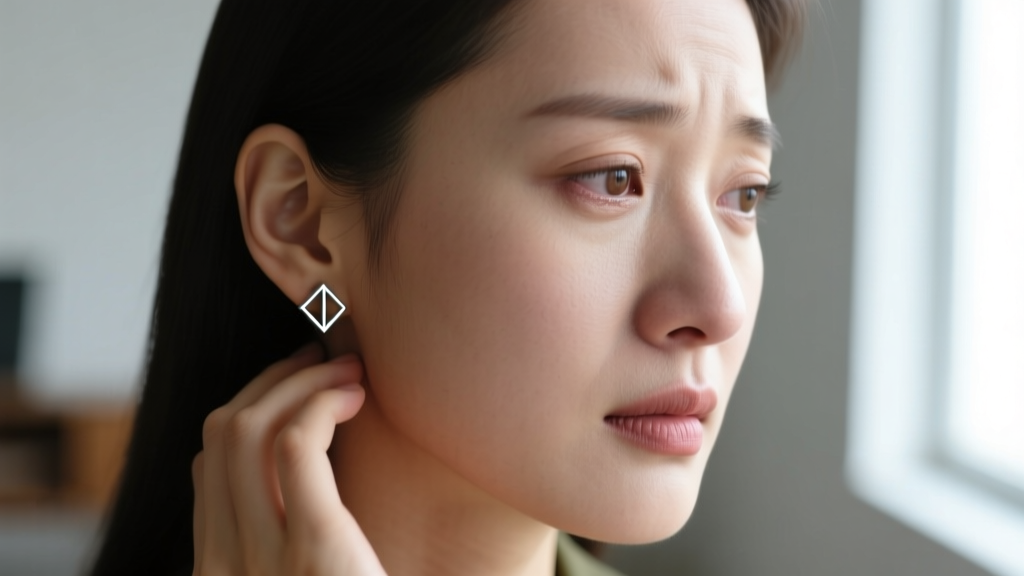
Migraines are complex neurological events, but external physical triggers are frequently overlooked by both patients and practitioners. If you suffer from chronic headaches or tension pain radiating from your jaw and temples, your jewelry might be the hidden culprit. Finding the right earring for migraines requires a deep understanding of the intersection between neurology, metallurgy, and ear anatomy. Whether you are trying to stop your current earrings from triggering an attack, or you are navigating the controversial daith piercing phenomenon, this troubleshooting guide will help you identify and eliminate earring-induced pain.
The Neurological Link: How Earrings Trigger Headaches
The human ear is densely packed with nerve endings, primarily branches of the trigeminal nerve (specifically the auriculotemporal nerve) and the cervical plexus (the great auricular nerve). The trigeminal nerve is the primary pathway involved in migraine pathophysiology. When an earring compresses, pulls on, or irritates these delicate neural pathways, it can trigger a cascade of neurological misfires. This localized trauma sends distress signals to the trigeminal ganglion, potentially initiating the vasodilation and neurogenic inflammation characteristic of a full-blown migraine attack.
Troubleshooting the Big Three Earring Triggers
If you suspect your jewelry is contributing to your headache frequency, you must systematically isolate the point of failure. The vast majority of earring-induced migraines stem from three specific mechanical or chemical issues.
1. Traction and Weight Strain
Heavy dangles, oversized brass hoops, and elaborate statement pieces create constant downward traction on the fistula (the piercing channel). This micro-tension radiates through the auriculotemporal nerve, causing muscle guarding in the jaw and neck. While standard dermatological guidelines suggest that earrings exceeding 5 grams per ear are linked to traction fatigue and lobe elongation, for chronic migraineurs, the threshold is often much lower. Many sensitive individuals report tension headaches when wearing earrings exceeding just 2 to 3 grams for more than four hours.
2. Nickel Allergy and Histamine Cascades
Contact dermatitis from nickel or low-grade alloys is not just a localized skin issue; it is a systemic immune response. According to the American Academy of Dermatology, severe metal allergies trigger a histamine cascade. Histamine causes vasodilation—the widening of blood vessels. Because vascular expansion in the cranial region is a primary mechanical driver of migraine pain, wearing cheap alloy earrings can literally trigger the vascular conditions necessary for a migraine to take hold, even if you do not experience a visible rash on your earlobe.
3. Mechanical Compression from Clutches and Backs
Standard butterfly backs and tight screw-on clutches are notorious for pinching the tissue behind the earlobe. This compression restricts localized lymphatic drainage and directly pressures the great auricular nerve. If you wake up with a headache after sleeping in your earrings, or feel a dull ache behind your ear by mid-afternoon, the earring back is likely the point of failure.
The Daith Piercing Phenomenon: Vagus Nerve Stimulation
When researching an earring for migraines, you will inevitably encounter the daith piercing. Located in the innermost cartilage fold of the ear, the daith piercing is heavily rumored to alleviate migraines by stimulating the vagus nerve, mimicking the effects of auricular acupuncture. The American Migraine Foundation notes that while there is a lack of peer-reviewed clinical trials proving its efficacy, the anecdotal success rate among chronic migraineurs is substantial enough to warrant serious attention.
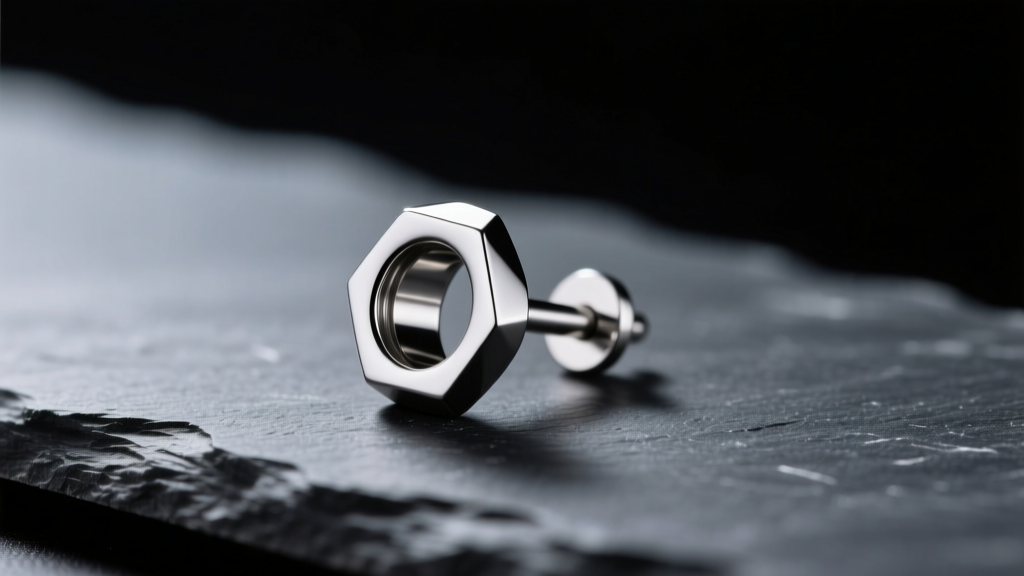
However, the therapeutic benefit relies entirely on the piercing remaining perfectly healed and free of inflammation. If you wear low-quality jewelry in a daith piercing, the resulting cartilage irritation, swelling, and potential perichondritis (inflammation of the cartilage membrane) will trigger severe tension headaches that mimic or worsen migraines. A daith piercing meant for migraine relief must exclusively house ASTM F136 implant-grade titanium or solid 14k/18k nickel-free gold. Furthermore, the jewelry must be a 16-gauge or 14-gauge seamless clicker or flat-back labret to prevent rotation and bacterial trapping.
Non-Pierced Alternatives: Ear Cuffs and Magnetic Clip-Ons
For individuals whose migraines are triggered by the physical trauma of a fistula, abandoning traditional piercings may be the only viable solution. Ear cuffs that wrap around the helix or conch without requiring a piercing can provide the aesthetic of cartilage jewelry without the neural inflammation. However, tension-based ear cuffs can also compress the auriculotemporal nerve if the metal is too rigid. Look for adjustable, lightweight silver or titanium cuffs with padded silicone grips. Magnetic clip-ons are another alternative, but they must be carefully calibrated; excessive magnetic pull on the earlobe can cause ischemic pain (restricted blood flow), which rapidly triggers headache pathways.
Material and Weight Matrix for Migraine Sufferers
Selecting the correct earring for migraines requires strict adherence to material purity and weight limits. Use the following troubleshooting matrix to evaluate your current jewelry box.
| Material | Weight Profile | Allergy / Histamine Risk | Migraine Safety Rating |
|---|---|---|---|
| ASTM F136 Titanium | Ultra-Light (1-2g) | Zero (Biocompatible) | Excellent (First Choice) |
| Niobium | Light (2-3g) | Zero (Hypoallergenic) | Excellent |
| Solid 18k Gold | Moderate (3-5g) | Very Low (If Nickel-Free) | Good (Monitor Weight) |
| Surgical Steel (316L) | Moderate (3-5g) | Moderate (Contains Nickel) | Poor (Histamine Risk) |
| Brass / Copper Alloys | Heavy (6g+) | High (Reactive Metals) | Severe Trigger (Avoid) |
Actionable Fixes for Immediate Relief
If you are currently experiencing an earring-induced headache, implement these troubleshooting steps immediately to halt the neurological feedback loop:
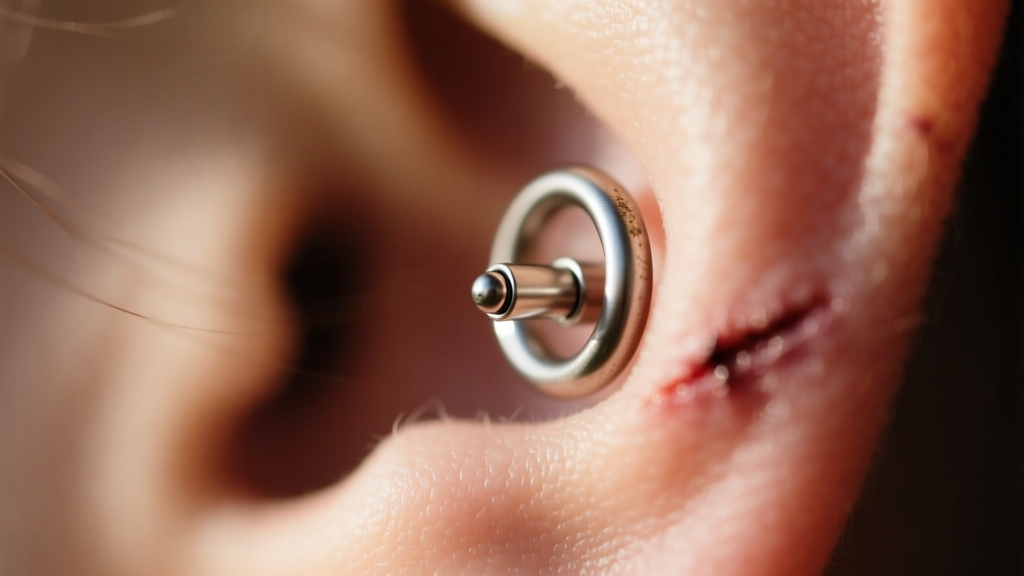
- Remove the Hardware: Take out all earrings immediately to relieve traction and nerve compression. If the fistula is fresh and you fear closure, insert a sterile, flexible PTFE (Teflon) glass retainer, which weighs less than a gram and eliminates metal-allergy risks.
- Ditch the Butterfly Backs: Throw away all standard metal friction backs. According to the Association of Professional Piercers, flat-back labrets with internally threaded or threadless ends are the gold standard for minimizing tissue pressure and allowing proper lymphatic flow.
- Utilize Silicone O-Rings: If you must wear traditional wire-post studs, secure them with soft, medical-grade silicone O-rings instead of metal clutches. This distributes the pressure evenly across the back of the earlobe without pinching the great auricular nerve.
- Apply Cold Compression: Apply a sterile cold compress to the earlobe and the mastoid bone (behind the ear) for 10 minutes to constrict localized blood vessels and numb the irritated trigeminal branches.
- Audit Your Jewelry Box: Weigh your daily-wear earrings using a digital kitchen scale. Relocate any piece exceeding 4 grams to a "special occasion only" box, and strictly limit their wear time to under two hours to prevent traction-induced migraine onset.
Ultimately, managing migraines requires eliminating all micro-stressors. By treating your earring selection as a matter of neurological health rather than mere aesthetics, you can drastically reduce your exposure to hidden physical triggers and reclaim your comfort.