The Ultimate Guide to .5 Carat Diamond Earrings for Beginners
Discover everything you need to know about .5 carat diamond earrings. Learn sizing, 4Cs, settings, and pricing in this beginner-friendly buying guide.

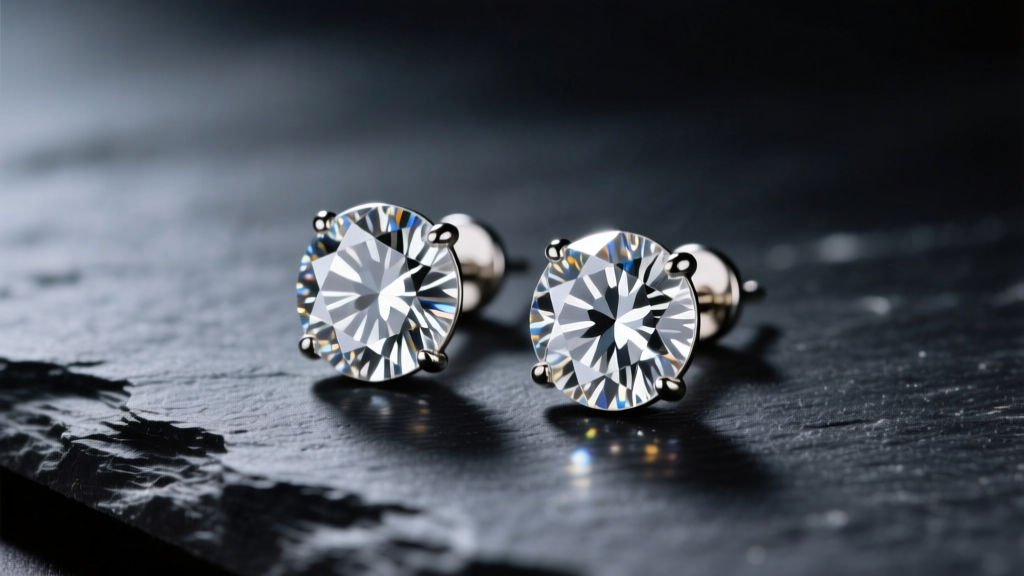
Stepping into the world of fine jewelry can feel overwhelming, especially when technical jargon and pricing structures get in the way of finding the perfect pair of everyday studs. If you are currently shopping for .5 carat diamond earrings, you have landed on the most versatile, classic, and universally flattering carat weight available. Whether you are buying a gift, celebrating a milestone, or upgrading your daily wardrobe, half-carat diamonds offer a brilliant balance of noticeable sparkle and understated elegance.
In this comprehensive beginner's guide, we will decode the industry terminology, break down exact millimeter sizes, and show you exactly where to spend (and save) your budget to maximize brilliance.
The Biggest Beginner Trap: CTW vs. Per-Ear Weight
Before you click 'add to cart' on any retailer's website, you must understand the most common point of confusion in diamond jewelry: Carat Total Weight (CTW) versus per-ear carat weight.
When a jeweler advertises '.5 carat diamond earrings,' they are almost always referring to the combined weight of both earrings. This means each individual ear will feature a 0.25-carat diamond. If your goal is to have a half-carat diamond in each ear, you need to search for '1.00 CTW diamond earrings.' Always verify the product description to ensure the weight aligns with your expectations. According to the Federal Trade Commission's Jewelry Guides, retailers must clearly disclose total carat weights to prevent consumer deception, but understanding the shorthand will save you from a disappointing unboxing.
Sizing Up: What Does a .5 Carat Diamond Earring Actually Look Like?
Carat is a measure of weight, not physical dimensions. However, for standard round brilliant diamonds, we can reliably map carat weight to millimeter (mm) measurements. This is crucial for visualizing how the earrings will sit on your earlobe.
| Total Carat Weight (CTW) | Weight Per Ear | Approximate Diameter (mm) | Visual Profile |
|---|---|---|---|
| 0.50 CTW | 0.25 carats | ~4.1 mm | Dainty, perfect for second piercings or minimalist daily wear. |
| 1.00 CTW | 0.50 carats | ~5.2 mm | The classic 'half-carat per ear' look. Noticeable, elegant, and versatile. |
| 1.50 CTW | 0.75 carats | ~5.9 mm | Bold and prominent, offering significant finger (or ear) presence. |
For context, a standard pencil eraser is about 5 mm wide. A 0.25-carat diamond (4.1 mm) will sit neatly on the earlobe without drooping, making it an ideal choice for those with smaller earlobes or active lifestyles.
Navigating the 4Cs for Small Diamonds
The Gemological Institute of America (GIA) established the 4Cs (Cut, Color, Clarity, and Carat) as the universal standard for diamond grading. However, the rules change drastically when you are buying smaller stones like .5 carat diamond earrings. Here is your strategic framework.
Cut: The Non-Negotiable Priority
Cut dictates how well a diamond interacts with light. In smaller diamonds, a poor cut will make the stone look dull, glassy, and significantly smaller than its actual carat weight. Never compromise here. Insist on an 'Excellent' or 'Ideal' cut grade. A brilliantly cut 0.25-carat diamond will face up whiter and appear larger than a poorly cut 0.30-carat stone.
Color: The Face-Up Illusion
Because diamonds in earrings are viewed from a distance (usually a few feet away) and are set in metal, you do not need to pay the premium for D or E colorless grades.
- G to H (Near Colorless): The sweet spot for white gold and platinum settings. They face up brilliantly white to the naked eye.
- I to J (Faint): An excellent budget-friendly choice, especially if you are setting the diamonds in 14k or 18k yellow or rose gold, which naturally masks faint warmth.
Clarity: Eye-Clean is Enough
Unlike an engagement ring, which is examined up close, earrings are viewed from across a table. You can safely drop your clarity requirements to SI1 or SI2 (Slightly Included) as long as the diamond is 'eye-clean' (no visible black carbon spots to the naked eye). This single adjustment can save you 20% to 30% on your total purchase.
Gemologist's Rule of Thumb: 'In stones under 0.50 carats per ear, prioritize Cut above all else. The human eye cannot easily distinguish between VS1 and SI1 clarity from three feet away, but it will instantly notice a lack of sparkle from a poorly cut stone.'
Choosing the Right Setting and Backing
The way your diamond is held in place affects both its security and its perceived size.
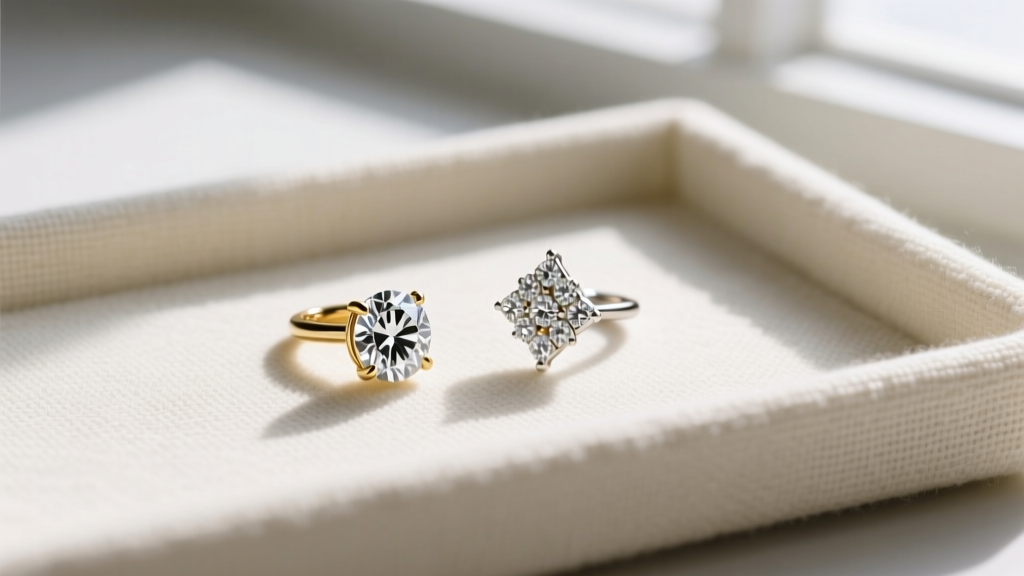
Setting Styles
- 3-Prong Martini: The most popular choice for studs. The three prongs and V-shaped base allow maximum light entry and make the diamond appear slightly larger. However, the pointed base can poke the back of the ear if the post is too short.
- 4-Prong Basket: Offers a flat profile that sits flush against the earlobe, providing excellent comfort and security. The extra prong provides a more symmetrical, square-ish face-up appearance.
- Bezel: A modern rim of metal completely encircles the diamond. While it sacrifices a tiny bit of light return, it is entirely snag-free, making it the ultimate choice for medical professionals, athletes, or parents with toddlers.
Backings: Friction vs. Screw
Do not overlook the earring back. Standard friction (butterfly) backs are easy to put on but can wear out over time, loosening their grip. For diamonds of any significant value, upgrade to screw backs or locking lever backs. They take a few extra seconds to secure, but they provide peace of mind that your investment will not end up lost on a subway floor.
2026 Market Pricing: Natural vs. Lab-Grown Diamonds
The diamond market has shifted dramatically over the last few years. Lab-grown diamonds possess the exact same chemical, physical, and optical properties as mined diamonds, but they come at a fraction of the cost. Below is a realistic pricing framework for .5 carat diamond earrings (0.50 CTW / 0.25ct per ear) with G-H color and VS-SI clarity.
| Diamond Origin | Estimated Price Range (0.50 CTW) | Best For |
|---|---|---|
| Natural (Mined) | $650 - $1,400 | Traditionalists, heirloom seekers, and those who value geological rarity. |
| Lab-Grown | $250 - $500 | Maximizing budget, allowing buyers to upgrade to larger sizes or better metals. |
By opting for lab-grown stones, many beginners find they can afford to upgrade their setting to premium 18k gold or platinum without exceeding their total budget.
Your Final Pre-Purchase Checklist
Before finalizing your order, run through this quick expert checklist:
- Verify the Weight: Confirm if the listing is 0.50 CTW (total) or 0.50 per ear.
- Check the Cut Grade: Ensure it is graded Excellent/Ideal (for round brilliants).
- Review the Return Policy: Only buy from retailers offering at least a 30-day, no-questions-asked return window so you can evaluate the sparkle in natural daylight.
- Metal Matching: Ensure the metal color complements your existing everyday jewelry (e.g., matching your wedding band or favorite necklace chain).
Finding the perfect pair of .5 carat diamond earrings does not require a degree in gemology. By understanding the mechanics of total carat weight, prioritizing cut over flawless clarity, and choosing a setting that matches your lifestyle, you will secure a pair of studs that deliver brilliant, lifelong sparkle.


