How Do I Clean My Earrings? The Ultimate Metal Guide
Learn exactly how to clean and sanitize your earrings based on their metal type, from implant-grade titanium to sterling silver and solid gold.

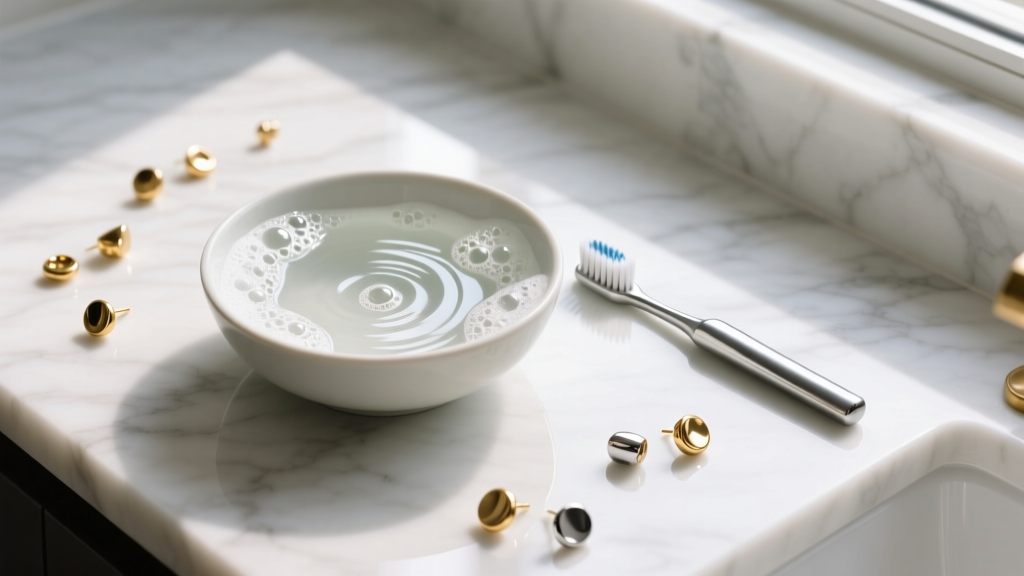
If you have ever found yourself asking, "how do I clean my earrings?" you are not alone. Earrings are uniquely susceptible to a combination of environmental tarnish, cosmetic residue, and biological buildup. Unlike rings or necklaces, earring posts pass directly through the body, meaning they accumulate sebum, dead skin cells, and soap scum in the microscopic grooves of their threading. Cleaning them requires more than a quick wipe; it demands a material-specific approach to preserve the metal's integrity and protect your piercing health.
In this comprehensive guide, we break down the exact chemical and mechanical methods required to clean, polish, and sanitize every type of earring in your collection, ensuring they remain safe for long-term wear in 2026 and beyond.
The Science of Earring Buildup and Tarnish
Before applying any cleaning solution, it is vital to understand what you are actually removing. Earring buildup generally falls into two categories: biological and chemical.
Biological Buildup (Sebum and Keratin)
Often colloquially referred to as "ear cheese," this grayish, odorous paste is a mixture of sebum (natural skin oils), dead keratinocytes (skin cells), and residual shower products. This buildup is particularly aggressive on textured surfaces, such as the external threads of a 20-gauge (0.8mm) or 18-gauge (1.0mm) earring post. Because this matter is lipid-based, it requires a mild surfactant to break down the oils without damaging the surrounding metal or gemstones.
Chemical Tarnish (Oxidation and Sulfidation)
Metals like sterling silver and copper alloys react with sulfur compounds in the air and human sweat, forming a dark layer of silver sulfide or copper oxide. Gold and titanium, being highly noble or reactive-passive metals, do not tarnish in this way, but they can still suffer from surface dullness due to hard water spots and lotion accumulation.
Step-by-Step: Cleaning by Material Type
The method you choose must align with the metallurgy of your jewelry. Using the wrong chemical agent can strip platings, pit porous stones, or weaken structural alloys.
1. Implant-Grade Titanium (ASTM F136) & Niobium
Titanium and niobium are the gold standards for body jewelry. They are highly biocompatible and resistant to corrosion.
- The Wash: Mix a few drops of fragrance-free, dye-free liquid dish soap (like Dawn) into a bowl of warm distilled water.
- The Scrub: Use a dedicated, extra-soft baby toothbrush to gently agitate the post and threading. Pay special attention to the O-rings on captive bead rings or the threads on internally threaded barbells.
- The Rinse: Rinse thoroughly under warm distilled water to prevent mineral spotting.
- Drying: Pat dry with a lint-free microfiber cloth or use a hair dryer on the cool setting to blast water out of tight crevices.
2. Solid Gold (14k & 18k)
Gold is a soft, noble metal. While it will not rust or tarnish, it is easily scratched and can lose its luster if subjected to harsh abrasives.
- The Soak: Submerge your solid gold earrings in a solution of warm water and a few drops of mild Castile soap for 15 minutes.
- The Agitation: Gently brush with a soft-bristled makeup brush (like a clean eyeshadow brush) rather than a toothbrush, which can leave micro-scratches on high-polish 18k gold.
- Gemstone Warning: If your gold earrings feature porous stones like opals, pearls, or turquoise, skip the soak entirely. According to the Gemological Institute of America (GIA), porous gems can absorb liquids, leading to internal fracturing or discoloration. Wipe these gently with a damp cloth instead.
3. Sterling Silver (925)
Sterling silver contains 92.5% silver and 7.5% copper. It is the copper content that makes it highly susceptible to sulfur-induced tarnish.
- Light Tarnish: Use a dedicated silver polishing cloth (impregnated with micro-abrasives and anti-tarnish agents). Wipe in a single direction rather than in circles to avoid highlighting micro-scratches.
- Heavy Tarnish: Utilize the electrochemical reduction method detailed in the section below.
- Post Care: Silver posts are prone to bending. When brushing the post, hold the earring by the decorative head to avoid applying lateral torque to the 20-gauge wire.
4. Costume & Gold-Plated Jewelry
Plated jewelry consists of a microscopic layer of gold or rhodium over a base metal like brass or copper. Submerging these pieces or using ultrasonic cleaners will cause the plating to flake and peel.
- The Method: Dampen a microfiber cloth with a 50/50 mix of water and mild soap. Wipe the surface gently.
- Drying: Dry immediately and completely. Any lingering moisture will seep through microscopic pores in the plating and cause the base metal to oxidize, resulting in green skin stains and structural blistering.
The Redox Reaction: Restoring Heavily Tarnished Silver
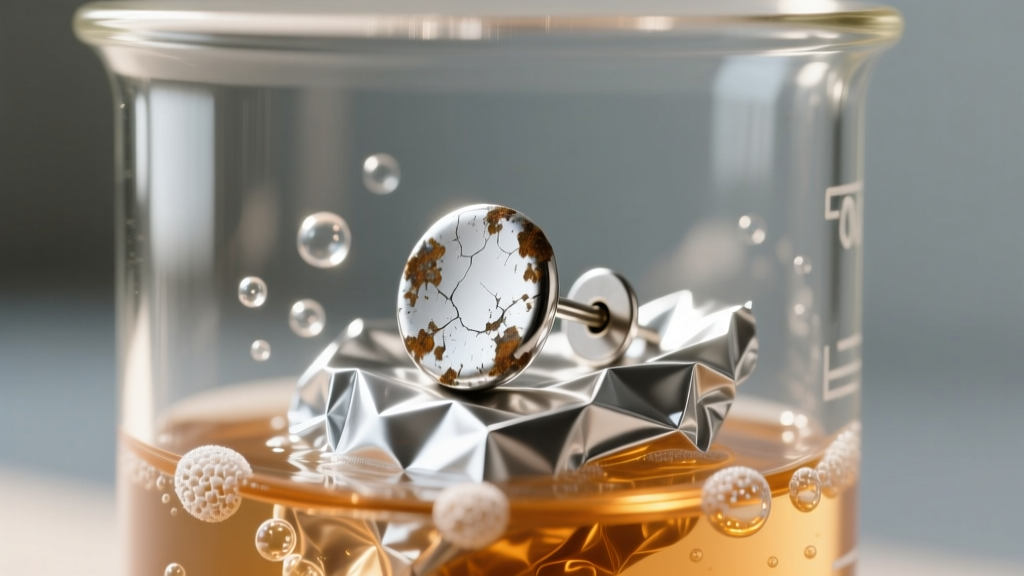
If your sterling silver earrings have turned completely black, polishing cloths will not suffice. You need to reverse the chemical reaction through an electrochemical reduction process. This method converts silver sulfide back into pure silver without removing any underlying metal.
- Line a glass or ceramic bowl with aluminum foil, shiny side up.
- Place your tarnished silver earrings directly onto the foil, ensuring they are physically touching the metal.
- Sprinkle two tablespoons of baking soda over the jewelry.
- Pour boiling water into the bowl. You will immediately see bubbling and smell a faint sulfur (rotten egg) odor.
- Let the earrings sit for 3 to 5 minutes. The aluminum acts as a sacrificial anode, pulling the sulfur away from the silver and forming aluminum sulfide in the water.
- Remove with wooden tongs, rinse in distilled water, and buff dry.
Note: Never use this method on antiqued silver (where dark tarnish is intentionally left in the crevices for contrast) or on earrings set with glued-in gemstones, as the boiling water will melt the adhesive.
Sanitizing vs. Cleaning: What is the Difference?
Cleaning removes physical debris; sanitizing kills microorganisms. If you are swapping earrings between different people, or re-inserting a piece that has been in storage, sanitization is a mandatory step. The Association of Professional Piercers (APP) emphasizes that body jewelry must be properly sterilized or sanitized to prevent the introduction of pathogens into the fistula (the piercing channel).
The 70% Isopropyl Alcohol Rule
When sanitizing earring posts, reach for 70% isopropyl alcohol, not 91% or 99%. According to guidelines outlined by the Centers for Disease Control and Prevention (CDC), higher concentrations of alcohol evaporate too quickly to effectively penetrate bacterial cell walls. The 30% water content in 70% alcohol slows evaporation, ensuring the solution remains in contact with the metal long enough to denature the proteins of harmful microbes.
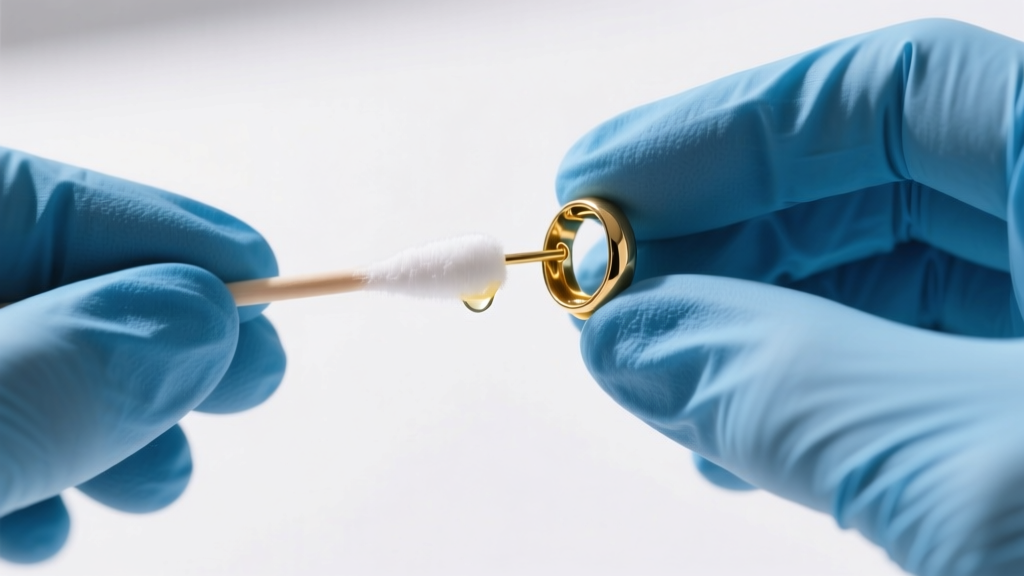
- Application: Soak a lint-free swab in 70% alcohol and thoroughly wipe the earring post, the backing, and the threading.
- Evaporation: Allow the alcohol to air-dry completely before insertion. Inserting a wet, alcohol-soaked post into a piercing will cause severe chemical irritation and tissue drying.
Material Compatibility Matrix
Use this quick-reference table to ensure you are not accidentally destroying your jewelry with incompatible cleaning agents.
| Material | Mild Soap & Water | Ultrasonic Cleaner | 70% Isopropyl Alcohol | Boiling / Redox |
|---|---|---|---|---|
| Implant-Grade Titanium | Safe | Safe | Safe | Safe (Boiling only) |
| Solid Gold (14k/18k) | Safe | Safe (No porous gems) | Safe (Briefly) | Unsafe |
| Sterling Silver (925) | Safe | Unsafe (Can pit) | Unsafe (Accelerates tarnish) | Safe (Redox only) |
| Gold-Plated / PVD | Safe (Gentle) | Unsafe (Strips plating) | Unsafe | Unsafe |
| Pearls / Opals | Wipe Only | Unsafe (Shatters) | Unsafe (Dries out) | Unsafe |
What to Avoid: Common Cleaning Mistakes
In the pursuit of clean jewelry, many people inadvertently cause irreversible damage. Avoid these common pitfalls:
- Using Toothpaste: Toothpaste contains abrasive silica particles designed to scrub enamel. On the Mohs hardness scale, toothpaste abrasives rank around 3 to 4. Because pure gold is a 2.5 and 14k gold is roughly a 3.5, toothpaste will leave deep, permanent micro-scratches across the surface of your gold earrings.
- Bleach and Chlorine: Never clean your earrings in a sink where bleach has recently been used, and never wear them in a chlorinated pool. Chlorine reacts with the alloy metals in gold (like copper and zinc), causing a phenomenon called "stress corrosion cracking," which can literally cause the prongs holding your diamonds to snap off.
- Ultrasonic Cleaners on Fracture-Filled Gems: If your earrings feature emeralds or rubies that have been fracture-filled with oils or resins, the high-frequency vibrations (typically 40kHz) of an ultrasonic cleaner will shake the filler loose, leaving the stones cloudy and structurally compromised.
Maintaining Piercing Health Through Clean Jewelry
Knowing how to clean your earrings is only half the battle; maintaining a clean environment for your piercings is equally important. Always wash your hands with antibacterial soap before handling earring posts. Store your cleaned earrings in a dry, airtight container with anti-tarnish strips to prevent environmental sulfidation. By matching your cleaning chemistry to your jewelry's metallurgy, you ensure that your favorite pieces remain brilliant, hygienic, and safe for your body for decades to come.


