Are Handmade Beaded Earrings Worth It? Value Guide
Discover how to assess the true value of handmade beaded earrings. Learn pricing tiers, material grades, and what justifies artisan costs.

The True Cost of Artisan Beadwork
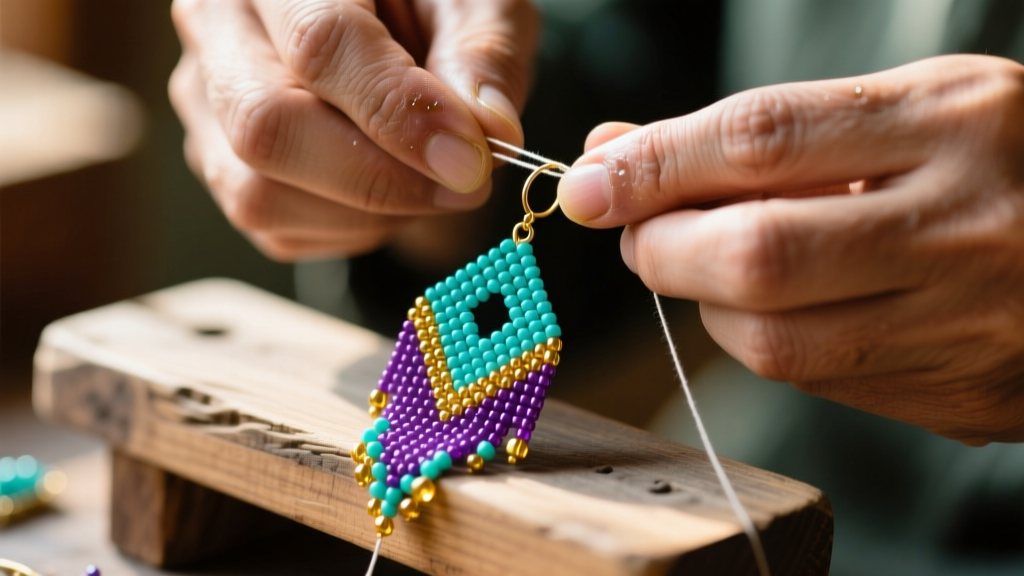
When browsing online marketplaces or local craft fairs, the pricing for handmade beaded earrings can vary wildly. You might see a pair of beaded dangles for $12 sitting right next to a seemingly similar pair priced at $85. For the untrained eye, this discrepancy feels arbitrary. However, as a jewelry appraiser and style analyst, I can assure you that the gap between cheap assembly and true artisan beadwork is vast. Evaluating the value of beaded jewelry requires looking past the surface colors and examining the structural integrity, material grades, and the sheer hours of meticulous labor involved.
True handmade beadwork involves complex weaving techniques like peyote stitch, brick stitch, herringbone, and right-angle weave. These are not simply beads strung onto a wire; they are architectural micro-sculptures. A single pair of intricate brick-stitch fringe earrings can take an experienced artisan anywhere from four to eight hours to complete. When you factor in a living wage, overhead, and high-quality components, a $60 price tag is often a bargain. This guide will teach you how to audit the materials and construction of beaded earrings so you can confidently assess their true market value.
Decoding Bead Materials: From Acrylic to Zircon
The foundation of any beaded earring is, naturally, the bead itself. The price and longevity of the piece are heavily dictated by the origin and manufacturing process of these tiny components.
Seed Beads: Miyuki vs. Toho vs. Mass-Market
Not all seed beads are created equal. Japanese seed beads, specifically Miyuki Delicas and Toho Treasures, are the gold standard for woven earrings. Miyuki Delicas are precision-manufactured cylinder beads with a large hole-to-bead ratio, allowing for multiple thread passes and a remarkably flat, uniform fabric. They cost significantly more than mass-produced Chinese or Indian seed beads, which often suffer from inconsistent sizing, sharp edges that fray thread, and high waste rates (sometimes up to 20% of a tube is unusable). If an artisan advertises the use of 11/0 Miyuki Delicas, you are paying for structural longevity and pixel-perfect pattern alignment.
Glass and Crystal: Czech Fire-Polished vs. Acrylic
For drop earrings and dangles, the focal beads matter immensely. Authentic Czech fire-polished glass beads undergo a rigorous heating process that rounds their faceted edges, giving them a soft, luxurious sparkle that mimics high-end gemstones. Conversely, cheap acrylic or molded plastic beads will scratch easily, cloud over when exposed to skin oils, and lack optical depth. According to the GIA Gem Encyclopedia, even when dealing with glass imitations of gemstones, the optical clarity and cutting precision dictate the value. Always look for the telltale cold, heavy feel of real glass versus the lightweight, easily scratched surface of acrylic.
Hardware and Thread: The Hidden Failure Points
The most common reason beaded earrings fail is not the beads themselves, but the internal armature and findings. A beautiful weave is useless if the thread degrades or the ear wire causes contact dermatitis.
Thread Selection: Fireline vs. Standard Nylon
Cheaply made beaded jewelry often uses standard nylon or silk thread. These organic fibers degrade rapidly when exposed to UV light, humidity, and the natural acids in human skin oil. Within a year, the thread can become brittle, leading to catastrophic bead loss. High-end artisans use gel-spun polyethylene threads, such as Wildfire or Fireline (typically in 6lb or 8lb test). These threads are waterproof, UV-resistant, and virtually impossible to break with bare hands. Furthermore, they do not stretch over time, ensuring that fringe earrings maintain their original drape and tension for decades.
Wire Gauges and Ear Findings
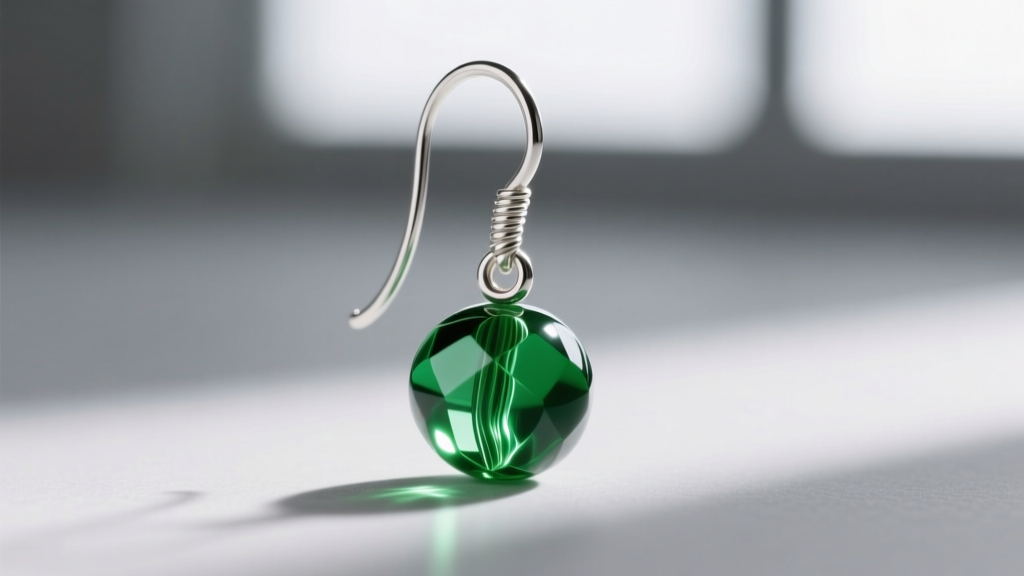
The metal that actually passes through your piercing is a critical value indicator. Standard commercial earrings often use 22-gauge or 24-gauge brass or nickel-silver, which can bend easily and cause allergic reactions. A master jeweler crafting handmade beaded earrings will typically forge their own ear wires from 20-gauge half-hard sterling silver, Argentium silver (which is highly tarnish-resistant), or niobium for hypoallergenic needs. The Rings & Things Learning Center notes that 20-gauge wire is the optimal thickness for standard lobe piercings, providing enough rigidity to hold the earring's shape while remaining comfortable. If the ear wires look flimsy, discolored at the stress points, or lack a proper tension loop to prevent the earring from sliding off, the value drops significantly.
The 2026 Pricing Matrix: What Should You Actually Pay?
To help you navigate the market, I have categorized handmade beaded earrings into three distinct value tiers. Use this matrix to determine if a seller's pricing aligns with their materials and labor.
| Tier | Price Range | Materials & Techniques | Labor Investment |
|---|---|---|---|
| Hobbyist / Basic | $15 - $30 | Standard seed beads, nylon thread, commercial brass French hooks, simple stringing or basic daisy chain. | 1 - 2 Hours |
| Artisan / Intermediate | $35 - $65 | Miyuki/Toho beads, Czech glass accents, Fireline thread, sterling silver-plated or gold-filled findings, brick or peyote stitch. | 3 - 5 Hours |
| Masterwork / Heirloom | $80 - $150+ | Precious metal seed beads, genuine gemstone focal beads, 20g Argentium/Niobium ear wires, complex 3D right-angle weave, invisible finishing. | 6 - 12+ Hours |
"When a customer asks why my beaded statement earrings cost $95, I show them the spool of 6lb Fireline thread and the tube of 24k gold-plated Miyuki beads. The materials alone cost $25, but it is the eight hours of unbroken focus and the zero-margin-for-error tension that they are truly purchasing." — Elena R., Master Beadweaver
Red Flags: Spotting Mass-Produced Fakes
With the rise of overseas dropshipping, many mass-produced, machine-assembled earrings are falsely marketed as 'handmade.' Here is how to spot the imposters:
- Perfectly Identical Knots: If you see visible knotting between beads and every single knot is mathematically identical in size and tension, it was likely done by a machine or an underpaid assembly line worker using jigs, not an independent artisan.
- Painted Glass Masquerading as Stone: Mass producers often use dyed or surface-painted glass to imitate turquoise, lapis lazuli, or jade. Look closely at the drill holes; if the color is concentrated around the hole or chips away to reveal clear glass underneath, it is a fake.
- Crushed Crimps: High-quality artisans use crimp covers (small metal beads that close over the flattened crimp bead) or weave the thread back into the pattern to hide the termination point. Exposed, mashed crimp beads are a hallmark of rushed, low-value assembly.
- Stiff Drape: Woven beadwork should flow like fabric. If a peyote-stitch fringe feels rigid or board-like, the artisan pulled the thread too tight or used the wrong thread-to-bead ratio, compromising the structural integrity.
Care, Maintenance, and Longevity
To protect your investment in high-quality handmade beaded earrings, proper maintenance is non-negotiable. Never use ultrasonic cleaners or harsh chemical dips on beaded jewelry. The high-frequency vibrations can shatter delicate glass beads and fray internal polyethylene threads. Furthermore, porous gemstones like turquoise, malachite, and freshwater pearls will absorb chemicals, leading to permanent discoloration.
Instead, clean your earrings using a soft, lint-free microfiber cloth lightly dampened with distilled water. Gently wipe the beads and immediately dry them. When storing your earrings, always lay them flat in a lined jewelry box or hang them from a dedicated rack. Storing heavy beaded dangles in a tangled pile can cause the internal thread to stretch or the ear wires to bend out of their 20-gauge calibration. By understanding the anatomy, materials, and true labor costs behind handmade beaded earrings, you transition from a casual shopper to an informed collector, ensuring every piece you add to your wardrobe is a testament to genuine artisan craftsmanship.


