Harley Quinn Earrings: Technical Guide to Cosplay & Daily Wear
An expert technical guide to Harley Quinn earrings, covering asymmetrical weight distribution, gauge sizing, and material metallurgy for cosplay.

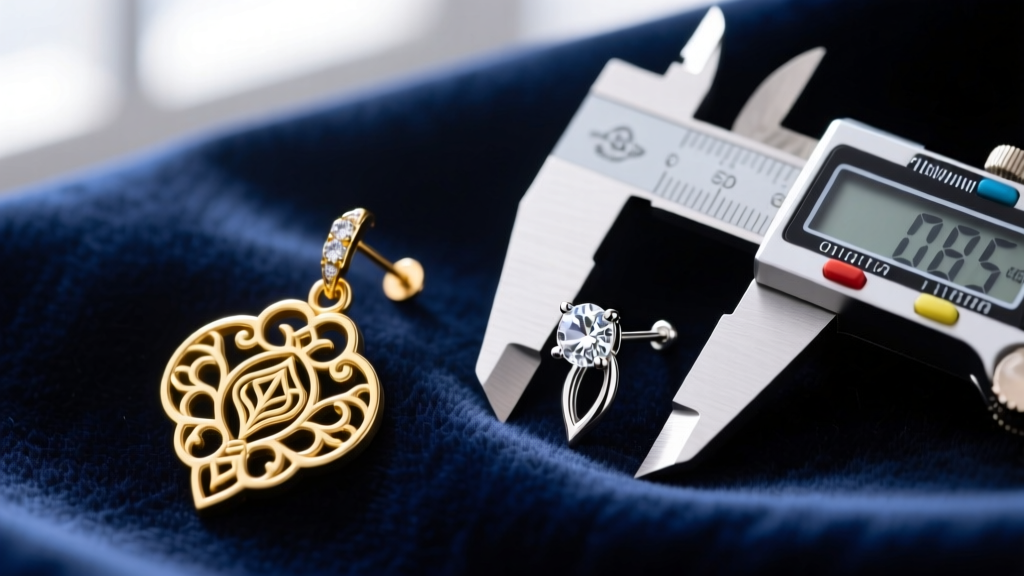
The Biomechanics of Asymmetrical Earlobe Loading
Replicating iconic pop-culture jewelry requires more than just aesthetic accuracy; it demands a rigorous understanding of biomechanics and tissue tolerance. When analyzing Harley Quinn earrings across her cinematic and comic iterations, jewelers and cosplay fabricators face a unique engineering challenge: extreme asymmetrical loading. From the classic diamond studs seen in Suicide Squad to the chaotic, mismatched hoops, jester bells, and heavy "PUDDIN" charms featured in Birds of Prey, the weight distribution is rarely balanced.
The human earlobe is composed primarily of areolar connective tissue and adipose (fat) deposits, entirely lacking the rigid cartilage found in the upper ear. While this gives the lobe high elasticity, it possesses remarkably low tensile strength. Wearing a 12-gram heavy charm on one ear and a 2-gram stud on the other creates uneven facial pulling, but the immediate, localized risk is tissue failure at the fistula (the piercing channel). As we navigate the 2026 convention season, where multi-day cosplay wear is standard, understanding the physical limits of the earlobe is critical for anyone sourcing or fabricating these specific character pieces.
Gauge Sizing and the "Cheese-Cutter" Effect
Standard commercial lobe piercings are typically performed at 20-gauge (0.81mm) or 18-gauge (1.02mm). However, hanging heavy Harley Quinn motifs—such as solid brass playing card drops or oversized jester bells—on standard 20-gauge wires is a catastrophic error. The pressure exerted on the tissue is calculated as Force divided by Area. A heavy charm on a thin wire drastically reduces the surface area, exceeding the tissue's yield strength.
This results in the "cheese-cutter effect," a phenomenon well-documented by the Association of Professional Piercers (APP), where the jewelry slowly migrates downward through the flesh, eventually tearing the lobe completely. To safely support the pendulum effect of Harley's drop earrings, fabricators must upgrade the post thickness. For charms weighing between 5 and 10 grams, a 16-gauge (1.29mm) post is the minimum requirement. For pieces exceeding 10 grams, a 14-gauge (1.63mm) or even 12-gauge (2.05mm) post is mandatory to distribute the clamping force and prevent tissue migration.
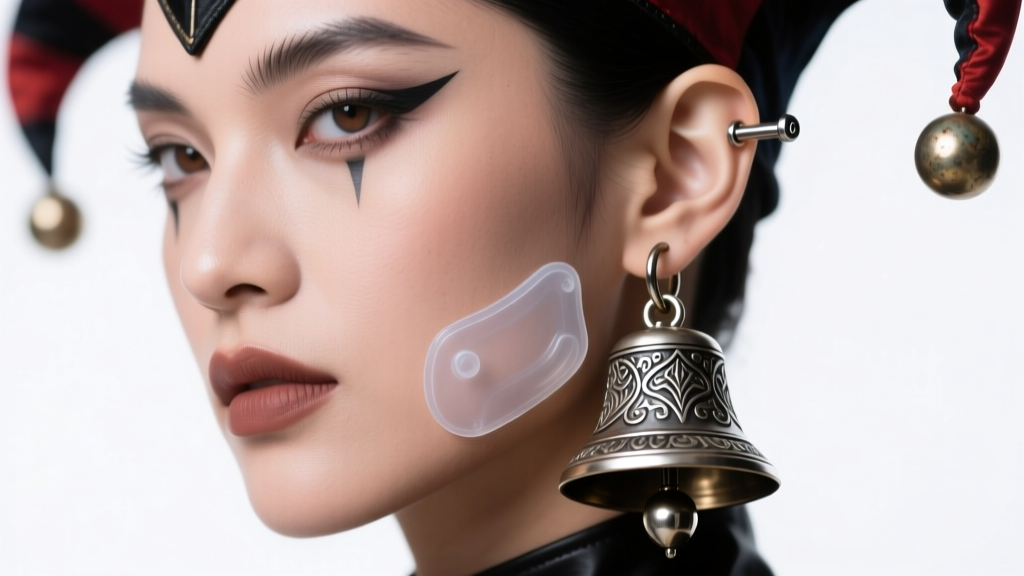
Material Metallurgy for High-Stress Cosplay Environments
Convention environments are highly corrosive to base metals. Twelve hours of wear involves elevated body temperatures, continuous friction, and exposure to sweat, which is rich in chloride ions and lactic acid. Many mass-produced Harley Quinn cosplay earrings are cast from zinc alloys or raw brass. These materials not only oxidize rapidly, turning the skin green, but they also leach nickel and copper, triggering severe contact dermatitis in stressed, micro-abraded piercing channels.
For high-end, screen-accurate replicas that prioritize tissue health, material selection must adhere to strict biocompatibility standards. Below is a technical comparison of common materials used in character jewelry fabrication:
| Material Grade | Biocompatibility | Weight / Density | Best Use Case |
|---|---|---|---|
| ASTM F136 Titanium (Ti-6Al-4V ELI) | Excellent (MRI Safe, Hypoallergenic) | Lightweight (4.43 g/cm³) | Heavy posts, internal threading, long-term convention wear |
| 316L Surgical Stainless Steel | Moderate (Contains trace Nickel) | Heavy (8.00 g/cm³) | Hoops, huggies, short-term wear for non-sensitive lobes |
| Niobium (Reactive Metal) | Excellent (Highly inert) | Moderate (8.57 g/cm³) | Anodized color accents (red/black or pink/blue motifs) |
| Zinc Alloy / Pot Metal | Poor (High irritation risk) | Variable | Strictly for display or clip-on conversions; avoid pierced use |
Utilizing Implant-Grade Titanium for the post and the primary structural components ensures that the chloride ions in sweat do not compromise the metal's passivation layer, preventing localized infections during high-stress cosplay events.
Hardware Engineering: Securing the Diamonds and Charms
The Suicide Squad iteration of Harley Quinn famously sported large, mismatched diamond studs (often estimated around 2.0 to 2.5 carats each). Replicating this requires addressing the center of gravity. A 2.5-carat diamond set in a traditional 4-prong martini setting raises the stone's center of gravity away from the earlobe, creating a forward-leaning torque that causes the stud to droop.
Furthermore, standard butterfly friction backs rely on mere tension and typically fail under 0.2 to 0.5 pounds of lateral force—easily generated by a cosplayer turning their head quickly or adjusting a wig. To secure heavy studs and front-heavy "PUDDIN" charms, expert jewelers utilize La Pousette backings. These precision-engineered, spring-loaded locking caps grip a notched post, requiring over 2 pounds of deliberate lateral force to disengage. The Gemological Institute of America (GIA) frequently recommends secure locking mechanisms for high-carat active wear to prevent catastrophic loss.
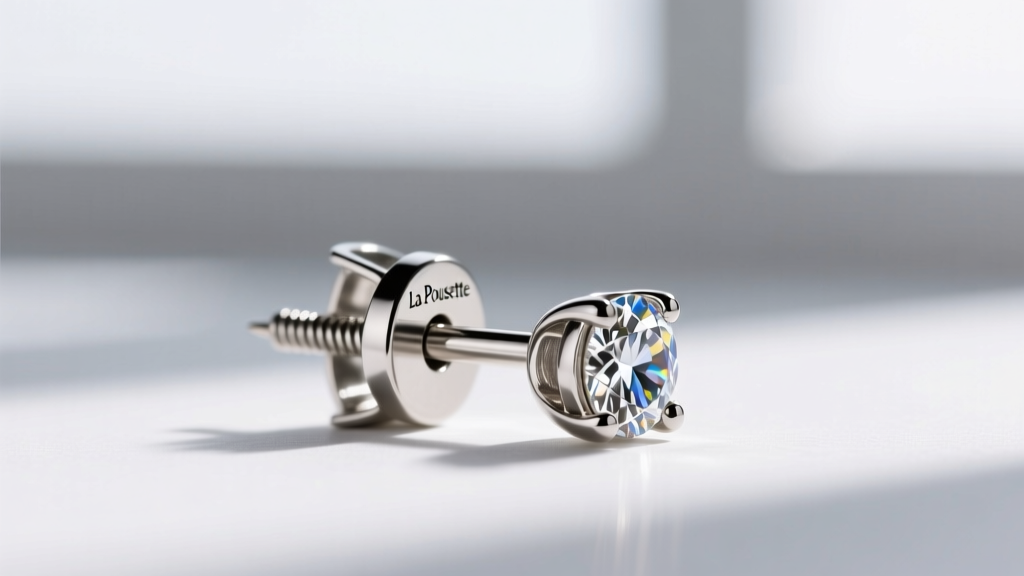
For heavy drop charms, fabricators should also incorporate a silicone earlobe support patch (often called an earlobe lifter). This clear, medical-grade silicone disc slides onto the post behind the earlobe, increasing the surface area of the backing from roughly 15mm² to over 150mm². This drastically reduces the PSI (pounds per square inch) on the skin, preventing the backing from digging into the flesh and causing necrosis or deep indentations during a 14-hour convention day.
Fabrication & Sourcing: Replicating the Iconic Motifs
Creating the "PUDDIN" charm or the intricate playing card motifs requires advanced CAD (Computer-Aided Design) modeling. A common failure mode in amateur cosplay jewelry is casting these charms in solid brass, resulting in pieces that weigh upwards of 18 grams—far beyond the safe threshold for a standard lobe piercing.
Hollow-Form Modeling and Electroplating
To maintain screen-accurate dimensions without the destructive weight, modern 2026 fabrication techniques utilize hollow-form CAD modeling. By designing the charm with a 1.5mm outer shell and an internal honeycomb or hollow lattice structure, the piece can be 3D printed in castable resin, invested, and cast in lightweight aluminum or sterling silver. Alternatively, pieces can be 3D printed in high-toughness SLA resin, sanded, and electroplated with a thick layer of 18k gold or rhodium. This reduces the final weight of a 25mm "PUDDIN" charm from 14 grams to a highly manageable 3.5 grams.
Enamel Techniques for Colorways
Harley's signature red/black and pink/blue colorways are frequently applied via enamel. Avoid soft epoxy resins (cold enamel), which scratch easily, yellow under UV convention lighting, and chip when the charms swing and collide. Instead, specify vitreous (hard) enamel fired at 1400°F. Vitreous enamel fuses directly to the metal substrate, providing a glass-like, scratch-resistant finish that will survive years of cosplay wear without degrading.
Quick-Reference Gauge & Weight Tolerance Chart
| Earring Style | Estimated Weight | Minimum Safe Gauge | Required Backing Type |
|---|---|---|---|
| Standard Diamond Studs (1.0ct) | 1.5g - 2.5g | 18g (1.02mm) | La Pousette or Screw-back |
| Medium Hoops / Huggies | 3.0g - 5.0g | 16g (1.29mm) | Hinged Snap / Clicker |
| "PUDDIN" / Charm Drops | 6.0g - 12.0g | 14g (1.63mm) | Flat Disc + Silicone O-Ring |
| Heavy Jester Bells / Chains | 12.0g+ | 12g (2.05mm) or Eyelet | Flared Eyelet / O-Ring Lock |
Post-Convention Tissue Recovery and Maintenance
Even with perfect gauge sizing and titanium hardware, wearing asymmetrical, heavy Harley Quinn earrings for multiple days causes micro-trauma to the fistula. Post-convention aftercare is non-negotiable. Upon removing the jewelry, cleanse the lobes with a sterile saline solution (0.9% sodium chloride) to remove sweat, sebum, and microscopic metal particulates.
If the earlobe feels elongated, tender, or exhibits a visible crease below the piercing hole (an early indicator of tissue migration), cease wearing all heavy drops immediately. Switch to lightweight, 18-gauge titanium labret studs to keep the channel open while allowing the collagen matrix to repair. Apply a cold compress to reduce localized edema, and avoid re-introducing heavy cosplay jewelry for a minimum of 14 days. By treating character jewelry fabrication as an intersection of metallurgy, biomechanics, and dermatology, cosplayers and collectors can safely enjoy iconic styles without sacrificing their tissue integrity.


