The Ultimate Beginner Guide to Hoop Dangle Earrings
Discover everything about hoop dangle earrings. Learn how to choose the right metal gauge, balance weight, and match them to your face shape.

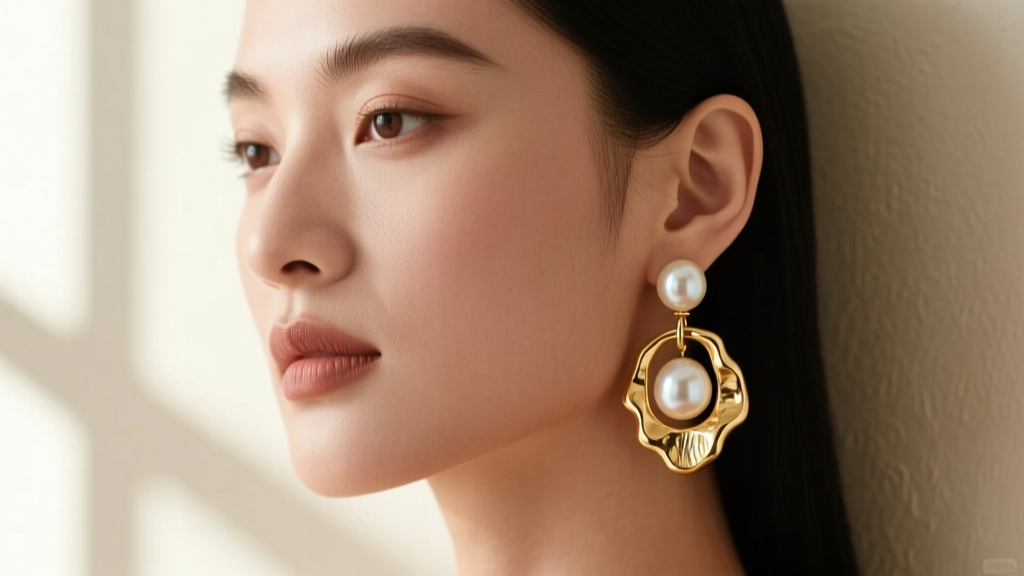
What Are Hoop Dangle Earrings? Defining the Hybrid
When browsing jewelry collections, you will frequently encounter two distinct categories: hoops and dangles. However, the hoop dangle earring represents a brilliant hybrid design that merges the structural benefits of both. In this style, a hoop (ranging from a tight huggie to a medium-sized circle) acts as the foundational anchor through the earlobe, while a decorative element—a chain, gemstone drop, or geometric charm—is suspended from the bottom or front of the hoop.
For beginners, this hybrid style is a game-changer. Traditional dangle earrings suspended from a straight post often pull backward on the piercing, causing discomfort and stretching over time. By utilizing a hoop base, the weight of the dangle is distributed more evenly around the curvature of the earlobe, creating a cantilever effect that supports heavier, more dramatic drops with significantly less strain on the piercing hole.
The Physics of Comfort: Wire Gauge and Weight Distribution
The most common mistake beginners make when purchasing hoop dangle earrings is ignoring the wire gauge—the thickness of the metal passing through the ear. If a heavy dangle is attached to a wire that is too thin, it creates what professional piercers call the "cheese cutter effect." The concentrated downward force slowly slices through the tissue of the earlobe, leading to migration, tearing, and permanent stretching.
Understanding Gauge Sizes for Hybrid Earrings
To ensure your earlobes remain healthy and comfortable, you must match the gauge of the hoop base to the total weight of the dangle. Here is the precise framework you should use when shopping:
- 22-Gauge (0.64mm): Strictly for micro-dangles weighing under 3 grams. Avoid this gauge for any substantial drops.
- 20-Gauge (0.81mm): The standard for lightweight, everyday hoop dangles. Safe for drops weighing between 3 and 6 grams.
- 18-Gauge (1.02mm): The ideal sweet spot for medium-weight statement pieces (7 to 12 grams). This thickness provides enough structural integrity to prevent the hoop from warping under the dangle's kinetic movement.
- 16-Gauge (1.29mm): Mandatory for heavy, oversized architectural dangles exceeding 12 grams. While slightly thicker, it completely eliminates the cheese cutter effect for dramatic, high-fashion pieces.
According to guidelines established by the Association of Professional Piercers (APP), maintaining an appropriate gauge-to-weight ratio is the single most important factor in preventing long-term lobe damage from heavy jewelry.
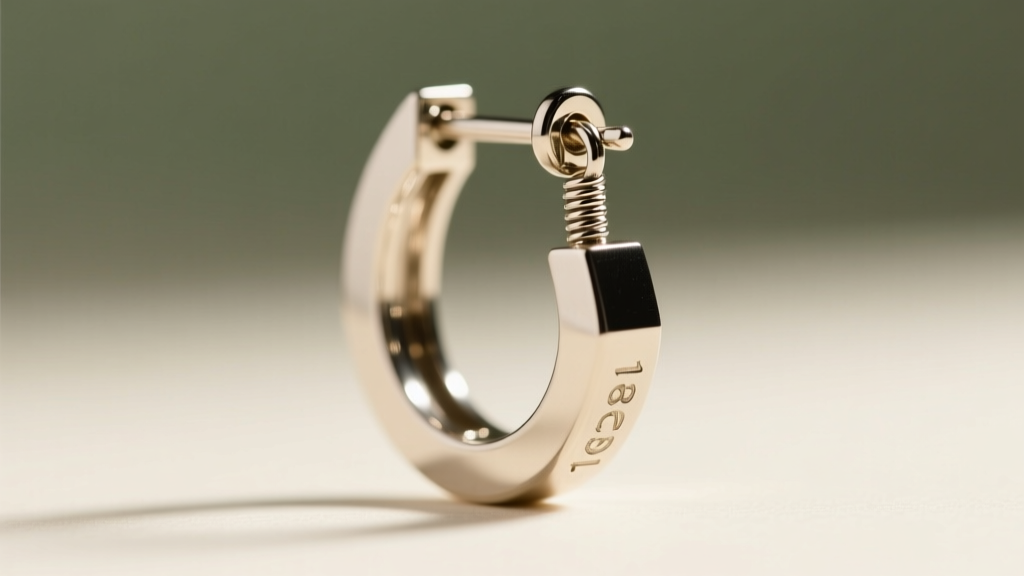
Metallurgy 101: Choosing Safe, Durable Materials
Because hoop dangle earrings introduce kinetic movement and friction against the piercing channel, the metal grade is paramount. Reactive metals will cause contact dermatitis, which is exacerbated by the micro-tears created by heavy dangles swinging throughout the day.
| Metal Grade | Nickel-Free? | Durability & Weight | Avg. Price Range | Best Application |
|---|---|---|---|---|
| Implant Grade Titanium (ASTM F-136) | Yes | Ultra-Light, Highly Durable | $35 - $85 | Sensitive lobes, heavy structural dangles |
| Niobium | Yes | Slightly heavier, very malleable | $25 - $60 | Color-anodized dangles, beginner budgets |
| 14k Solid Gold (Alloyed) | Varies (Check alloy) | Excellent hardness, premium weight | $150 - $450 | Everyday luxury, fine gemstone drops |
| Surgical Stainless Steel (316L) | No (Contains Nickel) | Heavy, prone to tarnish over time | $15 - $40 | Occasional wear only, non-sensitive ears |
When investing in gold hoop dangle earrings, opt for 14k rather than 18k or 24k. As noted by the Gemological Institute of America (GIA), pure gold is exceptionally soft. A thin 18k or 24k gold hoop will easily bend out of shape under the swinging weight of a dangle, compromising the latch mechanism. 14k gold offers the perfect balance of precious metal content and structural hardness.
Face Shape & Proportion Matrix
The beauty of the hoop dangle hybrid is its versatility, but choosing the wrong proportions can throw off your facial symmetry. Use this matrix to select the ideal silhouette for your bone structure:
- Round Faces: Avoid wide, circular hoops with short dangles, which will emphasize facial width. Instead, choose elongated, narrow drops (like a slender bar or chain) suspended from a small, tight huggie hoop. This creates a vertical line that visually lengthens the face.
- Square Faces: Angular jawlines benefit from softening elements. Look for medium-sized circular hoops featuring curved, organic dangles—such as teardrop gemstones or spherical pearls. Avoid harsh geometric squares or sharp triangular drops.
- Oval Faces: The most versatile canvas. You can experiment with oversized statement hoops featuring dramatic, heavy dangles. Just ensure the total length of the earring does not extend more than an inch below the jawline, which can visually drag the face downward.
- Heart-Shaped Faces: Characterized by a wider forehead and narrow chin. Select small to medium hoops with dangles that are wider at the bottom (like a chandelier or inverted triangle drop). This adds visual weight to the lower half of the face, balancing the proportions.
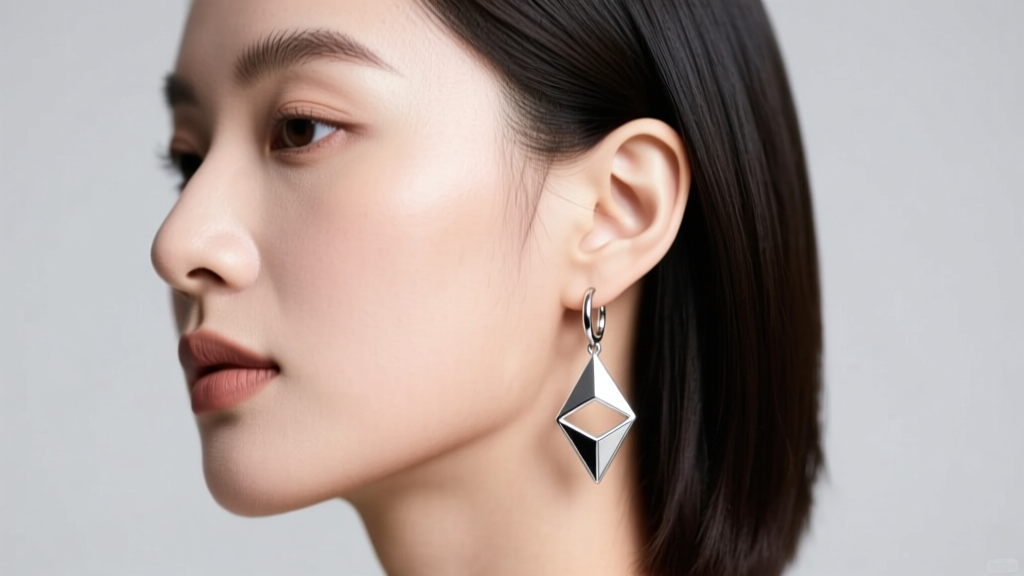
Latch Mechanics: Security vs. Comfort
The closure mechanism on a hoop dangle earring dictates both its security and its comfort level. Because the dangle adds momentum, a weak latch will easily pop open when the earring swings.
The Clicker (Segment Ring)
The clicker features a hinged segment that snaps into place with an audible "click." This is the most secure option for heavy dangles. The tension-based closure is highly resistant to the kinetic pulling of a swinging drop, making it ideal for active days or travel.
The Leverback
Leverbacks feature a hinged wire that loops through the ear and clicks into a catch on the back of the earring. While secure, the exposed catch can sometimes snag on long hair or winter scarves. They are best suited for medium-weight dangles worn in controlled environments.
Continuous (Endless) Hoops
These feature a thin wire that threads into a hollow tube on the opposite end of the hoop. While they offer a seamless, minimalist look, they are notoriously insecure for heavy dangles. The swinging motion of the drop will frequently work the wire loose from the tube. Avoid continuous hoops for any dangle exceeding 4 grams.
Care and Maintenance for Hybrid Styles
Cleaning hoop dangle earrings requires a nuanced approach, especially when the dangle features delicate gemstones. While the metal hoop base can often withstand ultrasonic cleaning, the kinetic joints and suspended stones cannot.
Expert Maintenance Tip: Never use ultrasonic cleaners on hoop dangle earrings featuring pearls, opals, turquoise, or emeralds. The high-frequency vibrations will shatter the delicate internal structures of these porous stones. Instead, use a soft-bristled baby toothbrush dipped in warm water and a drop of mild, phosphate-free dish soap to gently scrub the hoop base and the bail connecting the dangle.
Furthermore, always store your hoop dangle earrings hanging from a dedicated jewelry rack or laid perfectly flat. Tossing them into a jewelry box will inevitably cause the dangle to wrap around the hoop, bending the wire and weakening the structural integrity of the metal over time. By respecting the mechanics, metallurgy, and proportions of this hybrid style, you can comfortably wear dramatic, eye-catching pieces from morning until night.


