Technical Guide to Hope Earrings: Motifs, Metals, and Gemology
Master the technical details of hope earrings. Explore motif casting, gauge sizing, gemstone durability, and metal alloys for lasting wear.

The Engineering of Symbolic Hope Motifs
When jewelers and collectors discuss hope earrings, the conversation often leans heavily into sentimentality. However, from a manufacturing and structural engineering perspective, symbolic motifs like anchors, doves, and feathers present unique metallurgical and mechanical challenges. Unlike simple geometric studs, hope earrings feature asymmetrical weight distribution and delicate extremities that require precise lost-wax casting techniques and rigorous quality control.
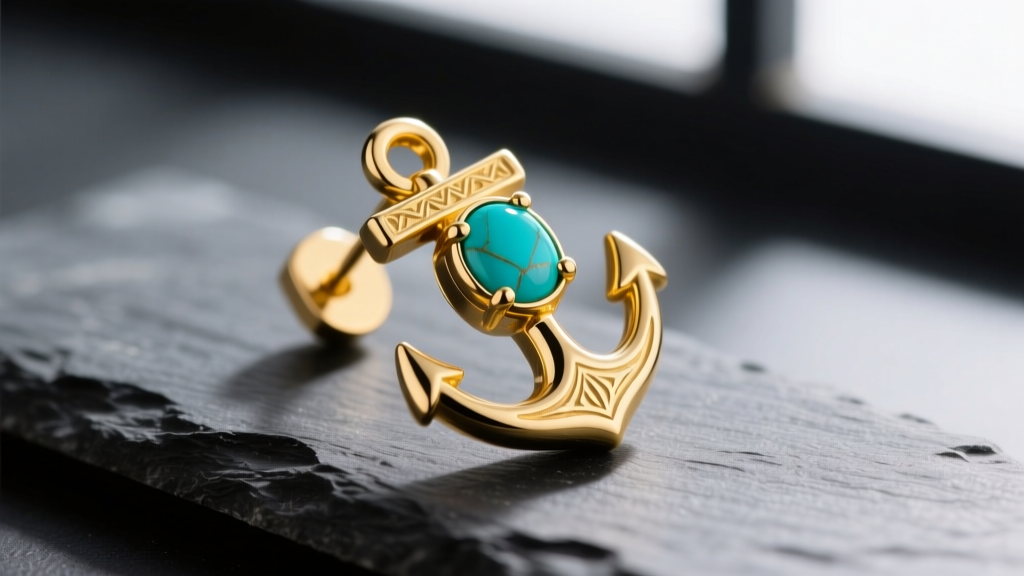
Take the anchor motif, a universal symbol of hope and stability. The vertical shank and horizontal stock of an anchor earring act as levers. If the cross-sectional thickness of the shank is cast below 1.2mm in standard gold alloys, the earring becomes highly susceptible to plastic deformation (bending) when snagged on hair or clothing. Master casters will often reinforce the intersection of the anchor’s shank and stock with a subtle, contoured gusset that is polished away to remain invisible, increasing the structural yield strength without adding visual bulk.
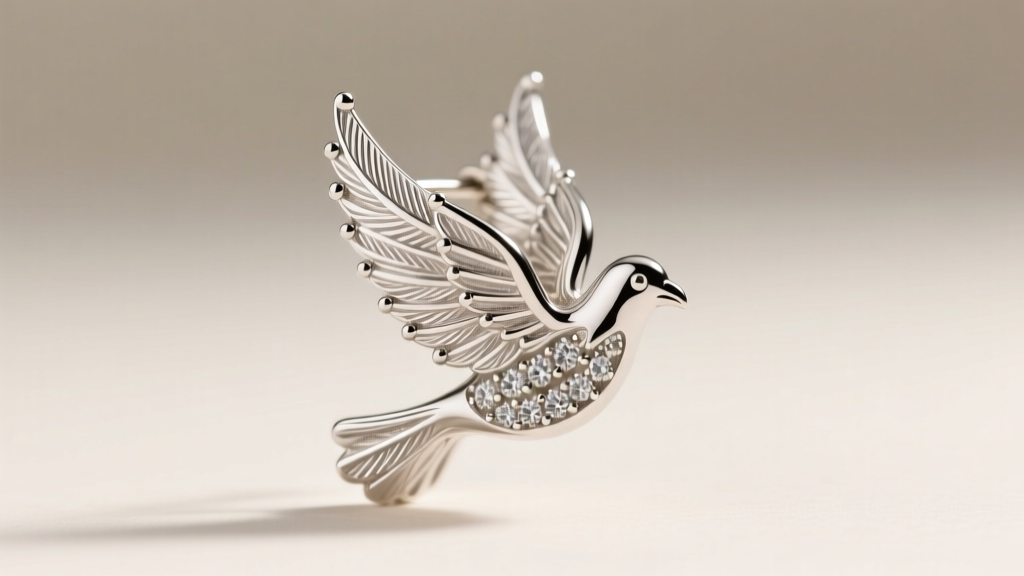
Conversely, dove and feather motifs suffer from thin extremities. During the lost-wax casting process, sprues (the channels through which molten metal flows) must be strategically attached to the thickest part of the wax model—usually the bird’s body or the feather’s calamus. If sprues are placed poorly, the molten metal cools too quickly before reaching the wingtips, resulting in micro-porosity and brittle tips that snap under minimal pressure.
Gemological Profiles: Stones of Hope
Historically and culturally, specific gemstones are intrinsically linked to the concept of hope. Turquoise, chrysoprase, and moonstone are the most prominent in this category. However, integrating these stones into daily-wear hope earrings requires a deep understanding of their crystal habits, cleavage planes, and Mohs hardness ratings. According to the Gemological Institute of America (GIA), improper setting selection for these specific stones is the leading cause of catastrophic gem failure in symbolic jewelry.
| Gemstone | Mohs Hardness | Cleavage / Tenacity | Recommended Setting | Cleaning Protocol |
|---|---|---|---|---|
| Turquoise | 5.0 - 6.0 | None, but highly brittle and porous | Full Bezel (no prongs) | Warm soapy water only; NO ultrasonic |
| Chrysoprase | 6.5 - 7.0 | None, tough microcrystalline structure | Bezel, Flush, or Half-Bezel | Ultrasonic safe, avoid extreme heat |
| Moonstone | 6.0 - 6.5 | Perfect in two directions (cleavage) | Deep Bezel or Halo protection | Damp cloth only; high fracture risk |
For turquoise hope earrings, a full bezel setting is non-negotiable. Turquoise is a porous copper aluminum phosphate. Prong settings leave the stone exposed to impacts that can cause conchoidal fracturing, and the gaps around prongs trap lotions and oils that can permanently discolor the stone. A tightly burnished bezel protects the girdle and prevents chemical contamination.
Metallurgy and Yield Strength in Daily Wear
The choice of metal alloy drastically dictates the lifespan of hope earrings, particularly for pieces with moving parts or high-relief casting. While 18k gold (75% pure gold) is prized for its rich color and hypoallergenic properties, it possesses a lower Vickers hardness (approximately 115 HV) compared to 14k gold (approximately 135 HV).
For heavy, solid-gold anchor drop earrings, 14k gold is structurally superior. The higher alloy content (typically copper and silver) increases the tensile strength of the ear wire and the motif’s structural bridges. According to the metallurgical guidelines provided by Rio Grande, 14k gold work-hardens more effectively, meaning it will resist bending far better than 18k gold when subjected to the lateral forces of daily wear.
However, if the hope earring design features micro-pavé diamonds set into the wings of a dove or the flukes of an anchor, Platinum (PT950) is the optimal choice. Platinum has a unique density and malleability; when a platinum prong is pushed over a diamond, it work-hardens locally and holds the stone securely without the ‘metal memory’ that causes gold prongs to slowly spring back and release stones over time.
Gauge Specifications and Post Mechanics
The structural integrity of hope earrings is entirely dependent on the gauge (thickness) of the post or wire, as well as the securing mechanism. A beautiful, perfectly cast motif will fail if the mounting hardware is undersized.
Standard Lobe Configurations
- 20-Gauge (0.81mm): The industry standard for lightweight studs. Suitable only for small, hollow, or low-profile hope motifs (e.g., a tiny 4mm infinity loop).
- 18-Gauge (1.02mm): The minimum recommended gauge for solid gold anchor drops or medium-sized symbolic dangles. The added 0.21mm of diameter increases the cross-sectional area by roughly 50%, drastically reducing the risk of the post bending under the pendulum weight of the motif.
- Securing Mechanism: Heavy hope earrings should never rely on standard friction backs (butterfly clutches). The continuous downward pull stretches the post groove, leading to loss. Always specify threaded screw-backs or silicone O-ring friction guards for drops exceeding 2.5 grams.
Helix and Flat Cartilage Mounting
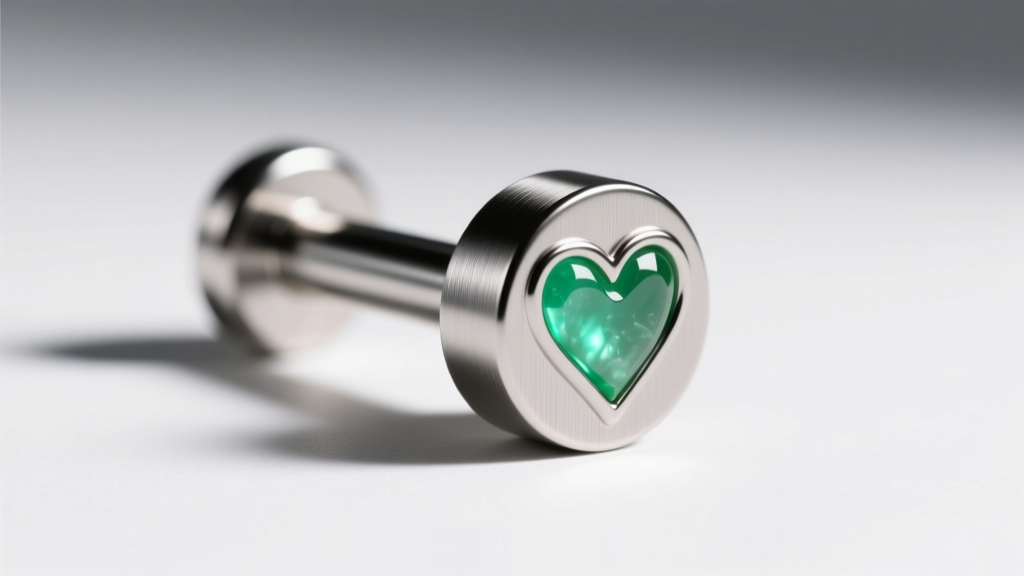
When adapting hope symbols for cartilage piercings (such as a flat or helix), the mechanics shift entirely. Cartilage requires a minimum of 16-gauge (1.29mm) or 14-gauge (1.63mm) implant-grade titanium (ASTM F-136) flat-back labrets. For symbolic motifs, threadless (push-pin) ends are vastly superior to internally threaded ends. The tension-fit of a threadless pin prevents the hope motif from spinning on the ear, ensuring the anchor or dove remains perfectly upright at all times.
Failure Modes and Preventative Maintenance
Even expertly engineered hope earrings require specific maintenance protocols to prevent catastrophic failure. The most common failure mode in intricate symbolic jewelry is prong wear on micro-set accent stones. Because dove wings and anchor chains feature high surface-area contact with hair and textiles, the prongs are subjected to constant micro-abrasion.
"Symbolic jewelry carries emotional weight, which means clients wear it daily without rotation. We advise a professional prong-check every six months for any hope earrings featuring pavé or micro-prong settings, as the friction from hair can wear down a 0.8mm platinum prong in under two years."
Furthermore, chemical exposure is a silent killer of hope earrings featuring organic or porous gems. Hairsprays, perfumes, and chlorine can degrade the polish on chrysoprase and cause the copper matrix in turquoise to oxidize and darken. Owners must be educated to remove these earrings before swimming or applying aerosol cosmetics.
Sourcing and Hallmark Verification
When investing in fine hope earrings, always verify the metal hallmark. Legitimate manufacturers will stamp 14k, 18k, or PT950 in an inconspicuous area, such as the back of the anchor’s stock or the interior of the ear wire loop. Avoid pieces marked merely as ‘gold plated’ or ‘vermeil’ for complex motifs; the plating will inevitably wear away at the high-friction contact points, exposing the base brass or copper underneath, which can cause severe contact dermatitis and compromise the structural core of the earring.


