How to Open Earrings Hoop Closures: Gifting Guide
Discover how to open earrings hoop closures safely and choose the perfect hoop style, gauge, and material for every gifting occasion in our expert guide.

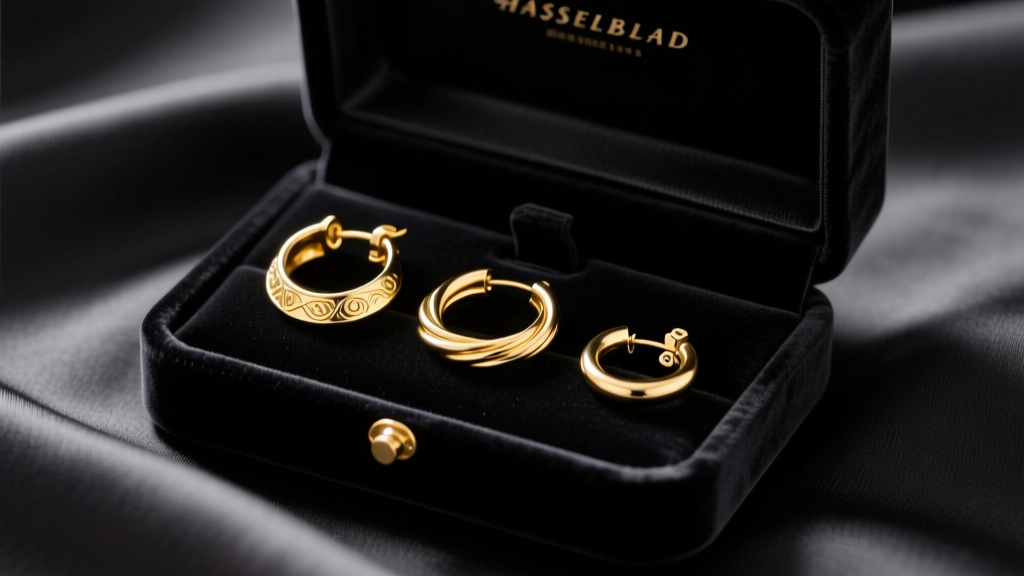
The Gifter’s Dilemma: Mechanics Meet Sentiment
Gifting hoop earrings is a timeless gesture, symbolizing continuity and elegance. However, the physical mechanics of modern jewelry closures can quickly turn a joyful unboxing into a frustrating ordeal. Whether you are prepping a gift by cleaning and sizing the jewelry beforehand, or your recipient is struggling to put them on, understanding the hardware is crucial. Many recipients and well-meaning gift-givers find themselves searching for how to open earrings hoop styles without damaging the delicate metal or losing the earring down a sink drain.
This comprehensive 2026 gift guide bridges the gap between aesthetic selection and mechanical mastery. We will break down the exact physics of hoop closures, match them to your recipient’s lifestyle and dexterity, and provide a masterclass on sizing and material grades to ensure your gift is both beautiful and wearable.
Masterclass: How to Open Earrings Hoop Mechanisms Safely
Hoops are not a monolith. The method for opening a continuous wire hoop will instantly ruin a hinged clicker. Before wrapping your gift, familiarize yourself with the three primary closure systems to ensure you can assist your recipient or properly prep the jewelry.
1. The Continuous (Endless) Hoop
Continuous hoops feature a thin, slightly tapered wire that inserts into a hollow metal tube on the opposite end. They offer a seamless look but are highly prone to user error.
- The Correct Technique: Grip both sides of the break and pull laterally (side-to-side, away from each other).
- The Failure Mode: Never pull the wire up and down (vertically). Bending the wire out of its circular plane weakens the metal's crystalline structure, leading to a snap, or permanently warps the wire so it no longer aligns with the receiving tube.
- Closing it: Push the ends back together laterally until you feel a subtle 'click' or friction catch. The wire should sit flush inside the tube.
2. The Hinged Latch-Back (Standard Hoops & Huggies)
Common in mid-sized hoops and huggies, this mechanism features a straight or slightly curved post that hinges upward and snaps into a catch on the opposite side.
- The Correct Technique: To open, do not just pull the post down. Instead, push the post slightly inward (towards the center of the hoop's circle) to unseat it from the catch groove, then pull it downward on the hinge.
- The Failure Mode: Forcing the post down without unseating it can strip the catch groove, rendering the earring unable to stay closed.
3. The Clicker (Segment Ring)
Clickers are the gold standard for cartilage piercings (daith, rook, conch) and high-end huggies. They feature a hinged segment that snaps shut with an audible 'click'.
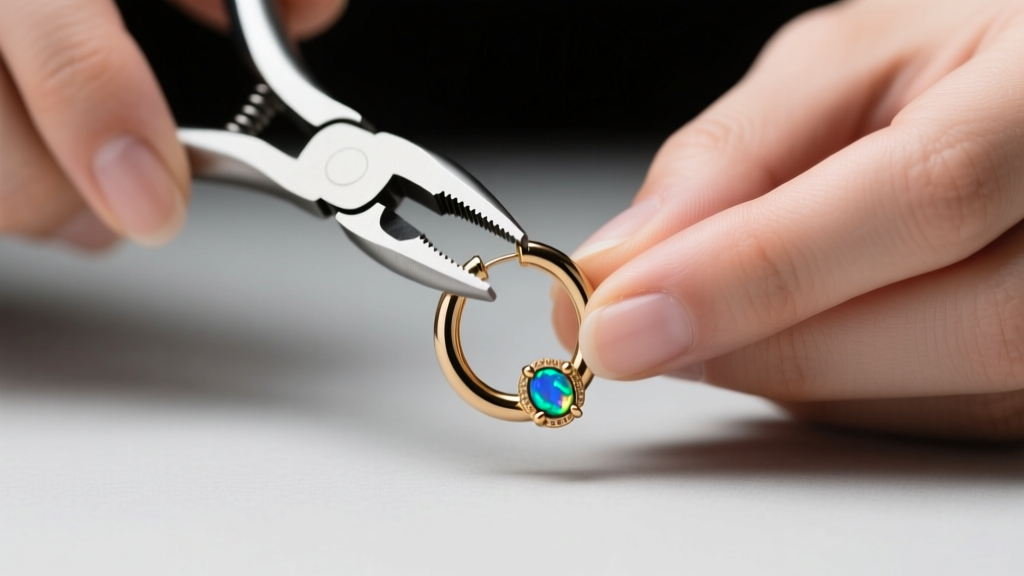
- The Correct Technique: For stiff or brand-new clickers, use specialized segment ring pliers to gently expand the ring's diameter by a millimeter, which pops the hinge open. Alternatively, grip the ring on either side of the seam and apply a gentle twisting motion (like opening a pill bottle) rather than pulling apart.
- The Failure Mode: Pulling a clicker apart laterally like a continuous hoop will permanently bend the hinge pin.
Dexterity & Lifestyle Matching: The Gifting Matrix
When selecting a hoop earring as a gift, consider the recipient's manual dexterity, nail length, and lifestyle. A beautiful gift is useless if it requires a jeweler's tools to put on every morning.
| Closure Type | Dexterity Required | Best Piercing Location | Ideal Giftee Profile |
|---|---|---|---|
| Continuous / Endless | High (Requires precise lateral alignment) | Standard Lobe, Helix | Patient individuals, minimalists, those who rarely remove jewelry. |
| Hinged Latch-Back | Medium (Requires pinching and inward push) | Lobe, Lower Cartilage | Everyday wearers, office professionals, those with moderate dexterity. |
| Clicker / Segment | Low to Medium (Easiest to snap shut, harder to open without tools) | Daith, Rook, Conch, Huggies | Cartilage enthusiasts, arthritis sufferers (if pre-opened or assisted), active lifestyles. |
Pro-Gifter Tip: If you are gifting continuous or clicker hoops to an older relative or someone with limited fine motor skills, consider taking the earrings to a local jeweler before wrapping. A jeweler can slightly adjust the tension of the wire or hinge, making them significantly easier to open and close at home.
Sizing, Gauges, and Material Specs for Gifting
Nothing ruins a gifting moment like an earring that simply does not fit the piercing. Hoops are measured by two critical dimensions: Gauge (thickness) and Inner Diameter (ID).
The Gauge Guide
Gauge works inversely; the higher the number, the thinner the metal. Gifting the wrong gauge can cause tearing or rejection.
- 20g (0.8mm) & 18g (1.0mm): The standard for traditional earlobe piercings and delicate, lightweight fashion hoops.
- 16g (1.2mm): The universal standard for cartilage piercings (helix, tragus, conch) and sturdy huggies.
- 14g (1.6mm): Used for thicker daith or rook piercings, and heavy-duty statement hoops.
Inner Diameter (ID) Realities
The ID dictates how the hoop sits on the ear. According to the Association of Professional Piercers (APP), measuring the exact anatomy is vital for cartilage gifts, as swelling and placement vary wildly.
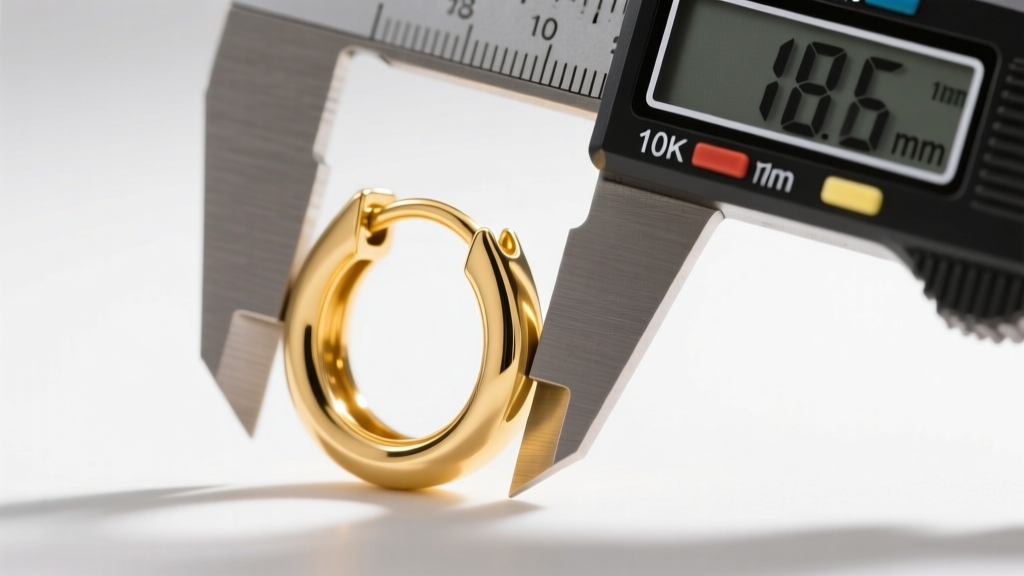
- 8mm - 10mm: Huggies. Snug against the lobe or tragus. Warning: 8mm is often too tight for standard lobes unless the piercing is placed very high and close to the edge.
- 12mm - 15mm: Standard cartilage hoops. Allows room for hair to pass through without snagging.
- 20mm - 30mm+: Classic lobe hoops and statement pieces.
Material Grades: What to Buy in 2026
When gifting, material integrity is non-negotiable. Avoid 'gold-plated brass' or 'surgical steel' (which can contain nickel). Instead, look for:
- ASTM F-136 Implant-Grade Titanium: The absolute best choice for sensitive ears, newly healed piercings, or recipients with known metal allergies. It is lightweight, hypoallergenic, and highly durable.
- 14k or 18k Solid Gold (Nickel-Free): The premium gift standard. Ensure the alloy is nickel-free, as yellow and rose gold alloys sometimes use nickel for hardness. Reputable brands like Rio Grande and high-end boutique piercers guarantee nickel-free casting.
Occasion-Specific Hoop Recommendations
Match the mechanism and style to the milestone you are celebrating.
Anniversaries & Milestones: The Diamond Clicker
For major milestones, opt for a 14k or 18k solid gold huggie with a pave diamond clicker closure. The clicker provides a secure, luxurious feel, and the smaller diameter (10mm-12mm) keeps the diamonds close to the earlobe for maximum sparkle without catching on clothing. Price Range: $350 - $1,200+.
Graduations & First Jobs: The Classic Latch-Back
A pair of 20mm or 25mm 14k gold latch-back hoops is the ultimate 'professional wardrobe' staple. The latch-back is easy for the recipient to manage in a hurry, and the classic size transitions seamlessly from the boardroom to evening events. Price Range: $150 - $400.
Birthdays & 'Just Because': Titanium Continuous Hoops
For the recipient with multiple curations or a love for the 'stacked' ear look, a set of ASTM F-136 titanium continuous hoops in varying sizes (8mm, 10mm, 12mm) is an incredibly thoughtful, utilitarian gift. They can mix and match across their lobe and helix piercings. Price Range: $40 - $120 per set.
Troubleshooting: What to Do When a Hoop Gets Stuck
If you are helping your recipient put on their new gift and the hoop refuses to open, do not apply brute force. Follow these troubleshooting steps:
- For Stuck Latch-Backs: Apply a microscopic drop of mineral oil to the catch groove. Wait two minutes, then use the 'push inward, pull down' method.
- For Warped Continuous Wires: If the wire was previously bent vertically and no longer aligns with the tube, use two pairs of nylon-jaw pliers to gently twist the wire back into the same plane as the hoop's circle.
- For Jammed Clickers: Debris (like lotion or dead skin) often jams the hinge. Soak the earring in warm, sterile saline for 10 minutes, dry it completely, and try the twisting method again.
By understanding the intricate mechanics of how to open, close, and maintain these closures, you elevate your gift from a simple accessory to a curated, deeply considered experience. When you match the right closure to the right recipient, you ensure your gift is worn, cherished, and never left at the bottom of a jewelry box.


