How to Open Hoop Earrings: Mastering Closures & Trending Styles
Learn exactly how to open hoop earrings of every closure type. Explore trend analysis, material guides, and troubleshooting tips for stuck hoops.

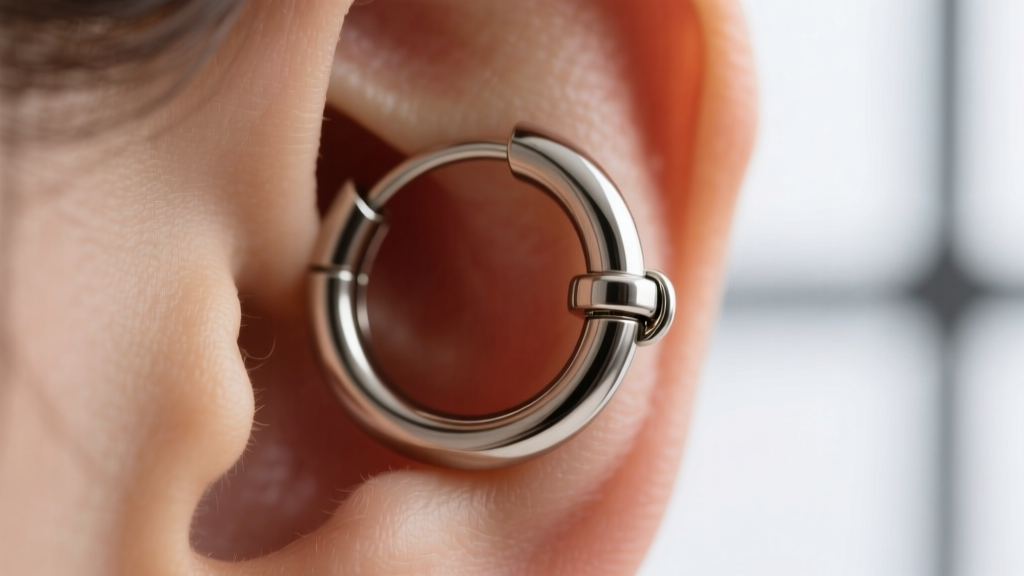
The Evolution of Hoop Closures in Modern Jewelry
Hoop earrings are a cornerstone of contemporary jewelry, but the mechanics of wearing them often frustrate even the most seasoned collectors. Understanding how to open hoop earrings is not just a matter of convenience; it is essential for preserving the structural integrity of fine jewelry and maintaining ear health. In recent years, the jewelry industry has seen a massive shift away from bulky, visible latch-backs toward invisible, seamless mechanisms. As the 'curated ear' trend continues to dominate style editorials, the demand for micro-hinges and continuous rings has skyrocketed. However, these sleek designs require specific handling techniques. Pulling a seamless ring apart like a latch-back will permanently warp the metal, while forcing a micro-hinge can snap the tension pin. This comprehensive guide merges practical mechanics with style analysis, ensuring you can manipulate your jewelry safely while staying ahead of current aesthetic trends.
Step-by-Step: How to Open Hoop Earrings by Mechanism
The method you use to open your hoops must match the specific engineering of the closure. Using the wrong technique is the leading cause of jewelry breakage and lost gemstones. Below, we break down the exact manipulation required for the three most prevalent hoop mechanisms on the market today.
1. Hinged Click-Closures (The Modern Standard)
Hinged hoops feature a micro-post that snaps into a receiving catch. They are currently the most popular style for everyday huggies and medium-sized lobes hoops due to their ease of use and secure lock. To open them, locate the nearly invisible seam opposite the hinge. Place your thumb and index finger on either side of the seam. Gently press the post downward and away from the catch. Never pull the two halves laterally (left and right), as this will bend the micro-post and ruin the 'click' tension. When closing, align the post with the catch and press firmly until you hear an audible snap.
2. Seamless and Continuous Hoops (The Tension Twist)
Continuous hoops are a single piece of wire with a slightly thicker end that acts as a friction plug. These are highly favored for cartilage piercings, helices, and tragus placements because they lack hinges that can harbor bacteria. The golden rule for continuous hoops is to twist, never pull. Hold the hoop with both hands, gripping near the seam. Gently twist one hand toward you and the other away from you, creating a spiral gap. Slide the wire out of the piercing. To close, reverse the twisting motion until the ends align, then push the slightly tapered end into the hollow tube of the opposite side. According to the Association of Professional Piercers, twisting preserves the circular memory of the wire, whereas pulling causes metal fatigue and warping.
3. Captive Bead Rings (CBRs) and Segment Rings
CBRs rely on the natural tension of the metal ring to hold a small bead in place. While they were the standard for decades, they are now mostly reserved for heavy-gauge daith or rook piercings. For gauges thicker than 18G (1.02mm), bare hands are rarely strong enough to open the ring without warping it. You must use specialized ring-opening pliers. Insert the pliers into the center of the ring and gently squeeze the handles to expand the circumference just enough for the bead to drop out. Segment rings operate similarly but use a curved metal segment instead of a bead, requiring the same lateral expansion technique.
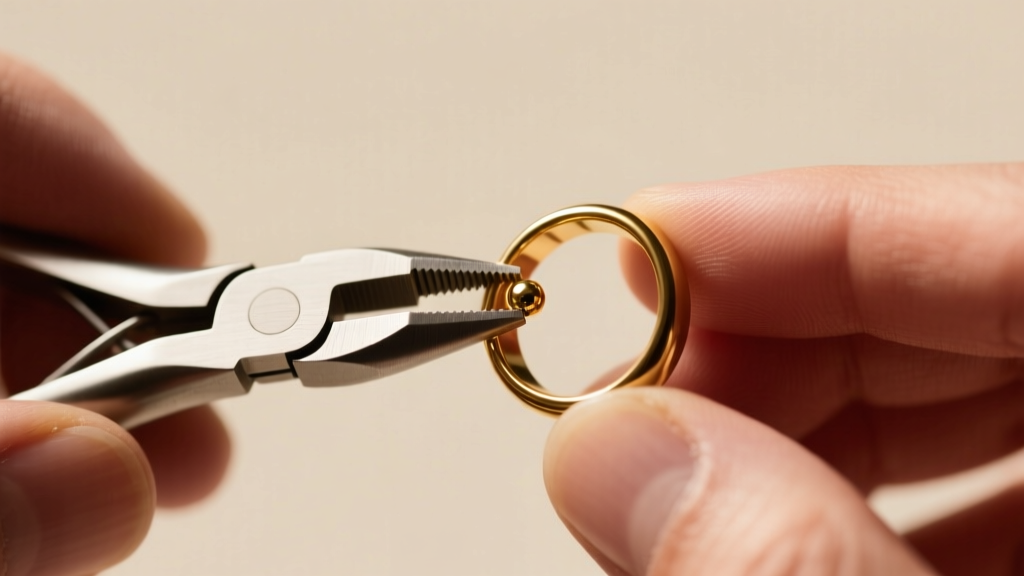
Material Science: Why Bending Ruins Certain Hoops
When learning how to open hoop earrings, understanding metallurgy is just as important as understanding mechanics. Different alloys react differently to manipulation, and treating them all the same will result in costly damage.
- Implant-Grade Titanium (ASTM F-136): Exceptionally strong and hypoallergenic, titanium has high tensile strength but low malleability. If you bend a titanium continuous hoop back and forth, it will experience work hardening and eventually snap cleanly. Always use the twist method.
- 14k and 18k Solid Gold: Gold is highly malleable. While it won't snap easily, it will permanently lose its perfect circular shape if pulled laterally. A warped gold hoop will never sit flush in a cartilage piercing again.
- Plated Brass or Stainless Steel: Budget-friendly fashion hoops often use a base metal coated in a thin layer of gold or silver. Bending these hoops will cause the plating to micro-fracture and flake off, exposing the reactive base metal to your piercing. Avoid manipulating plated hoops whenever possible.
Closure Types vs. Trend Popularity & Difficulty
| Closure Type | 2026 Trend Status | Opening Difficulty | Best Gauge Application |
|---|---|---|---|
| Micro-Hinged Click | Extremely High (Huggies/Lobes) | Very Easy | 20G - 16G |
| Seamless Continuous | High (Curated Cartilage) | Moderate (Requires twisting) | 18G - 14G |
| Captive Bead Ring | Niche (Heavy/Daith) | Hard (Requires pliers) | 14G - 8G |
| Latch-Back (Saddle) | Declining (Vintage/Dangle) | Easy | 20G - 18G |
Troubleshooting Stubborn or Stuck Hoop Earrings
Even with perfect technique, environmental factors can cause closures to jam. If you are struggling with a stuck hoop, do not resort to excessive force, which can tear the earlobe or shatter inset gemstones.
Debris in the Micro-Hinge
The most common reason a click-closure refuses to open is the accumulation of dead skin cells, sebum, or hair products inside the receiving catch. This creates a glue-like barrier. Soak the earring (while still in the ear, or removed if possible) in warm distilled water with a drop of gentle, fragrance-free soap for five minutes. Use a soft-bristled baby toothbrush to gently agitate the seam. The debris will dissolve, and the hinge will release with minimal pressure.
Bent Tension Posts
If a hinged hoop opens easily but refuses to click shut, the micro-post is likely bent at a microscopic angle. Using a pair of nylon-jaw jewelry pliers (never metal-on-metal, which scratches gold), gently coax the post back into perfect alignment with the catch. If the post is severely warped, the earring must be sent back to the jeweler for laser soldering.
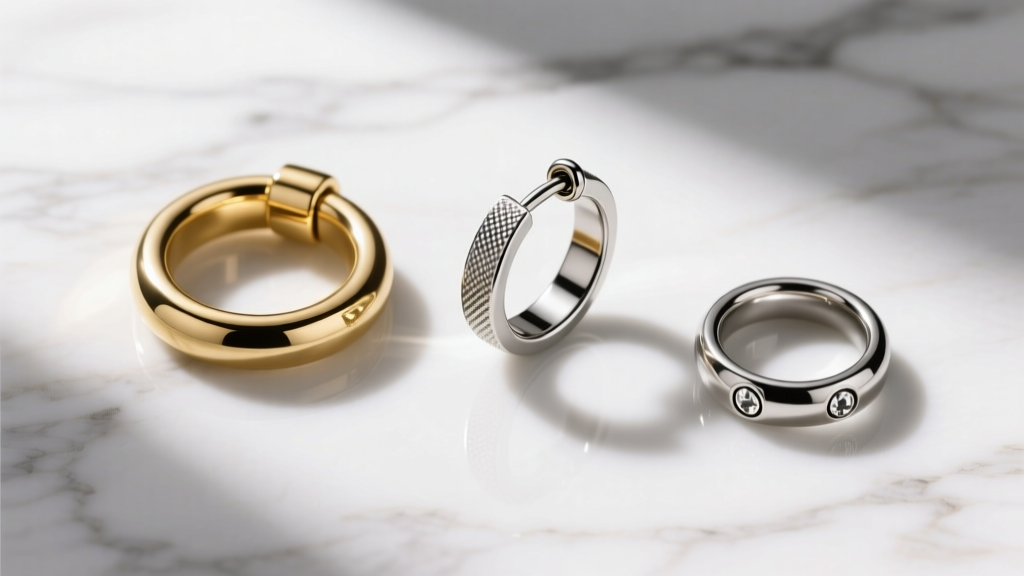
Style & Trend Analysis: Matching Closures to Aesthetics
The closure mechanism is no longer just a functional afterthought; it dictates the visual weight and styling potential of the earring. As noted in recent Vogue trend forecasts, the modern aesthetic heavily favors 'invisible' hardware that allows the metal texture or gemstone setting to take center stage.
For the highly popular 'curated ear' projects, where multiple cartilage piercings are styled cohesively, seamless continuous hoops are the undisputed champion. Because they lack a bulky hinge box, they offer a flawless, unbroken circle of gold or titanium that catches the light uniformly. Conversely, for the lobe, chunky gold huggies with hidden micro-hinges provide the structural security needed to support pave-set diamonds without the visual interruption of a clasp.
'The hallmark of luxury jewelry in the 2020s is the concealment of mechanics. The best hoop earrings look like they are floating through the ear, with the closure entirely disguised within the silhouette of the design.'
Ultimately, mastering how to open hoop earrings of various designs empowers you to invest in higher-quality, trend-forward pieces without the fear of damaging them during daily wear. By respecting the metallurgy and utilizing the correct tools, your hoops will maintain their perfect geometry and secure fit for a lifetime.


