Ribbed Hoop Earrings: Metal Properties & Care Guide
Discover the best metals for ribbed hoop earrings. Compare 14k gold, titanium, and surgical steel for durability, texture retention, and sensitive ears.

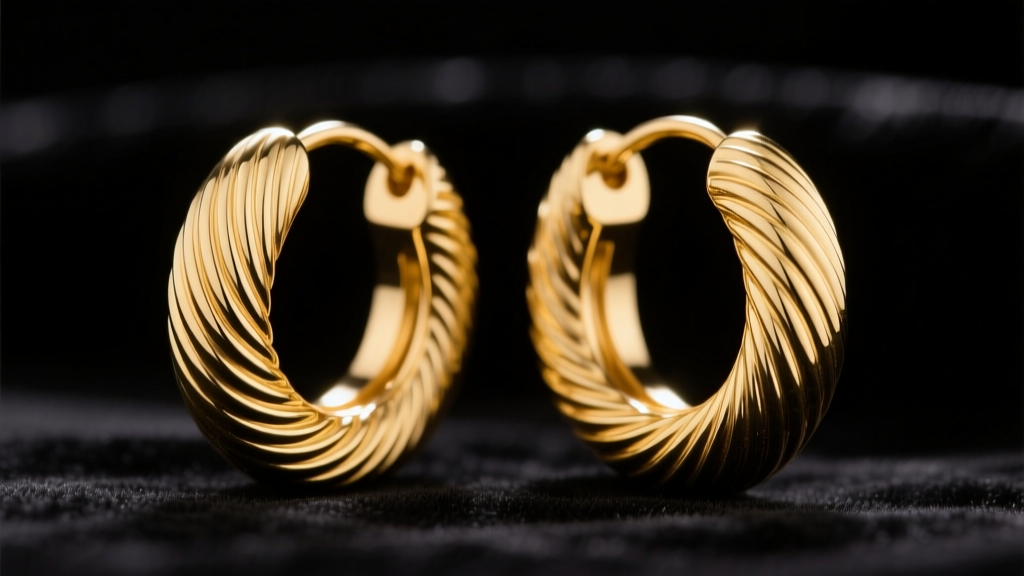
The Structural Demands of Ribbed Textures
Ribbed hoop earrings—characterized by their corrugated, grooved, or fluted surfaces—represent a unique intersection of aesthetic design and metallurgical engineering. Unlike smooth, high-polish hoops that can be easily buffed and reformed, ribbed hoops rely on precise structural integrity to maintain their light-catching ridges. As of 2026, the jewelry market has seen a massive surge in textured ear styling, but not all metals are created equal when it comes to holding a ribbed pattern.
The process of creating these ridges typically involves either traditional die-stamping or modern CNC (Computer Numerical Control) milling. When a metal is forced into a ribbed shape, it undergoes work hardening. If the base metal is too soft, the ridges will flatten over time from the simple friction of daily wear, hair brushing, and sleeping. Conversely, if the metal is too brittle, the stamping process can cause micro-fractures along the grooves, leading to catastrophic snapping at the clasp or hinge. Understanding the Vickers Hardness (HV) and tensile strength of your chosen metal is critical before investing in ribbed hoops.
2026 Material Comparison Matrix
To help you navigate the options, we have compiled a comprehensive metallurgical breakdown of the most common materials used for ribbed hoop earrings in the current market. This data factors in hardness, biocompatibility, and average retail pricing for standard 15mm-20mm hoops.
| Metal / Alloy | Vickers Hardness (HV) | Tarnish & Scratch Resistance | Hypoallergenic Profile | Est. Price Range (2026) |
|---|---|---|---|---|
| 14k Gold (Yellow/White) | 135 - 160 HV | High (Excellent ridge retention) | Good (Depends on copper/nickel mix) | $180 - $450 |
| 18k Gold | 115 - 125 HV | Moderate (Ridges may soften over years) | Very Good | $350 - $800+ |
| Implant-Grade Titanium (ASTM F136) | 330 - 360 HV | Exceptional (Virtually indestructible) | Perfect (100% Nickel-Free) | $45 - $120 |
| 316L Surgical Steel | 150 - 190 HV | High (Passive oxide layer protects grooves) | Poor to Moderate (Contains 8-10% Nickel) | $20 - $60 |
| Platinum (950 Pt) | 110 - 130 HV | Moderate (Scratches, but displaces rather than loses metal) | Perfect | $900 - $2,500 |
Metallurgical Deep Dive: How Specific Alloys Perform
14k vs. 18k Gold: The Hardness Trade-Off
According to the Gemological Institute of America (GIA), pure 24k gold is far too malleable for any textured jewelry, sitting at a mere 25 HV. Therefore, alloying is mandatory. For ribbed hoop earrings, 14k gold (58.5% pure gold mixed with copper, silver, and zinc) is objectively superior to 18k gold for texture retention. The higher proportion of alloy metals in 14k gold increases its Vickers Hardness, allowing the ribbed ridges to remain crisp and sharply defined for decades. While 18k gold offers a richer, warmer yellow hue, its softer nature means the peaks of the ribs will gradually polish down and flatten from friction against hair and clothing.
Implant-Grade Titanium (ASTM F136)
For those with hyper-sensitive ears or fresh cartilage piercings, Ti-6Al-4V (ASTM F136) is the undisputed champion. As noted by the Association of Professional Piercers (APP), this specific aerospace-grade titanium alloy is completely free of nickel and features a passive oxide layer that prevents any chemical reaction with human sebum or sweat. Because titanium is incredibly hard (over 350 HV), CNC-milled titanium ribbed hoops will never lose their texture. Furthermore, titanium can be anodized using electrical currents to create vibrant, permanent colors like teal, purple, or gold without the use of surface platings that could chip off in the deep grooves of the ribs.
316L Surgical Steel and the Nickel Trap
While 316L stainless steel is heavily marketed as "hypoallergenic," it actually contains between 8% and 10% nickel. The American Academy of Dermatology warns that prolonged contact with nickel-containing alloys is the leading cause of allergic contact dermatitis. In smooth hoops, this might be manageable, but the deep grooves of ribbed hoops trap sweat, dead skin cells, and moisture. This creates a micro-environment that can accelerate nickel leaching, resulting in itchy, flaky earlobes. If you opt for steel ribbed hoops, ensure they are PVD (Physical Vapor Deposition) coated to seal the nickel inside the core metal.
Maintenance and Failure Modes
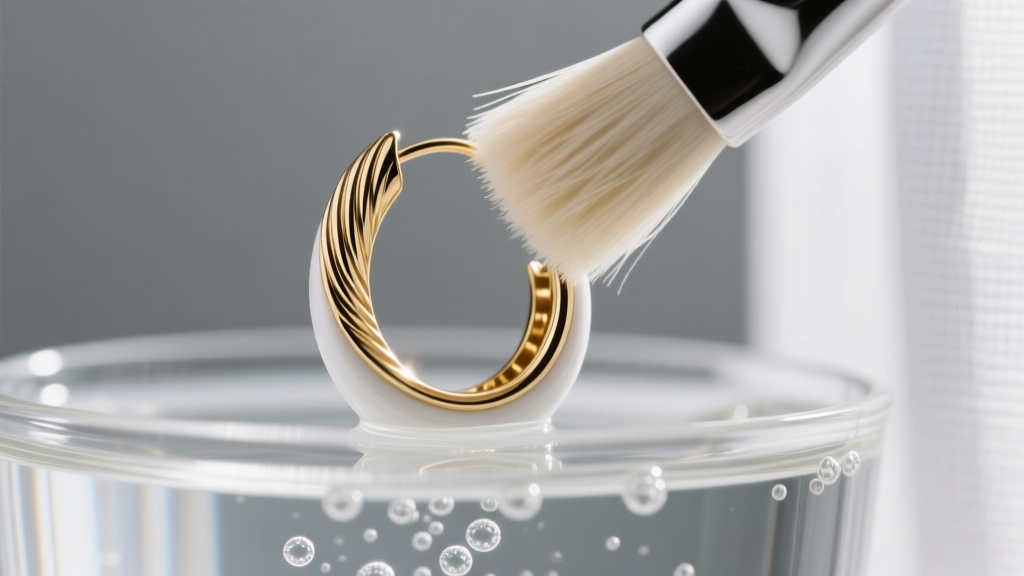
The very feature that makes ribbed hoops beautiful—the deep, light-catching grooves—is also their biggest maintenance liability. Textured metals trap cosmetic products, dry shampoo, and natural skin oils far more aggressively than smooth metals. Over time, this buildup turns into a dark, hardened sludge that dulls the reflective quality of the ribs.
Expert Cleaning Protocol: Never use harsh chemical dips or silver polish on ribbed gold or titanium. The chemicals can pool in the grooves and cause localized discoloration. Instead, use a 40kHz ultrasonic cleaner with a few drops of mild, ammonia-free dish soap for exactly 90 seconds. Follow up with a soft-bristled baby toothbrush to gently dislodge debris from the deepest valleys of the corrugation.
Common Failure Modes: The most frequent point of failure in ribbed hoops is the hinge or the clicker mechanism. Because the wire must be thick enough to support the ribbed texture, the added weight and rigidity put immense stress on the hinge pin. Always open clicker-style ribbed hoops by pushing the hinged segment *up and away* from the clasp, rather than pulling it sideways, which will bend the microscopic pin and ruin the snapping tension.
Gauge Sizing and Cartilage Considerations
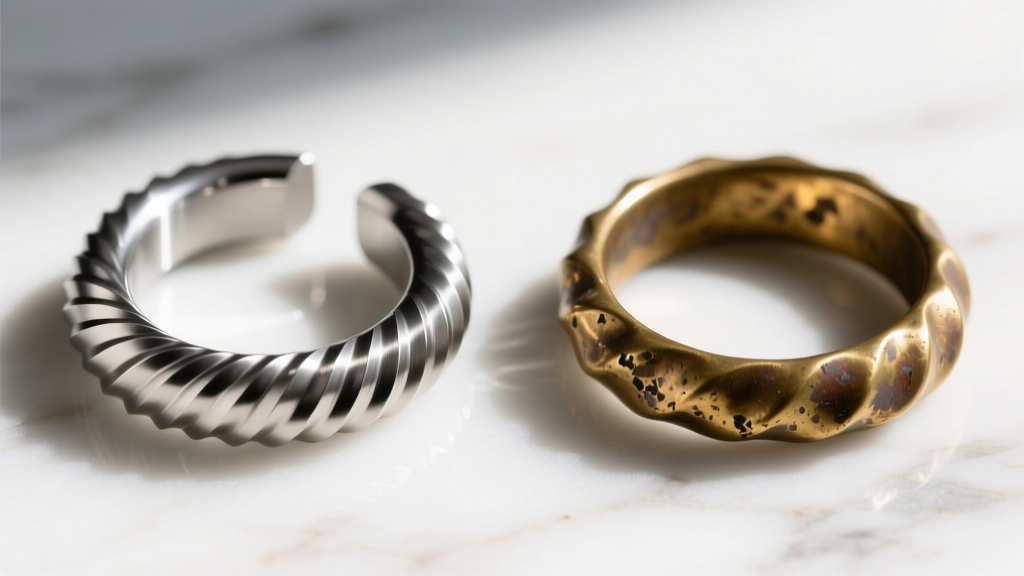
The structural viability of a ribbed hoop is heavily dependent on its gauge (thickness). Standard smooth hoops are frequently manufactured in 20-gauge (0.81mm) or 18-gauge (1.0mm) wire. However, the milling or stamping process required to create ribs removes material from the sides of the wire, effectively weakening its cross-section.
- 20-Gauge (0.81mm): Avoid for ribbed styles. The wire is simply too thin to support deep corrugation without becoming brittle and prone to snapping.
- 18-Gauge (1.0mm): The minimum acceptable thickness for standard lobe ribbed hoops. Provides adequate strength while remaining lightweight.
- 16-Gauge (1.2mm): The gold standard for ribbed hoops, especially for cartilage, conch, or helix piercings. The extra thickness allows for deeper, more dramatic CNC-milled grooves without compromising the structural core of the wire.
- 14-Gauge (1.6mm): Reserved for heavy, statement-making ribbed huggies or daith piercings. Offers maximum ridge depth but requires a fully healed, stretched, or naturally accommodating piercing fistula.
When selecting ribbed hoop earrings, prioritize the manufacturing method and the specific alloy over the mere aesthetic. A CNC-milled 16-gauge titanium hoop will outlast, outperform, and remain significantly more hygienic than a thinly stamped brass or low-karat gold alternative. By understanding the metallurgical realities of textured jewelry, you can invest in pieces that maintain their architectural brilliance for a lifetime.


