How to Secure and Style S Earrings: A Step-by-Step Guide
Learn how to securely wear, adjust, and style S earrings. Our step-by-step guide covers gauge sizes, metal grades, and preventing loss.

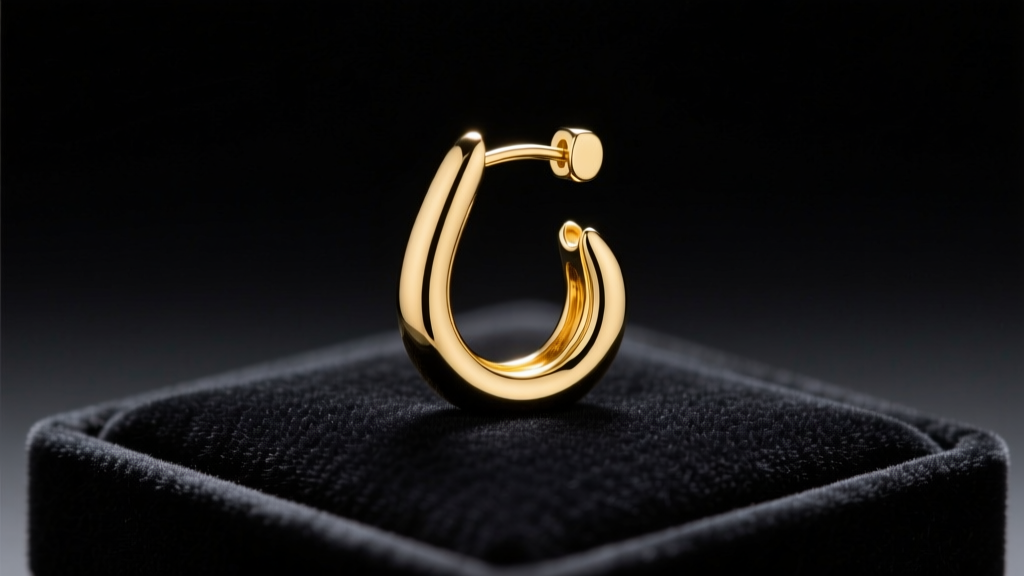
S earrings, commonly known as S-hook or S-wire earrings, are a staple in fine jewelry and artisan beadwork. Their elegant, minimalist design relies on a continuous piece of wire formed into an 'S' shape, eliminating the need for bulky clasps or earring nuts. However, this friction-based design presents a universal challenge: they frequently fall off if not properly fitted or secured. In 2026, as lightweight, modular jewelry continues to dominate trend forecasts, mastering the art of wearing and securing S earrings is an essential skill for any jewelry enthusiast.
This comprehensive, step-by-step guide will walk you through the exact mechanics of S earrings, from understanding wire gauges to professional tension-adjustment techniques, ensuring your favorite dangles stay securely in your lobes.
Understanding S Earrings: Anatomy and Gauge Sizes
Before attempting to modify or secure your S earrings, you must understand their anatomy and how they interact with your piercing. An S-wire finding consists of three main parts: the top hook (which passes through the ear), the central spine, and the bottom loop (which holds the dangle or bead).
The Critical Role of Wire Gauge
The most common reason S earrings slip out of the ear is a mismatch between the wire gauge and the piercing fistula (the healed tissue tube). Standard earlobe piercings are typically done at 20-gauge (0.81mm) or 18-gauge (1.02mm). If you insert a 22-gauge (0.64mm) S-wire into an 18-gauge hole, the wire is too thin, allowing it to slide out with minimal movement.
- 22-Gauge (0.64mm): Best for very lightweight, delicate dangles. High risk of falling out in stretched or standard 18G piercings.
- 20-Gauge (0.81mm): The industry standard for most commercial S earrings. Fits snugly in standard 20G lobe piercings.
- 18-Gauge (1.02mm): Ideal for heavier gemstone drops or structural metals. Provides excellent friction but may require gentle wiggling to insert into tighter 20G piercings.
According to the Association of Professional Piercers, matching your jewelry gauge to your piercing size is critical not just for security, but to prevent the "cheese-cutter effect," where a wire that is too thin slowly migrates through the tissue under the weight of a dangle.
Step-by-Step: How to Secure S Earrings So They Never Fall Out
If your S earrings constantly slip out, do not abandon them. Use these three professional jeweler techniques to secure them based on your comfort level and the value of the piece.
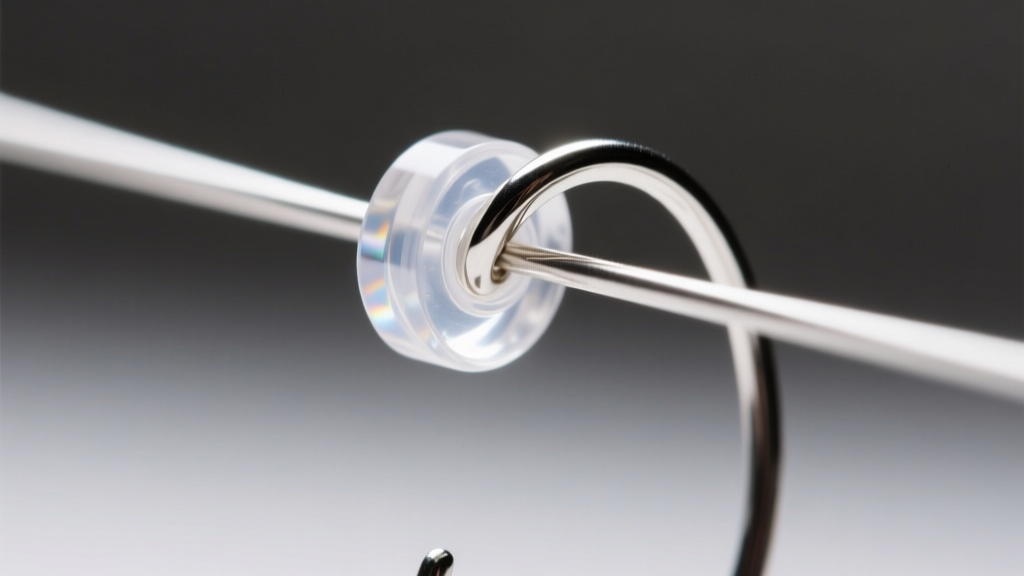
Method 1: The Silicone Stopper Technique (Non-Destructive)
This is the fastest, non-destructive way to secure S earrings, especially for expensive or antique pieces you do not want to bend.
- Purchase ultra-thin silicone earring stoppers (specifically designed for French wires or S-hooks, usually with a 0.8mm inner hole).
- Insert the S earring through your earlobe from front to back.
- Slide the silicone stopper onto the back of the wire, pushing it flush against the back of your earlobe.
- Trim any excess wire protruding past the stopper if it scratches your neck, using flush cutters.
Method 2: Adjusting the Wire Tension (The Jeweler's Approach)
If you prefer a seamless look without stoppers, you can increase the friction of the top hook by adjusting its tension.
- Obtain a pair of nylon-jaw pliers. Never use standard steel pliers, as they will mar the polish and scratch precious metals.
- Gently grip the top curve of the 'S' hook with the nylon pliers.
- Apply a microscopic amount of inward pressure to close the gap of the hook by roughly 0.5mm. This increases the "snap" or friction when it passes over the earlobe.
- Test the earring. If it is too tight to insert, you risk tearing the fistula. The goal is a gentle resistance, not a forceful squeeze.
Method 3: The Jump Ring Conversion
For heavy dangles where the bottom loop of the S-wire pulls the top hook forward (leveraging it out of the ear), add a 3mm or 4mm closed jump ring to the bottom loop. Attach your dangle to the jump ring instead. This allows the dangle to swing freely without transferring kinetic torque to the top hook, keeping it securely anchored in your lobe.
Material Grades and Hypoallergenic Considerations
Because S earrings rely on friction, the metal must be smooth to prevent micro-tears in the piercing channel. Furthermore, the constant friction can accelerate metal fatigue or cause allergic reactions if the alloy is impure. The Gemological Institute of America (GIA) notes that nickel allergies are among the most common contact dermatitis triggers, making metal selection paramount.
| Metal Grade | Vickers Hardness (HV) | Allergy Risk | Best For | Avg. Price (Findings) |
|---|---|---|---|---|
| Implant-Grade Titanium (Ti6Al4V ELI) | 330 HV | Zero | Sensitive piercings, daily wear | $12 - $25 / pair |
| 14k Yellow Gold (Nickel-Free) | 135 HV | Very Low | Heirloom dangles, luxury wear | $85 - $150 / pair |
| Argentium Silver (935) | 105 HV | Low | Artisan beadwork, bright finishes | $18 - $35 / pair |
| Niobium (Anodized) | 140 HV | Zero | Colorful custom S-hooks | $15 - $30 / pair |
Note: Avoid standard Sterling Silver (925) for S earrings if you have reactive skin, as the 7.5% copper content can oxidize and cause irritation when subjected to the constant friction of an S-wire moving through the fistula.
Styling S Earrings for Different Face Shapes
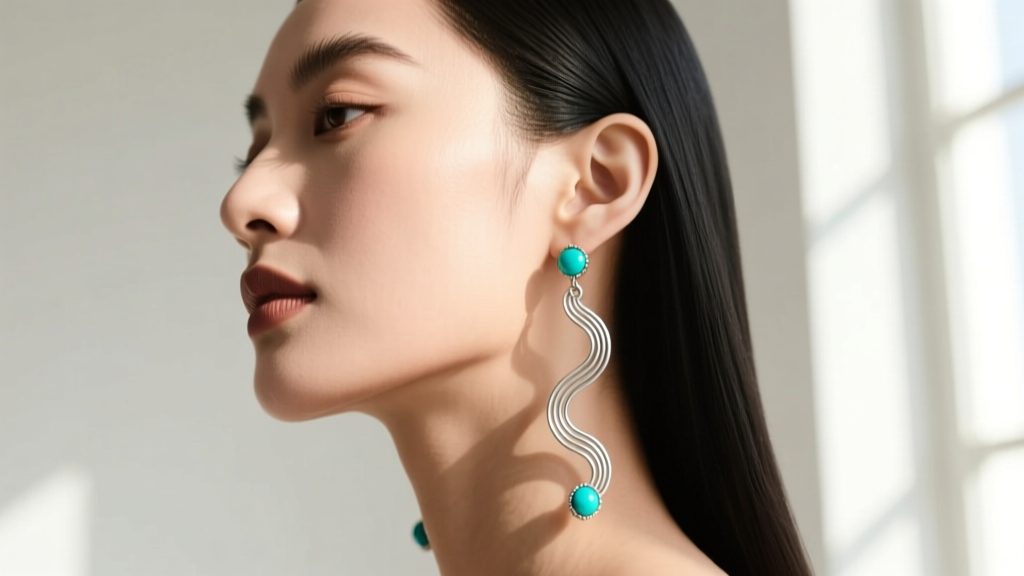
Beyond security, S earrings offer a unique aesthetic advantage: their invisible finding creates the illusion that the dangle is floating directly from the earlobe. Here is how to style them based on facial geometry.
- Round Faces: Opt for long, linear S-wire dangles (2 inches or longer). The vertical drop elongates the face. Avoid circular beads that mimic the face's natural curvature.
- Square Faces: Choose S earrings with soft, curved elements like teardrop pearls or oval cabochons. The organic shapes soften a strong jawline.
- Heart-Shaped Faces: Select S earrings that are wider at the bottom than the top, such as chandelier-style dangles hung from an S-hook. This adds visual weight to the narrower chin area.
- Oval Faces: You have the versatility to wear any S earring style. Experiment with asymmetric S-hooks or geometric architectural drops.
Troubleshooting Common S Earring Issues
Issue: The Bottom Loop Opens and Drops the Bead
Solution: The bottom loop of an S-wire is usually a simple open loop, not a soldered ring. Over time, the weight of the dangle pulls the loop open. Use two pairs of flat-nose pliers to twist the loop open laterally (like a door hinge) rather than pulling it apart outward. Once the bead is secured, twist it tightly closed. For a permanent fix, apply a microscopic drop of jeweler's epoxy to the seam.
Issue: The Wire Snaps at the Central Spine
Solution: This is caused by metal fatigue from repeatedly bending the wire to adjust the tension. If your S earrings snap frequently, you are likely using a metal that is too soft (like fine silver) or work-hardening it too much by over-adjusting. Switch to 18k gold or work-hardened Argentium silver, and only adjust the tension once.
Issue: The Earring Spins Forward
Solution: If the dangle is too heavy, it pulls the top hook forward, exposing the wire from the front. Counterbalance the earring by adding a small, decorative metal bead to the front of the top hook before inserting it through the ear. This shifts the center of gravity backward, keeping the earring perfectly vertical.
Final Thoughts on S Earring Maintenance
S earrings are a brilliant, minimalist finding that requires a bit of mechanical understanding to wear confidently. By matching your wire gauge to your piercing, utilizing silicone stoppers or nylon-jaw tension adjustments, and selecting hypoallergenic metals like implant-grade titanium or Argentium silver, you can enjoy the floating illusion of S-wire jewelry without the anxiety of losing your favorite pieces. Inspect your bottom loops monthly for signs of pulling, and your S earrings will remain a secure, elegant staple in your collection for years to come.


