Zuni Turquoise Earrings: 2026 Value & Pricing Guide
Assess the true value of Zuni turquoise earrings in 2026. Learn pricing tiers, authenticity markers, and investment tips for Native jewelry.

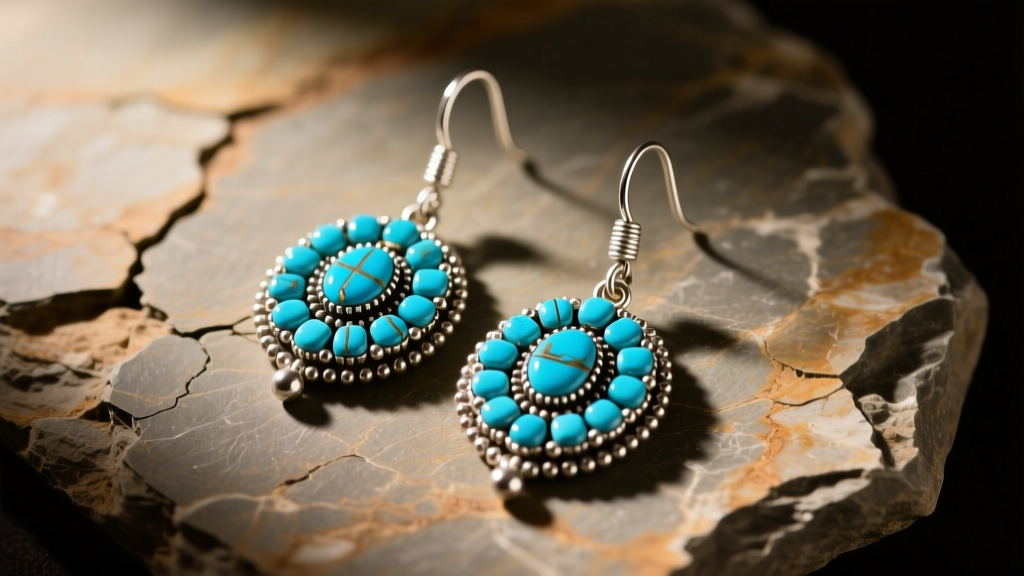
The True Cost of Authentic Zuni Turquoise Earrings in 2026
Navigating the market for Native American jewelry requires a discerning eye, especially when evaluating Zuni turquoise earrings. Originating from the Zuni Pueblo in New Mexico, these pieces are globally revered for their meticulous lapidary work, intricate silver smithing, and deep cultural significance. However, as we move through 2026, the valuation of these earrings has shifted dramatically due to the rising cost of precious metals, the scarcity of high-grade natural turquoise, and an influx of sophisticated overseas counterfeits.
For collectors and everyday wearers alike, understanding the budget versus investment value of Zuni earrings is no longer just about aesthetics; it is about recognizing authentic craftsmanship. According to the Indian Arts and Crafts Board, the misrepresentation of non-Native jewelry as authentic Native American art is a persistent issue. This guide breaks down the exact pricing tiers, material grades, and structural hallmarks you need to make an informed, value-driven purchase this year.
Decoding Zuni Craftsmanship: What Justifies the Price?
The premium attached to genuine Zuni turquoise earrings is directly tied to the labor-intensive techniques passed down through generations. Unlike cast jewelry, authentic Zuni pieces are hand-fabricated from sterling silver sheet and wire, with every single stone hand-cut and set. When assessing value, look for these four signature Zuni styles:
- Needlepoint: Features long, narrow, pointed turquoise stones set in individual silver bezels. This requires extreme precision, as the stones are fragile and prone to breaking during the setting process. High-value needlepoint earrings will have uniform stone lengths and perfectly smooth bezels.
- Petit Point: Similar to needlepoint but utilizes tiny, round, oval, or pear-shaped stones. A single pair of petit point dangles can contain over 100 individually set stones, making the labor cost the primary driver of the price.
- Cluster Work: Involves grouping stones of varying sizes and shapes together. Master artists use 'sawdust backing' (fine silver or copper dust packed behind the stone) to cushion the turquoise and ensure a tight, rattle-free fit.
- Inlay: Zuni artisans are famous for channel inlay (silver borders between stones) and stone-to-stone inlay. The value here is determined by the flushness of the stones; running your fingernail across the surface should reveal zero ridges.
Material Grades and Hardware Specifications
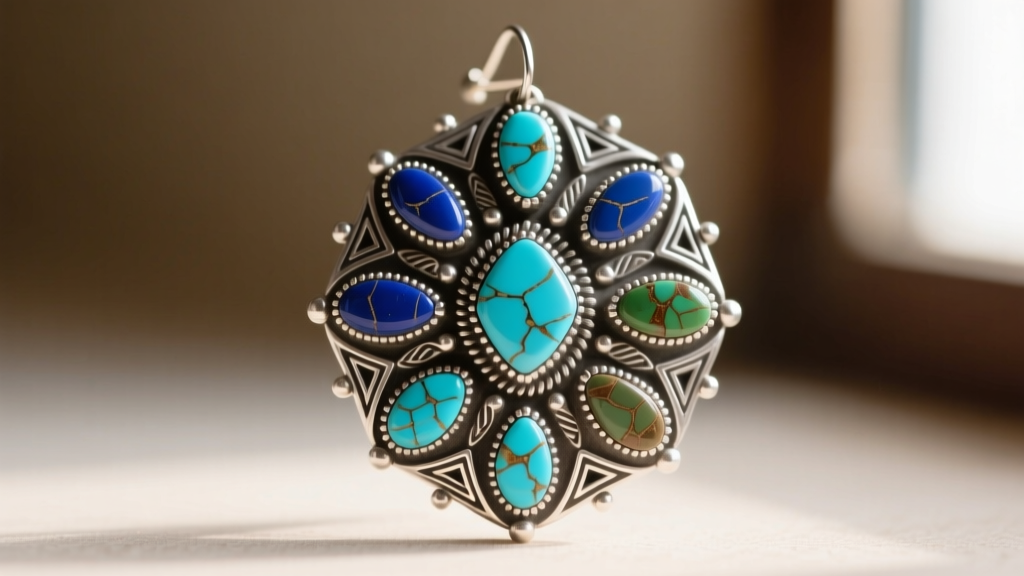
Authentic Zuni earrings are almost exclusively crafted in .925 sterling silver. The ear wires (French hooks) are typically forged from 20-gauge or 22-gauge half-hard sterling silver wire, providing enough tensile strength to hold heavy cluster dangles without bending. If the wire is overly thick (18-gauge) or unusually stiff and magnetic, it is likely a mass-produced import. Furthermore, the turquoise used is predominantly stabilized. Because the legendary Sleeping Beauty mine closed years ago, authentic artists now rely on high-quality stabilized Kingman or Royston turquoise. As noted by the Gemological Institute of America (GIA), stabilization is an accepted industry practice that enhances durability without compromising the stone's structural integrity, provided it is disclosed.
2026 Pricing Matrix: Budget vs. Investment Tiers
To help you assess whether a pair of Zuni turquoise earrings is priced fairly, we have compiled a 2026 market valuation matrix based on current silver spot prices, artist reputation, and lapidary complexity.
| Style / Category | Silver Weight & Hardware | Stone Quality & Origin | 2026 Price Range | Value Verdict |
|---|---|---|---|---|
| Budget / Entry (Small Studs, Simple Inlay) | Lightweight (3-6g), 22g wire, unmarked or simple '925' stamp | Stabilized turquoise, uniform color, minimal matrix | $65 - $150 | Excellent for daily wear; low investment appreciation. |
| Mid-Range (Petit Point Dangles, Channel Inlay) | Medium weight (8-15g), 20g wire, stamped with artist initials | High-grade stabilized Kingman, precise cuts, tight bezels | $180 - $450 | Sweet spot for value; retains resale value well if hallmarked. |
| High-End (Complex Cluster, Large Needlepoint) | Heavy (20g+), reinforced solder joints, recognized family hallmark | Natural or premium stabilized, exceptional color matching | $500 - $1,200 | Strong investment; highly sought after by serious collectors. |
| Master / Museum (Vintage or Award-Winning) | Museum-quality fabrication, historic coin silver or heavy sterling | Rare natural turquoise (e.g., vintage Sleeping Beauty or Lander Blue) | $1,500 - $5,000+ | Heirloom grade; appreciates annually based on provenance. |
Red Flags: How to Spot Counterfeit 'Zuni-Style' Earrings
The financial incentive to fake Native American jewelry has led to a flood of imported 'Zuni-style' earrings, primarily manufactured in the Philippines and China. Protecting your budget means knowing how to identify these fakes. The Indian Pueblo Cultural Center emphasizes that buying directly from Pueblo artisans or certified Native-owned galleries is the only 100% foolproof method, but you can spot fakes using these physical indicators:
1. The Bezel and Solder Test
Examine the silver bezels (the metal walls wrapping the stones) under a 10x jeweler's loupe. Authentic Zuni silversmiths use precise, tight bezels that are smoothly burnished down over the stone. Counterfeits often feature 'cast' bezels that look rounded, uneven, or show visible file marks. Additionally, look at the back of the earring. Genuine pieces will have clean, flat silver backs with neat solder lines. Fakes often reveal messy, pitted soldering or, worse, thick layers of clear epoxy glue holding the stones in place.
2. Hallmark Inconsistencies
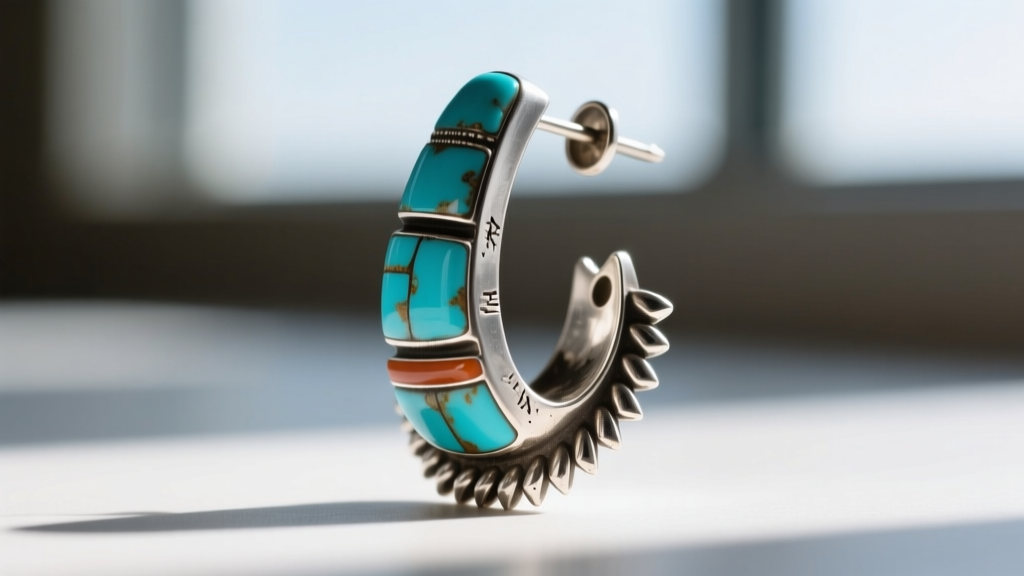
While not all vintage Zuni pieces are hallmarked, modern authentic earrings usually bear the artist's initials or a pictograph stamped into the silver. Counterfeiters often stamp a generic '925' or 'Tibet Silver' mark. If you see a hallmark that looks mechanically laser-engraved rather than hand-stamped with a steel punch, proceed with extreme caution. Furthermore, authentic Zuni artists rarely use 'antiquing' (oxidized black silver) in the deep crevices of petit point work; they prefer bright, highly polished silver to contrast with the blue stones.
3. The Weight and Sound Check
Pick up the earrings. Authentic sterling silver has a specific density. If a large cluster dangle feels suspiciously light, it may be silver-plated brass or aluminum. Gently tap the turquoise stones with a wooden toothpick. Authentic stones set with sawdust backing will emit a solid, dull thud. If you hear a high-pitched 'click' or rattle, the stones are likely glued or poorly seated, indicating mass production.
Care and Maintenance to Protect Your Investment
Once you have invested in authentic Zuni turquoise earrings, proper maintenance is critical to preserving their financial and aesthetic value. Turquoise is a porous, relatively soft gemstone (rating 5-6 on the Mohs scale). Never use ultrasonic cleaners, steam cleaners, or harsh chemical silver dips on Zuni jewelry. The chemicals can strip the stabilization resin, causing the stones to crack or turn a muddy green.
Instead, clean the silver components with a dry, treated silver polishing cloth, carefully avoiding the stones. Store your earrings in an anti-tarnish pouch with a silica gel packet to control humidity. Because the ear wires are typically 20-gauge sterling, avoid pulling or bending the hooks when putting them on, as repeated stress can cause the silver to snap at the solder joint where the hook meets the earring body.
Final Verdict: Are Zuni Turquoise Earrings Worth the Premium?
In 2026, authentic Zuni turquoise earrings remain a stellar value proposition, provided you buy within the correct tier for your goals. For budget-conscious buyers, spending $100 to $200 on a pair of well-crafted, hallmarked petit point studs offers immense daily-wear value and supports Native artisans. For investors, allocating $500+ toward complex needlepoint or cluster dangles from recognized families (such as the Leekya, Lupe, or Iule lineages) yields a wearable asset that historically outpaces inflation. By prioritizing structural integrity, verified hallmarks, and reputable sourcing over suspiciously low prices, you ensure your investment in Zuni lapidary art stands the test of time.


