Pocket Knife Earrings Troubleshooting: Fix Snags, Rust & Weight
Troubleshoot common pocket knife earrings issues. Learn how to fix stiff hinges, prevent lobe tearing, stop rust, and avoid hair snags safely.

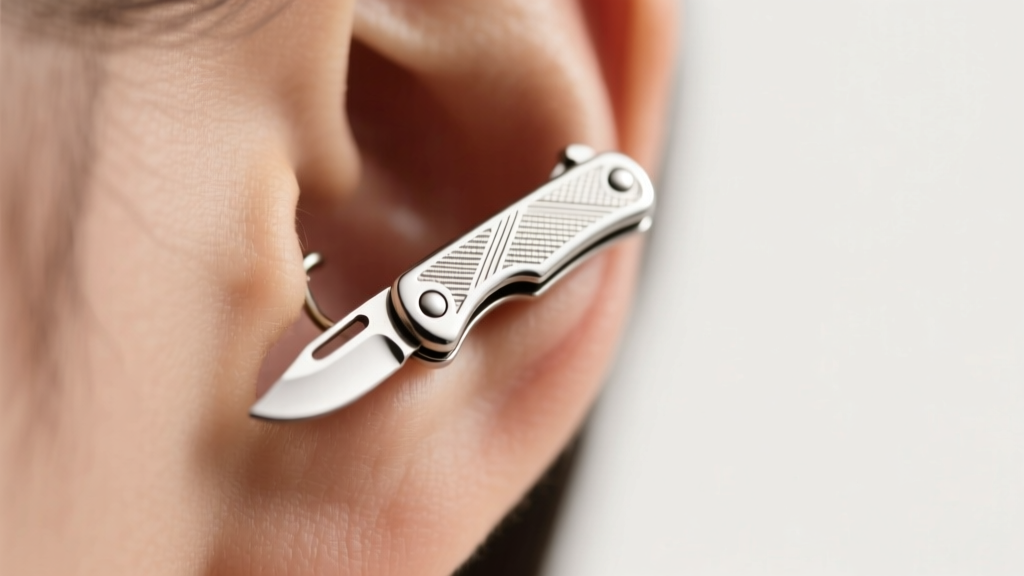
Novelty and industrial jewelry have carved out a massive niche in the 2026 alternative fashion space, with pocket knife earrings standing out as a staple for gothic, cyberpunk, and utilitarian aesthetics. However, translating a functional mechanical tool into a wearable ear accessory introduces a unique set of biomechanical and metallurgical challenges. Unlike standard studs or seamless hoops, pocket knife earrings feature moving parts, uneven weight distribution, and deep crevices that trap debris.
Whether you are dealing with a seized hinge, a stretching earlobe, or a blade edge that refuses to stop catching on your winter knitwear, this comprehensive troubleshooting guide will help you restore your jewelry to perfect working order while keeping your piercings safe and healthy.
Troubleshooting Matrix: Common Failures & Quick Fixes
Before diving into the deep-dive repairs, consult this quick-reference matrix to diagnose the exact failure mode of your pocket knife earrings.
| Problem | Primary Cause | Immediate Fix | Long-Term Prevention |
|---|---|---|---|
| Seized/Stiff Hinge | Oxidized metal dust and skin oils | Apply synthetic watch oil | Monthly dry PTFE lubrication |
| Lobe Sagging/Pain | Asymmetrical weight on thin wire | Use silicone support patches | Upgrade post to 14G or 12G titanium |
| Internal Rust | Mild steel hinge pins reacting to moisture | 99% Isopropyl alcohol micro-swab | Remove before showering; store with silica |
| Snagging Hair/Clothes | Sharp 90-degree stamped metal edges | File edges with 600-grit sandpaper | Request jeweler edge-blunting upon purchase |
| Green/Black Skin Stain | Copper/brass base metal reacting to sweat | Clear nail polish on contact points | Re-plate or buy solid 316L steel/titanium |
Issue 1: Stiff Hinges and Locked Mechanisms
The most frustrating issue with mechanical novelty earrings is a hinge that refuses to open or close smoothly. Pocket knife earrings typically use micro-friction hinges or simple pin-and-barrel joints. Because they sit close to the skin, these microscopic gaps quickly fill with a paste-like mixture of sebum, dead skin cells, and oxidized metal dust.
Lubrication Without Ruining the Patina
Never use standard WD-40 on your jewelry. It leaves a sticky, toxic residue that attracts more dirt and can cause severe contact dermatitis. Instead, use a synthetic watch oil (like Moebius) or a dry PTFE (Teflon) lubricant. Apply a microscopic drop to the hinge pin using a needle-tip oiler, work the blade back and forth gently to distribute the fluid, and wipe away any excess with a lint-free swab. This restores the satisfying 'snap' of the mechanism without compromising the metal's darkened oxidized patina.
Issue 2: Lobe Strain and Asymmetrical Weight Distribution
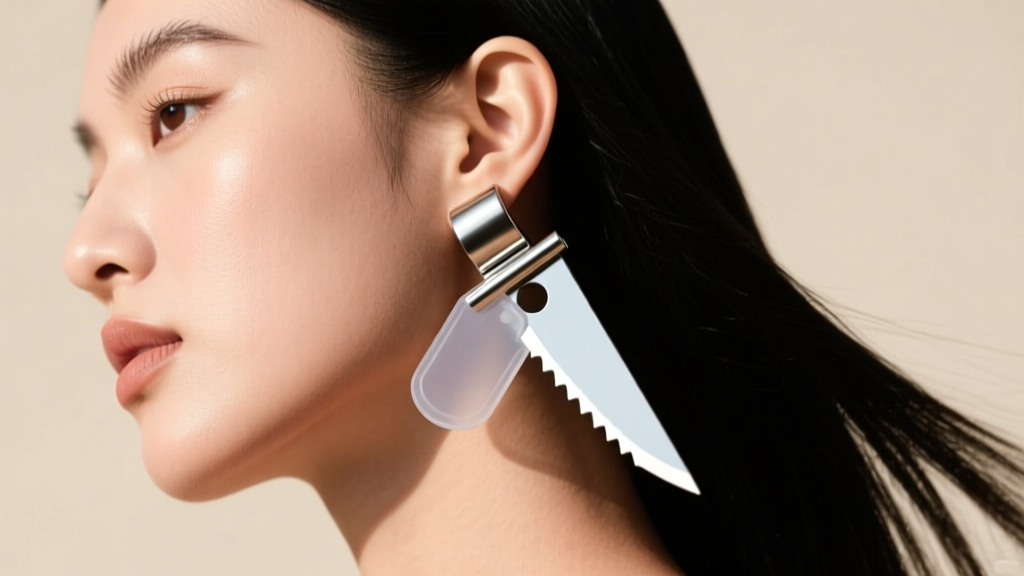
A standard novelty pocket knife earring can weigh anywhere from 12 to 30 grams. When this mass is suspended from a standard 20-gauge (0.8mm) or 18-gauge (1.0mm) wire, it creates a severe 'cheese-cutter effect.' Over time, the thin wire will slowly migrate downward, thinning the tissue of your earlobe and potentially causing a blowout or permanent tear.
Gauge Upgrades and Support Patches
To solve this, you must address the physics of the dangle. According to guidelines from the Association of Professional Piercers (APP), heavy jewelry requires thicker, implant-grade posts to distribute the load. Have a professional jeweler swap the hanging wire for a 14-gauge (1.6mm) or 12-gauge (2.0mm) ASTM F136 titanium leverback or french hook. If your piercing cannot accommodate a thicker gauge, you must use invisible silicone ear support patches (such as LobeWonder) on the back of the ear to distribute the weight across a wider surface area of skin.
Issue 3: Rust, Tarnish, and Crevices Cleaning
Many mass-produced pocket knife earrings feature a zinc alloy or brass body with a chrome or silver-tone plating. However, the internal hinge pins are frequently made of mild steel to keep manufacturing costs down. When exposed to humidity or sweat, these hidden steel pins rust, expanding slightly and seizing the hinge entirely.
Ultrasonic vs. Manual Brushing
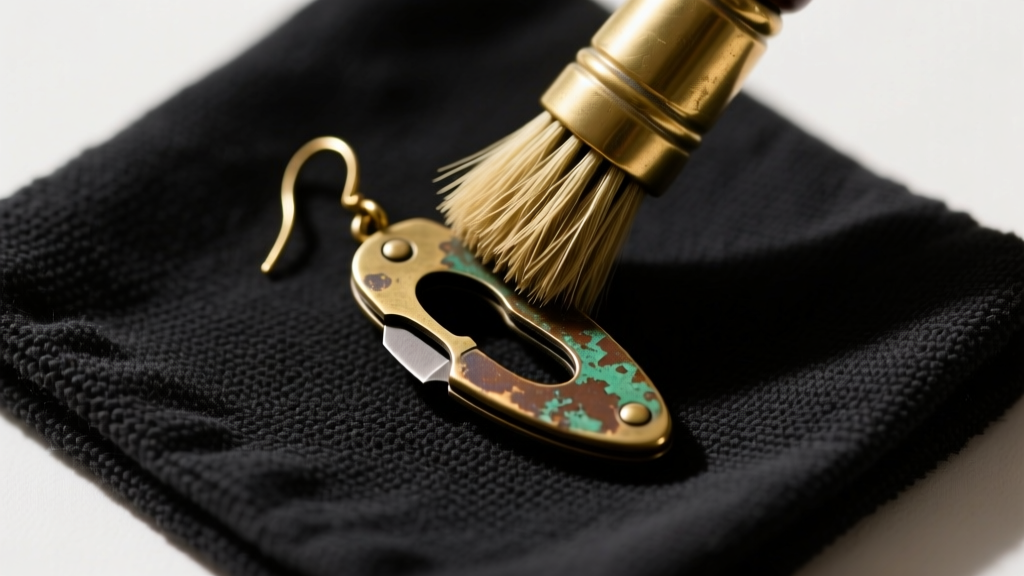
While ultrasonic cleaners are excellent for solid gold or platinum, they can vibrate loose the plating on cheap pot-metal novelty earrings. Instead, rely on manual detailing. Dip a soft-bristled jeweler's brass brush in 99% isopropyl alcohol and gently scrub the crevices. The alcohol cuts through the grease and evaporates instantly, depriving the mild steel pins of the moisture they need to rust. For stubborn tarnish on the outer casing, a specialized silver-polishing cloth is safe, but avoid liquid dip cleaners which will strip the antiquing from the blade engravings.
Issue 4: Snagging on Hair and Knitwear
The 'blade' portion of these earrings is often stamped or cast from metal, leaving microscopic 90-degree burrs along the edges. Even if the blade is technically blunt, these sharp corners act like tiny hooks, catching on loose threads, sweater knits, and long hair.
Filing and Edge Blunting Techniques
You can easily fix this at home without altering the visual design of the earring. Take a piece of 600-grit or 800-grit wet/dry sandpaper, fold it tightly, and run it lightly along the edges of the blade and the handle. You are not trying to round off the shape; you are simply 'breaking the edge' to remove the microscopic burrs left by the factory stamping process. Follow up with a quick polish using a microfiber cloth to restore the shine to the edges.
Material Safety: What is Actually Touching Your Piercing?
It is vital to separate the material of the earring's decorative body from the material of the post that actually passes through your flesh. Many suppliers market their items as 'surgical steel,' which is a largely unregulated marketing term that often includes 300-series stainless steels containing high levels of nickel. If you experience itching, flaking, or weeping around your piercing, you are likely reacting to the nickel in the post or the copper in the base metal leaching through worn plating.
For 2026 and beyond, the industry standard for sensitive piercings is solid, un-plated implant-grade titanium. If you love the look of a specific pot-metal pocket knife earring but have metal sensitivities, apply a thin coat of clear, flexible polyurethane nail polish to the ear wire. Let it cure for 24 hours before wearing. This creates a biocompatible barrier between the reactive metal and your skin.
Final Maintenance Checklist
- Weekly: Wipe down the hinge area with an alcohol prep pad to remove sebum buildup.
- Monthly: Apply a micro-drop of dry PTFE lubricant to the hinge pin to maintain mechanical tension.
- Storage: Store in a sealed ziplock bag with a small silica gel desiccant packet to prevent ambient humidity from rusting internal steel components.
- Pre-Shower: Always remove pocket knife earrings before bathing; trapped soap scum will permanently gum up the friction hinges.
By understanding the mechanical and metallurgical realities of novelty jewelry, you can keep your pocket knife earrings functioning smoothly and looking razor-sharp for years to come. For more information on safe jewelry materials and piercing care, consult resources from Rio Grande jewelry supply and professional piercing organizations.


