2026 Trends: Styling the Butterfly Earrings Hoop Revival
Explore the 2026 butterfly earrings hoop trend. Expert analysis on materials, gauge sizes, cartilage styling, and investment tiers for winged hoops.

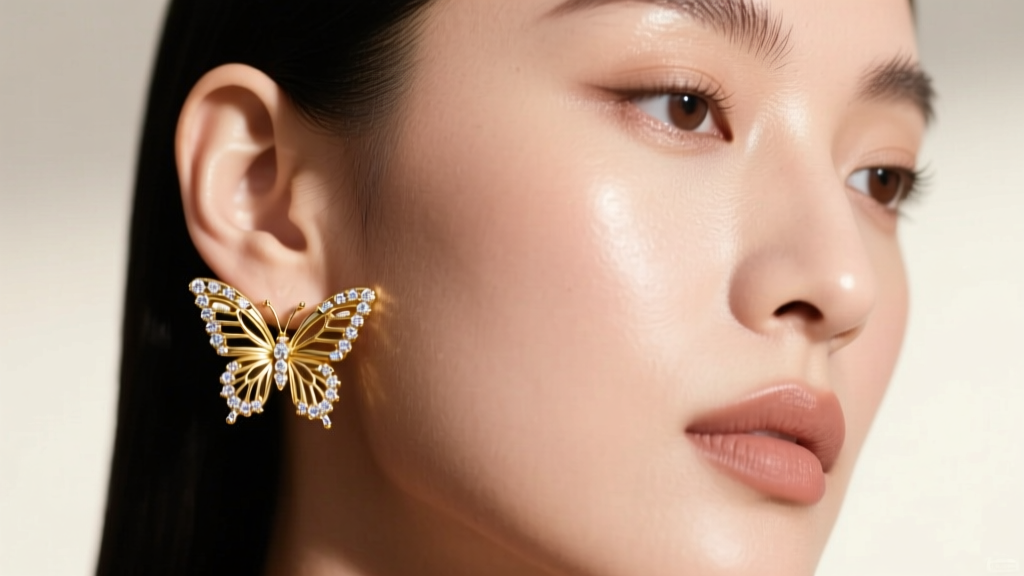
The Metamorphosis: Why the Butterfly Earrings Hoop is Dominating 2026
The trajectory of nature-inspired jewelry has shifted dramatically as we navigate 2026. While the early 2020s saw a resurgence of Y2K aesthetics characterized by cheap alloy metals and plastic rhinestones, the current landscape demands architectural sophistication. The modern butterfly earrings hoop is no longer just a nostalgic relic; it has evolved into a staple of fine jewelry curation. This season, the focus is on kinetic movement, mixed-metal wing detailing, and structural integrity. Designers are moving away from flat, stamped charms and instead utilizing 3D cast wings that wrap around the hoop's circumference or suspend from invisible micro-pave hinges. This evolution bridges the gap between whimsical expression and luxury investment, making the winged hoop a dominant force in both lobe and cartilage styling.
Anatomy of a Modern Butterfly Hoop: Materials and Construction
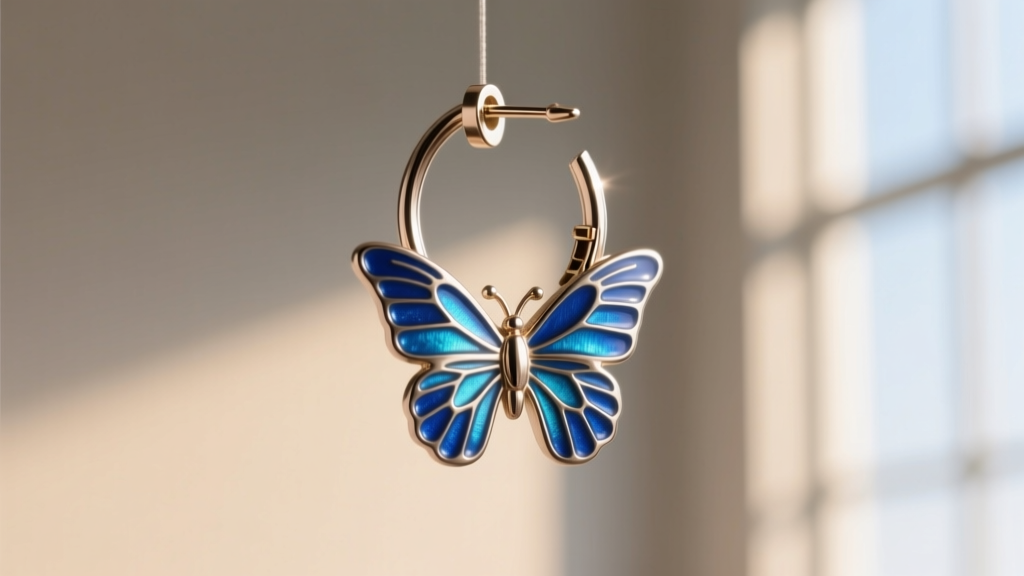
To understand the value and longevity of these pieces, one must examine the metallurgy and decorative techniques employed by top-tier jewelers. The wings of the butterfly are typically rendered using either vitreous enamel or micro-pave gemstone settings. Vitreous enamel, which involves fusing glass powder to metal at temperatures exceeding 1,400°F, offers a translucent, shatter-resistant finish that will never yellow. In contrast, budget-friendly cold enamel (epoxy resin) is prone to UV degradation and peeling within 12 to 18 months of daily wear. According to the Gemological Institute of America (GIA), the integration of lab-grown diamonds into the wing structures has allowed for intricate, high-brilliance pavé work without the exorbitant cost of mined stones, fundamentally shifting the pricing structure of luxury animal-motif jewelry.
Material Grade and Durability Matrix
| Material | Grade / Type | Best Application | Durability & Failure Modes |
|---|---|---|---|
| 14k Solid Gold | 58.5% Pure Gold | Everyday Lobe Wear | High durability; prongs may catch on hair if not flush-set |
| Implant-Grade Titanium | ASTM F136 | Fresh Piercings & Cartilage | Hypoallergenic; limits complex enamel work due to heat tolerance |
| Vitreous Enamel | Fused Glass Powder | Luxury Color Accents | Shatter-resistant; requires torch firing; immune to UV yellowing |
| Cold Enamel | Epoxy Resin | Budget Fashion Jewelry | Prone to UV yellowing, peeling, and scratching over time |
Lobe vs. Cartilage: Placement and Gauge Dynamics
Styling a butterfly earrings hoop requires a strict understanding of piercing gauges and weight distribution. Standard lobe piercings are typically done at 20G (0.8mm) or 18G (1.0mm). However, the addition of a 3D butterfly charm adds lateral torque to the hoop. If the wire is too thin (e.g., 22G), the hoop will warp into an oval shape under the weight of the wings, causing the clasp to pop open unexpectedly. For lobe placements featuring heavy enameled wings, an 18G or 16G (1.2mm) wire is mandatory to maintain structural tension.
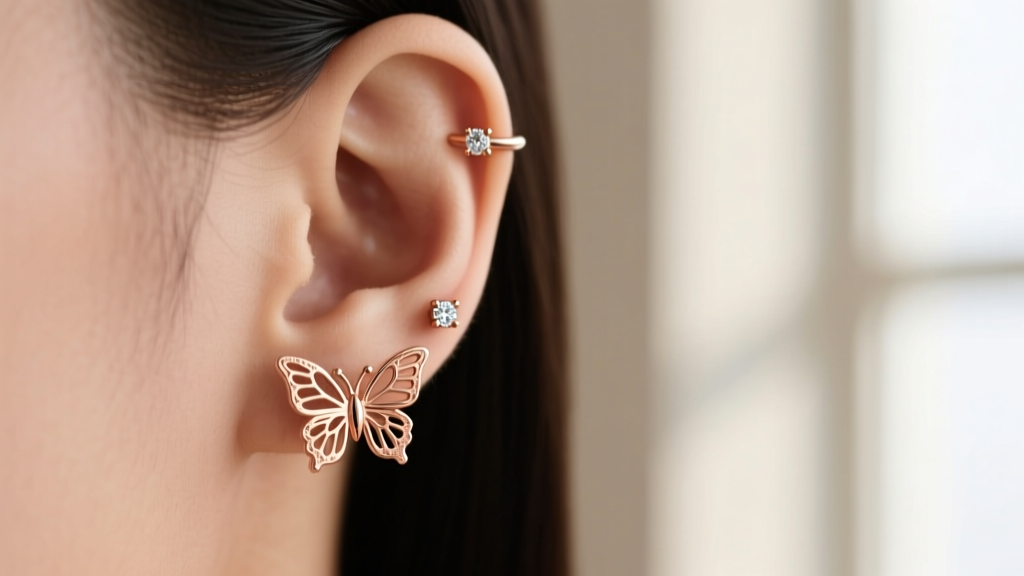
When transitioning to cartilage placements—such as the helix or tragus—the dynamics change entirely. The Association of Professional Piercers (APP) strongly recommends a minimum of 16G (1.2mm) or 14G (1.6mm) for cartilage jewelry to prevent the 'cheese-cutter effect,' where thin wire migrates through the tissue. A cartilage-specific butterfly earrings hoop must utilize a hinged segment clicker clasp rather than a traditional saddle clasp, ensuring a secure lock that won't snag on hair or clothing while sleeping. Furthermore, the internal diameter must be precisely measured (usually 8mm to 10mm for helixes) to allow the butterfly wings to lay flat against the ear without pressing into the conch.
Face Shape and Scale: Styling the Winged Silhouette
The visual weight of the butterfly wings drastically alters how the earring interacts with your facial geometry. In 2026, the trend has bifurcated into two distinct scales: the 'Micro-Wing' huggie and the 'Macro-Wing' statement hoop. Choosing the correct scale is essential for harmonious styling.
- Round and Oval Faces: Opt for elongated, drop-style hoops where the butterfly hangs as a dangling element below the lobe. This creates a vertical line that lengthens the jawline. Avoid wide, horizontally sprawling wings that add unnecessary width to the cheeks.
- Square and Heart-Shaped Faces: Medium-sized hoops (20mm - 25mm diameter) with rounded, sweeping butterfly wings soften angular jawlines and balance a wider forehead. The curved lines of the wings mimic the natural contours of the face, providing a softening effect.
- Petite Features: The 'Micro-Wing' huggie (10mm - 12mm diameter) is ideal. The butterfly should wrap snugly around the earlobe, acting as an intricate detail rather than an overwhelming statement piece. Look for flush-set sapphire or diamond wings to catch the light without adding physical bulk.
Investment Guide: Pricing Tiers and Brand Benchmarks
Navigating the market requires an understanding of what drives the cost of a butterfly earrings hoop. The pricing is heavily dictated by the base metal, the enameling technique, and the presence of genuine gemstones.
Market Tiers Breakdown
1. The Accessible Tier ($45 - $120): Dominated by gold vermeil (sterling silver base with a thick 14k gold plating) and cold enamel. These pieces are excellent for seasonal trend participation but will require replating after 1-2 years of frequent wear. The clasps are often simple wire-wrapped hinges which may loosen over time.
2. The Demi-Fine Tier ($250 - $600): This is the sweet spot for everyday luxury. Expect solid 14k gold (yellow, white, or rose) with vitreous enamel wings or lab-grown sapphire accents. These hoops feature precision-machined clicker clasps and are designed to withstand daily wear, showering, and swimming without tarnishing.
3. The Fine Jewelry Tier ($1,200 - $4,500+): Reserved for heritage houses and high-end independent artisans. These pieces utilize 18k gold or platinum, hand-carved wax models for the butterfly anatomy, and VS-clarity natural diamonds. The wings often feature articulated joints, allowing them to flutter slightly with the wearer's movement.
Care and Tarnish Prevention for Enamel and Gemstone Wings
Maintaining the brilliance of your winged hoops requires specific care protocols, particularly if they feature intricate pavé work or vibrant enamel. While solid gold will not tarnish, the accumulation of sebum, lotions, and environmental dust can dull the gemstones and obscure the enamel's glass-like finish. For routine cleaning, use a solution of warm water and a few drops of mild, phosphate-free dish soap. Soak the hoops for 10 minutes, then gently agitate the pavé wings with an extra-soft baby toothbrush. Never use ultrasonic cleaners on vitreous enamel or fractured gemstones, as the high-frequency vibrations can cause the glass enamel to crack or loosen the micro-prongs holding the diamonds. Store your butterfly hoops in individual anti-tarnish microfiber pouches to prevent the wings from scratching against other jewelry in your collection.


