Beginner's Guide to Buying Turquoise Feather Earrings
Discover how to choose, style, and care for turquoise feather earrings. Learn about stone authenticity, metal pairings, and face-shape matching.

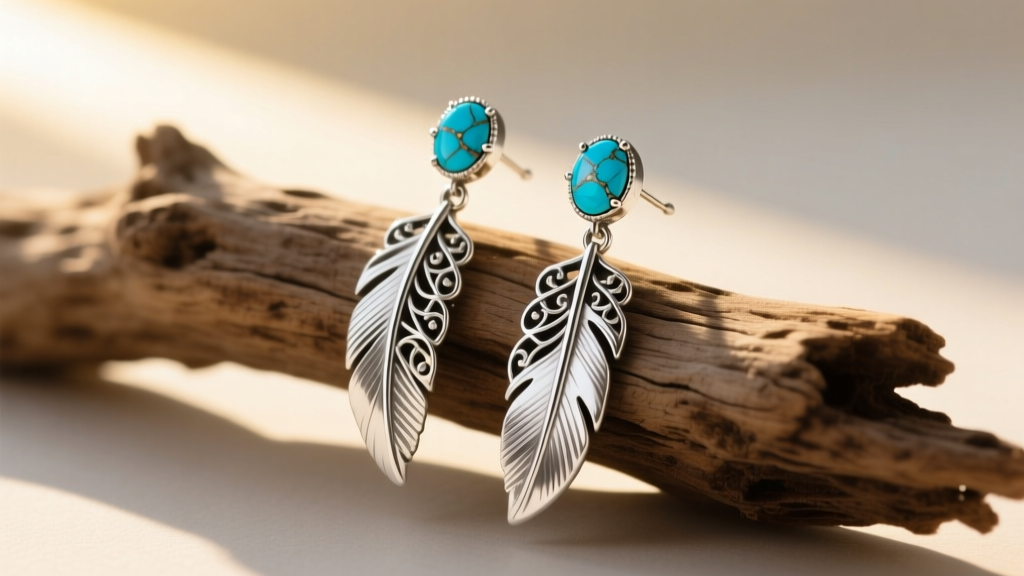
The Appeal of the Boho-Chic Staple
Turquoise feather earrings occupy a unique space in jewelry design, bridging the gap between rich Southwestern heritage and modern bohemian aesthetics. The feather motif symbolizes freedom, vision, and a connection to nature, while the vibrant blue-green hue of turquoise provides a striking visual anchor. However, for beginners navigating the jewelry market, the sheer volume of options can be overwhelming. The space is flooded with plastic imitations, poorly constructed hardware, and misleading stone descriptions. Understanding the material grades, metallurgy, and structural mechanics of these earrings is essential for making an investment that lasts.
Decoding Turquoise: Genuine vs. Stabilized vs. Imitation
The most critical factor in evaluating turquoise feather earrings is the authenticity and treatment of the stone. According to the Gemological Institute of America (GIA), natural turquoise is a porous, relatively soft copper-aluminum phosphate mineral. Because of its inherent fragility, the vast majority of turquoise used in commercial jewelry undergoes some form of treatment.
Understanding the Mohs Scale and Stabilization
On the Mohs hardness scale, turquoise ranges from 3 to 6. Lower-grade 'chalk' turquoise is too soft to be cut or polished without crumbling. To solve this, lapidaries use a stabilization process, infusing the porous stone with a clear epoxy resin under pressure. This hardens the stone, enhances its color, and makes it durable enough for daily wear. It is important to note that stabilization is an accepted industry standard, not a deception, provided it is disclosed. Conversely, 'dyed' stones (usually howlite or magnesite) and 'block' turquoise (reconstituted dust mixed with glue) are considered imitations and hold little intrinsic value.
| Turquoise Type | Mohs Hardness | Avg. Price Range | Best Use Case |
|---|---|---|---|
| Natural (Untreated) | 5.0 - 6.0 | $150 - $500+ | High-end collector pieces, occasional wear |
| Stabilized | 6.0 - 7.0 | $45 - $120 | Everyday wear, durable dangle earrings |
| Dyed Howlite | 3.5 | $15 - $35 | Fast fashion, temporary festival wear |
| Block / Reconstituted | 2.0 - 3.0 | $10 - $25 | Costume jewelry, avoid for longevity |
The Matrix: Nature's Fingerprint
When examining the stone in your feather earrings, look for the 'matrix'—the webbing of host rock (often brown limonite or black sandstone) left in the stone. A fine, evenly distributed 'spiderweb' matrix is highly prized and can actually increase the stone's value, proving its natural origin since synthetic imitations struggle to replicate this organic pattern authentically.
Anatomy of Feather Earrings: Metals and Mechanics
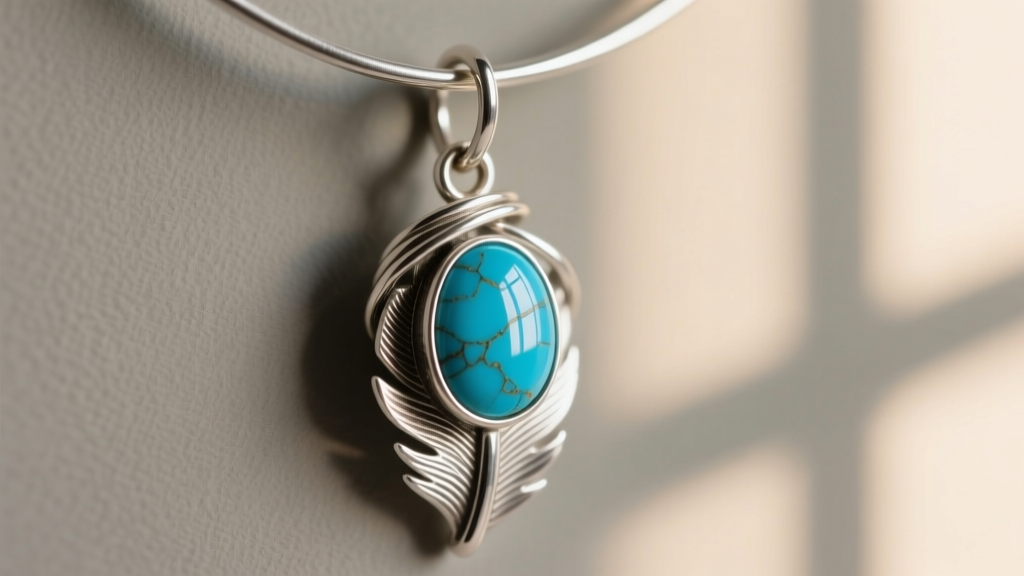
The 'feather' component of the earring is typically crafted from metal, though enamel and woven thread variations exist. For metal feathers, the manufacturing method dictates the level of detail and the structural integrity of the piece.
Die-Struck vs. Cast Metalwork
High-quality feather earrings are usually die-struck. This process involves stamping a sheet of metal (like 925 sterling silver) with immense pressure between two hardened steel dies. The result is a dense, durable feather with crisp, razor-sharp barbs and a polished finish. Cast feathers, made by pouring molten metal into a mold, are thicker, heavier, and often suffer from a loss of fine detail and internal porosity, making them prone to snapping at the stem.
Gauge Sizes and Ear Lobe Health
Because feather dangles can be surprisingly heavy, the hardware connecting them to your ear is a vital health consideration. Standard French wire (fishhook) earrings are typically 20-gauge (0.81mm). If the metal feather and turquoise cabochon exceed 12 grams in total weight, a 20-gauge wire will act like a cheese wire, slowly slicing through your earlobe tissue over time. For heavier statement pieces, always look for 18-gauge (1.02mm) posts or wires, or opt for a leverback closure that distributes the weight more evenly across the lobe.
- Sterling Silver (925): The premier pairing for turquoise. The cool, bright white metal enhances the blue tones of the stone. Ensure it is stamped '.925'.
- Yellow Gold (14k): Creates a warmer, more luxurious contrast, often used in high-end Southwestern designs.
- Brass/Copper: Offers an antique, rustic look but will oxidize quickly and can turn the skin green if not sealed with a clear lacquer.
Styling Framework: Matching Face Shapes and Occasions

Turquoise feather earrings are inherently statement-making, but their elongated, tapered shape makes them incredibly versatile for balancing different facial structures. As noted by Encyclopedia Britannica, turquoise has been used as an ornamental stone for millennia, and its visual weight can be manipulated through jewelry design to flatter the wearer.
Face Shape Matrix
- Round Faces: Opt for long, narrow, V-shaped feather dangles that drop below the jawline. The sharp vertical lines elongate the face and draw the eye downward, countering the width of the cheeks.
- Square Faces: Choose feathers with softer, curved edges or teardrop-shaped turquoise bezels at the top. Avoid rigid, geometric metalwork that mimics a strong jawline.
- Heart-Shaped Faces: Medium-length drop earrings that flare out slightly at the bottom (like a peacock feather silhouette) add visual weight to a narrower chin.
- Oval Faces: The universal shape. You can comfortably wear wide, clustered feather studs or dramatic, shoulder-grazing dangles.
Pro Styling Tip: When wearing elaborate turquoise feather earrings, keep your neckline clear. A V-neck or scoop-neck top provides the negative space necessary for the earrings to serve as the focal point, preventing the 'busy' look that occurs when they clash with a detailed collar or statement necklace.
Care and Maintenance: Preserving Stone and Silver
Even stabilized turquoise requires specific care to maintain its vibrant color and structural integrity. The stone is highly sensitive to sudden temperature changes and harsh chemicals. Always follow the 'Last On, First Off' rule: put your earrings on after applying hairspray, perfume, and lotions, and remove them before washing your face or showering.
Never use ultrasonic cleaners or steam cleaners on turquoise jewelry. The high-frequency vibrations can fracture the stone, and the heat can melt the stabilizing resin or damage the glue holding the cabochon in its bezel. Instead, clean the silver feather with a dedicated silver polishing cloth, carefully avoiding the stone. If the turquoise becomes dusty, simply wipe it gently with a soft, barely damp microfiber cloth and let it air dry completely before storing it in an anti-tarnish pouch.
By understanding the nuances of stone grading, metalwork mechanics, and proper maintenance, beginners can confidently navigate the market. A well-chosen pair of turquoise feather earrings is not just a fleeting trend; it is a wearable piece of art that, when cared for properly, can be passed down through generations.


